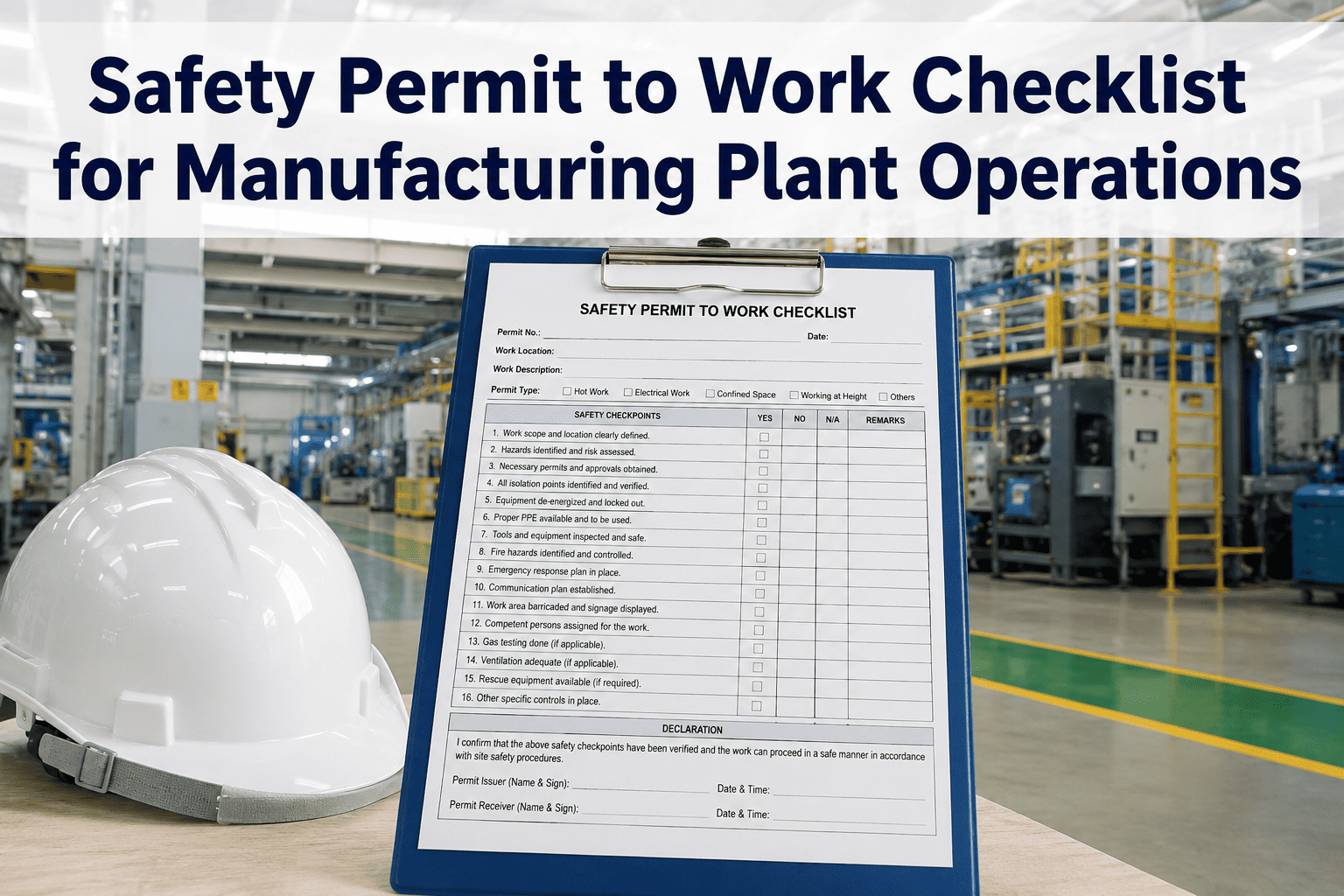
SOP drift on the shop floor rarely announces itself. It compounds through minor step skips, undocumented deviations, and signoff gaps that go undetected until a quality failure or audit finding surfaces the pattern. One mid-size discrete manufacturing facility running three production lines under ISO 9001 compliance watched its nonconformance rate climb quarter over quarter — not from equipment failure, but from process variation that no one could trace or verify. Field supervisors had no structured mechanism to confirm work was being performed as written. Verification existed on paper but not in practice. If your operation is absorbing the same SOP drift pressure, Sign Up Free to see how Oxmaint structures field verification from day one — or Book a Demo with an operations compliance specialist.
SOP Compliance · Field Verification · Document Control
Connect SOP Execution to Verifiable Field Evidence
Digital checklists, step-level signoff, visual verification, and audit-ready records — Oxmaint helps supervisors close the gap between written procedure and actual work performed.
Plant Profile
The Operation: Three Lines, One Compliance Standard, No Field Verification Loop
Site Profile
IndustryDiscrete manufacturing — assembly and process operations
Lines3 production lines, 70+ documented SOPs in active use
Team18 operators, 4 supervisors, 2 quality leads
ComplianceISO 9001, internal audit cycle, customer QMS requirements
Prior systemPaper checklists, verbal supervisor rounds, manual logbooks
Oxmaint featuresDigital Inspections · SOP-Linked Checklists · Signoff Workflows · Audit Trail · Evidence Capture
Baseline Pressure Points
43%
Of internal audit findings traced to unverified SOP step execution
2.8×
Higher rework rate on lines with no structured supervisor sign-off discipline
31%
Of quality records incomplete at close with no evidence of field verification
Root Cause Analysis
Why SOP Drift Was Widening — And Why Supervisors Couldn't Catch It
A structured review of 90 days of inspection records, rework logs, and audit findings identified four execution gaps accelerating process deviation faster than any retraining effort could offset. The facility did not need more procedures. It needed verification mechanisms that connected written SOPs to real field evidence, gave supervisors a structured inspection route, and made signoff discipline a system function rather than a personal discipline. Sign Up Free to map your own SOP drift drivers — or Book a Demo to see how Oxmaint's inspection engine applies to your operation.
41%
No Step-Level Signoff at Point of Work
SOPs were available on paper but not enforced step by step at the work station. Operators self-certified completion without a structured mechanism to confirm each critical step was performed as written.
26%
Inspection Routes Without Evidence Closure
Supervisor rounds happened verbally. No field evidence — photo, measurement, or digital timestamp — was captured to confirm process state was verified at time of inspection.
19%
Document Versions Out of Sync on the Floor
Printed SOPs on the production floor did not always reflect the current approved version. Operators followed superseded procedures without visibility into what had changed or when.
14%
Audit Trail Gaps Across Shift Boundaries
Compliance records were incomplete at shift handover. Incoming supervisors had no structured view of what had been verified, what was pending, and where process deviation had been flagged during the prior shift.
The Solution
How Oxmaint Replaced Paper Checks with a Structured Verification System
The site deployed Oxmaint without restructuring its supervisor roster or altering shift patterns. The platform replaced paper checklists and verbal rounds with digital inspection routes tied directly to active SOP versions — capturing step-level signoff, photo evidence, and timestamp records at point of work. Supervisors gained a real-time compliance dashboard across all three lines each shift. Quality leads could access complete audit trails without waiting for end-of-day log reconciliation. Book a Demo to see how inspection workflows are configured for your SOP structure — or Sign Up Free to explore the platform directly.
01
SOP-Linked Digital Checklists at Point of Work
Every active SOP is mapped to a structured digital checklist. Operators complete step-by-step tasks on a mobile device at the work station — with mandatory fields, photo capture options, and signoff confirmation at each critical step. Completion without required inputs is not possible.
02
Structured Supervisor Inspection Routes with Evidence Capture
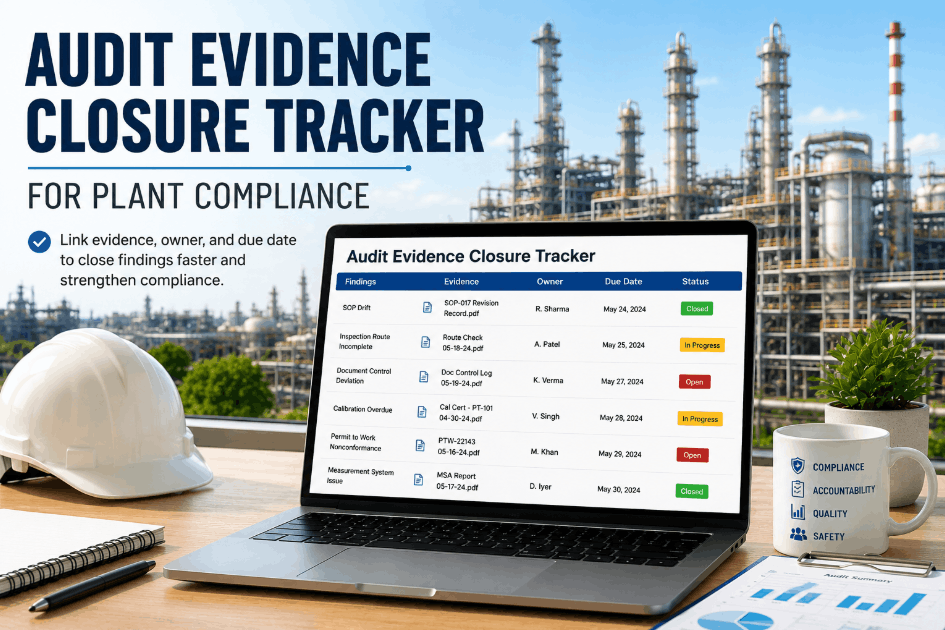
Supervisors follow defined inspection routes tied to production line assets and SOP verification points. Each stop in the route requires a timestamped digital sign-off — with photo evidence where critical process parameters are being verified. Verbal rounds are replaced with a documented, auditable trail.
03
Version-Controlled SOP Access on the Floor
Operators access only the current approved SOP version from their mobile device. Superseded procedures are automatically removed from active use. When an SOP is updated, the change is reflected in the checklist without requiring a reprint cycle or floor distribution step.
04
Continuous Audit Trail Across Shifts and Lines
Every inspection event, signoff, evidence record, and deviation flag is stored in a searchable audit trail. Incoming supervisors log in to a full compliance picture from the prior shift. Quality leads access records in real time rather than at day-end consolidation — enabling faster response to process deviation before it drives rework or audit findings.
Results at 90 Days
What the Numbers Looked Like Three Months After Deployment
54%
Reduction in internal audit findings linked to unverified SOP execution
68%
Drop in quality records closed without field verification evidence
39%
Decrease in rework events traced to process deviation on verified lines
100%
SOP version compliance — floor access limited to current approved revisions only
+44%
Supervisor inspection completion rate — structured routes replaced ad hoc rounds
3.6×
Faster audit evidence retrieval — digital trail replaced manual log search
| Metric |
Before Oxmaint |
90 Days After |
Change |
| Audit findings — SOP drift |
43% of total |
20% of total |
-54% |
| Records without field evidence |
31% |
10% |
-68% |
| Monthly rework events (deviation) |
27 |
16 |
-39% |
| SOP version compliance |
~71% (paper) |
100% (digital) |
Full compliance |
| Supervisor inspection completion |
58% |
83% |
+44% |
| Audit evidence retrieval time |
4.2 hrs avg |
1.2 hrs avg |
-71% |
Key Business Impact
What Closing the SOP Verification Gap Actually Delivers
"The SOP drift I see most often in manufacturing isn't caused by operators ignoring procedures. It's caused by a verification system that never closes the loop. When the only confirmation that a step was completed is the operator's own signature on a paper form — and supervisors are doing verbal rounds with no structured output — there's no real evidence that the intended work was performed. Digital inspection routes tied to SOP versions don't just create records. They change the behavioral dynamic on the floor. When operators know each step requires a digital confirmation before moving forward, and supervisors know their route completion is visible in real time, process discipline becomes structural rather than personal. That's when SOP drift stops being a recurring audit finding and starts becoming a solved problem."
Priya Shenkar, Quality Systems Specialist
17 years manufacturing quality and compliance · Former QMS lead, tier-1 industrial supplier · Specialist in SOP governance, inspection systems, and audit readiness
SOP Governance · Inspection Routes · Audit Readiness
Replace Paper Verification with Evidence-Backed Digital Signoff
Step-level SOP checklists, supervisor inspection routes, version-controlled document access, and real-time audit trail — Oxmaint gives operations teams the verification structure to keep process quality under control every shift.
FAQs
Frequently Asked Questions
How does Oxmaint help supervisors reduce SOP drift on the shop floor?
Oxmaint ties digital checklists directly to active SOP versions, requiring step-level signoff at point of work. Supervisors follow structured inspection routes with evidence capture — replacing verbal rounds with a documented, auditable verification loop.
Can Oxmaint ensure operators are using the current approved SOP version?
Yes. Operators access only the live approved version from their mobile device. Superseded versions are automatically removed from active use when an SOP is updated.
Does Oxmaint support photo evidence capture during inspections?
Yes. Inspection steps can require photo evidence before a signoff is accepted, creating visual proof of process state at the time of verification — directly linked to the relevant SOP step and asset.
How does Oxmaint support audit readiness for ISO 9001 or similar standards?
Every signoff, inspection event, deviation flag, and evidence record is stored in a searchable digital audit trail. Retrieving compliance records for an audit takes minutes rather than hours of manual log review.
How quickly can a site deploy Oxmaint's SOP inspection workflows?
Most sites configure and activate initial SOP-linked checklists within the first week. Measurable improvements in inspection completion and record closure typically appear within the first 30 days of structured use.
Every Verified Step Is Process Quality You Keep
Give Your Supervisors the Verification Structure to Stop SOP Drift
Oxmaint brings SOP-linked digital checklists, supervisor inspection routes, evidence capture, and continuous audit trail to operations teams — with no additional headcount required.