Part substitution decisions made without a structured approval framework create hidden risk — incorrect specs silently enter the asset, warranty is voided, and failure rates climb with no audit trail. Every day a critical component is unavailable, maintenance teams face pressure to swap in a substitute, and without a formal review path, that decision lives in someone's memory, not in the work order. At $3,400–$11,000 per unplanned equipment failure, the cost of an unapproved substitution far exceeds the cost of a structured review. Sign Up Free to automate part substitution approvals per asset class, per criticality level, across every site in your plant network.
Engineering · Article · Inventory Control
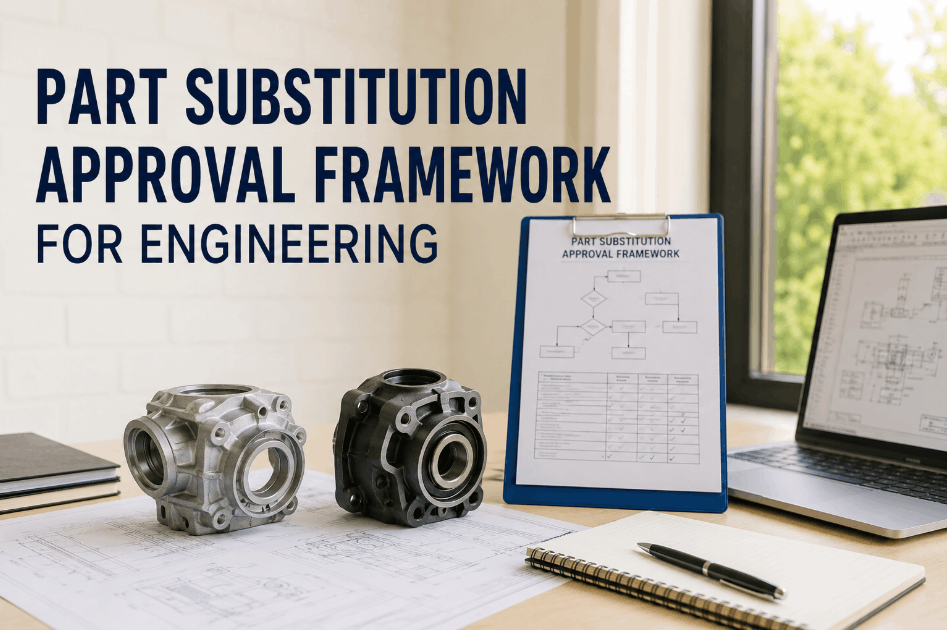
Part Substitution Approval Framework for Engineering
Substitution gates, approval tiers, equivalency verification, and CMMS-linked work order integration — structured frameworks for engineering teams managing critical components, vendor risk, and procurement delays.
$7,200Average cost of an unplanned equipment failure linked to an unapproved part substitution
67%Of substitution decisions made without documented engineering approval during stockouts
−58%Reduction in substitution-related rework when a CMMS approval gate is enforced per work order
4.2×Higher audit finding rate for facilities with no substitution traceability record in the CMMS
Substitution Approval Tiers by Component Criticality
Not every part substitution carries equal risk. A non-OEM fastener on a secondary panel carries a fundamentally different risk profile from a substitute bearing on a drive shaft or an alternative seal compound on a pressure vessel. Engineering approval frameworks tier the substitution review process to the criticality of the component — routing low-risk consumables through a single-level technician sign-off while directing safety-critical and OEM-specified parts through multi-level engineering and procurement review before the work order can close. Book a Demo to see how OxMaint routes substitution approvals automatically based on asset class and criticality flag configured in your equipment register.
Tier 1
Consumable & Non-Critical
Fasteners, standard filters, non-load-bearing hardware. Technician-level sign-off. No engineering review required. Document substitute part number in work order.
Low Risk
Tier 2
Functional Equivalent — Verified
Same spec, alternate manufacturer. Requires supervisor approval + datasheet equivalency confirmation. Work order holds until approved.
Moderate Risk
Tier 3
OEM-Specified Components
Bearings, seals, gearbox internals. Engineering sign-off required. Substitute must pass spec cross-check. Time-limited approval window before re-review.
High Risk
Tier 4
Safety-Critical & Pressure-Rated
Pressure vessel fittings, safety valve components, structural load-bearing parts. Multi-level review: Engineering + QA + Plant Manager. Permanent CMMS record required.
Critical
Tier 5
Regulatory & Compliance-Bound
Parts covered by insurance, regulatory certification, or OEM warranty clauses. No substitution without written OEM or regulatory body consent. Zero-tolerance gate in CMMS.
No Substitute
Auto
Pre-Approved Substitution List
Engineering-vetted alternates loaded into CMMS per part number. Work order auto-approves when substitute is on the pre-approved list. Audit trail maintained automatically.
Fast-Track
The Substitution Risk Cascade — How One Unapproved Swap Compounds
Unapproved part substitutions rarely cause immediate failure — their damage is cumulative and invisible. A substitute bearing runs 15% outside its rated load tolerance. The asset continues to operate. The next scheduled PM passes without flagging the substitution because it was never recorded in the CMMS. Six months later, the bearing fails, taking out an adjacent shaft and triggering an unplanned 72-hour shutdown. The maintenance record shows a bearing failure. The root cause — an unapproved substitute installed under stockout pressure — is never traced. Understanding the cascade is how engineering teams justify the approval framework investment. Sign Up Free to link every substitution decision to the work order, the asset record, and the approval chain — creating the traceability that breaks the cascade.
Part Substitution Risk Cascade — 5 Stages from Stockout to Shutdown
Stage 1
Preferred Part Unavailable
Lead time delay or stockout forces substitute decision under production pressure. No formal review process exists.
$0
Cost if framework enforced
↓
Stage 2
Unverified Substitute Installed
Alternate part installed without datasheet cross-check or engineering approval. Not recorded in CMMS asset history.
$420
Rework if caught at PM
↓
Stage 3
Accelerated Wear — Not Detected
Out-of-spec component degrades faster than OEM design life. Next PM interval is set to OEM schedule, not substitute schedule.
$1,100
Early PM if flagged
↓
Stage 4
Secondary Component Damage
Failed substitute damages adjacent components. Failure is now a multi-part replacement event. Production line down.
$3,800
Repair + parts cost
↓
Stage 5
Unplanned Shutdown + Root Cause Unknown
Extended outage, emergency procurement, and full repair event. No CMMS record links failure to original substitution. Root cause analysis inconclusive.
$9,400+
Shutdown + investigation
Substitution Approval Compliance Scoring — Rate Your Engineering Programme
Most plants believe they have a substitution control process. What they actually have is an informal practice — a senior technician who knows what is acceptable, a supervisor who approves verbally, and a CMMS record that shows the substitute part number with no approval flag, no equivalency check, and no expiry. The scoring framework below helps engineering teams assess their actual substitution control maturity and identify the gaps that create audit risk, warranty exposure, and untraced failure patterns. Book a Demo to map your current substitution process against OxMaint's approval workflow and identify where manual gaps create compliance exposure.
Part Substitution Approval Maturity Score
Score 5 = fully controlled · Score 1 = active compliance risk · Assess per site
5
Fully Controlled — CMMS Gated
All substitutions routed through tiered approval gates in CMMS. Pre-approved list maintained per asset class. Every substitute linked to datasheet, approver, and time stamp. Audit trail complete.
Action: Maintain and review pre-approved list quarterly. No gaps in current programme.
4
Mostly Controlled — Manual Gaps
Approval process exists but some substitutions bypass the gate under emergency. Verbal approvals occasionally not transcribed to CMMS. Pre-approved list incomplete for some asset classes.
Action: Close manual bypass path. Enforce CMMS gate on all Tier 3+ components. Audit last 90 days for undocumented substitutions.
3
Informal Process — Supervisor Dependent
Approvals are person-dependent. No formal tier structure. CMMS records substitute part number but no approval chain. Equivalency is assumed, not verified.
Action: Implement tier classification. Build approval workflow in CMMS. Require datasheet attachment on all Tier 2+ substitutions within 60 days.
2
Ad Hoc — No Documented Framework
Substitutions made at technician discretion. No approval workflow. CMMS work orders close with substitute part number and no supporting documentation. Warranty and audit exposure active.
Action: Freeze ad-hoc substitutions on critical assets. Initiate framework build. Backfill CMMS records for last 6 months where possible.
1
No Control — Active Risk
No substitution framework exists. Parts are sourced and installed without any engineering review, documentation, or CMMS record. Failure root cause analysis routinely inconclusive.
Action: Immediate engineering review of all critical assets for undocumented substitutions. Establish framework and CMMS workflow before next audit window.
Technology Integration: CMMS Approval Gates, Inventory Visibility, and Vendor Risk
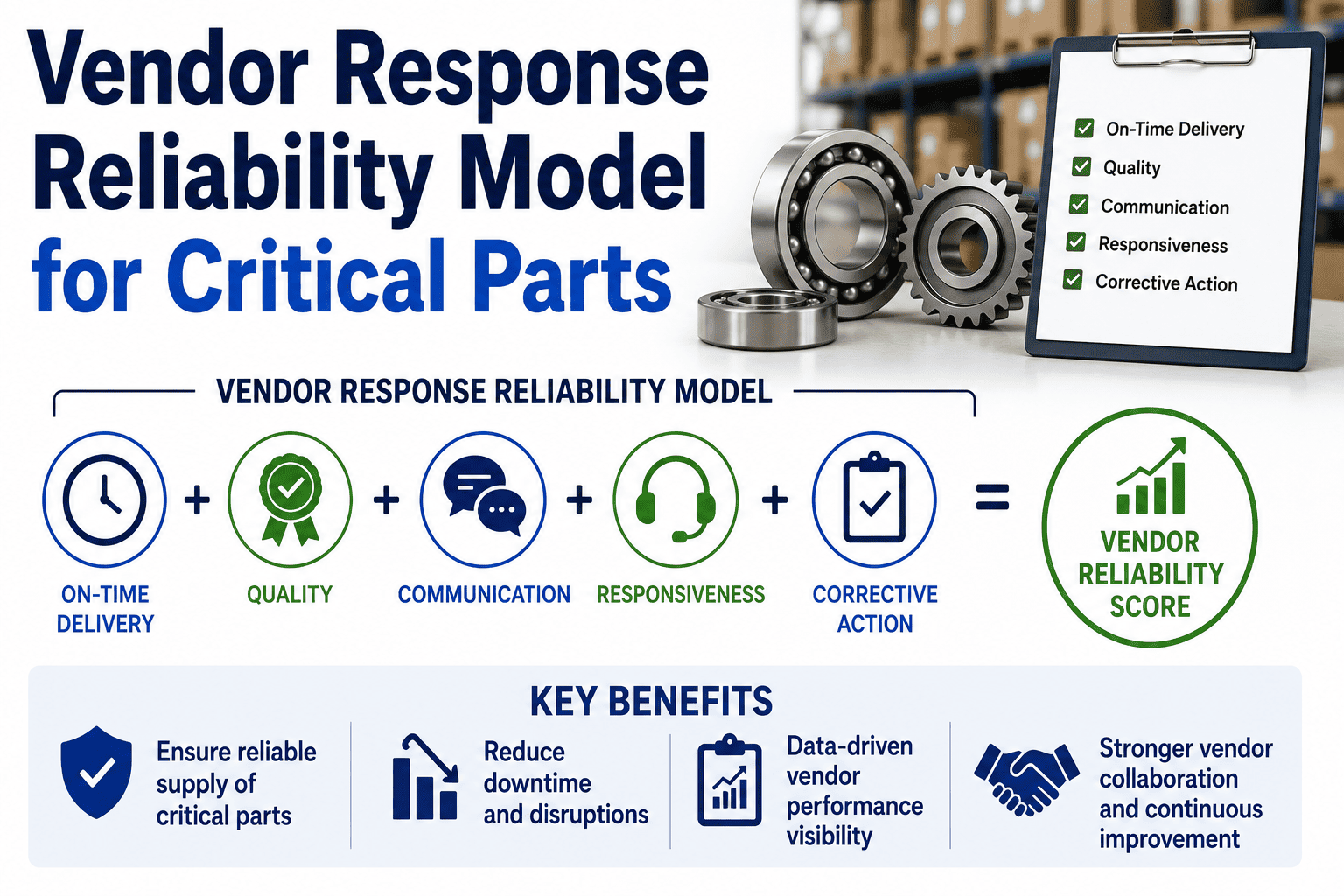
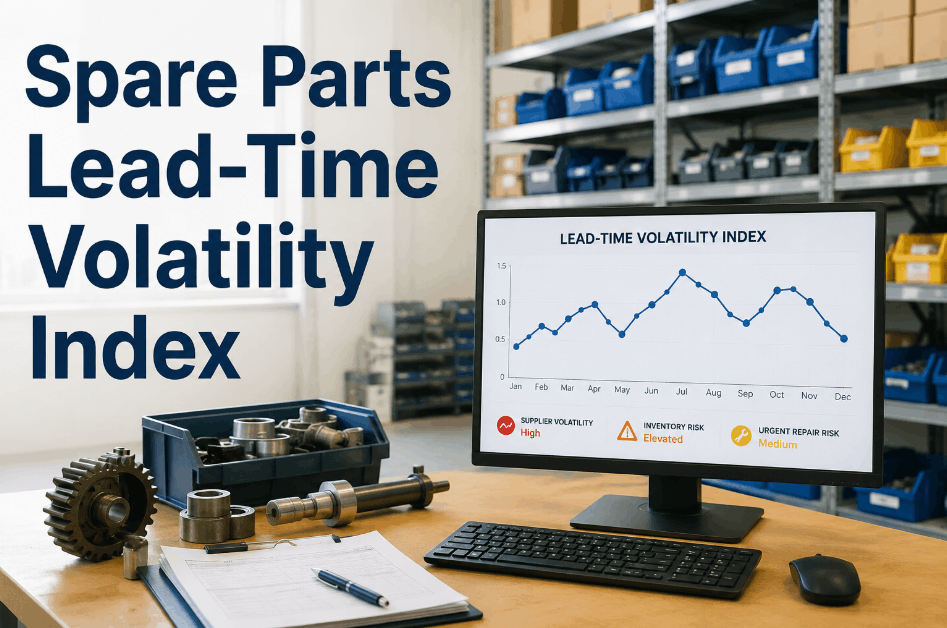
A paper-based or spreadsheet substitution log fails at the point of decision — the technician standing at the parts counter under production pressure has no visibility into whether the substitute part is pre-approved, what the approval tier requires, or who the sign-off authority is. Modern substitution control integrates approval gates directly into the CMMS work order workflow, so the substitute part number triggers the correct review path automatically. Inventory visibility shows stock levels for preferred and pre-approved alternates in real time. Vendor risk flags highlight single-source dependencies before they create stockout-driven substitution pressure. Sign Up Free to connect OxMaint's substitution approval workflow to your parts inventory and purchasing system — eliminating the gap between stockout detection and approved alternate identification.
CMMS Approval Gates
94%
Work order closure compliance with substitution gate enforcement
Substitute part number entered on a work order automatically triggers the correct approval tier based on component criticality. Work order cannot close until the approval chain is complete.
Inventory Visibility
87%
Reduction in emergency substitutions with real-time stock alerts
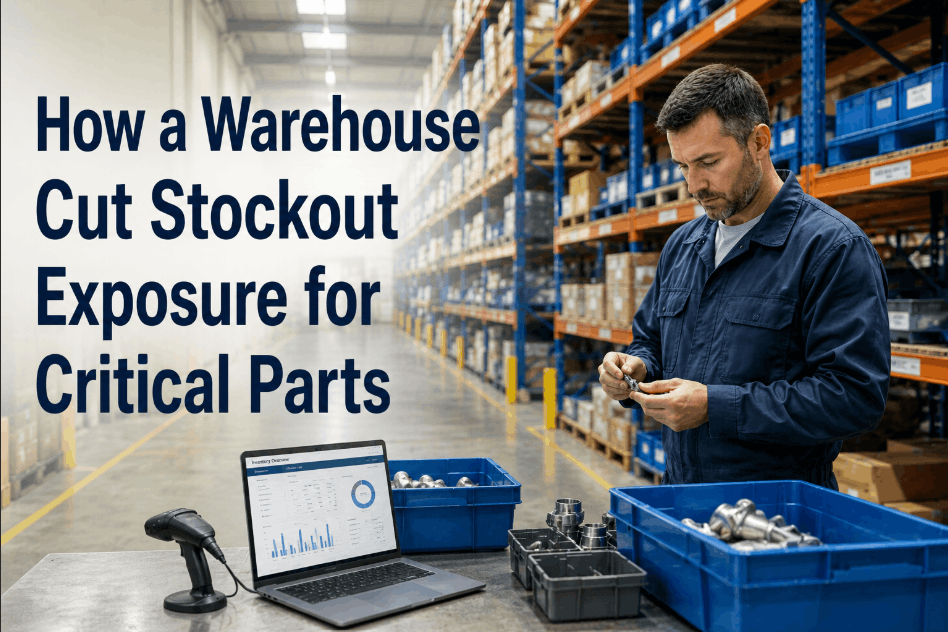
Pre-approved alternate parts listed alongside preferred stock in inventory. Low-stock alerts on preferred parts trigger procurement before stockout forces unplanned substitution.
Datasheet Attachment
100%
Audit trail completeness with CMMS document linking
Substitute equivalency datasheets attached directly to the work order and asset record. Every substitution decision has a documented technical basis retrievable at any future audit.
Vendor Risk Flags
79%
Reduction in single-source stockout events with vendor diversification alerts
Single-source dependencies flagged in the parts register. Procurement triggered to qualify alternate vendors before supply disruption creates substitution pressure on critical components.
"
We had three warranty claim rejections in one year — all traced back to undocumented part substitutions that weren't in the CMMS. We built a tiered approval framework in OxMaint, linked every substitute to a datasheet, and ran the approval gate through the work order. No warranty rejections in the following 18 months. The framework paid for itself on the first claim it prevented.
Maintenance Engineering Manager — Process manufacturing facility, 340 assets under management
Root Causes of Substitution Control Failures
Substitution control failures cluster around three root causes: stockout pressure that bypasses the formal review path, absence of a pre-approved alternate list that forces improvised decisions, and CMMS records that capture the substitute part number without capturing the approval chain. The bar chart below shows the distribution of root causes across engineering compliance audit findings related to part substitution in industrial plant operations. Book a Demo to see how OxMaint's substitution workflow addresses each root cause category with a specific control point.
Part Substitution Control Failure — Root Cause Distribution (%)
No pre-approved alternate list
78%
Stockout pressure bypassing review
71%
No CMMS approval chain record
65%
No criticality-based tier classification
54%
Verbal approvals not transcribed
46%
Datasheet equivalency not verified
38%
Control Every Substitution Decision Before It Controls Your Reliability Programme.
OxMaint enforces part substitution approval gates per asset class, per criticality tier — CMMS-integrated, audit-ready, and free to start.
Frequently Asked Questions
What is a part substitution approval framework in maintenance engineering?
A tiered review process that routes substitute part decisions through the correct approval level based on component criticality — from technician sign-off for consumables to multi-level engineering review for safety-critical components.
Sign Up Free to configure OxMaint's substitution approval tiers for your plant.
How does a CMMS enforce part substitution approval gates?
When a substitute part number is entered on a work order, the CMMS identifies the component criticality tier and holds the work order open until the required approval chain is completed and documented. The work order cannot close without a compliant approval record.
What is a pre-approved substitution list and how is it maintained?
Engineering-vetted alternate part numbers stored in the CMMS against each preferred part. When a pre-approved alternate is selected, the work order approval is auto-completed. The list requires quarterly review to stay current with vendor and spec changes.
How does part substitution control reduce audit findings?
Every substitution generates a CMMS record linking the substitute part, the approval authority, the datasheet reference, and the date — creating a complete audit trail that satisfies ISO, OSHA, and insurance review requirements without manual assembly.
Can OxMaint integrate substitution approval with inventory and procurement?
Yes — OxMaint links substitution approvals to inventory visibility and purchase order triggers. Low-stock alerts on preferred parts initiate procurement before stockout forces unplanned substitution decisions under pressure.
Book a Demo to see the full workflow.
Build Your Substitution Approval Framework — Before the Next Stockout Forces the Decision.
OxMaint automates approval tiers, pre-approved lists, and audit trails for every part substitution across your plant network.