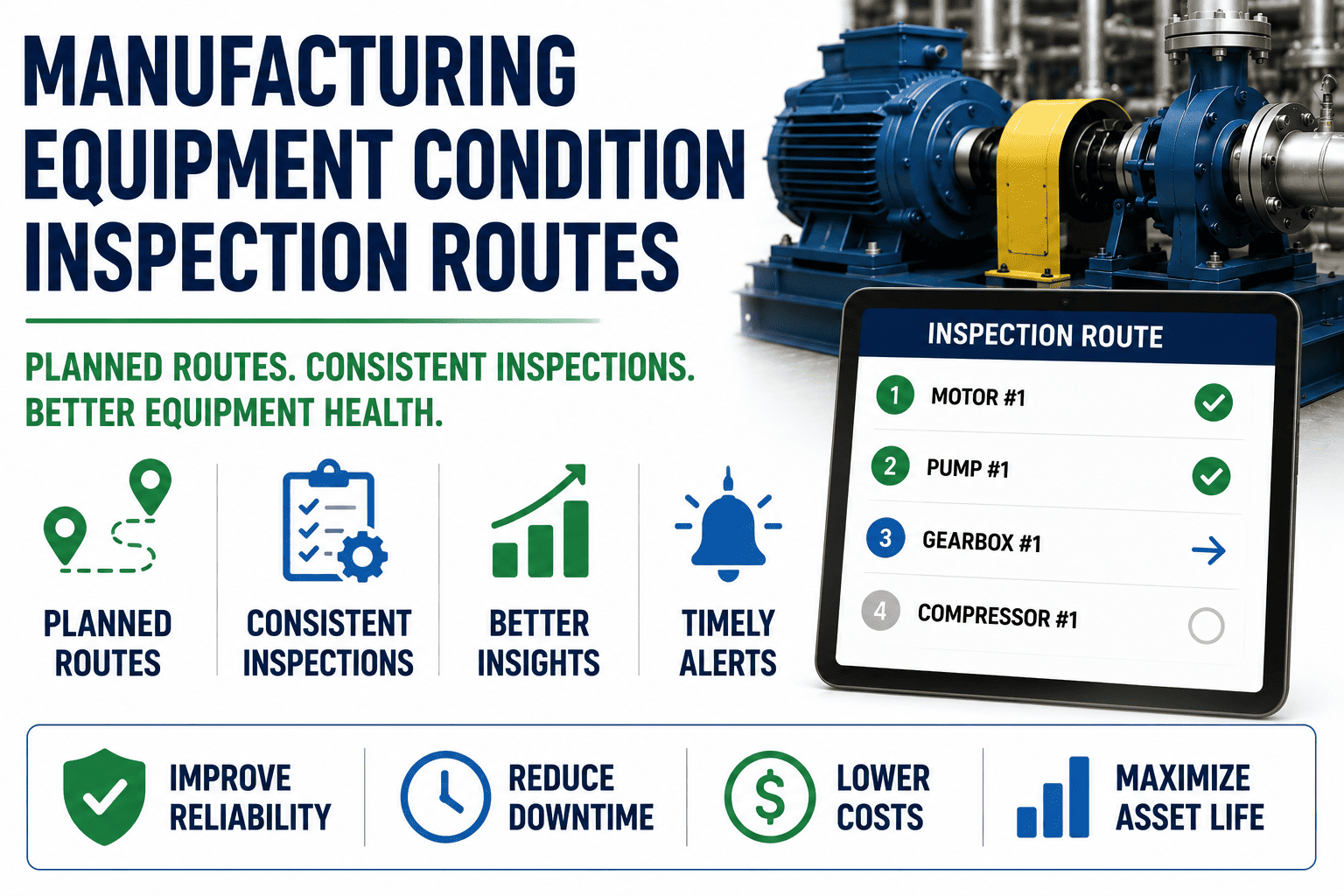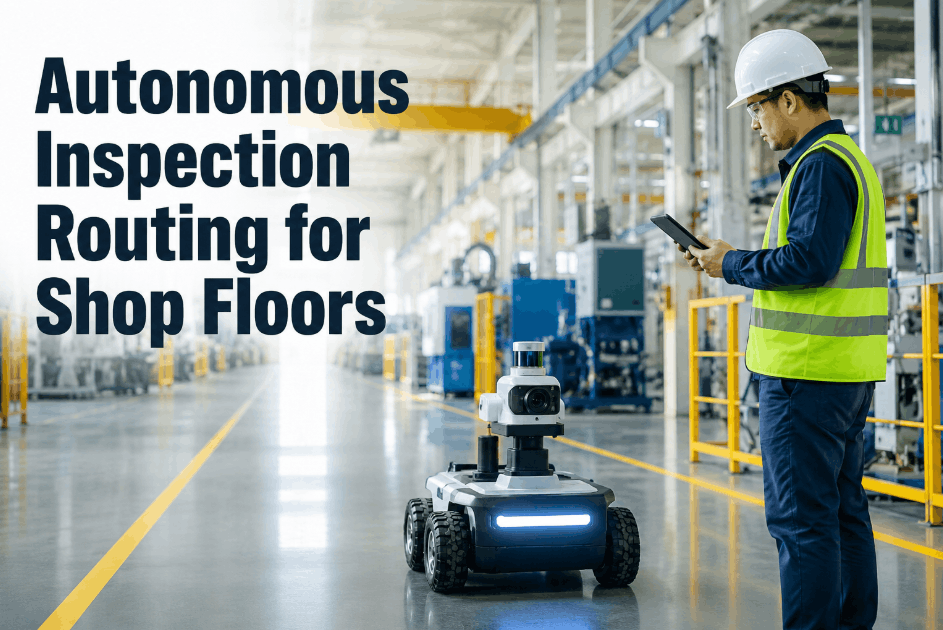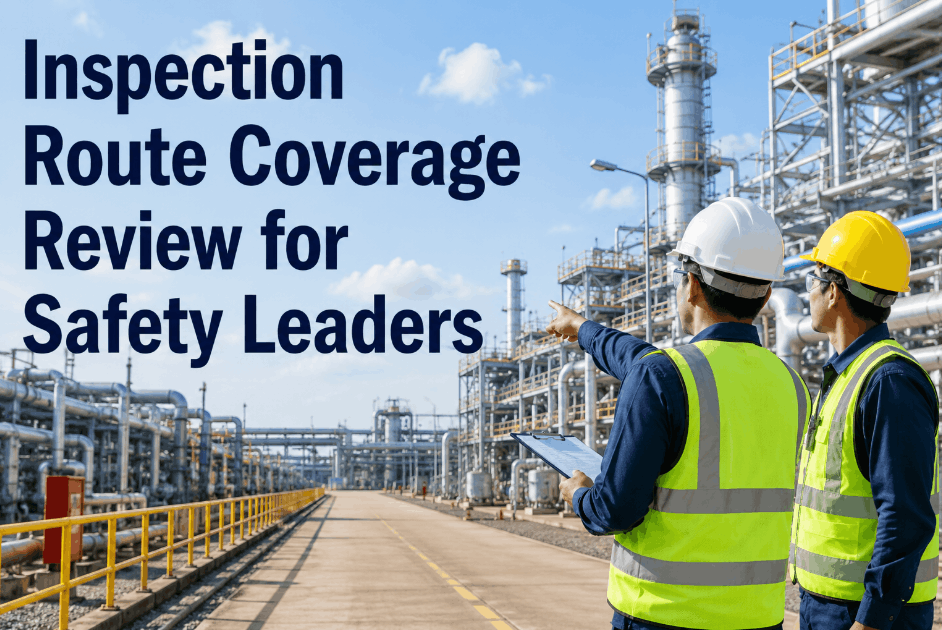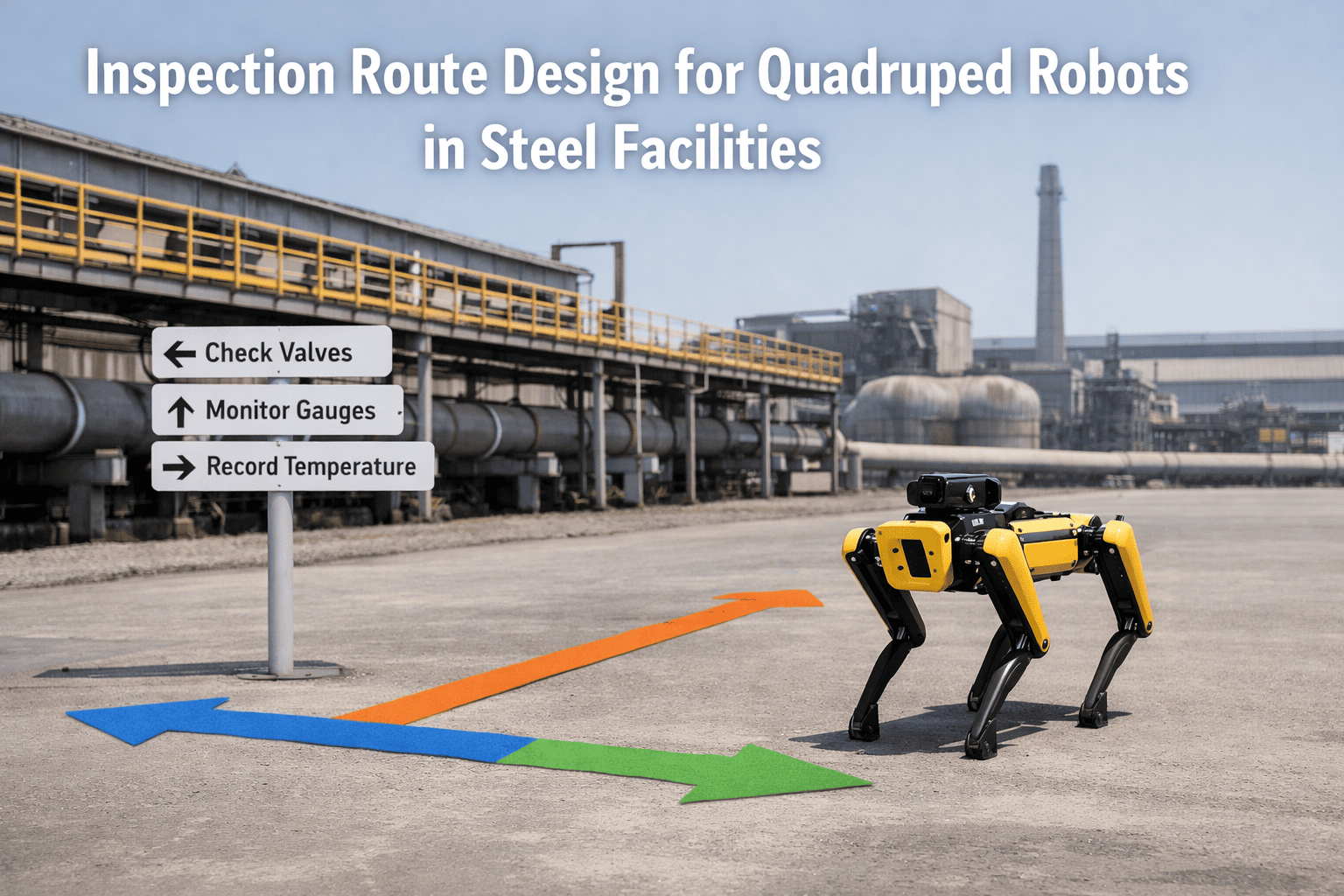
Line supervisors walking unstructured inspection routes miss the same abnormal conditions every shift — not because they are inattentive, but because the highest-risk check points are buried at the end of habitual paths that developed around convenience rather than consequence. Autonomous inspection routes are systematically designed supervisor walkways that sequence check points by risk priority, ensuring that safety-critical observations, condition checks on high-consequence assets, and abnormality detection opportunities come first — before time pressure or fatigue reduces inspection quality. Without structured route design, abnormal conditions accumulate in plain sight until a breakdown, a safety event, or a quality failure makes them impossible to miss. Sign Up Free to start managing supervisor inspection routes with digital work orders and complete condition capture. Oxmaint AI helps operations and maintenance teams design risk-based inspection routes, dispatch daily rounds via mobile, and capture condition findings that build an asset health picture over time. Book a Demo to see how Oxmaint supports structured inspection route programs across production line assets.
Stop Letting Abnormal Conditions Hide in Plain Sight
Oxmaint AI designs and dispatches risk-priority inspection routes for line supervisors — capturing condition findings, abnormality flags, and asset health data that surface problems before they become failures.
Why Unstructured Inspection Routes Miss the Highest-Risk Conditions
Gap #1
Convenience-Based Routing
Supervisors develop inspection habits around ease of access rather than consequence of failure — consistently checking low-risk assets thoroughly while high-consequence check points receive cursory attention or are skipped entirely.
Gap #2
No Condition Capture Standard
Supervisor rounds produce verbal reports or paper notes with inconsistent condition descriptions — making it impossible to identify deteriorating asset trends or compare findings across shifts and supervisors.
Gap #3
Abnormality Without Escalation
Supervisors observe abnormal conditions during rounds but have no structured escalation path — conditions are noted mentally or on paper and forgotten before a work order is raised or maintenance is notified.
Gap #4
No Route Compliance Tracking
Inspection routes are never verified for completion — supervisors may skip entire sections under production pressure with no system record of the missed observation or the gap in asset health monitoring.
Gap #5
Risk Priority Not Sequenced
Check point sequences are designed for physical convenience rather than inspection priority — high-consequence assets at the far end of a route receive degraded attention after lower-risk checks at the beginning consume supervisor time.
Gap #6
No Cross-Shift Pattern Visibility
Condition findings from different supervisors and shifts are never aggregated — recurring abnormalities that appear across multiple rounds are invisible until they generate a failure, because no system connects the distributed observations.
How Oxmaint AI Supports Risk-Priority Inspection Route Design
01
Route and Asset Register
Build a structured inspection route register in Oxmaint with risk-priority sequencing, check point definitions, and condition assessment criteria for each asset on the supervisor walkway.
→
02
Daily Round Dispatch
Oxmaint generates shift inspection work orders and delivers them to line supervisors via mobile — with risk-sequenced check point lists, condition assessment fields, and abnormality escalation prompts pre-loaded.
→
03
Condition Finding Capture
Supervisors record condition ratings, abnormality descriptions, and photo evidence directly in the Oxmaint mobile app — with immediate work order generation for conditions requiring maintenance response.
→
04
Asset Health Trend Reporting
Oxmaint aggregates inspection findings across shifts and supervisors to identify recurring abnormalities, deteriorating asset condition trends, and check points generating disproportionate defect discoveries.
What Oxmaint Captures Per Supervisor Inspection Round
Route Compliance Data
Check point completion verified per inspection round
Risk-priority sequence adherence tracked per supervisor
Missed check points flagged for route audit follow-up
Condition Records
Asset condition ratings captured at each check point
Abnormality descriptions and photo evidence recorded
Supervisor digital signoff on every inspection round
Escalation Tracking
Immediate work order generation from abnormality findings
High-consequence conditions escalated for priority response
Escalation status tracked from finding to resolution
Operational Outcome
Inspection records exportable for compliance and audit review
Recurring abnormalities identified before failure events
Asset health trends built automatically from round data
62%
Of abnormal conditions found during structured rounds were not identified by unstructured supervisor walkways on the same assets
2.5×
More defect discoveries per inspection hour when supervisor routes are sequenced by risk priority rather than physical convenience
48hrs
Typical Oxmaint deployment time from setup to first structured inspection route work orders active in field
45days
Average time to first recurring abnormality trend identification after Oxmaint inspection route tracking is deployed
Oxmaint AI vs Standard CMMS for Supervisor Inspection Route Management
Standard CMMS — Limited Inspection Route Visibility
Inspection tasks tracked but no risk-priority route sequencing or check point compliance verification
Condition findings captured as free text notes with no structured assessment criteria or trend analysis
No cross-shift aggregation — recurring abnormalities from multiple rounds remain invisible in disconnected records
Abnormality escalation relies on supervisor memory rather than automatic work order generation from findings
Missed check points generate no alert — route gaps accumulate undetected between management reviews
No asset health trend reporting — inspection data sits in closed work orders with no pattern analysis
Oxmaint AI — Inspection Route Compliance Tracked in Real Time
Risk-priority check point sequences dispatched to supervisors via mobile app — Sign Up Free
Structured condition assessment fields enforced at each check point before round closure
Automatic work order generation triggered by abnormality findings during inspection rounds
Cross-shift condition aggregation identifies recurring abnormalities across supervisor rounds
Missed check points flagged immediately for supervisor and operations manager review
Asset health trend reports generated automatically from cumulative inspection data — Book a Demo
6 KPIs to Measure Inspection Route Effectiveness for Line Supervisors
These KPIs help operations and maintenance teams confirm that structured inspection routes are improving abnormality detection rates and reducing asset health surprises across production lines. Book a Demo to see how Oxmaint calculates all six automatically across your inspection route register.
KPI 01
Route Completion Rate
Percentage of inspection rounds with all scheduled check points completed per shift. Low completion rates identify production pressure patterns or route design problems that leave high-risk assets uninspected.
Route Compliance
KPI 02
Abnormality Discovery Rate
Number of abnormal conditions identified per inspection round over time. Improving discovery rates after route restructuring confirm that risk-priority sequencing is exposing conditions that convenience-based routes missed.
Detection Quality
KPI 03
Abnormality Escalation Rate
Percentage of identified abnormalities converted to maintenance work orders within the target escalation window. Low escalation rates indicate findings are being noted but not actioned before conditions deteriorate further.
Response Conversion
KPI 04
High-Risk Check Point Coverage Rate
Percentage of high-consequence check points inspected on time across all shifts. Coverage gaps on safety-critical or high-consequence assets represent unquantified operational risk accumulating between observations.
Risk Coverage
KPI 05
Recurring Abnormality Rate
Percentage of abnormalities appearing at the same asset across multiple consecutive inspection rounds. High recurrence rates identify chronic conditions requiring root cause investigation rather than repeated observation.
Chronic Conditions
KPI 06
Inspection Record Completeness Rate
Percentage of inspection rounds with all required condition fields, supervisor signoff, and timestamps completed before work order closure. Incomplete records prevent cross-shift trend analysis and compliance verification.
Record Integrity
Industries Using Oxmaint for Supervisor Inspection Route Management
Automotive Assembly
Risk-Priority Inspection Routes for Assembly Line Supervisors
Automotive assembly plants use Oxmaint to design and dispatch structured inspection routes for line supervisors — ensuring safety-critical check points on conveyors, robots, and press equipment are observed first on every shift. Sign Up Free for your operations team.
Food and Beverage
Hygiene and Condition Inspection Routes for F&B Lines
Food and beverage producers use Oxmaint to manage structured supervisor inspection routes that sequence hygiene checks, equipment condition assessments, and food safety observations by risk priority across production shifts. Book a Demo for your food safety program.
Pharmaceuticals
GMP Inspection Rounds for Regulated Manufacturing
Pharmaceutical manufacturers use Oxmaint to dispatch structured GMP inspection routes that guide supervisors through environmental monitoring, equipment condition checks, and facility observations required by regulatory compliance programs.
Heavy Manufacturing
Equipment Condition Routes for Heavy Production Lines
Heavy manufacturing facilities use Oxmaint to structure supervisor inspection routes around high-consequence equipment — ensuring that press systems, overhead cranes, and hydraulic assets receive consistent condition observation across every operating shift.
Your Supervisors Walk the Line Every Shift. Make Sure They See What Matters.
Oxmaint AI helps operations teams design risk-priority inspection routes, capture condition findings digitally, and build the asset health picture that prevents abnormal conditions from hiding in plain sight. Book a Demo to see structured inspection route management applied to your production line assets.
Frequently Asked Questions
What are autonomous inspection routes and why do they matter for line supervisors?
Autonomous inspection routes are risk-prioritised supervisor walkways that sequence check points by consequence of failure rather than physical convenience. They ensure high-risk assets are observed first every shift, before time pressure degrades inspection quality on the most important check points.
How does Oxmaint support structured supervisor inspection rounds?
Oxmaint dispatches shift inspection work orders with risk-sequenced check point lists to supervisor mobile devices, enforces structured condition assessment fields at each point, and automatically generates maintenance work orders from abnormality findings.
Can Oxmaint identify recurring abnormalities across multiple inspection shifts?
Yes. Oxmaint aggregates condition findings across shifts and supervisors to flag assets with recurring abnormalities — enabling maintenance teams to initiate root cause investigation before chronic conditions generate failures.
Does Oxmaint track inspection route completion compliance?
Yes. Oxmaint records check point completion per round and flags missed observations for management review — ensuring that production pressure does not silently eliminate high-risk check points from supervisor routes.
How quickly can Oxmaint be deployed for a structured inspection route program?
Most facilities have Oxmaint dispatching structured inspection routes within 48 hours of setup. Route check points and risk priorities can be configured from existing inspection sheets, and supervisors can begin capturing digital condition findings immediately via mobile app.
Know Your Highest-Risk Assets Are Checked First. Every Shift.
Oxmaint AI tracks inspection route compliance, captures condition findings, and builds the digital asset health records your operations and maintenance teams require — across every check point on every production line in your facility.