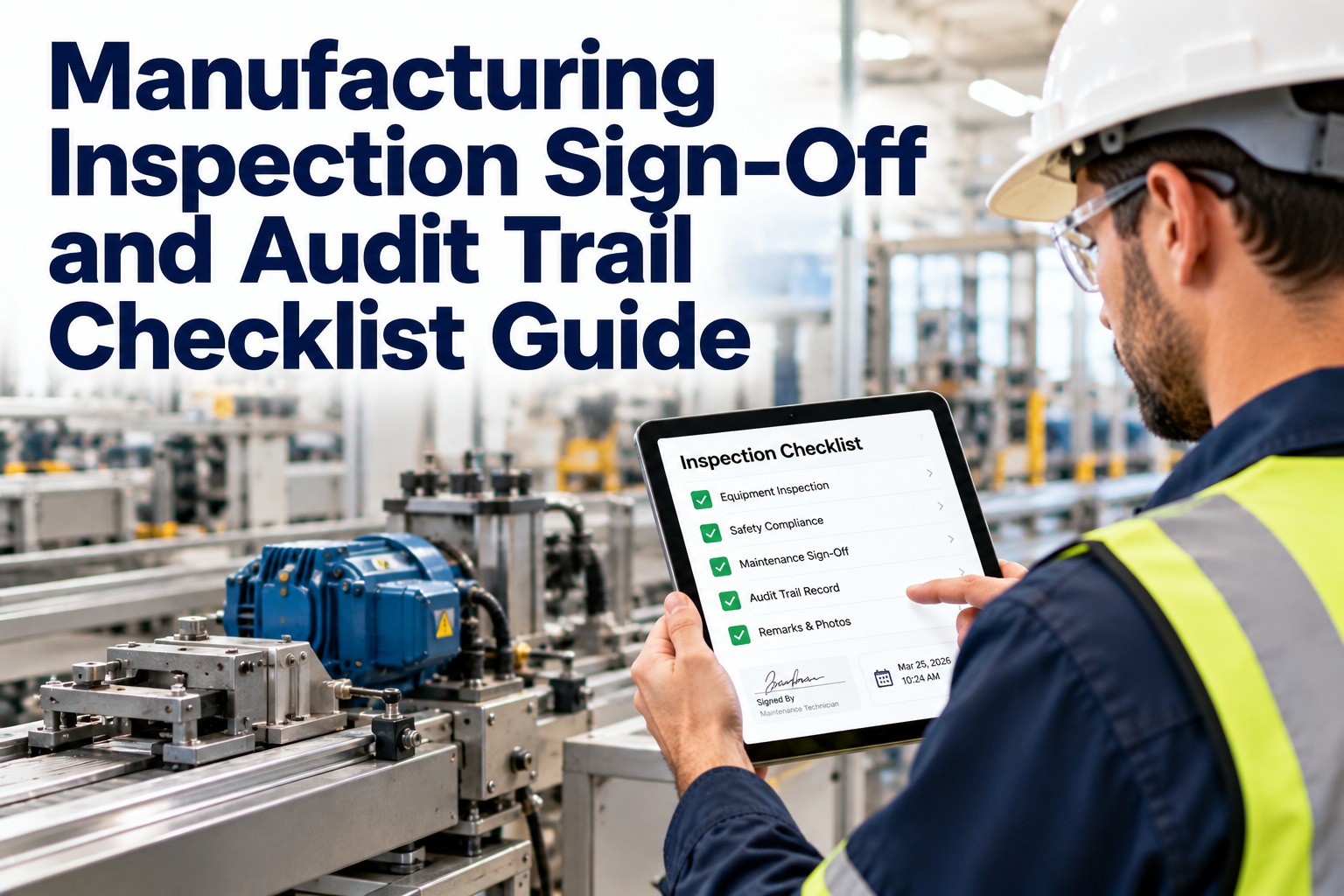
Inspection route coverage is one of those gaps that stays invisible until a safety incident exposes it. A mid-size process plant with five operational zones found itself with a persistent problem: safety inspections were being completed on paper, but coverage was uneven, route assignments were ambiguous, and no one could verify whether a technician had physically reached every checkpoint. Compliance records existed. But the data behind them was incomplete, inconsistent, and impossible to audit with confidence. If your plant is managing safety oversight with disconnected routes and incomplete coverage data, Sign Up Free to see how Oxmaint structures inspection route management from assignment to evidence closure — or Book a Demo with an operations specialist.
Inspection Coverage · Route Design · Field Verification
Close the Gaps in Safety Inspection Route Oversight
Route-level coverage tracking, checkpoint verification, field evidence capture, and compliance closure — OxMaint helps safety leaders know every zone was inspected, not just that a form was submitted.
Plant Profile
The Operation: Five Zones, Fragmented Routes, and No Coverage Verification
Plant Overview
IndustryProcess manufacturing — five operational zones, mixed hazard classifications
Team18 safety technicians, 2 safety supervisors, 1 compliance coordinator
Inspection Volume200–280 inspection checkpoints completed per week across all zones
Prior SystemPaper route sheets, manual signoffs, no digital checkpoint tracking
Oxmaint FeaturesInspection Route Management · Checkpoint Verification · Field Evidence Capture · Signoff Discipline · Audit Trail · Compliance Record Completeness
Baseline Pressure Points
41%
Of inspection routes had at least one checkpoint with no verifiable completion evidence at month-end audit
3.1×
Time required to reconstruct inspection coverage records versus target during compliance review cycles
29%
Of high-risk zone checkpoints reported as complete without field-verified evidence or supervisor signoff
Root Cause Analysis
Why Inspection Coverage Kept Falling Short — And Why Route Blind Spots Persisted
A structured review of 90 days of inspection logs and compliance submissions identified four structural gaps behind the coverage failures. The plant was not short on inspection activity — technicians were completing rounds on schedule. The problem was structural: routes lacked checkpoint-level accountability, field evidence was not captured at the point of inspection, and no system connected route completion to supervisor verification or compliance records. Sign Up Free to map your own inspection coverage gaps — or Book a Demo to see how Oxmaint structures checkpoint accountability for your routes.
38%
No Checkpoint-Level Tracking — Route Completion Was Binary
Inspection records captured whether a route was completed, not whether each checkpoint within it was physically reached. Partial route completions appeared as full compliance in monthly records.
26%
Field Evidence Not Captured at Point of Inspection
Technicians completed paper sheets at the end of their round, not at each checkpoint. Findings, observations, and condition data were lost or generalized before entry — reducing record integrity across high-risk zones.
22%
Signoff Discipline Not Enforced by Route Design
Supervisor review was a manual step with no system trigger. Routes closed without supervisor acknowledgment regularly — leaving compliance submissions without the verification layer regulators required.
14%
Route Design Not Updated as Operational Zones Changed
New equipment installations and zone reconfigurations were not reflected in active inspection routes. Blind spots accumulated over time as the physical environment changed but route coverage did not.
The Solution
How Oxmaint Rebuilt Inspection Route Coverage Across All Five Operational Zones
The plant deployed Oxmaint without adding safety headcount or restructuring its compliance reporting cycle. The platform replaced paper route sheets with digital inspection routes that tracked completion at the checkpoint level — capturing field evidence, condition data, and technician verification at the point of inspection, not at the end of the shift. Supervisor signoff was embedded as a required step in route closure, and compliance records populated automatically from completed checkpoint data. Route design was updated to reflect current zone configurations, and coverage gaps identified through historical data were eliminated in the first review cycle. Book a Demo to see how the platform rebuilds inspection route coverage for your operational environment.
01
Checkpoint-Level Route Tracking and Completion Verification
Each inspection route was broken into individual checkpoints with required completion steps. Technicians verified each stop digitally in the field — replacing binary route-complete flags with granular checkpoint evidence that captured actual inspection activity.
02
Field Evidence Capture at the Point of Inspection
Findings, observations, and condition records were entered at each checkpoint during the inspection — not reconstructed afterward. Photo attachments, condition ratings, and field notes were linked directly to the checkpoint record, creating a defensible evidence chain for every route.
03
Enforced Supervisor Signoff and Route Closure Discipline
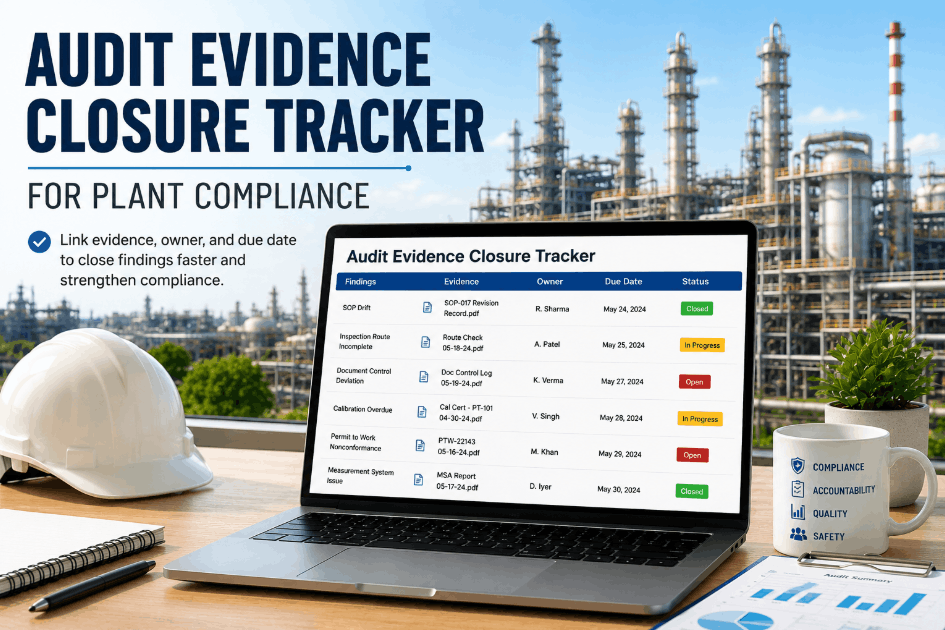
Route closure required supervisor acknowledgment before compliance records were marked complete. Signoff prompts were system-triggered at route completion — removing the manual review step as a gap in the compliance chain and creating a consistent audit trail across all zones.
04
Route Design Aligned to Current Zone Configuration
Active inspection routes were reviewed and updated to reflect current plant layout, equipment additions, and zone reclassifications. Coverage gaps identified through 90-day route analysis were addressed before the next inspection cycle, ensuring no high-risk checkpoint was missed going forward.
Results at 90 Days
What Coverage Numbers Looked Like Three Months After Deployment
83%
Drop in routes with unverified checkpoints at month-end audit — from 41% to 7% of routes
91%
Reduction in high-risk checkpoint completions lacking field-verified evidence
68%
Faster compliance record reconstruction during audit cycle — from 3.1× to 1.0× target time
+44%
Increase in routes closed with verified supervisor signoff before compliance submission
100%
Checkpoint-level documentation compliance — up from ~59% under paper route system
4.1×
ROI on platform cost within 90 days from reduced audit rework and compliance exposure
| Metric |
Before Oxmaint |
90 Days After |
Change |
| Routes with unverified checkpoints (month-end) |
41% |
7% |
-83% |
| High-risk checkpoints without evidence |
29% of completions |
3% of completions |
-91% |
| Compliance record reconstruction time |
3.1× target |
1.0× target |
-68% |
| Routes with supervisor signoff at close |
38% |
82% |
+44% |
| Checkpoint documentation compliance |
~59% (paper) |
100% (digital) |
Full compliance |
| Audit cycle preparation time |
18 hrs avg |
6 hrs avg |
-67% |
Key Business Impact
What Closing Inspection Route Gaps Means for Compliance-Dependent Operations
"Inspection route coverage failures are almost always invisible until they become liability events. The most common pattern I see is a plant where the inspection program looks complete on paper — routes are assigned, rounds are happening, forms are getting filled — but there's no real accountability at the checkpoint level. No one can tell you if a technician actually walked past a piece of equipment, what condition it was in when they did, or whether anyone reviewed the results before the record was filed. Getting to a state where every checkpoint has verified evidence and every route has a closed signoff chain is not a headcount problem. It's a system design problem. The right platform makes checkpoint accountability the default, not the exception."
Marcus Okafor, Safety Operations and Compliance Systems Advisor
14 years process and discrete manufacturing safety programs · Former safety systems lead, multi-site operations · Specialist in inspection route design, field verification architecture, and regulatory audit readiness
Route Coverage · Checkpoint Accountability · Audit Readiness
Replace Paper Routes With Verified Inspection Coverage
Checkpoint-level tracking, field evidence capture, enforced supervisor signoff, and route-to-compliance closure — OxMaint gives safety leaders full coverage visibility without adding headcount or restructuring inspection programs.
FAQs
Frequently Asked Questions
How does Oxmaint improve inspection route coverage for safety teams?
Oxmaint tracks completion at the individual checkpoint level, not just at the route level. Each checkpoint requires digital verification in the field, so coverage gaps are visible in real time — not discovered during audit.
Can Oxmaint enforce supervisor signoff as part of route closure?
Yes. Supervisor acknowledgment is embedded as a required step before a route is marked complete. Routes cannot close without it, creating a consistent signoff chain across all inspection programs.
Does Oxmaint support field evidence capture at each checkpoint?
Yes. Technicians can attach photos, condition ratings, and field notes directly to individual checkpoints during the inspection round — not after the shift. Every checkpoint builds its own evidence record.
How does Oxmaint help with regulatory audit readiness?
Compliance records populate automatically from completed checkpoint data. Audit trail, signoff history, and field evidence are all accessible in one place — reducing record reconstruction time from days to hours.
How quickly does route coverage improve after deploying Oxmaint?
Most plants see measurable improvement in checkpoint verification rates within the first two inspection cycles. Full signoff compliance and coverage normalization typically stabilize within 60 days.
Every Checkpoint Verified Is a Liability Gap Closed
Give Your Safety Program the Route Coverage Structure It Needs
Oxmaint brings checkpoint-level tracking, field evidence capture, enforced signoff discipline, and compliance-ready audit trails to safety inspection programs — with no additional headcount required.