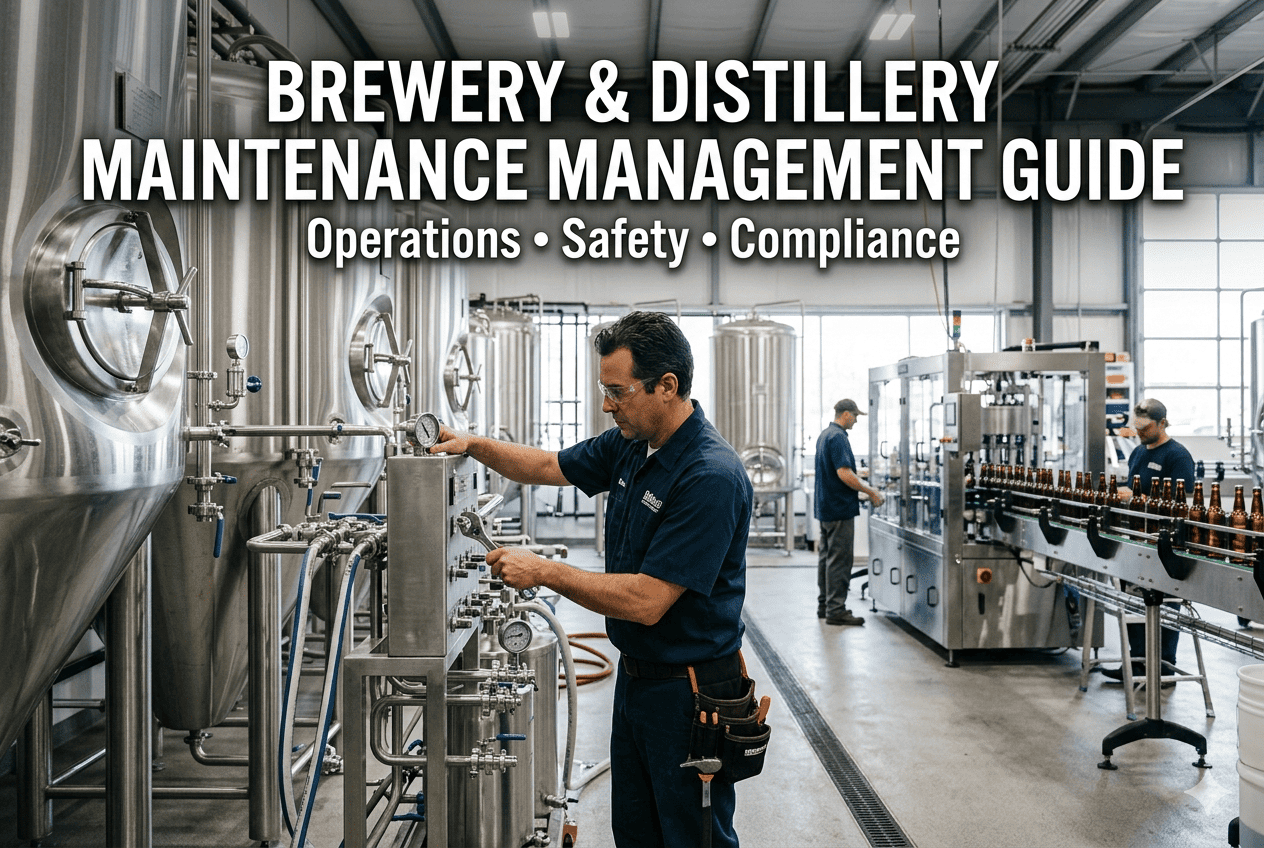
A 40-BBL fermenter at a well-regarded Pacific Northwest craft brewery tested positive for Lactobacillus on a Tuesday morning. Three batches of pale ale — 120 barrels, about $48,000 at wholesale — had to be dumped. The root cause wasn't a recipe change, a yeast strain, or a new ingredient. It was a CIP spray ball that had been partially blocked for eleven days. Nobody noticed because nobody was tracking spray-ball rotation speed or caustic return temperature on that specific vessel. The last documented CIP validation lived in a notebook in the cellar manager's desk. Beer spoilage rarely announces itself — it compounds quietly through your PM blind spots, which is exactly why connected maintenance built for beverage production matters more than any brewhouse upgrade you can sign up to try for free.
The Beverage Production Reality — 2026
Craft Brewing Is a $27.8B Market Running on Sanitation, Stainless Steel, and Tight Margins
9,736
U.S. craft breweries in 2025
Generating $77.1B in revenue across a maturing, competitive market
$27.8B
U.S. craft beer retail value
With margins compressed by rising input costs and softer demand
15–20%
Yield loss on basic fermenters
Without temperature control and validated CIP cycles
21 CFR 117
FSMA brings beer under FDA
Preventive Controls Rule applies to breweries as food facilities
The Production Journey — Where Maintenance Protects Every Batch
Every pint and every bottle of spirit passes through seven distinct production stages, and each stage has its own equipment, its own failure modes, and its own sanitation requirements. A CMMS that treats the brewery or distillery as a single list of assets misses the point — the real work is protecting the batch at every handoff.
01
Milling
Grain mill, auger, hopper
Roller alignment wears over thousands of bushels, creating inconsistent grist crush and affecting extract yield. Weekly roller gap checks and dust-collection inspections are the unglamorous but critical PMs.
02
Mashing
Mash tun, rake motor, steam jacket
Rake arm motor load, steam jacket integrity, and false-bottom cleanliness drive mash efficiency. A 2% drop in efficiency on a mid-sized line costs more than a full year of CMMS investment in a single quarter.
03
Boiling / Whirlpool
Kettle, calandria, vapor stack
Scale buildup on heat-transfer surfaces silently extends boil-off time and increases gas consumption. Quarterly descaling and annual kettle entry inspections are non-negotiable for energy efficiency.
04
Fermentation
Fermenters, glycol jackets, blow-off
Temperature deviation of 2°C can ruin an IPA's ester profile. Glycol jacket leaks, dip-tube biofilm, and pressure-relief valve integrity are the three silent killers of brewery quality.
05
Distillation (Spirits)
Pot/column still, condenser, parrot
Condenser fouling reduces reflux ratio and product consistency. For distilleries, still gasket integrity and thermometer calibration are TTB compliance requirements — not nice-to-haves.
06
Maturation / Filtration
Brite tanks, DE filter, membranes
Filter differential pressure trending tells you about membrane life long before catastrophic blow-through. Brite tank carbonation-stone maintenance and pressure transducer calibration protect finish quality.
07
Packaging
Filler, capper, labeler, conveyor
The bottling line is where a clean beer still gets oxidized. DO pickup on the filler, CO₂ counter-pressure, capper torque, and seal integrity are the four variables that decide shelf stability.
The CIP Triangle — Why Your Cleaning Cycle Is Only as Strong as Its Weakest Corner
Every clean-in-place cycle is a function of three interacting energies — get any one of them wrong and the whole cleaning validation fails. This is the framework every brewery and distillery CIP audit comes back to, and the reason why scheduling CIP based on "time since last clean" is a lagging indicator at best.
C
Chemical Energy
Caustic concentration (typically 1–2% w/v sodium hydroxide), acid phase for beer stone and scale, sanitizer contact time. Wrong concentration = incomplete cleaning or wasted chemical and rinse water.
Target: 1–2% NaOH, 120–180°F
T
Thermal Energy
Caustic solutions clean most effectively between 49–82°C (120–180°F). Heat loss across long CIP loops must be tracked; a return temperature 15°F below supply signals a problem that recent supply-side instrumentation alone won't catch.
Target: 15°F supply-to-return delta max
M
Mechanical Energy
Spray ball rotation speed, supply pressure, flow rate, and coverage pattern. A cleaning machine rated at 5 RPM at 125 PSI needs 9 minutes for 45 revolutions — less is under-cleaning, more is just waste.
Target: 5 RPM @ 125 PSI, 9 min caustic
Missing any one corner of the triangle means the cleaning validation fails — regardless of how disciplined the other two are. Tracking all three requires a maintenance system that logs parameters, not just completion checkboxes.
Beverage-Grade CMMS
Validated CIP Cycles. Documented Temperature Logs. FSMA-Ready Records.
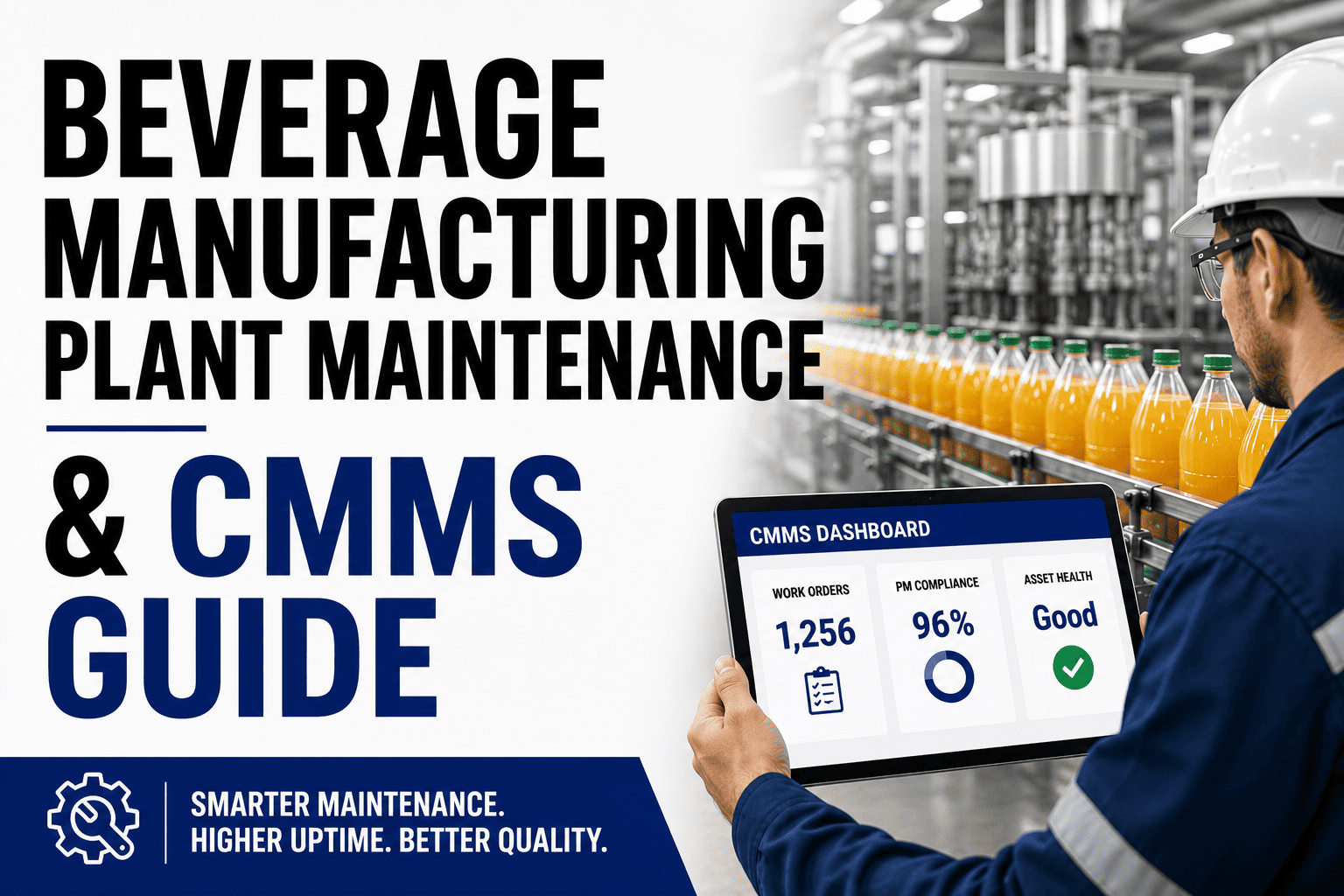
Oxmaint turns every CIP cycle, every fermenter temperature check, and every filler gasket replacement into a timestamped digital record — so your next FDA inspection, TTB audit, or quality investigation takes an hour, not three days.
Equipment Maintenance Intervals — The Working Cheat Sheet
Every experienced brewer and distiller has a mental model of what gets serviced when. The trouble is when that model lives in one person's head instead of the team's system. Here's the reference schedule most well-run beverage plants follow — the exact cadence Oxmaint ships with as a starter template for new customers.
| Equipment class |
Daily check |
Weekly PM |
Monthly / Quarterly |
Annual overhaul |
| Fermenters |
Visual leak check, glycol supply temp, CO₂ blow-off |
Dip-tube & gasket inspection, PRV test |
Spray-ball rotation audit, temp probe calibration |
Full vessel entry, coating inspection, recert |
| Mash & Kettle |
Steam pressure log, rake motor amps |
Strainer plate cleaning, agitator lube |
Descaling, heat-exchanger plate inspection |
Pressure vessel recert, jacket integrity test |
| Stills (Distillery) |
Parrot tailings check, thermometer log |
Gasket inspection, condenser flow rate |
Shell & tube descaling, flange torque |
TTB inspection prep, full condenser overhaul |
| CIP Skid |
Caustic tank level, conductivity reading |
Pump seal inspection, spray-ball test |
PLC recipe audit, valve actuator function |
Tank re-passivation, heat-exchanger clean |
| Bottling / Canning Line |
Filler DO reading, capper torque sample |
Conveyor chain lube, labeler registration |
Star wheel inspection, seamer overhaul |
Full tear-down, bearing replacement |
| Glycol & Chillers |
Compressor amps, glycol pressure |
Condenser fin cleaning, level check |
Refrigerant leak test, pump seal audit |
Compressor overhaul, glycol replacement |
| Boiler / Steam |
Water level, blowdown, fuel pressure |
Blowdown verification, sight-glass clean |
Combustion analysis, water-chemistry test |
Jurisdictional inspection, tube inspection |
How Oxmaint Works for Breweries, Distilleries & Beverage Plants
Oxmaint is a CMMS designed for the distinctly sanitary, batch-traceable, audit-heavy reality of beverage production — not a generic factory system with beverage labels slapped on. Here's what changes the day your brewery or distillery goes live. Book a demo to see it configured around your own asset list.
01
CIP Cycle Validation Tracking
Every CIP cycle logged with supply & return temperature, caustic concentration, pressure, flow rate, and cycle duration. Deviation from setpoint triggers a work order before the next batch is pitched into the vessel.
Every cycle is audit-grade, not a check mark
02
Fermenter & Tank Temperature History
Continuous or scheduled temperature logging per vessel, per batch — tied to the recipe and yeast strain. Deviations are alerted in real time so the cellar team can intervene before flavor is compromised.
Quality investigations take minutes, not days
03
FSMA & TTB Audit-Ready Records
Every maintenance event, CIP log, calibration record, and food-safety inspection tagged, timestamped, and filterable by date, asset, or operator. Export the full audit package in one click when the inspector walks in.
Pass 21 CFR 117 and TTB audits with confidence
04
Spare Parts & Gasket Inventory
Track food-grade gaskets, spray balls, pump seals, glycol valves, and filler components against real consumption. Automatic reorder points mean the correct EPDM gasket is on the shelf before the filler leaks into the case packer.
Zero unplanned stockouts on critical sanitary parts
05
Mobile Work Orders for the Cellar
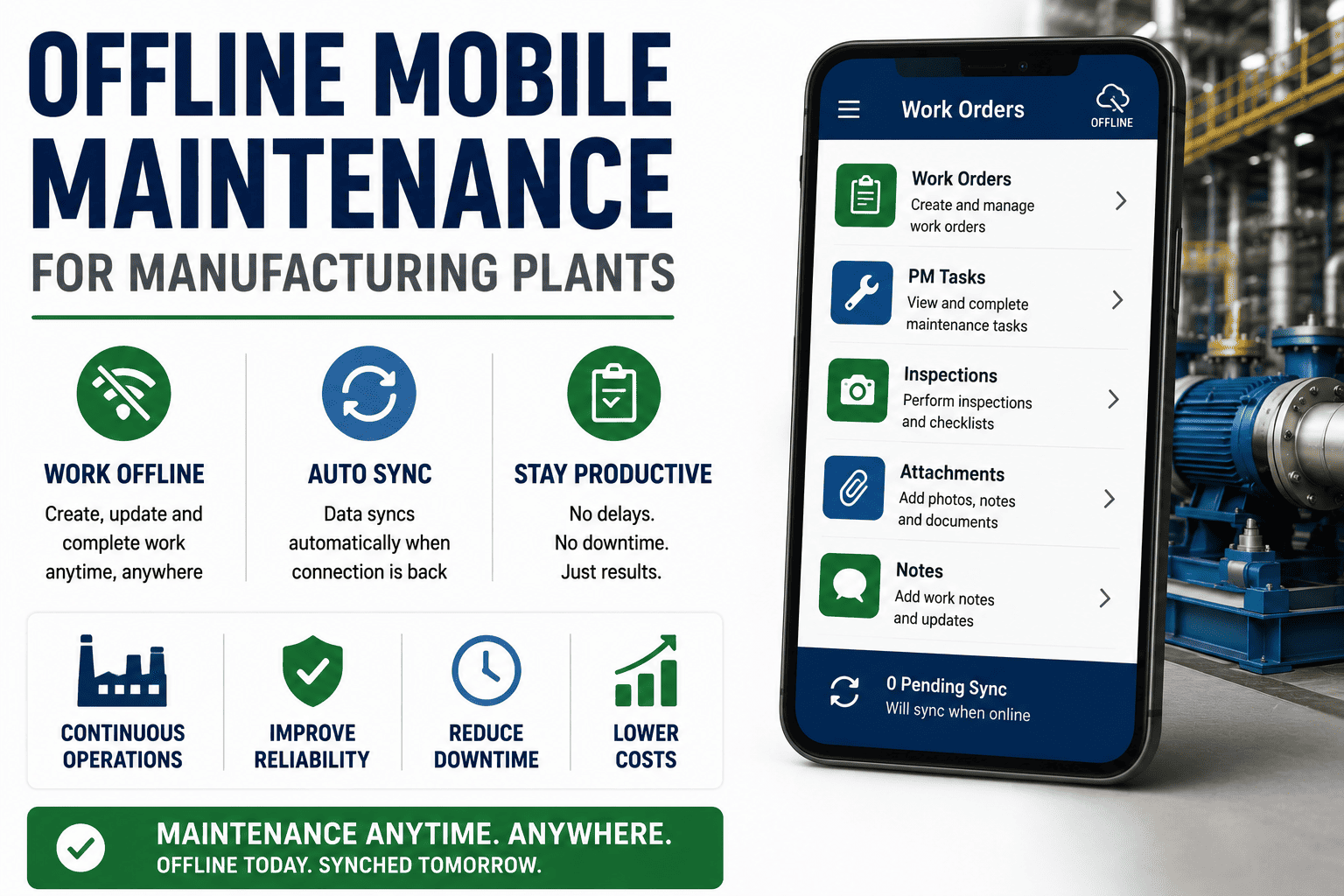
Cellar staff, packaging operators, and maintenance techs use phones to log PMs, submit requests, attach photos of failing seals, and sign off on completed work — with wet gloves and in loud environments.
Work order cycle time drops 40–60%
06
OEE & Yield Dashboards by Line
Bottling line OEE, kegging throughput, fermenter turnaround time, and filtration losses — all calculated live from work order and production data. Identify which line is quietly consuming your packaging margin.
Operational decisions driven by data, not intuition
Frequently Asked Questions
Direct answers to questions brewery and distillery operations leaders bring to maintenance platform evaluations — from 500-bbl microbreweries to 100K-case distilleries.
Is Oxmaint designed for beverage production specifically, or is it a generic CMMS?+
Oxmaint ships with asset templates for fermenters, mash tuns, stills, CIP skids, glycol chillers, bottling lines, and boilers — plus CIP cycle validation fields, sanitation PM routines, and FSMA-aligned audit workflows.
Book a demo to see it running on a sample brewery asset list.
How does the platform help with FSMA and FDA food-facility registration compliance?+
Under FSMA, breweries are classified as food facilities under 21 CFR 117. Oxmaint captures every PM, CIP validation, and sanitation check as timestamped digital records, filterable by asset and date. The full cGMP and preventive-controls evidence package exports in one click when the FDA inspector arrives.
Can Oxmaint track CIP cycle parameters, not just whether CIP happened?+
Yes — this is a core capability. CIP cycles are logged with supply/return temperature, caustic concentration, flow rate, pressure, spray-ball RPM, and cycle duration. Out-of-spec cycles auto-generate investigation work orders and block the vessel from being released for production until resolved.
What size brewery or distillery does Oxmaint work for?+
Oxmaint scales from 500-BBL microbreweries running a single packaging line up to regional breweries with multiple brewhouses and distilleries with complex continuous distillation columns. Pricing and setup are designed for single-site operations, not just enterprise accounts.
Sign up free to try it on your own asset list.
How long does implementation take for a working brewery or distillery?+
A typical 30-to-80-asset brewery or distillery goes live on Oxmaint in 1–2 weeks. Setup covers asset loading, PM and CIP scheduling, user roles, and mobile onboarding for cellar and maintenance staff. Most teams run parallel with their existing logbook for the first week, then retire paper entirely.
CMMS Built for Beverage Production
Protect Every Batch From Mill to Case.
CIP validation, fermenter temperature logs, FSMA-ready records, bottling line PMs, and mobile cellar work orders — unified in one system. Stop losing batches to missed maintenance, and stop scrambling when the auditor arrives.
1-click
FSMA audit export