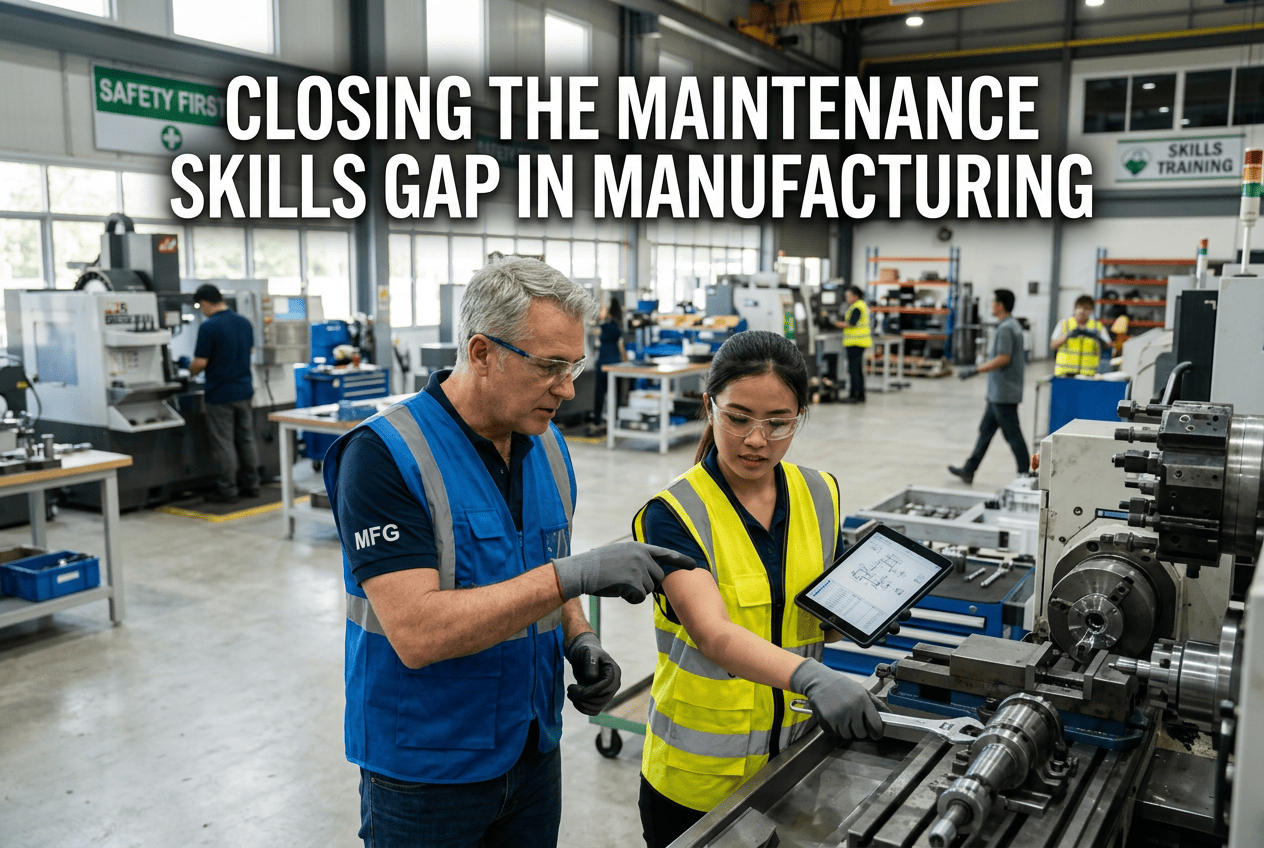
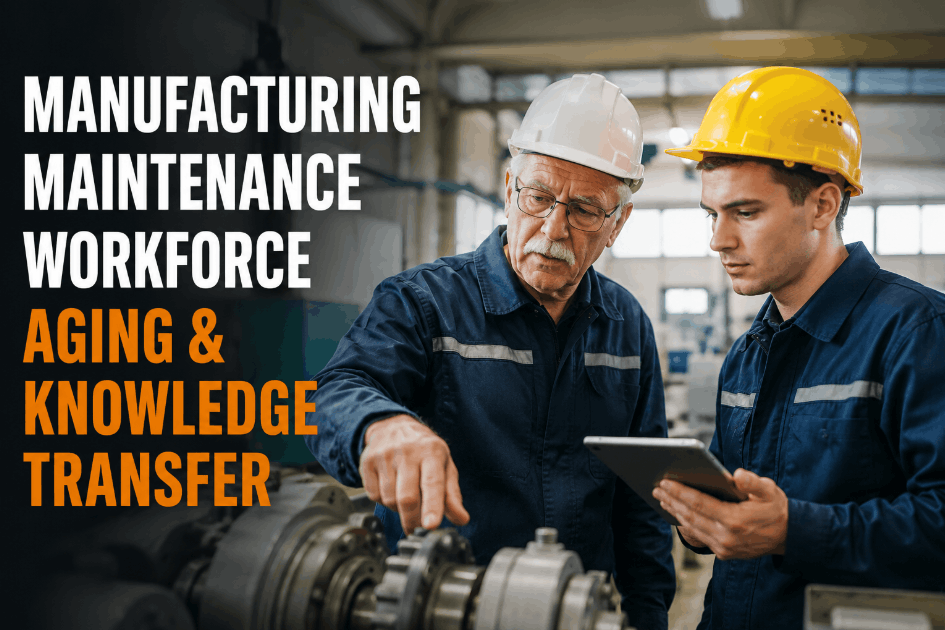
The average age of a maintenance technician in North American manufacturing is now over 48. Within the next five years, a significant portion of that workforce retires — and the technical knowledge they carry walks out with them. New hires bring energy and adaptability, but they do not arrive knowing why the #3 press vibrates at 60 Hz when the die alignment is off, or which bearing failure pattern on the South line predicts a gearbox failure in two weeks. That knowledge lives in the heads of people who are leaving. Oxmaint helps manufacturing teams capture, transfer, and digitize that institutional knowledge before it walks out the door — or book a 30-minute session to see how your plant can start closing its skills gap this quarter.
Workforce Development
The Maintenance Skills Gap Is Not Coming. It Is Already Here.
Plants that treat this as a future problem will lose their most experienced technicians before any replacement strategy is in place. Here is what the gap looks like — and what actually works to close it.
2.1M
skilled manufacturing jobs projected unfilled by 2030 (Deloitte)
48+
average age of maintenance technicians in US manufacturing
$240K
estimated cost per skilled technician lost — hiring, training, productivity gap
4.5 yrs
average time to bring a new technician to full competency on complex assets
The skills gap in maintenance is not primarily a hiring problem. It is a knowledge capture problem. Most plants are losing decades of asset-specific knowledge every time a senior technician retires — and replacing it with a new hire who will need years to reach the same level.
What the Skills Gap Actually Looks Like on the Plant Floor
Abstract workforce statistics do not capture what the gap feels like during a night shift failure. These are the four most common ways the maintenance skills gap shows up in practice — and each one has a measurable cost.
Symptom 01
Longer Mean Time to Repair
A senior technician who has repaired a specific pump 30 times diagnoses in 8 minutes. A newer technician with no institutional knowledge starts from the manual — 45 minutes to diagnosis, more to repair. Multiply that across every critical asset and every shift.
Impact: 3–5× longer MTTR on unfamiliar assets
Symptom 02
Rising Rework Rate
Repairs that miss the root cause return as failures within weeks. Plants experiencing skills gaps see rework rates climb from the 4–6% range toward 12–15% on complex assets — the same job done twice because it was not done right the first time.
Impact: 12–15% rework on complex assets vs. 4–6% baseline
Symptom 03
Over-Reliance on Contractors
When internal competency drops, plants call contractors for work that in-house technicians should handle. Contractor rates are 3–5× the cost of internal labor — and contractors have no institutional knowledge of your specific equipment history either.
Impact: 3–5× labor cost premium on contractor-dependent repairs
Symptom 04
Single Point of Knowledge Risk
One technician who truly knows the compressed air system. One person who understands the PLC ladder logic for the legacy packaging line. When those people are sick, on leave, or retired, those assets become unreachable — even for basic maintenance.
Impact: Unplanned downtime on assets only one person understands
Stop losing knowledge when technicians leave
Your CMMS Should Carry Your Plant's Maintenance Knowledge, Not Your Senior Technician's Memory
Oxmaint captures failure histories, repair procedures, and asset-specific knowledge in a searchable system that every technician can access — from day one on the job. Start building your institutional knowledge base today.
Knowledge Transfer: Capturing What Your Senior Technicians Know
Knowledge transfer is not a one-time interview. It is a structured process that runs alongside daily operations and captures tacit knowledge — the kind that is hard to write down but essential to get right. Here are the formats that work in manufacturing environments.
New technicians shadow senior ones during real maintenance tasks — not simulations. The senior technician narrates their reasoning, not just their actions. Shadowing is most effective when the senior technician is prompted with specific questions: "Why did you check that first?" and "What would tell you this is not the problem?"
Best for: Complex fault diagnosis, non-standard repair procedures
Every time a failure is diagnosed, the senior technician who diagnosed it documents the symptom pattern, the diagnostic steps, the root cause, and the repair. Over time, this builds a failure mode library specific to your equipment — far more useful than a generic manual.
Best for: Recurring failures, asset-specific diagnostic patterns
Written procedures miss nuance. A 5-minute video of a senior technician performing a pump overhaul — narrating each step — captures what a written SOP cannot. These do not need professional production. A mobile phone in landscape mode is sufficient.
Best for: Tactile, hands-on tasks with many steps
In the 6–12 months before a senior technician retires, conduct structured interviews focused on each critical asset they own: what they watch for, what the historical failure patterns are, what the maintenance team gets wrong, and what the manual does not tell you.
Best for: Pre-retirement knowledge capture, asset ownership transition
AI-Assisted Training: How Technology Is Closing the Gap Faster
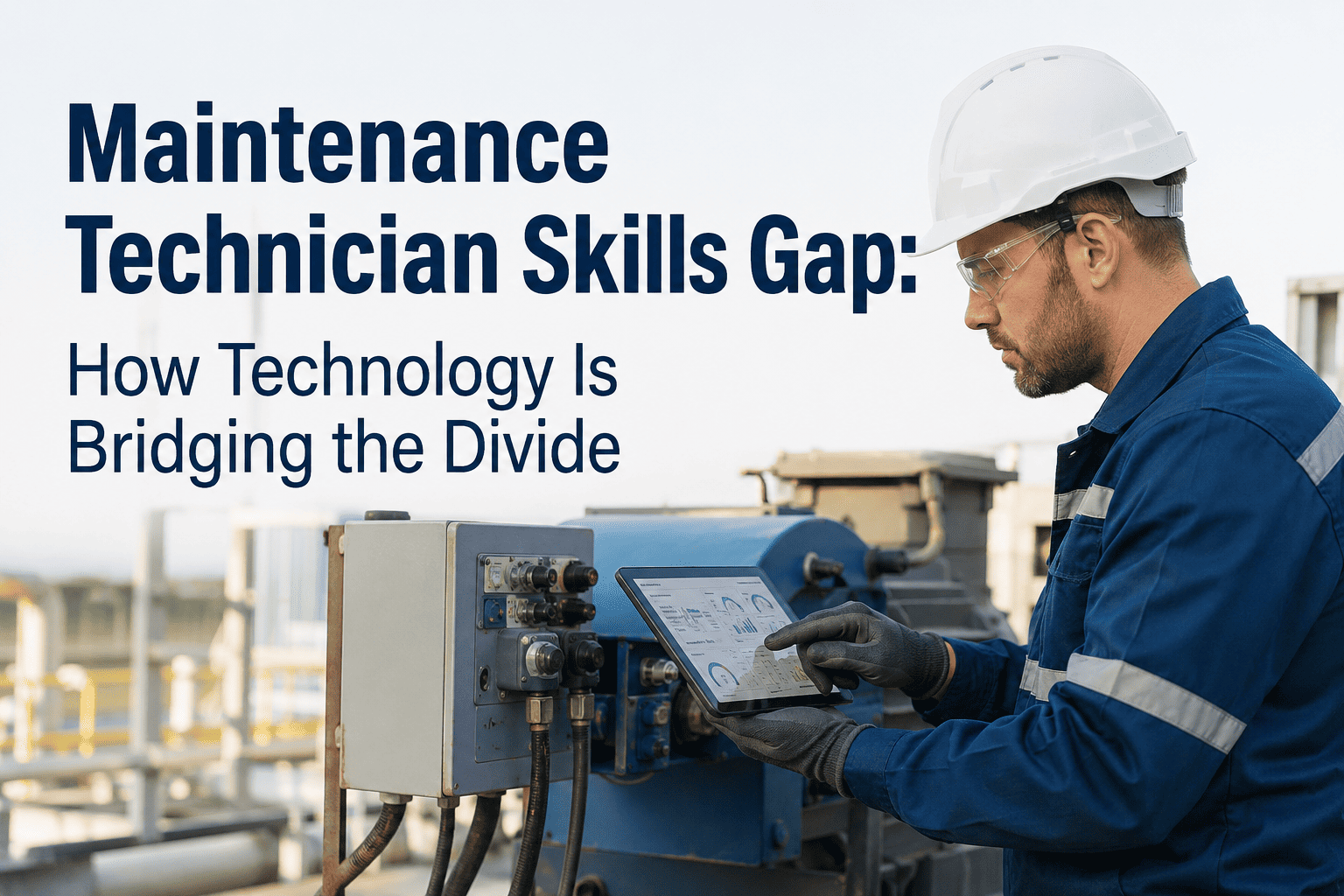
The skills gap is partly a speed problem — new technicians take too long to reach competency on complex assets. AI-assisted training tools are compressing that timeline by giving technicians access to contextual guidance at the point of work, rather than requiring them to stop, find a manual, and interrupt an experienced colleague.
Guided Fault Diagnosis
AI systems that walk technicians through a decision tree based on observed symptoms — narrowing down likely failure modes without requiring deep asset knowledge. The technician answers questions about what they observe; the system surfaces the most probable cause and the recommended first check.
Historical Failure Pattern Access
When a technician opens a work order on a pump, AI pulls the full repair history of that specific asset — every previous failure, what caused it, and what fixed it. This puts the institutional knowledge of the last 10 years in front of a technician on their first year.
Predictive Work Order Generation
AI systems that detect early failure signatures before the technician notices them — generating work orders proactively. Less experienced technicians can execute a clear, well-documented proactive task far better than they can diagnose a complex emergency failure.
Time to Asset Competency
Estimated time to independent competency on a complex Tier 1 asset
Augmented Reality Guidance in Maintenance Training
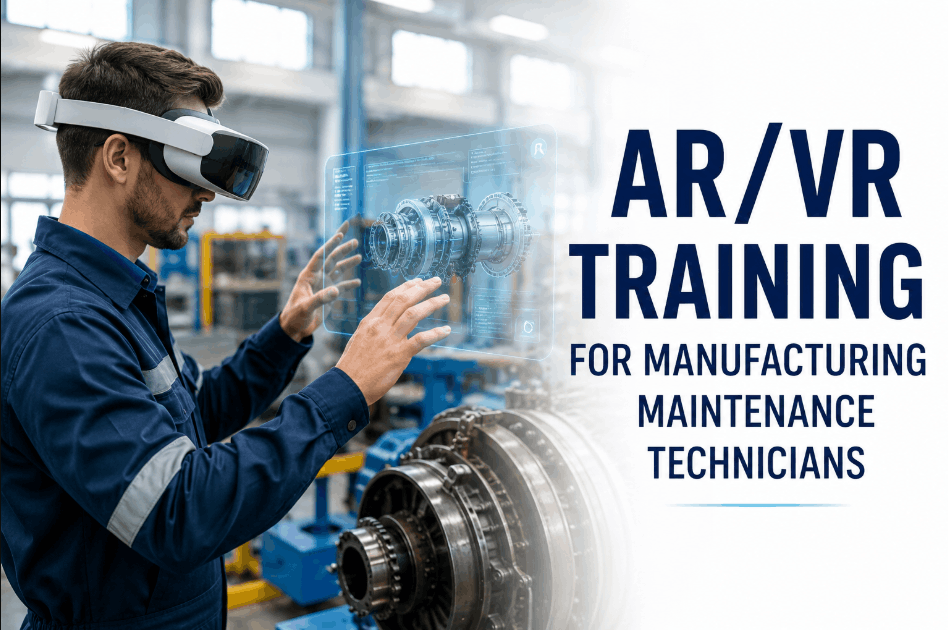
Augmented reality (AR) is moving from pilot projects into mainstream maintenance training in industrial plants. The use case is straightforward: a technician wearing an AR headset or holding a tablet sees the real equipment in front of them, overlaid with step-by-step instructions, safety warnings, and component identification — without needing to look away from the work.
Workforce Development Strategy: A Practical Roadmap
Closing a skills gap that has been building for decades does not happen in a quarter. But a structured roadmap with clear milestones makes the trajectory measurable and the investment defensible to plant leadership.
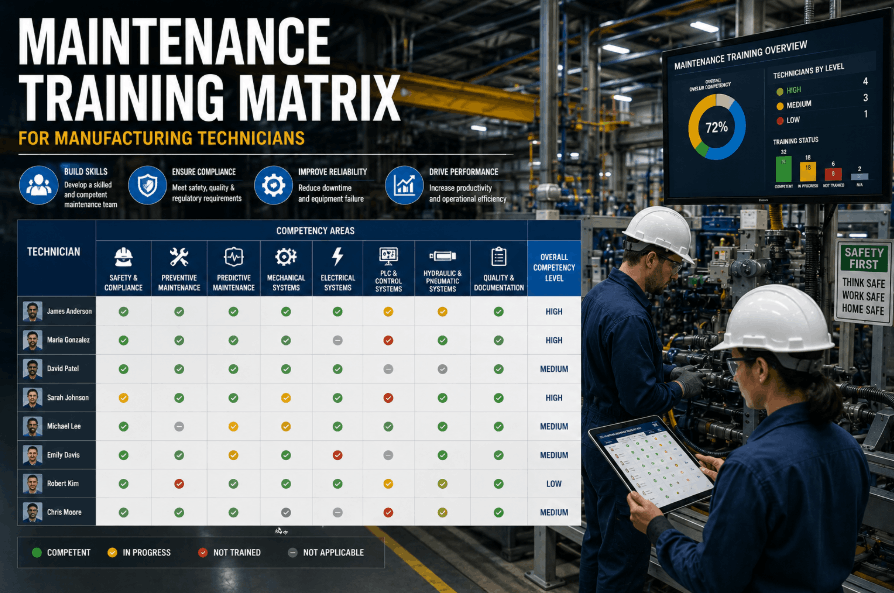
Build skills matrix for all critical assets
Identify single points of knowledge risk
Start failure mode documentation for Tier 1 assets
Conduct structured interviews with technicians 3–5 years from retirement
Launch shadowing programs for highest-gap technicians
Develop video SOPs for complex procedures
Implement CMMS-linked competency tracking
Begin AI-assisted work order guidance rollout
Track MTTR reduction on trained assets quarterly
Refresh skills matrix every 6 months
Expand AR guidance to high-complexity assets
Build internal certification path for senior technicians
Frequently Asked Questions
How do we start capturing knowledge from technicians who are resistant to documentation?
Make documentation part of the work, not extra to it. When a senior technician closes a work order, prompt them to add one diagnostic note — what they found and what confirmed it. Over time, this builds a knowledge base without requiring dedicated documentation sessions.
Oxmaint's work order workflows are designed to capture this naturally without adding friction to the repair process.
What is the ROI timeline for investing in maintenance workforce development?
Most plants see measurable MTTR improvements within 3–6 months of a structured skills transfer program. Rework rate reductions typically appear in month 4–8. Full payback on program costs — including documentation time, training hours, and CMMS investment — usually falls within 12–18 months at plants with moderate to high asset criticality.
Is AR training practical for plants that do not have large technology budgets?
Tablet-based AR is significantly more affordable than headset-based systems — entry-level implementations cost a fraction of headset solutions. For most plants, the more practical first step is digital SOPs with embedded photos and video, which deliver 60–70% of the competency benefit at a fraction of the AR implementation cost.
Book a call to discuss what fits your budget and plant size.
How do we hire for maintenance roles when the talent pool is shrinking?
The most effective approach shifts the hire profile: instead of requiring 5–10 years of asset-specific experience (increasingly rare), hire for problem-solving aptitude and mechanical intuition, then invest in structured onboarding supported by digital knowledge tools. You build the asset-specific competency internally rather than trying to buy it pre-built.
Build a maintenance team that outlasts any individual technician
The Skills Gap Closes When Knowledge Lives in the System, Not the Person
Oxmaint gives your plant a digital knowledge base for every asset — failure histories, repair procedures, competency records, and AI-assisted guidance — so new technicians reach full competency faster and institutional knowledge survives retirement.