Factory Data Integration Platforms for Real‑Time Visibility
By oxmaint on March 9, 2026
Every modern factory generates terabytes of operational data daily—from PLC signals and SCADA readings to ERP transactions and quality inspection logs. Yet an alarming number of manufacturers still rely on disconnected spreadsheets and siloed departmental systems, leaving critical production intelligence invisible to the people who need it most. A factory data integration platform bridges this gap by unifying shop floor OT data with enterprise IT systems, delivering a single, real-time source of truth that fuels smarter decisions at every level of the organization. With the Industry 4.0 market projected to reach $747 billion by 2030 and over 63% of manufacturers already adopting Industrial IoT technologies, the window for competitive advantage through integrated data is closing fast. Schedule a free consultation to explore how unified data visibility can eliminate blind spots across your plant floor operations.
The True Cost of Disconnected Factory Data
Data silos are not just a technical inconvenience—they represent one of the largest hidden costs in manufacturing. When your MES cannot communicate with your CMMS, when quality data stays locked away from engineering, and when production metrics never reach the planning team in real time, the financial impact compounds silently across every shift, every line, and every facility.
$12.9M
Average annual cost to organizations from poor data quality and fragmented information systems
84%
Of system integration projects fail or partially fail, often due to legacy complexity and siloed architectures
Only 16%
Of manufacturing executives report having real-time monitoring visibility across their full supply chain
A mid-sized manufacturing plant typically loses between $800K and $2.3M annually to data silos alone. These losses manifest through delayed root-cause analysis during quality incidents, redundant manual data entry between systems, missed preventive maintenance windows, and slow response to production deviations. The question is no longer whether you can afford to integrate—but whether you can afford not to.
Your factory is losing thousands every week to data silos you cannot see. Sign up for Oxmaint to connect your maintenance, production, and asset systems into one real-time platform—and start eliminating those hidden costs today.
What a Real-Time Data Integration Platform Actually Does
At its core, a factory data integration platform acts as the connective tissue between every system in your manufacturing operation. It collects, normalizes, contextualizes, and distributes data in real time—so that a sensor reading on a CNC machine, a work order in your CMMS, and a shipping update in your ERP all exist within a single, unified data layer accessible to every authorized stakeholder.
End-to-End Integration ArchitectureHow data flows from sensors to strategic decisions
01
Sensor and Machine Connectivity
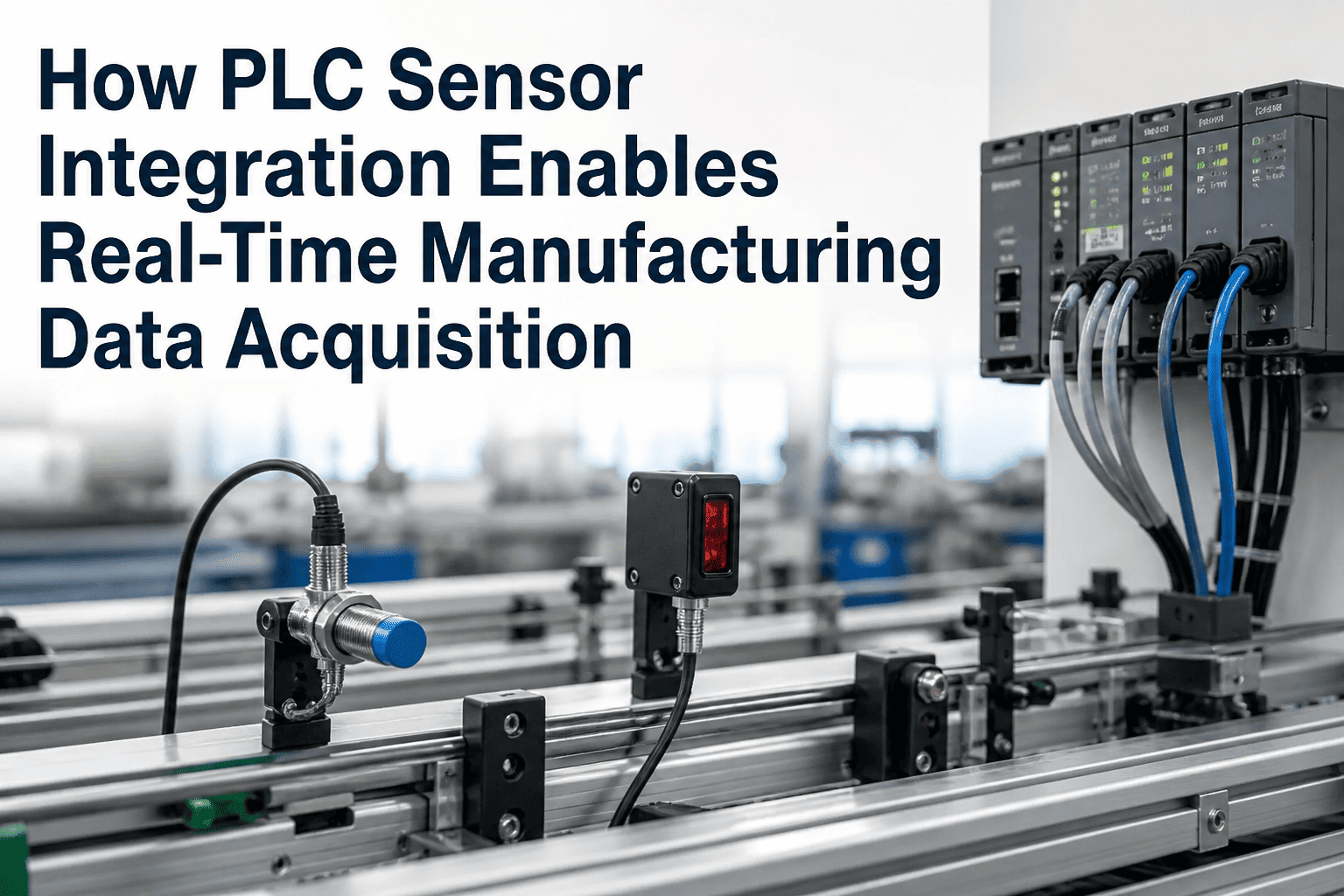
IoT gateways, PLCs, and edge devices capture machine-level data—vibration, temperature, cycle counts, throughput—at sub-second intervals using industrial protocols like OPC-UA, Modbus, and MQTT. Both modern smart machines and decades-old legacy equipment connect through the same layer.
02
Edge Normalization and Validation
Edge computing nodes clean, validate, and transform raw signals before they leave the plant floor. Local processing ensures sub-second anomaly alerts even during network disruptions, while intelligent filtering reduces cloud bandwidth consumption by up to 90%.
03
Unified Data Lakehouse
A cloud or hybrid data platform merges OT signals with IT data from ERP, MES, CMMS, QMS, and SCM systems. A common data model transforms raw readings into contextualized manufacturing KPIs—OEE, MTBF, first-pass yield, energy intensity—ready for analysis.
04
Analytics, Dashboards, and AI
Role-based dashboards deliver real-time intelligence tailored to each stakeholder: operators see machine health, supervisors see line performance, and executives see plant-wide KPIs. AI models surface anomalies, predict failures, and recommend optimizations humans would miss.
05
Closed-Loop Automation
Insights trigger action automatically—generating maintenance work orders, adjusting production schedules, flagging quality holds, and reordering spare parts. Sign up for Oxmaint to automate work order creation and asset tracking directly from integrated machine data.
Key Capabilities That Drive Production Visibility
The right integration platform does far more than move data between systems. It contextualizes information, reveals hidden patterns, and empowers every team—from maintenance technicians to plant managers—to make decisions based on what is happening right now, not what happened last week.
Platform Capability Overview
Live Production KPI Dashboards
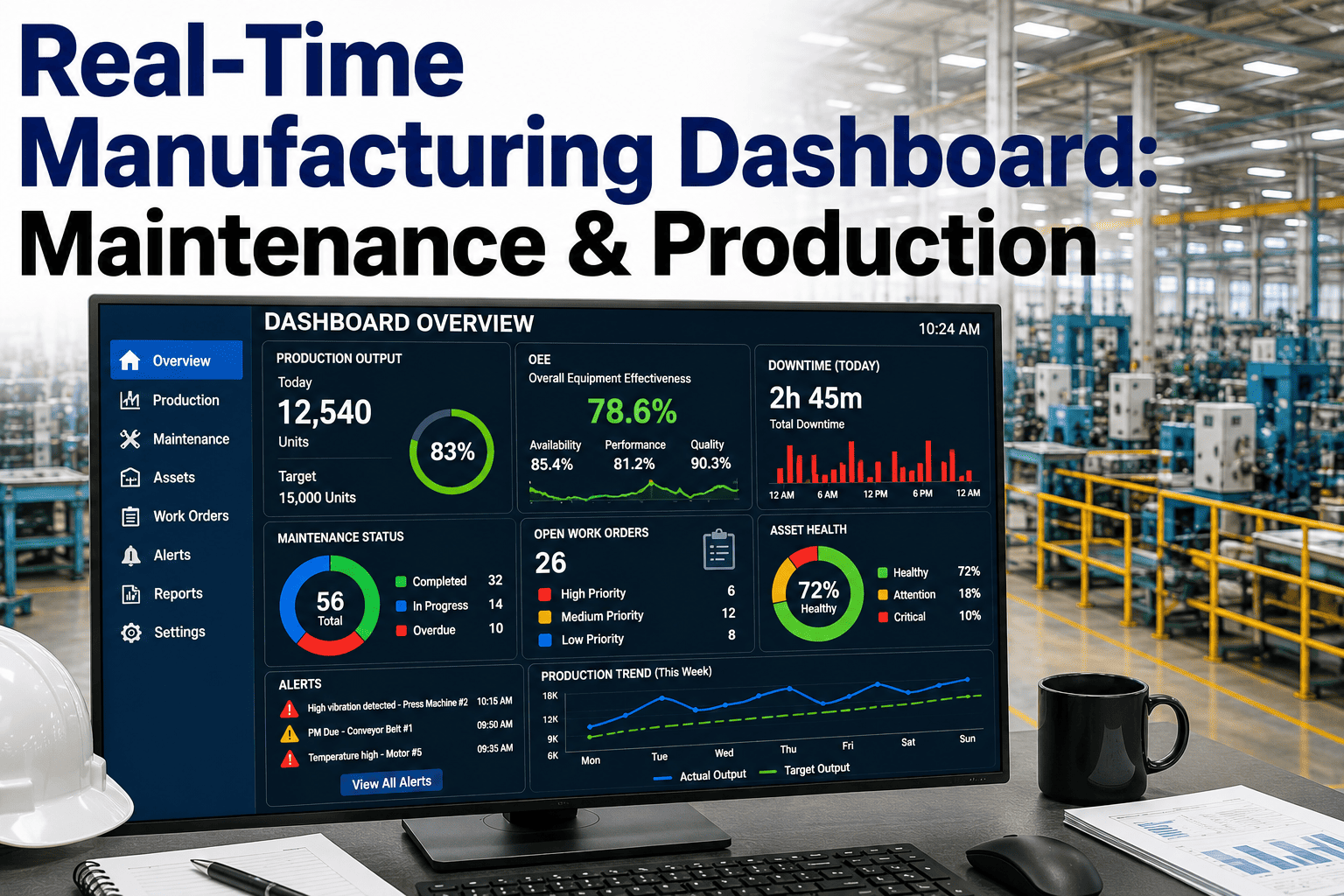
Monitor OEE, throughput, cycle time, scrap rate, and first-pass yield in real time across every line and facility. Drill from plant-wide views down to individual machine performance with a single click—no manual report generation required.
Cross-System Data Unification
Pre-built connectors link ERP, MES, SCADA, CMMS, QMS, and supply chain platforms into a bidirectional data mesh. All systems share a single source of truth—eliminating manual reconciliation and the spreadsheet chaos that plagues multi-system environments.
Intelligent Anomaly Detection
AI models continuously monitor machine behavior against learned baselines, flagging deviations in vibration, temperature, power draw, and output quality within seconds. Alerts route to the right technician via SMS, email, or directly into your CMMS as a prioritized work order.
Automated Compliance and Audit Trails
Every data point is logged with immutable timestamps and user attribution. Generate ISO, FDA 21 CFR Part 11, and industry-specific compliance reports directly from integrated production data—cutting reporting time by more than half.
Event-Driven Workflow Triggers
Define rules that automatically create maintenance tickets when vibration exceeds thresholds, reorder parts when inventory hits minimums, escalate quality holds when SPC limits are breached, or adjust schedules when upstream machines go down.
Want to see live KPI dashboards and automated anomaly alerts running on real factory data? Schedule a demo with our team—we will walk you through exactly how these capabilities work for your specific equipment, systems, and production environment.
Where Integration Connects Across the Manufacturing Stack
True operational visibility demands integration at every layer of the technology stack. Each system contributes a different dimension of insight—and only when those dimensions are unified can you achieve the full picture needed for proactive, data-driven manufacturing.
Manufacturing Technology Stack Integration Map
System Layer
Typical Platforms
Data Contributed
Visibility Enabled
Machine and Sensor Level
PLCs, CNC controllers, IoT sensors, robots
Cycle counts, vibration, temperature, power draw, throughput
Equipment health scores, utilization rates, condition-based maintenance triggers
Supervisory Control
SCADA, DCS, HMI systems
Process variables, alarms, setpoints, batch parameters
Process stability, alarm analytics, recipe adherence, batch genealogy
Production Execution
MES, MOM platforms
Work orders, routing, WIP status, labor tracking, downtime codes
Schedule adherence, bottleneck detection, operator efficiency, production progress
Maintenance and Assets
CMMS, EAM systems
Work orders, PM schedules, asset history, spare parts, failure codes
MTBF and MTTR trends, maintenance cost-per-asset, backlog health, compliance
Quality Management
QMS, LIMS, SPC tools
Inspection results, NCRs, CAPAs, SPC control charts
First-pass yield, defect Pareto, supplier quality scores, process capability indices
Order-to-delivery cycle time, inventory turns, cost variance, demand-supply alignment
Before and After: Siloed Operations vs. Integrated Visibility
Understanding the difference between operating with fragmented data and operating with a unified integration platform reveals why leading manufacturers treat data integration as a strategic priority, not just an IT project.
Operational Impact Comparison
Fragmented Systems
Production reports arrive hours or days late via manual data pulls
Maintenance teams lack visibility into live machine conditions
Quality incidents take 12-18+ hours to trace through disconnected records
Planning relies on gut instinct because cross-system data is unreliable
Each department operates on its own version of the truth
35-60%of maintenance still reactive firefighting
Integrated Data Platform
Live dashboards refresh every second with contextualized KPIs
Condition monitoring triggers work orders before equipment fails
Full batch traceability in minutes through connected quality and production data
AI-powered forecasting aligns schedules with demand and capacity
A single source of truth accessible to every authorized stakeholder
85%+of maintenance planned and proactive
Connect Your Factory Floor to Your Business Strategy
Oxmaint bridges the gap between maintenance, operations, and enterprise data—giving your teams a unified view of equipment health, work order status, and production KPIs across every facility, all from a single cloud platform built for manufacturers.
No two manufacturing environments generate the same data or face the same integration challenges. Effective platforms adapt their connectivity, data models, and analytics to the unique workflows and regulatory requirements of each industry vertical.
Integration Profiles by Industry
Manufacturing Sector
Critical Data Sources
Primary KPIs Tracked
Integration Priority
Automotive and Aerospace
Robots, torque tools, vision systems, MES
Takt time, first-pass yield, line balance, traceability
Full assembly-line synchronization and part genealogy
Food, Beverage, and CPG
Batch systems, CIP sensors, weight checks, ERP
Batch yield, CIP efficiency, allergen tracking, shelf life
Regulatory compliance, batch genealogy, and waste reduction
Pharmaceutical and Medical
Process historians, LIMS, environmental monitors
Batch deviation rate, review cycle time, environmental excursions
21 CFR Part 11 compliance and electronic batch release
Asset reliability, predictive maintenance, and regulatory reporting
Quantified Business Impact of Integration
The return on factory data integration is not theoretical—manufacturers consistently report measurable gains across operational efficiency, decision speed, and bottom-line cost reduction. The benefits compound as more systems are connected and AI models are trained on richer, more complete datasets.
Proven Integration OutcomesAggregated from industry research and deployment data
70%
Faster data query and report generation with modern integrated stacks
60%
Reduction in unplanned downtime after CMMS-MES-sensor integration
50%
Lower total cost of ownership vs. legacy batch-processing data approaches
35%
Reduction in maintenance costs through data-driven predictive strategies
Plants like yours are cutting downtime by 60% and maintenance costs by 35% with integrated data. Sign up for a free Oxmaint account to start connecting your asset and maintenance systems—and see measurable results within the first 90 days.
The most successful factory integration projects start small, deliver quick wins, and expand systematically. Trying to integrate everything at once is the fastest path to the 84% failure rate. A phased approach builds organizational momentum while proving ROI at each stage.
Step-by-Step Integration Rollout
Weeks 1 — 3
Audit, Assess, and Prioritize
Map every existing data source, system, and manual workaround. Identify the highest-impact integration points—typically maintenance-production visibility and real-time machine health—and define measurable KPIs for success.
Weeks 4 — 6
Connect Core Systems
Deploy connectors between your most critical systems—CMMS, MES, and key machine data sources. Establish a unified data model, validate data quality, and configure initial real-time dashboards for a pilot production line or department.
Weeks 7 — 10
Activate Analytics and Automation
Launch real-time KPI dashboards plant-wide. Configure automated alert rules, workflow triggers, and condition-based maintenance logic. Integrate ERP and quality systems to complete the cross-functional data picture.
Week 11+
Scale, Optimize, and Expand
Roll out across additional lines, facilities, and business units. Deploy advanced AI models for predictive maintenance and demand forecasting. Use early wins to build the business case for enterprise-wide transformation.
Most plants go live with real-time visibility in just 4-6 weeks. Schedule a demo and our integration specialists will build a custom deployment roadmap mapped to your existing systems, equipment, and highest-priority production pain points.
Factory data integration is not a plug-and-play exercise. Legacy equipment, inconsistent data formats, organizational resistance, and security concerns are real barriers—but each one has proven solutions that leading manufacturers have already implemented at scale.
Integration Challenge and Resolution Guide
Obstacle
Operational Impact
Proven Resolution
Legacy machines with no digital output
Blind spots in machine-level monitoring and OEE calculations
Retrofit IoT sensors and protocol converters that bolt onto existing equipment with zero downtime required for installation
Inconsistent data formats across platforms
Integration failures, inaccurate analytics, eroded trust in dashboards
Unified data models with automated ETL at the edge layer, plus master data management governance frameworks
Cross-functional integration teams with executive sponsorship, phased rollouts anchored to early visible wins
Cybersecurity and network segmentation
Potential exposure of operational technology to external threats
DMZ architectures, encrypted data diodes, zero-trust network policies, and role-based access controls
Data quality issues from sensors and manual entry
False anomaly alerts, unreliable baselines, flawed AI model training
AI-powered data validation, automated gap-filling algorithms, and outlier detection during model calibration
Turn Fragmented Factory Data into a Strategic Advantage
Your spreadsheets and disconnected systems cannot deliver the real-time production intelligence your teams need to compete. Oxmaint provides the integrated maintenance and operations platform that connects your asset data, work orders, machine health signals, and production KPIs—giving every stakeholder the visibility to act faster, reduce downtime, and drive continuous improvement across every facility you operate.
How quickly can we start seeing value from factory data integration?
Most plants achieve meaningful real-time visibility within 4-6 weeks by starting with high-impact connections like CMMS-to-machine data and production KPI dashboards. Quick wins from anomaly detection and automated work order creation typically deliver positive ROI within the first 90 days, with benefits compounding as additional systems and facilities are connected. Schedule a consultation to discuss a realistic timeline for your operation.
Can integration platforms connect to older legacy equipment?
Yes. Modern platforms support retrofit IoT sensors, edge gateways, and protocol converters that connect to equipment of any age—including machines with only analog outputs or proprietary communication standards like Modbus RTU, Profibus, and serial protocols. You do not need to replace existing equipment to bring it into your integrated data ecosystem.
What specific ROI can manufacturers expect from data integration?
Manufacturers consistently report 15-25% reductions in unplanned downtime, 10-20% improvements in overall equipment effectiveness, and major labor savings from eliminating manual data reconciliation across systems. Companies with strong data integration also achieve substantially higher returns on their AI and analytics investments. Sign up for a free account to start building your integrated visibility foundation today.
How does data integration specifically improve maintenance operations?
Integration connects live machine health signals—vibration, temperature, power consumption—directly to your CMMS. When sensor data indicates developing equipment degradation, the system automatically generates a prioritized work order, checks spare parts availability in inventory, and assigns the right technician based on skills and availability—transforming maintenance from reactive firefighting into proactive, predictive asset care.
What security measures protect factory data during and after integration?
Enterprise-grade platforms implement multi-layered security including network segmentation between IT and OT environments, end-to-end encrypted data transmission, role-based access controls, and SOC 2 Type II compliance. Edge processing keeps sensitive operational data on-premises when required, transmitting only aggregated analytics to the cloud. Book a demo to review the full security architecture and compliance capabilities.