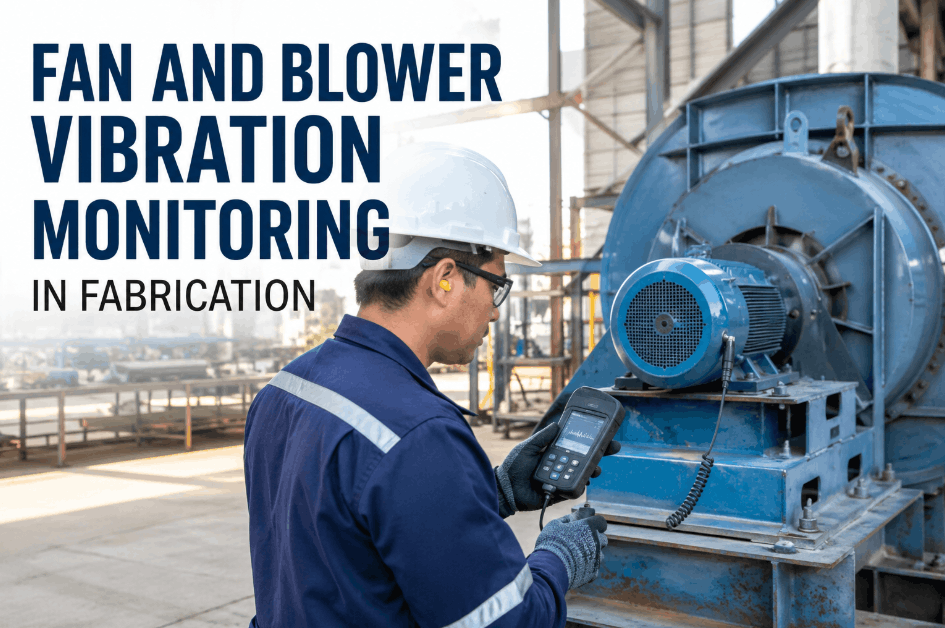
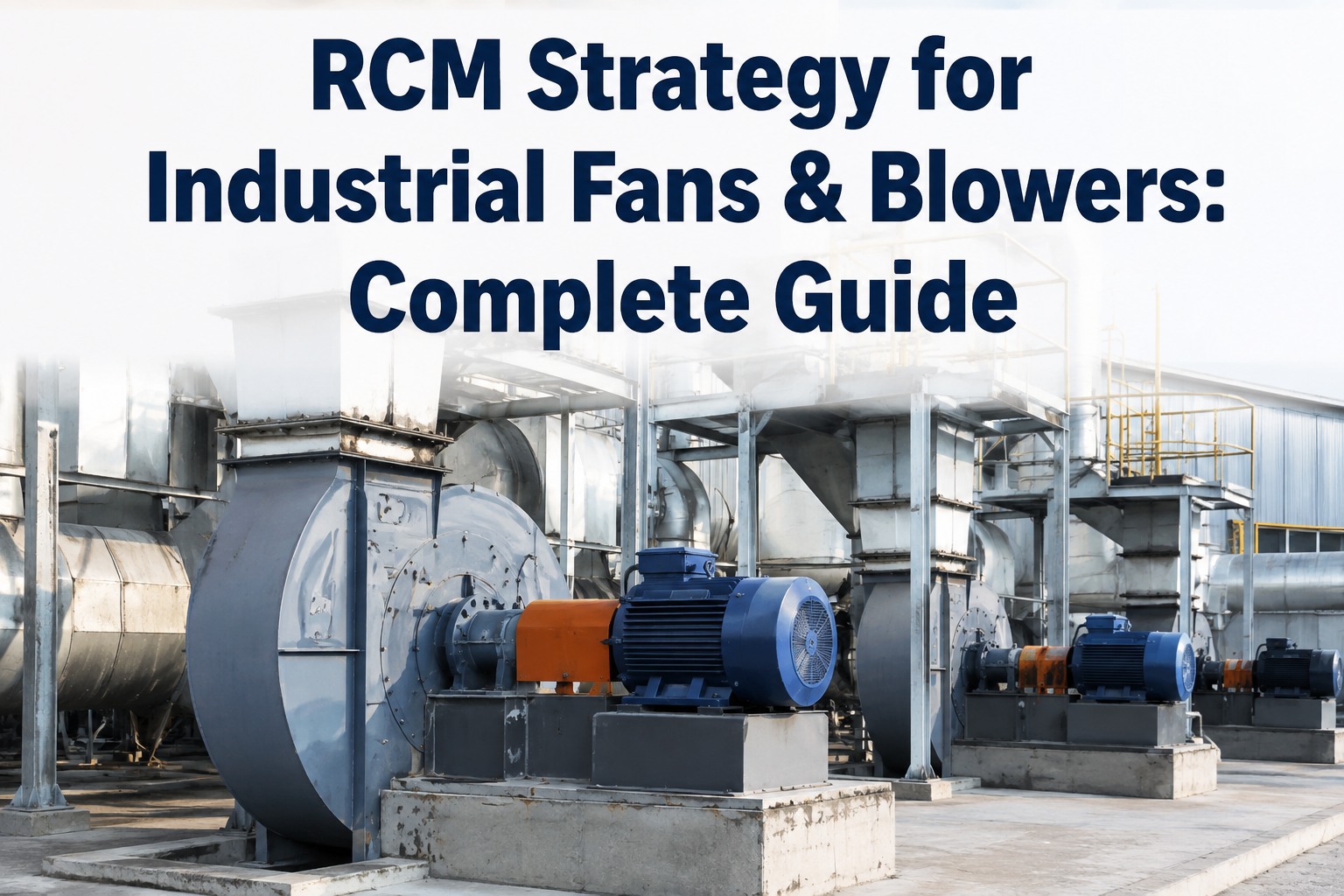
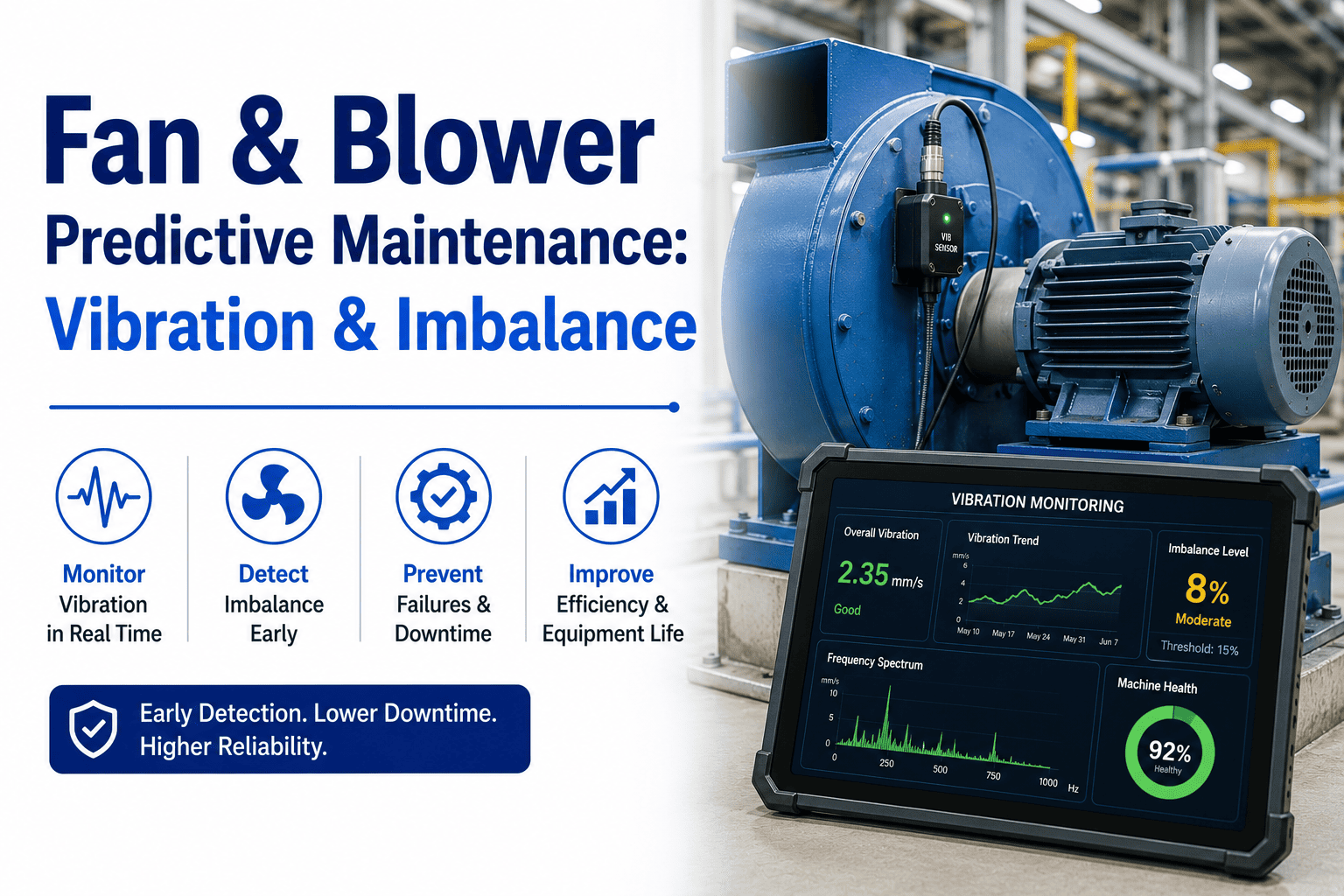
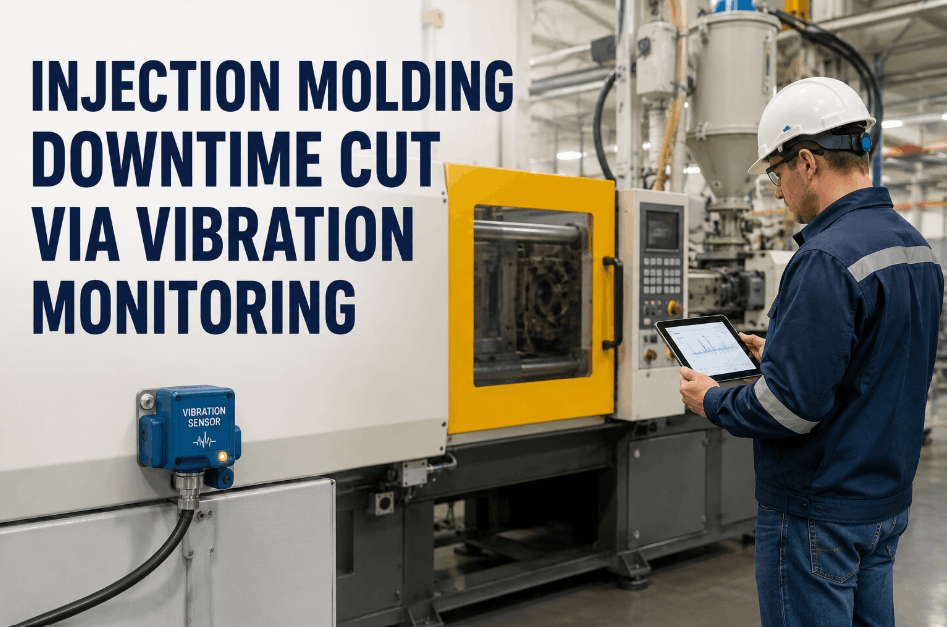
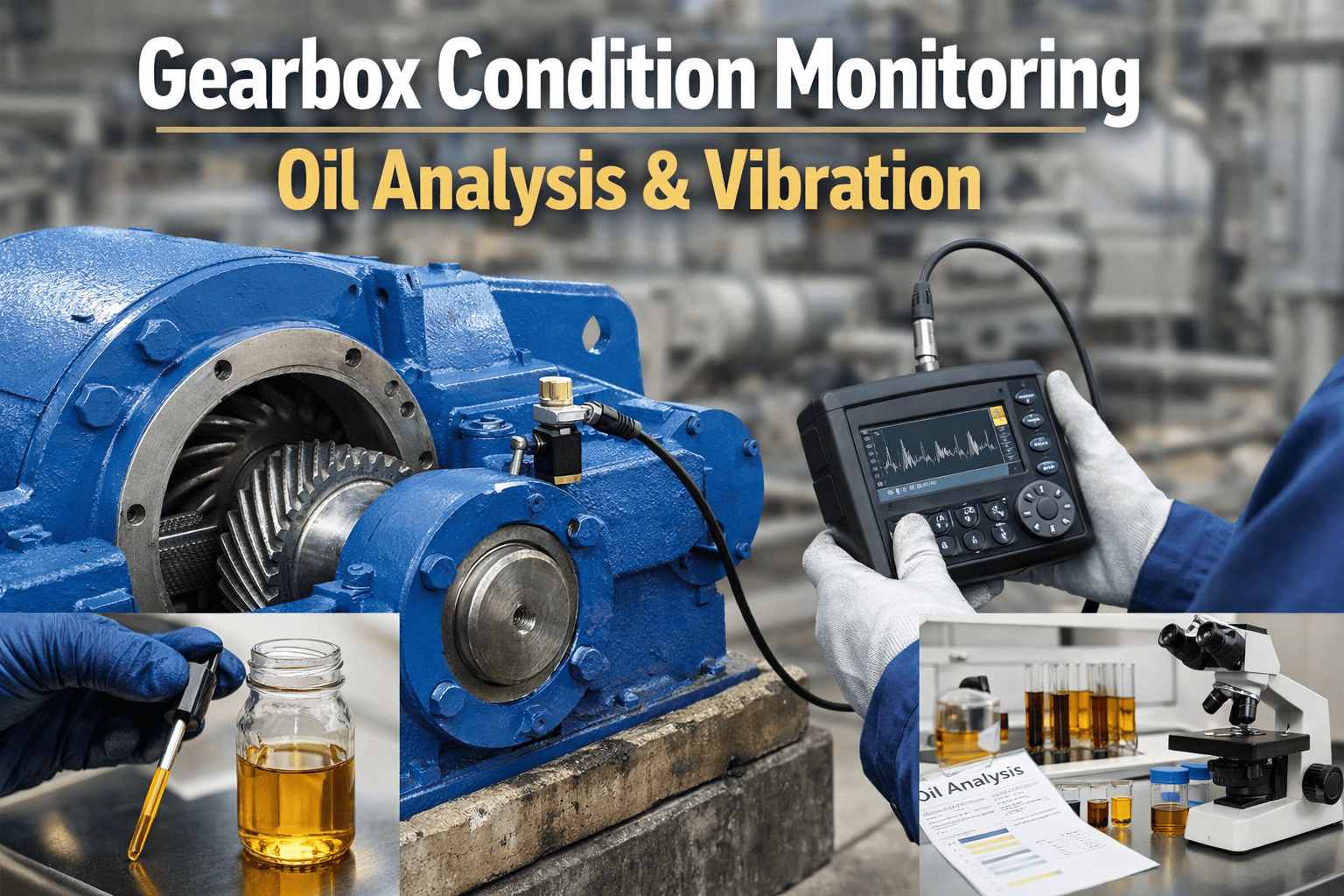
Fan and blower vibration in fabrication areas rarely fails without warning — it drifts. A bearing that starts with a faint high-frequency signature today becomes a seized shaft and a stopped extraction line in six weeks, and most fabrication shops only notice the trend once the noise is audible from the next bay. Left untracked, imbalance and looseness compound into bearing wear, coupling damage, and unplanned downtime on the fans and blowers that keep welding fume extraction, paint booths, and dust collection running. Sign Up Free to start logging vibration readings against every fan and blower asset in OxMaint, so drift gets caught while it is still a work order — not an outage.
Reliability · Blog · Fabrication Operations
Fan and Blower Vibration Monitoring for Fabrication Shops
Vibration logging, imbalance and looseness detection, bearing wear tracking, and CMMS-linked work orders — practical condition monitoring for the fans and blowers running extraction, ventilation, and process air in fabrication facilities.
68%Of fan/blower failures in fabrication shops trace back to imbalance or looseness left untracked
3–6 wksTypical lead time between first vibration drift and bearing failure on industrial fans
−58%Reduction in unplanned fan/blower downtime when vibration trends trigger CMMS work orders
2.3×Longer bearing life when looseness and imbalance are corrected at first detection
Vibration Signature Components — What Every Fan and Blower Record Needs
A usable fan vibration monitoring record is built from the same six data points, tracked consistently per asset rather than checked once and forgotten. Book a Demo to see how OxMaint structures vibration readings, asset history, and escalation in a single mobile-accessible record for every fan and blower on the shop floor.
Step 1
Asset Baseline
Baseline vibration reading logged per fan/blower at install or first inspection — RPM, mounting type, and bearing spec recorded against the asset.
Foundation
Step 2
Routine Reading
Scheduled vibration checks captured on a recurring inspection route, logged against the asset's QR code from the shop floor.
Routine
Step 3
Imbalance Flag
Reading exceeding baseline tolerance flagged automatically. Asset status changes from healthy to watch without manual review.
Detection
Step 4
Looseness Check
Mounting bolts, coupling alignment, and belt tension inspected when vibration trend is rising but bearing temperature is still normal.
Critical Gate
Step 5
Work Order Trigger
Vibration trend breaching threshold auto-generates a work order with the asset's full reading history attached for the technician.
Action
Step 6
Trend Reset
Post-repair reading logged as new baseline. Asset history retains full trend for next audit or reliability review.
Closure
The Vibration Drift Cascade — How Imbalance Becomes Bearing Failure
Fan and blower vibration does not jump straight to failure — it moves through predictable stages, and each stage is cheaper to fix than the next. Sign Up Free to track this cascade per asset and catch fabrication fan failures at the cheapest stage instead of the most expensive one.
Fan & Blower Vibration Drift — 5 Stages from Imbalance to Bearing Failure
Stage 1
Minor Imbalance, No Reading Logged
Slight vibration increase, within tolerance but trending. No baseline comparison exists to catch the drift.
$0
Cost if logged at routine check
↓
Stage 2
Looseness Develops Unchecked
Mounting bolts or coupling alignment loosens further. Vibration amplitude rises but no threshold alert exists.
$180
Tightening and realignment cost
↓
Stage 3
Bearing Stress Begins
Sustained vibration transfers load into the bearing race. Heat builds. Noise becomes audible on the shop floor.
$650
Bearing replacement, planned
↓
Stage 4
Shaft and Coupling Damage
Bearing failure transfers wear to shaft and coupling. Extraction or ventilation capacity drops noticeably.
$2,400
Emergency repair, parts and labor
↓
Stage 5
Fan/Blower Seizure, Line Stopped
Unit seizes mid-shift. Extraction or process air stops. Affected fabrication line halts until replacement unit installed.
$9,200+
Replacement unit + line downtime
Fan & Blower Reliability Maturity Score — How Is Your Shop Tracking Vibration?
Self-assess your fabrication shop's fan and blower monitoring programme against the five maturity levels below.
Fan & Blower Vibration Monitoring Maturity Score
Score 5 = full trend control · Score 1 = active failure risk · Assess per shop or per fan/blower fleet
5
Fully Controlled — Trend-Based Maintenance
Every fan and blower has a logged baseline, routine readings, and automated trend alerts. Work orders generate before bearing temperature rises.
Action: Maintain reading cadence. Review thresholds annually against actual failure data.
4
Mostly Controlled — Inconsistent Logging
Readings taken but not logged against every asset consistently. Some units missing baseline data.
Action: Standardise the reading route. Backfill baselines on unlogged fans/blowers within 30 days.
3
Partially Managed — Reactive Checks Only
Vibration checked only after a noise complaint or visible issue. No baseline trend exists for comparison.
Action: Establish baseline readings on critical fans/blowers this month. Add to PM schedule.
2
Reactive — Run to Failure
No vibration monitoring programme exists. Fans and blowers run until failure, then repaired or replaced.
Action: Identify critical fans/blowers. Implement routine vibration checks before next shutdown window.
1
No Programme — Active Failure Risk
No asset register for fans/blowers. No reading history. Failures are first noticed when the unit stops.
Action: Build a fan/blower asset register immediately. Assign routine inspection ownership this week.
Technology Integration: CMMS Vibration Tracking and Work Order Automation
A practical fan and blower monitoring programme needs four connected capabilities a paper logbook cannot provide. Sign Up Free to bring vibration readings, asset history, and work order automation into one CMMS workflow your technicians already use for daily inspections.
Asset-Linked Readings
100%
Vibration history visible per fan/blower via QR scan
Every reading logged against the asset record, viewable instantly by scanning the unit's QR code on the shop floor.
Threshold Alerts
−58%
Reduction in unplanned downtime with automated trend alerts
Readings exceeding baseline tolerance trigger an automatic status change and notification — no manual trend review required.
Work Order Automation
2.3×
Longer bearing life with early-stage intervention
Threshold breaches auto-generate a work order with the asset's full reading and repair history attached.
Mobile Field Access
Offline
Readings logged from the floor, even without connectivity
Technicians log readings on mobile during routine rounds; data queues offline and syncs automatically once reconnected.
"
We replaced two extraction fan bearings a year on average, always as emergency repairs. Once we started logging vibration readings against each asset in OxMaint and let threshold alerts trigger the work order, we caught the next three imbalance issues weeks before bearing temperature rose. No unplanned fan stoppage since.
Maintenance Supervisor — Metal fabrication facility, multi-line shop floor
Root Causes of Fan and Blower Failures in Fabrication
Fan and blower failures in fabrication shop floors cluster into six recurring root causes.
Fan & Blower Failure — Root Cause Distribution (%)
No baseline vibration reading logged
72%
Mounting/coupling looseness unaddressed
65%
No automated threshold alert
59%
Inconsistent inspection route
51%
Belt tension not checked routinely
44%
No reading trend retained for review
38%
Catch the Drift Before the Bearing Fails.
OxMaint logs vibration readings against every fan and blower, flags drift automatically, and turns threshold breaches into work orders — before the line stops.
Frequently Asked Questions
Why does fan and blower vibration monitoring matter in fabrication shops?
Vibration drift is the earliest detectable sign of imbalance, looseness, or bearing wear — catching it early prevents the extraction and ventilation downtime that halts fabrication lines.
How often should fan and blower vibration be checked?
Routine readings on a recurring schedule, with baseline comparison, catch drift far earlier than checks triggered only by noise or visible issues.
Can a CMMS automate fan and blower work orders from vibration trends?
Yes — readings logged against an asset can trigger automatic work order creation once a trend crosses a defined threshold, with full asset history attached for the technician.
Does OxMaint work offline for shop floor readings?
Yes — technicians can log readings on mobile without connectivity; data queues locally and syncs once the device reconnects.
What's the difference between imbalance and looseness in fan vibration?
Imbalance is uneven mass distribution on the rotating element; looseness is a mechanical mounting or coupling issue. Both raise vibration readings but require different corrective actions.
Build Your Fan & Blower Monitoring Programme Today.
OxMaint tracks vibration trends, automates work orders, and keeps every fan and blower asset record in one mobile-ready CMMS — free to start.