Every manufacturing plant has hidden waste—the furnace running 6% hotter than needed, the production line waiting 23 minutes between changeovers, the inventory buffer that quietly ties up working capital for weeks. Traditional lean methods uncover some of it during periodic kaizen events. But the rest stays invisible until AI analytics shine a light on patterns no clipboard audit could ever catch. Plants that combine lean philosophy with AI-driven insights are now achieving continuous improvement at a pace and precision that manual methods simply cannot match, reducing scrap by double digits and compressing cycle times that were considered already optimized. Schedule a free 30-minute demo to see how AI-enhanced lean strategies identify and eliminate hidden production waste at your facility.
From Toyota to Industry 4.0: The Lean Manufacturing Evolution
Lean manufacturing was born on the factory floors of post-war Japan, where Toyota developed a production system built on two pillars: respect for people and the relentless elimination of waste. For decades, that system spread globally through tools like value stream mapping, 5S workplace organization, and just-in-time inventory. These principles drove enormous gains—but they depended heavily on human observation, periodic audits, and manual data collection.
The limitation was always speed and scale. A skilled industrial engineer can observe one production line at a time and conduct time studies with a stopwatch. AI sensors monitor hundreds of machines simultaneously at sub-second resolution. Where traditional lean identifies waste after the fact, AI-enhanced lean predicts and prevents it. This is not a replacement of Toyota's principles—it is their natural next step, often called Lean 4.0. Sign up for Oxmaint free to digitize your lean workflows, automate maintenance scheduling, and track continuous improvement KPIs across your entire operation.
323 hrs
Average annual production downtime across 72 major multinationals—even after years of lean implementation
92–95%
Accuracy of AI-based anomaly detection in identifying process inefficiencies versus manual observation
30%
Operational cost savings reported by manufacturers integrating AI into lean production systems
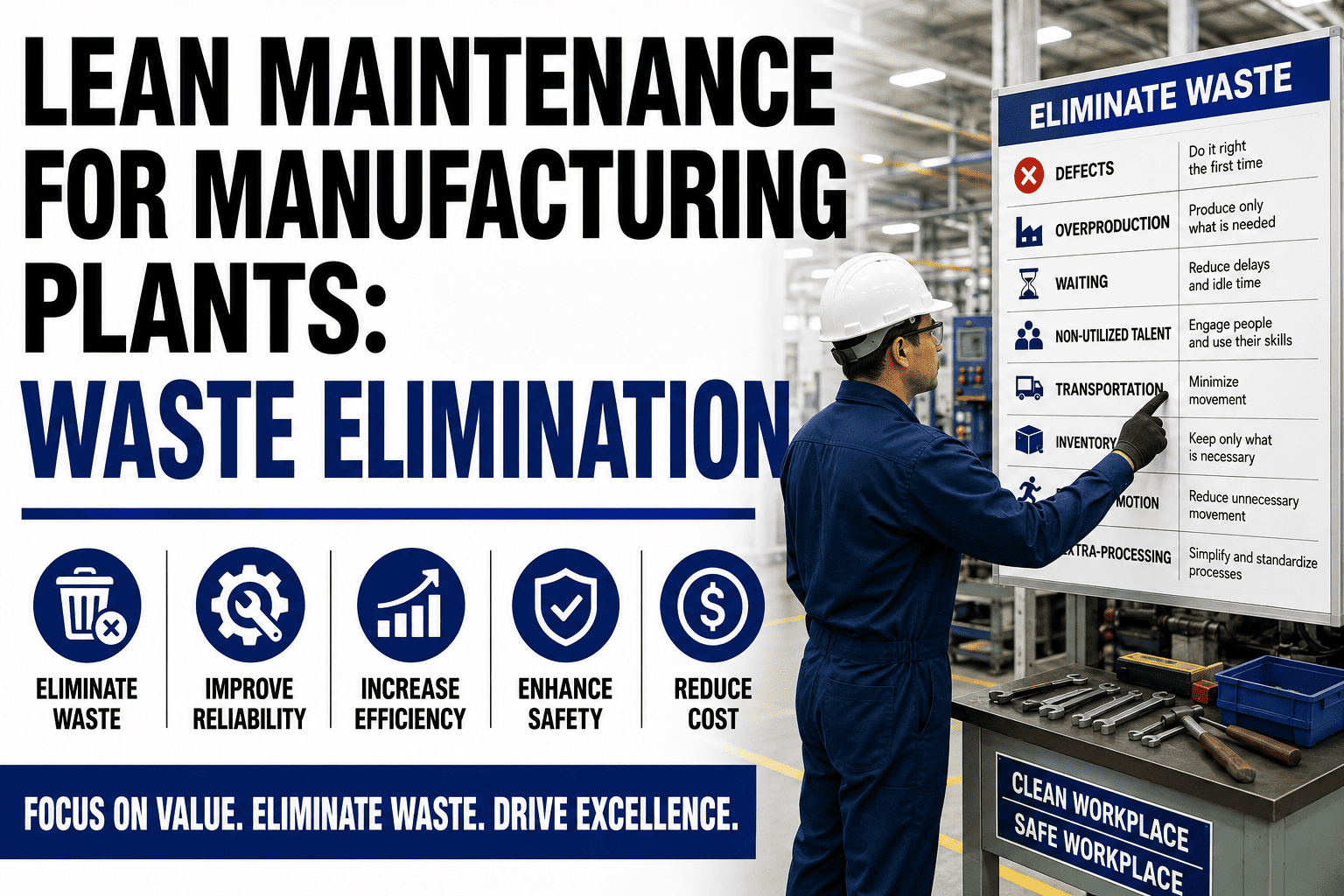
5 Production Wastes AI Catches Before Your Next Kaizen Event
Kaizen events are powerful—but they happen weekly or monthly. Between events, waste accumulates unnoticed. AI monitoring closes that gap by running continuous analysis across every connected asset, flagging anomalies the moment they deviate from optimal baselines. Here are five waste categories where AI delivers the most immediate, measurable impact.
01
Silent Quality Drift
A machine slowly drifts out of tolerance over days. Defect rates creep from 0.3% to 1.8% before anyone notices. AI vision systems and process parameter monitoring catch the drift within minutes, triggering alerts and automatic corrections before scrap accumulates.
02
Invisible Changeover Delays
Operators believe changeovers take 18 minutes. Sensor data reveals they actually average 27 minutes, with the gap hidden in setup variations, tool-search time, and inconsistent procedures. AI timestamps every step and identifies which sub-tasks cause the most delay.
03
Overproduction from Forecast Error
Traditional forecasting misses demand shifts by 20–50%. AI demand sensing integrates real-time order signals, market trends, and historical seasonality to tighten production schedules—eliminating the excess inventory that traditional lean buffers create.
04
Equipment Efficiency Degradation
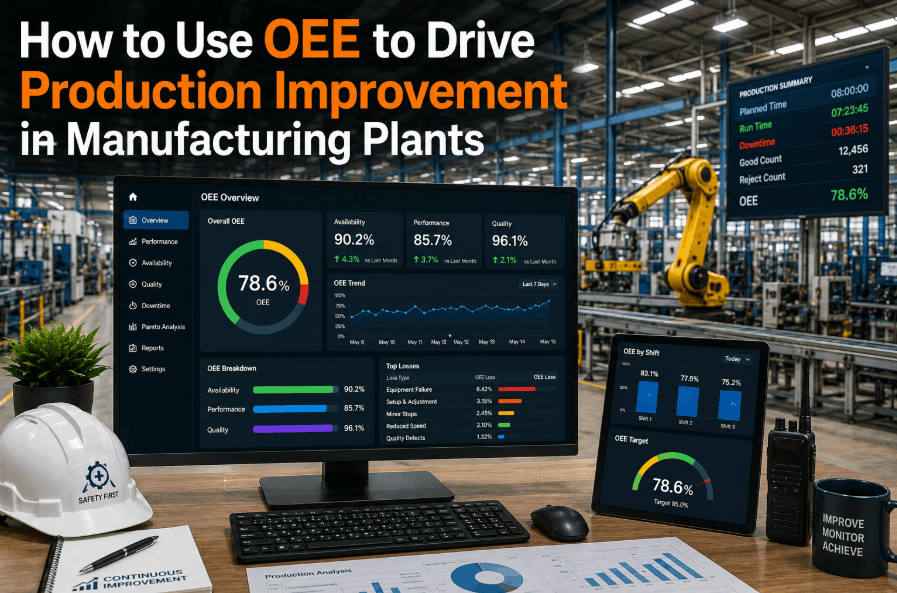
A machine running at 94% OEE slowly drops to 87% over three months due to bearing wear, lubrication issues, or calibration drift. AI predictive maintenance detects the degradation curve weeks before it triggers unplanned downtime or quality issues.
05
Energy Waste Tied to Production Gaps
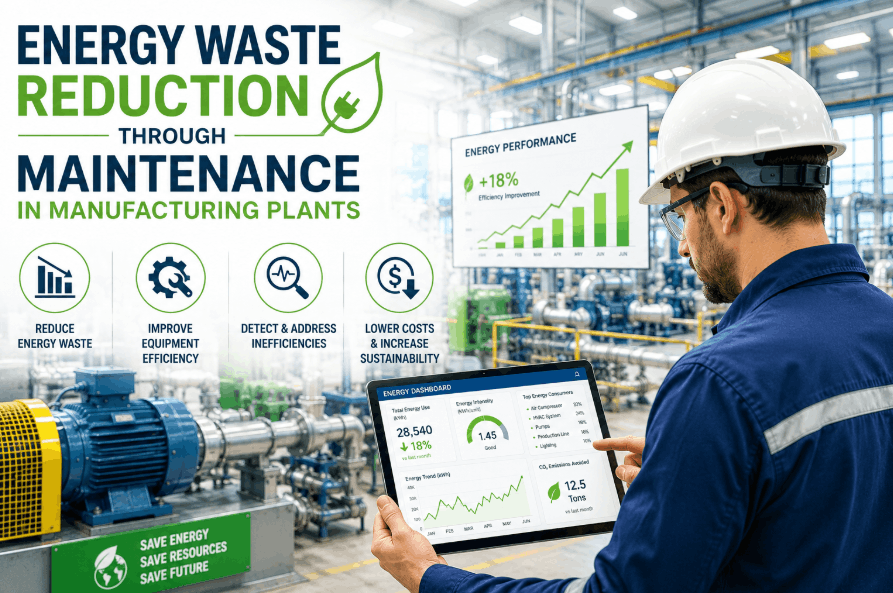
Machines idle between batches, consuming energy without producing output. AI correlates energy draw with production throughput in real time, identifying which assets waste the most energy during non-productive periods and recommending scheduling adjustments.
Start catching these 5 hidden wastes on your production floor today. Sign up for Oxmaint to get automated anomaly alerts, real-time asset health tracking, and AI-triggered work orders that detect quality drift, changeover delays, and efficiency drops—before they hit your bottom line.
Sign Up Free
Lean 4.0 in Action: Real-Time Continuous Improvement
Lean 4.0 is the convergence of proven lean principles with IoT sensors, edge computing, and machine learning. It transforms continuous improvement from a periodic initiative into a persistent, data-driven operating mode. Every connected asset feeds live data into AI models that learn, adapt, and recommend optimizations around the clock.
Digital Value Stream Mapping
Traditional VSM captures a snapshot on paper. Digital VSM updates every second—showing live WIP levels, bottleneck locations, queue times, and throughput across every station. Teams spot emerging problems on dashboards instead of discovering them during the next walk.
Predictive Maintenance as Waste Prevention
Unplanned downtime is the most expensive form of production waste. AI vibration analysis, thermal monitoring, and oil condition sensors predict failures weeks in advance—converting reactive firefighting into planned, lean maintenance windows.
AI-Optimized Pull Systems
Static kanban signals assume steady demand. AI-driven pull systems recalculate replenishment triggers dynamically based on live consumption, supplier lead time variability, and upcoming production schedules—achieving true just-in-time flow in high-mix environments.
Automated Root Cause Analysis
When a defect or deviation occurs, AI correlates hundreds of variables—temperature, pressure, speed, material batch, operator, time of day—to identify the root cause in minutes instead of the days or weeks a manual investigation would require.
Smart 5S & Workplace Compliance
Computer vision monitors workstation organization in real time, flagging deviations from 5S standards automatically. Digital checklists replace manual boards, and compliance data feeds directly into continuous improvement dashboards visible across shifts.
Digital Twin Process Simulation
Test layout changes, takt time adjustments, and scheduling scenarios in a virtual replica before touching the live production floor. Digital twins eliminate the trial-and-error risk that slows traditional lean improvement cycles.
Want to see live digital value streams and predictive maintenance dashboards in action? Schedule a 30-minute demo where our team walks you through how Oxmaint automates work orders from AI anomaly detection, tracks OEE in real time, and helps your lean teams prioritize improvements with data—not guesswork.
Book a Demo
Cycle Time Reduction Meets Machine Learning
Cycle time is the heartbeat of lean manufacturing. Every second shaved from a production cycle compounds into thousands of additional units per year. Traditional time studies capture a handful of cycles with a stopwatch. Machine learning analyzes millions of cycles to find patterns no human observer could detect—the specific combination of temperature, feed rate, and tooling that yields the fastest cycle without compromising quality.
Manual Time Studies
- Observer watches 10–20 cycles
- Records with stopwatch and clipboard
- Analyzes averages and standard deviations
- Reports findings weeks after observation
- Improvements plateau after initial gains
5–10%
typical cycle time improvement
VS
ML-Powered Cycle Analysis
- Sensors capture every cycle automatically
- Analyzes thousands of variables per cycle
- Identifies optimal parameter combinations
- Delivers insights in real time to operators
- Continuous learning drives compounding gains
20–38%
cycle time improvement with continuous optimization
Where Lean Six Sigma and Predictive Analytics Converge
Lean eliminates waste. Six Sigma reduces variation. Predictive analytics forecasts both. When these three disciplines converge, manufacturers gain a system that not only identifies current inefficiencies but anticipates future problems and recommends corrective actions before losses occur. This convergence is increasingly being adopted across automotive, aerospace, pharmaceutical, and electronics manufacturing.
| Discipline |
Primary Focus |
AI Enhancement |
Combined Outcome |
| Lean Manufacturing |
Eliminate non-value-added activities (8 wastes) |
Real-time waste detection via IoT and anomaly algorithms |
Continuous waste elimination instead of periodic audits |
| Six Sigma (DMAIC) |
Reduce process variation to 3.4 DPMO |
ML models predict variation before defects occur |
Proactive quality control with self-correcting parameters |
| Predictive Analytics |
Forecast future states from historical data |
Neural networks correlate hundreds of process variables |
Demand-driven production, predictive maintenance, failure prevention |
Bring Lean, Six Sigma, and AI Together on One Platform
Oxmaint centralizes maintenance data, tracks asset health with predictive analytics, and automates corrective work orders—giving your lean and Six Sigma teams the real-time intelligence they need to drive measurable, sustained improvement.
Sector-by-Sector Playbook: AI-Lean Strategies That Deliver
Different industries face different waste profiles. A food processor battling spoilage needs different AI interventions than an aerospace manufacturer fighting rework hours. The most effective AI-lean programs start with the sector's dominant waste type and expand from there.
Automotive
Dominant waste: Defects & Waiting
AI vision inspection at line speed catches micro-defects. Predictive scheduling eliminates bottleneck-driven idle time. Toyota's Kentucky plant cut defect rates by 91% with AI-powered inspection systems.
Food & Beverage
Dominant waste: Spoilage & Over-processing
AI batch optimization and shelf-life prediction reduce spoilage waste. Smart changeover sequencing cuts transition time by 15%. One multinational projected $185M in growth by pairing digital technologies with lean practices.
Aerospace & Defense
Dominant waste: Extra Processing & Rework
AI process parameter optimization ensures first-pass yield on precision components. Digital thread tracking links every manufacturing step to quality records, slashing rework hours by up to 30%.
Electronics
Dominant waste: Defects & Non-utilized Talent
AI-powered automated optical inspection runs 80% faster than manual checks. Automated data collection frees engineers for root cause analysis instead of logging results on spreadsheets.
Pharmaceutical
Dominant waste: Waiting & Inventory
Predictive batch scheduling compresses cycle times by 25%. Real-time environmental monitoring prevents batch deviations that cause expensive reprocessing and regulatory delays.
Heavy Equipment
Dominant waste: Transportation & Motion
AI-optimized facility layouts and material flow analytics reduce unnecessary handling by 30%. Fleet tracking and predictive maintenance cut unplanned equipment stops by half.
Your 90-Day Roadmap to AI-Driven Lean Operations
You do not need to overhaul your equipment or hire a data science team to start. The most successful AI-lean transformations follow a phased approach—starting with quick wins that prove value, then expanding as organizational confidence grows. Book a free demo and our team will build a customized 90-day AI-lean rollout plan tailored to your facility's equipment, waste profile, and production goals.
Day 1–21
Baseline & Connect
Map current value streams and quantify top waste sources. Deploy IoT sensors on your highest-impact assets. Integrate CMMS for centralized asset and work order tracking.
Day 22–50
Detect & Optimize
Activate AI anomaly detection and predictive maintenance models. Set automated work order triggers for detected issues. Begin real-time OEE and waste tracking dashboards.
Day 51–90
Scale & Sustain
Expand monitoring to additional production lines. Launch AI-driven scheduling and dynamic pull systems. Establish continuous improvement loops with automated reporting and cross-shift benchmarking.
The question for manufacturing leaders is no longer whether AI belongs in their lean strategy, but how quickly they can implement it before competitors gain the advantage. AI does not replace lean fundamentals—it amplifies them by addressing limitations that human-only observation inherently cannot overcome.
— AI in Manufacturing, Industry Analysis
Make Continuous Improvement Actually Continuous
Your clipboards and whiteboards got you this far. Oxmaint takes you further—connecting every asset to AI-powered monitoring, automating maintenance work orders the moment waste is detected, and giving your lean teams the live data they need to improve every shift, every day, without waiting for the next kaizen event.
Frequently Asked Questions
Does AI replace traditional lean tools like kaizen and value stream mapping?
No. AI amplifies these tools rather than replacing them. Value stream mapping becomes a live, continuously updating digital dashboard instead of a static wall chart. Kaizen events become more targeted because AI pre-identifies the highest-impact improvement opportunities with data. The lean philosophy of respecting people and eliminating waste remains the foundation—AI simply gives teams better information to act on.
Sign up for a free Oxmaint account to connect AI-driven anomaly alerts with your existing kaizen workflows and value stream dashboards.
What results can we expect in the first 90 days?
Most plants see measurable impact within the first 30 days—primarily from anomaly detection catching waste that was previously invisible between audits. By day 90, teams typically report reduced unplanned downtime, faster changeovers, and improved first-pass yield. The gains compound over time as machine learning models refine their understanding of your specific operation.
Do we need new equipment to get started with AI-enhanced lean?
No. Retrofit IoT sensors can be added to most legacy machines without replacing them. A cloud-based CMMS platform like Oxmaint layers AI analytics on top of the data you already generate—no expensive capital equipment required. The phased approach lets you start small with your highest-value assets and expand based on proven results.
Schedule a free consultation to get a step-by-step implementation plan designed around your current equipment and budget.
Which manufacturing sectors benefit most from AI-lean integration?
Any sector with repetitive processes and measurable waste benefits. Automotive and electronics see the fastest ROI from AI vision quality systems. Food and pharmaceutical manufacturers gain from batch optimization and compliance automation. Heavy equipment and aerospace benefit from predictive maintenance and rework reduction. The key is starting with your biggest waste source, regardless of industry.
Can small and mid-sized manufacturers afford AI-lean tools?
Absolutely. Cloud-based platforms have eliminated the need for massive upfront investment. You can start with foundational lean digitization—automated work orders, mobile checklists, real-time asset tracking—and add AI capabilities incrementally. The savings from reduced downtime and scrap typically pay for the platform within months.
Sign up free today to start with automated work orders, mobile checklists, and real-time asset tracking—then scale AI features as your results grow.