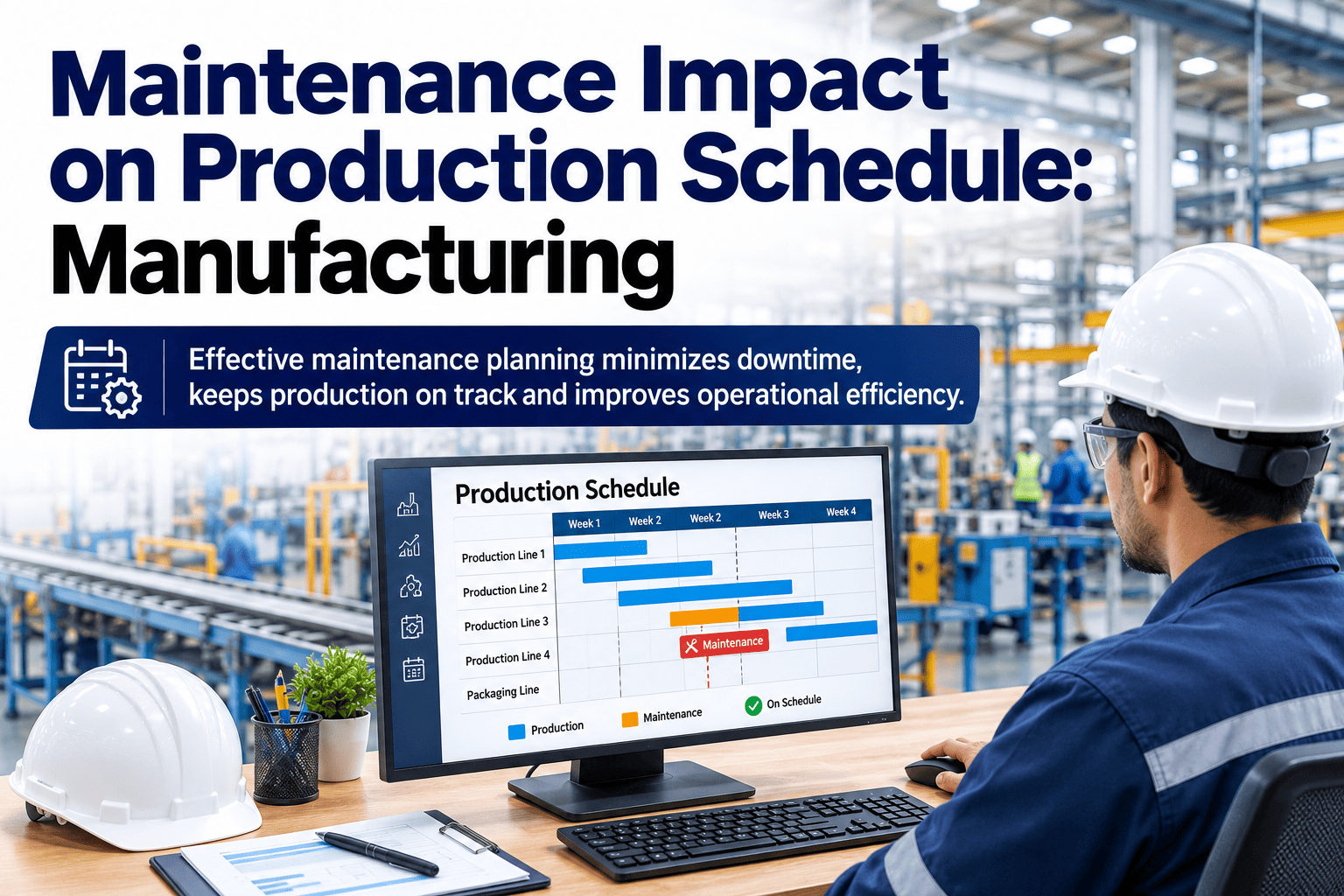
Maintenance impact on production schedule is one of the most contested metrics in manufacturing: when unplanned downtime or overlapping preventive maintenance windows disrupt the master production plan, the cost cascades from lost throughput to overtime premiums and missed customer delivery slots. Quantifying this maintenance production delay requires moving beyond generic OEE numbers to track exactly how many hours of schedule slippage are directly attributable to equipment failure, PM overruns, or spare parts shortages. By implementing CMMS production impact coding and integrated maintenance-production scheduling, plants can systematically reduce schedule deviations by 20–40%. This guide breaks down how to measure, track, and coordinate these activities using Start Free Trial to recover lost capacity without adding shifts.
How much production schedule time is your maintenance operation actually consuming?
When maintenance windows and production targets collide without coordination, reliability teams lose budget and operations teams miss shipments. Tracking the exact maintenance production schedule impact turns a weekly turf battle into a data-driven planning cycle.
Quantifying Maintenance Delay in Manufacturing
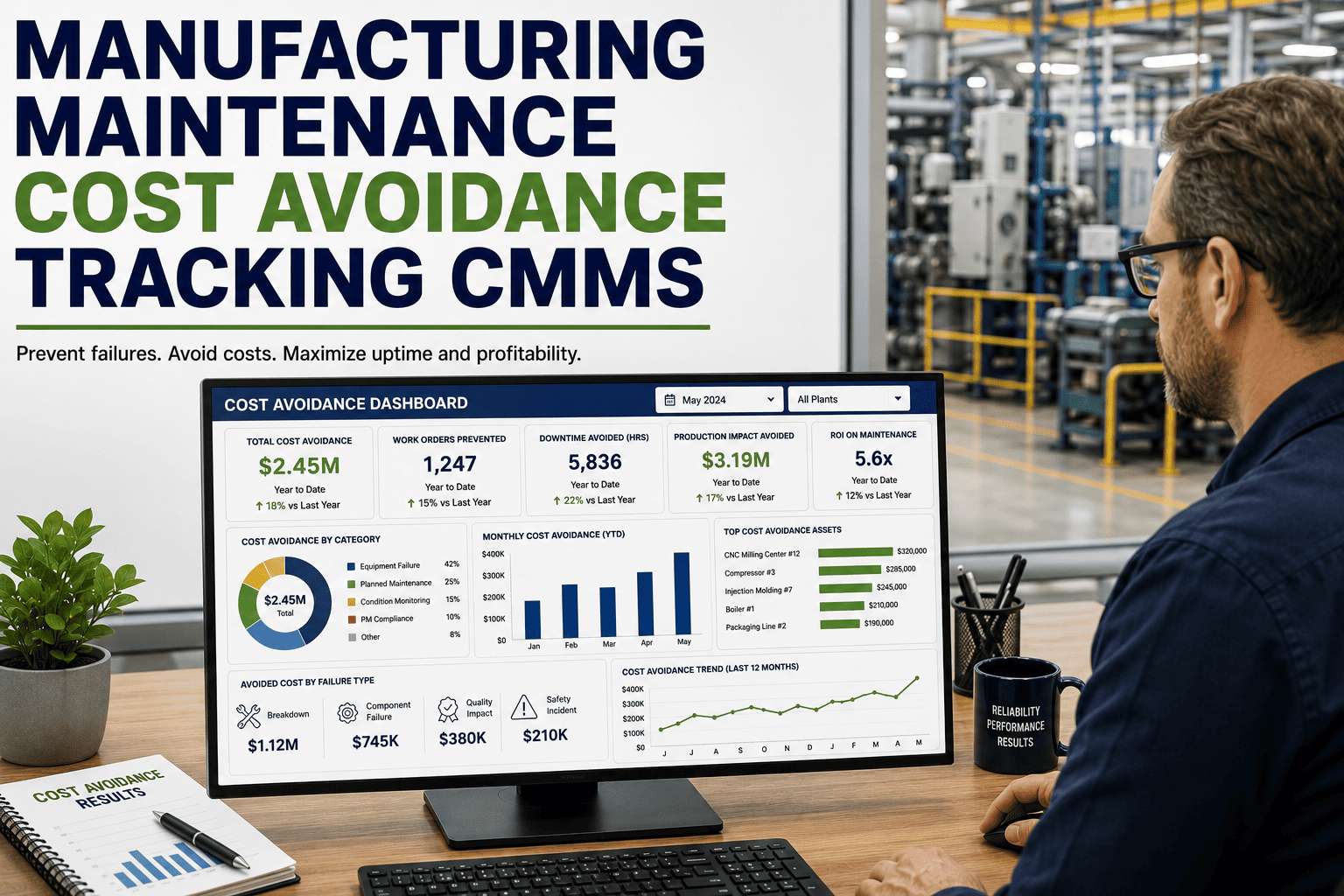
In a typical 180-asset plant running a $42K/hr production line, even a 2% maintenance-caused delay translates to over $1.3M in lost annual throughput. Here is how that manufacturing maintenance impact breaks down.
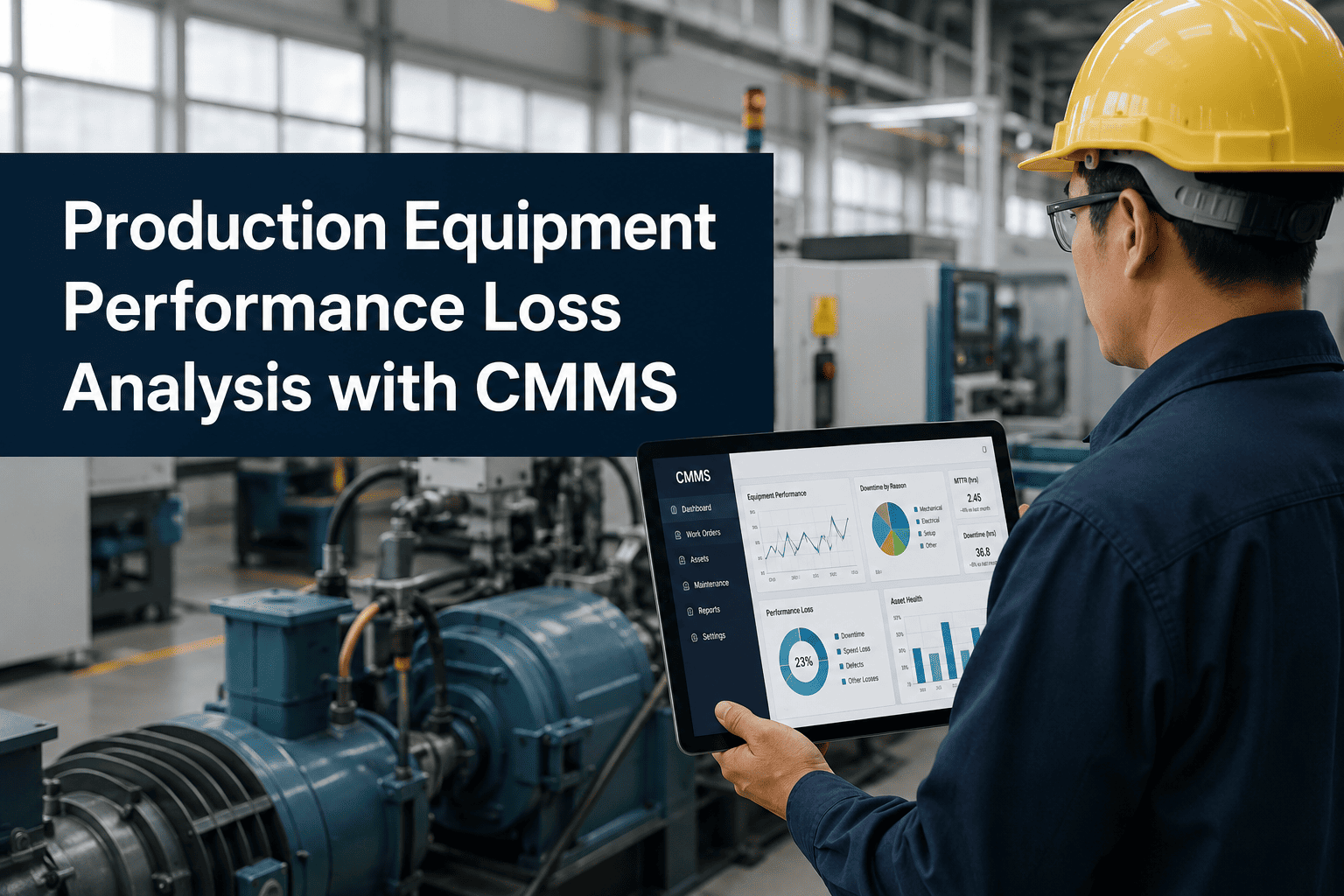
By tagging every work order with a CMMS production impact code, plants can isolate exactly how much schedule slippage is maintenance-attributable versus operational.
How to Track Maintenance Production Delays with CMMS Coding
To measure the true production impact maintenance has on the schedule, every work order must close with a standardized delay reason code. This creates the baseline data needed for maintenance production correlation.
| CMMS Impact Code | Description | Schedule Impact | Typical Recovery Action |
|---|---|---|---|
| MD-01 | Unplanned Mechanical Failure | Line stopped, production lost | Trigger emergency repair, re-route shift |
| MD-02 | PM Window Overrun | Startup delayed, batch queued | Shorten PM cycle, move to condition-based |
| MD-03 | Spare Parts Shortage | Equipment left in downtime state | Auto-reorder min/max in CMMS |
| MD-04 | Opportunistic Maintenance Overrun | Changeover extended beyond plan | Enforce strict time-boxed checklists |
5-Step Timeline to Coordinate Maintenance Windows & Production Schedules
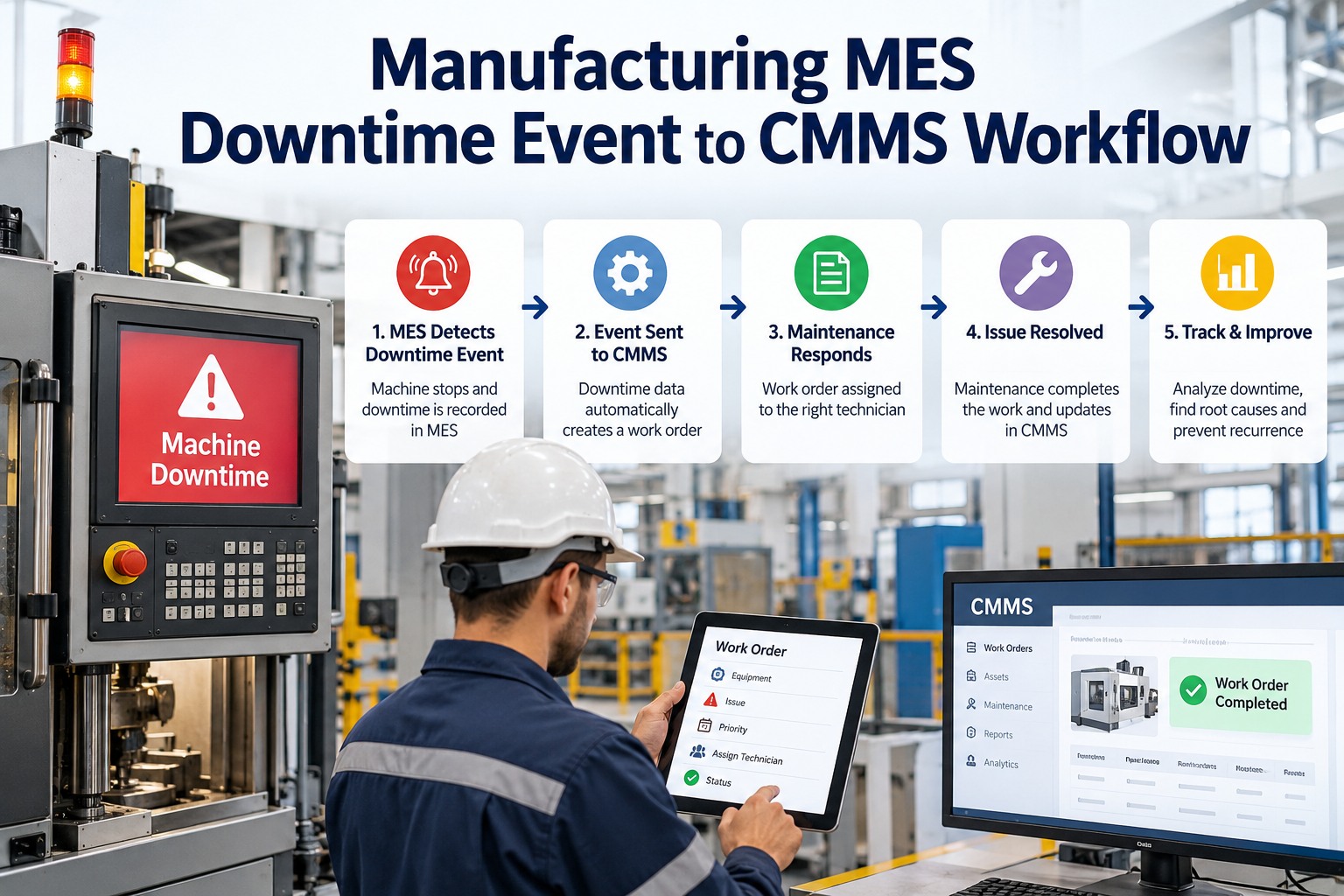
Top-performing plants eliminate weekly turf battles by running integrated planning meetings where CMMS and MES data share a single source of truth. Here is the standard production maintenance manufacturing coordination cycle.
Tactical Sync Meeting
Operations and maintenance review the last 24 hours of CMMS production impact codes, confirm today's production schedule maintenance windows, and negotiate immediate resource conflicts.
Integrated Scheduling Review
Merge next week's production runs with PM triggers. Identify opportunistic maintenance windows during planned product changeovers to maximize asset availability without extra schedule impact.
CMMS-MES Data Reconciliation
Compare actual maintenance delay tracking data against the MES production log. Flag discrepancies where maintenance duration exceeded the scheduled window and establish root cause.
Shutdown Negotiation & Negotiation
Plan major equipment overhauls and predictive maintenance interventions. Negotiate full or partial plant shutdown windows based on production forecasts and asset health criticality scores.
Impact Analytics Review
Analyze the manufacturing schedule maintenance performance. Calculate the exact ROI of maintenance interventions, adjust PM frequencies, and reallocate budget to highest-impact assets.
Stop Letting Maintenance Delays Dictate Your Production Schedule
See how OxMaint aligns your maintenance windows with production targets to recover lost capacity and cut schedule deviations by up to 40%.
How OxMaint Solves Maintenance Production Impact
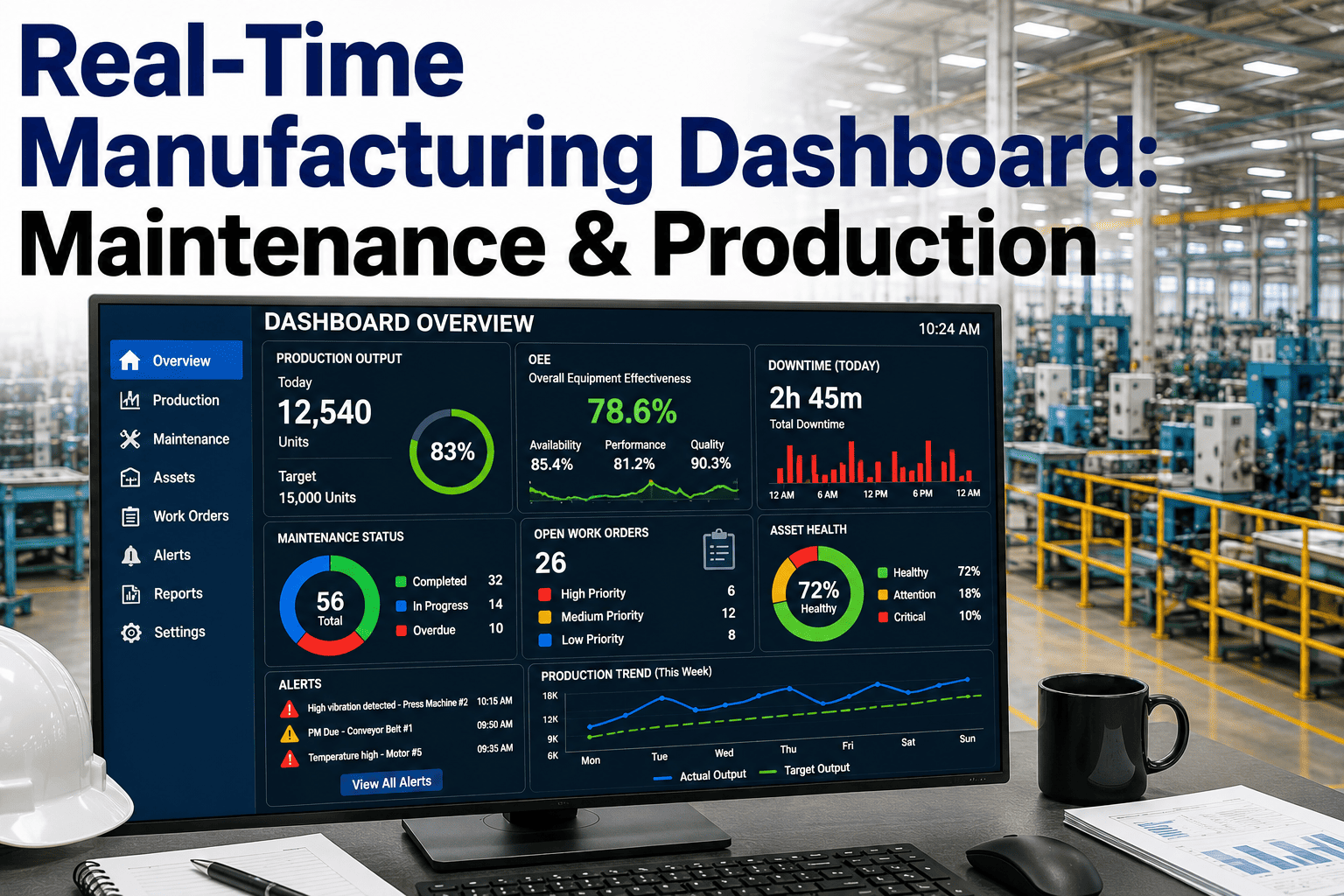
OxMaint is an AI-powered CMMS and EAM platform designed to bridge the gap between reliability engineering and production scheduling. By moving away from reactive spreadsheets, plants gain real-time visibility into how maintenance affects the schedule.
Production Impact Coding
Every work order in OxMaint requires a standardized delay reason code at closure. This automated CMMS production delay tracking isolates schedule slippage, giving you exact data on maintenance production correlation.
Integrated Maintenance Calendars
OxMaint's shared scheduling engine syncs preventive maintenance triggers with production changeovers. Reliability teams can securely block time-windows that operations can see in real-time, ending weekly turf battles.
Predictive Maintenance AI
OxMaint uses AI-driven sensor data to predict asset failures before they cause unplanned downtime. Shift from reactive firefighting to condition-based interventions during planned schedule windows.
Smart Spare Parts Inventory
Auto-linked BOMs and min/max replenishment ensure critical spares are always in stock when a maintenance window opens. Eliminate MD-03 delays where equipment sits idle waiting for parts.
The ROI of Coordinated Plant Maintenance Production
A 180-asset automotive components plant spending $42K/hr on production lines was losing 4 hours weekly to maintenance schedule collisions. By deploying OxMaint for maintenance delay tracking and integrated scheduling, they achieved the following over 6 months:
"Before OxMaint, our maintenance and operations teams fought daily over line access. The CMMS production impact coding proved that 60% of our delays came from uncoordinated PMs. We shifted to opportunistic maintenance during changeovers and recovered 12 hours of weekly capacity."
Maintenance Production Schedule Impact FAQs
How does maintenance impact the production schedule in manufacturing?
Maintenance impacts production schedules by consuming planned downtime windows (PMs) and causing unplanned line stoppages (breakdowns). When maintenance overruns its allocated window or fails unexpectedly, it directly delays batch completion, bottlenecks downstream operations, and forces schedule rescheduling. Tracking this via Start Free Trial CMMS production impact coding quantifies the exact hours lost.
What is CMMS production impact coding?
CMMS production impact coding is the practice of tagging every closed maintenance work order with a standardized reason code that denotes how it affected the production schedule (e.g., line stopped, startup delayed, changeover extended). This allows plants to measure the maintenance production correlation and isolate reliability-driven delays from operational issues.
How do you calculate maintenance delay in manufacturing?
You calculate maintenance delay by summing the total hours of unplanned downtime, PM overruns, and parts-related delays, then multiplying by the hourly production rate. Dividing this total schedule loss by the planned production hours gives you the maintenance production schedule impact percentage. You can see this calculated live by booking a demo at Book a Demo.
What is the difference between planned maintenance and production schedule maintenance?
Planned maintenance refers to any scheduled work (preventive or predictive) performed on an asset. Production schedule maintenance specifically refers to coordinating that planned work within the operational production calendar—ensuring PMs happen during natural changeovers or designated windows so they do not disrupt active manufacturing runs.
How can a CMMS reduce manufacturing schedule maintenance delays?
A CMMS reduces delays by centralizing work orders, automating PM triggers based on actual asset usage rather than arbitrary dates, and providing shared visibility into maintenance calendars. This allows operations and reliability teams to negotiate shutdown windows proactively, perform opportunistic maintenance, and eliminate the spare parts shortages that cause extended equipment downtime.
Align Maintenance & Production to Recover Lost Capacity
See OxMaint's AI-powered CMMS on your own assets. Discover how integrated scheduling and delay tracking can cut your schedule deviations by up to 40%.
Free 14-day trial · No credit card