The maintenance skills gap is no longer a future problem — it is a 2026 operational crisis. The U.S. Bureau of Labor Statistics projects over 500,000 manufacturing jobs will go unfilled through 2030, and Deloitte's manufacturing workforce report puts the skilled maintenance technician shortage at the heart of that number. Baby Boomer retirement is accelerating institutional knowledge loss, Gen Z hiring pipelines are running 3–5 years behind demand, and the complexity of modern CNC, robotics, and automation systems is outpacing what traditional apprenticeship programs can deliver at speed. Manufacturers who wait for the hiring market to fix this will keep paying for it in unplanned downtime, first-article failures, and rising contractor spend. The ones winning in 2026 are deploying AI-powered knowledge capture, AR-guided training, and digital SOPs through platforms like Oxmaint — turning what their best technicians know into a scalable, transferable system that survives retirement and onboards new hires in weeks instead of years.
The 2026 Skills Gap: By the Numbers
Before solving a problem, you have to understand its true scale. The maintenance skills gap is not a regional issue or a small-plant problem — it is a structural shift across every manufacturing segment. These numbers represent the operational reality plant managers are navigating right now.
2.1M
manufacturing jobs projected unfilled in the U.S. by 2030
Deloitte / Manufacturing Institute
41%
of current skilled maintenance workforce eligible to retire by 2028
Bureau of Labor Statistics
$40K+
average cost to replace one skilled maintenance technician
SHRM Workforce Report
3–5 yrs
typical time to develop a fully capable maintenance technician from scratch
Industry consensus estimate
Why Traditional Training Can't Keep Up
The conventional approach — apprenticeships, classroom training, shadowing experienced technicians — was built for a world where knowledge transfer happened over decades and equipment complexity changed slowly. Neither condition exists in 2026. Here is exactly where the traditional model breaks down and why technology-driven approaches are not optional extras but operational necessities.
Traditional Training vs. Technology-Driven Approach
Time to Competence
3–5 years of shadowing
6–12 weeks to task-level proficiency
Knowledge Retention
Lost when expert retires
Captured, searchable, always available
Error Rate on New Tasks
18–24% first-attempt error
3–6% with guided AR walkthroughs
Scalability
Limited by expert availability
Unlimited — deploy across all sites simultaneously
Cost Per Technician
$35,000–$60,000 over 3 years
$4,000–$8,000 per year at scale
Consistency Across Shifts
High variance — trainer-dependent
Standardized — same steps every time
Three Technologies Closing the Gap in 2026
The manufacturers making measurable progress on the skills gap in 2026 are not doing it through hiring alone. They are deploying three distinct technologies — each targeting a different dimension of the problem. Together, they create a self-reinforcing workforce capability system that reduces dependency on any single expert and makes every new hire significantly more productive faster.
Technology 01
AI-Powered Knowledge Capture
What your best technician knows — preserved forever
The Problem
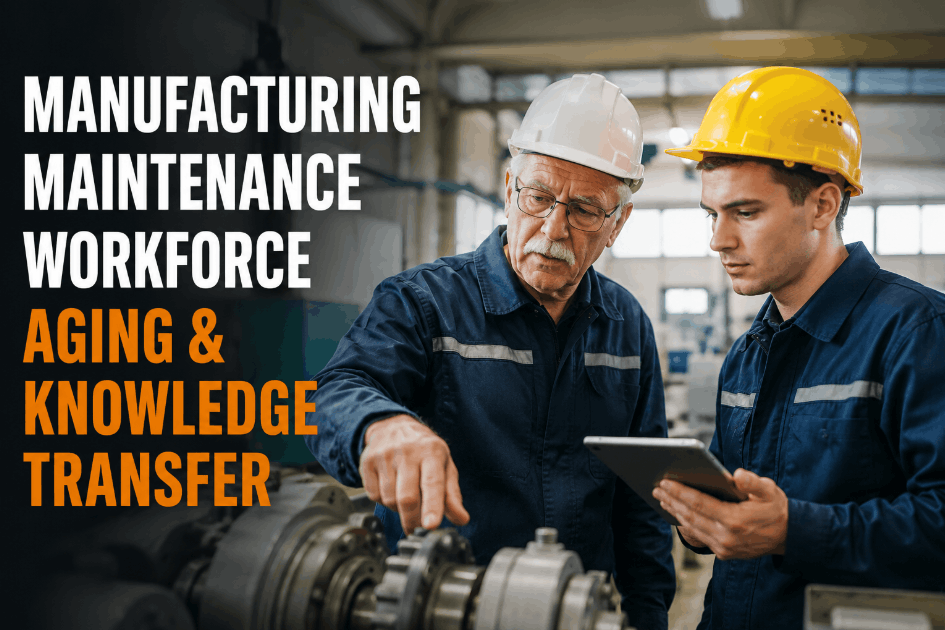
When a 28-year maintenance veteran retires, decades of diagnostic intuition, equipment-specific workarounds, and failure pattern recognition walk out the door with them. Traditional documentation — if it exists at all — captures procedures, not the judgment behind them.
The AI Solution
AI tools embedded in CMMS platforms capture decision trees, failure signatures, and resolution patterns from every work order completed by experienced technicians. Over time, the system builds a queryable knowledge base — so a junior technician facing an unfamiliar fault can ask the system and get the expert's answer, not a generic manual.
68%
faster fault diagnosis for new technicians using AI knowledge base vs. paper manuals
Technology 02
AR-Guided Maintenance Walkthroughs
Expert guidance at the point of work — without the expert
The Problem
A technician encountering a machine they have worked on only twice before has two options: find a more experienced colleague (who is probably busy elsewhere) or guess. Both options result in longer downtime, higher error rates, and safety risks on complex equipment.
The AR Solution
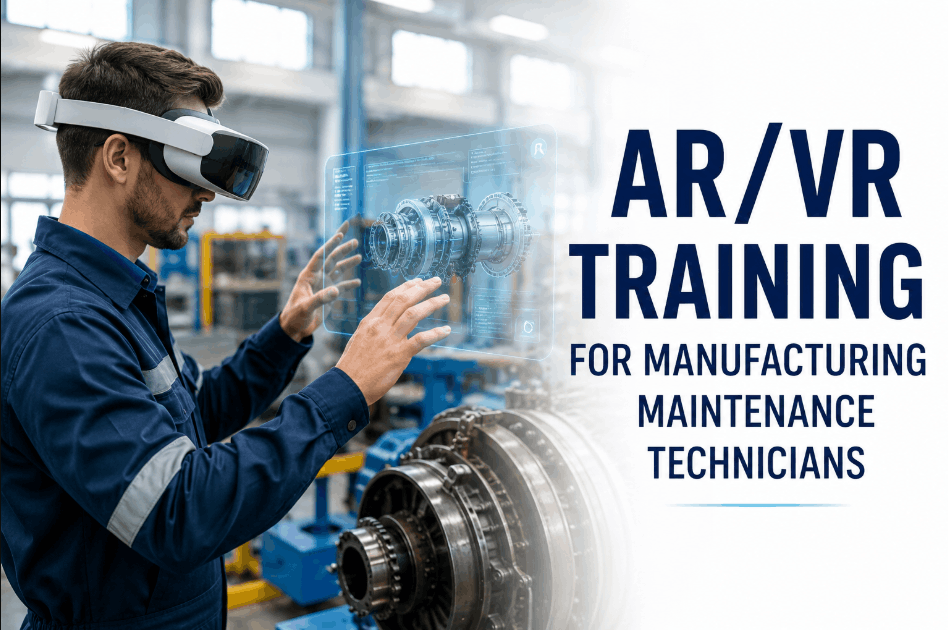
Augmented reality overlays — delivered through tablets, smart glasses, or mobile devices — guide technicians through complex procedures step-by-step with annotated visuals mapped to the actual equipment in front of them. The procedure adapts to what the technician is looking at, not a generic diagram from a manual printed in 2008.
40%
reduction in mean time to repair (MTTR) reported with AR-guided maintenance procedures
Technology 03
Digital SOPs & Mobile Work Orders
Right procedure, right technician, right moment
The Problem
Paper-based SOPs are out of date the moment they are printed, impossible to search, easy to skip, and provide no feedback when steps are missed or done incorrectly. In a skills-gap environment, this is not just inefficient — it is a quality and safety liability every single shift.
The Digital Solution
Digital SOPs delivered through mobile CMMS platforms like Oxmaint provide version-controlled, step-locked procedures that technicians follow on the shop floor in real time. Every step is timestamped, deviations are flagged, and completion data feeds back into maintenance analytics — creating a continuous improvement loop that paper can never replicate.
79%
reduction in procedure-related errors when digital step-locked SOPs replace paper checklists
Your Expert Knowledge Is Retiring. Is It Documented?
Oxmaint's Team & Workforce Management module captures work order history, procedure completion data, and technician performance trends — building the institutional knowledge base your plant needs before it walks out the door.
6–12
weeks to proficiency with digital training vs. 3–5 years traditional
83%
of manufacturers cite knowledge retention as their top workforce priority in 2026
How Oxmaint Addresses the Workforce Gap Directly
Oxmaint is not a training platform in the traditional sense. It is the operational layer where workforce capability, equipment knowledge, and maintenance execution converge — making knowledge transfer a byproduct of normal daily work rather than a separate initiative that never gets prioritized.
Digital Work Instructions at Point of Work
Technicians access step-by-step maintenance procedures directly on their mobile device — at the machine, during the task. Version-controlled SOPs ensure every technician follows current best practice regardless of shift, site, or experience level. No more "the way we've always done it" variation that causes rework and safety incidents.
Work Order History as Institutional Knowledge
Every completed work order in Oxmaint — failure description, diagnosis steps, parts used, resolution — becomes a searchable record tied to that specific asset. When a new technician faces the same fault six months later, the resolution history is available instantly. This is AI knowledge capture happening naturally through the maintenance workflow, with no extra documentation burden on your team.
Technician Skill Tracking & Certification Management
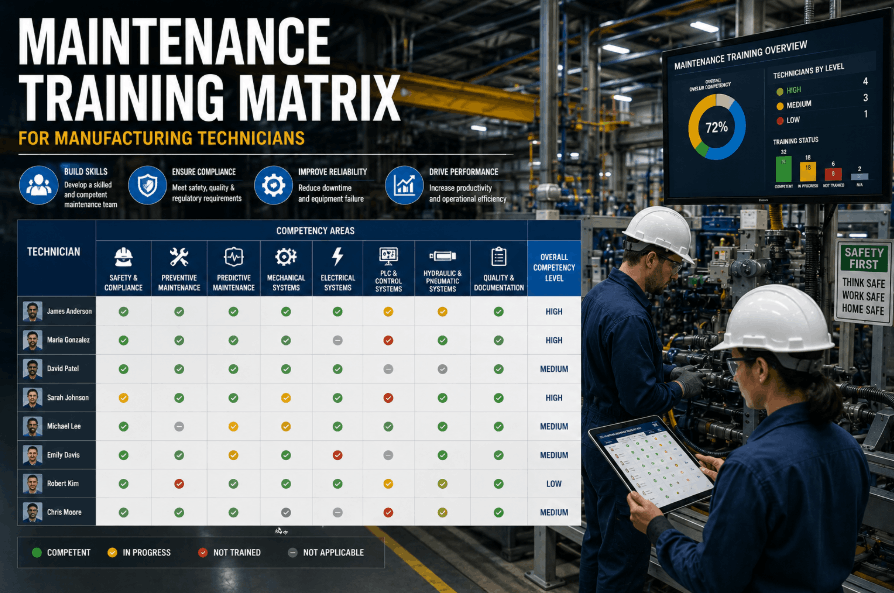
Oxmaint tracks which technicians are certified for which equipment types, surfaces skill gaps across your workforce, and ensures work orders are assigned to qualified personnel. When a certification expires or a new machine type is introduced, the gap is visible in your dashboard — not discovered during an incident investigation.
Multi-Site Knowledge Standardization
For manufacturers operating across multiple facilities, the skills gap is multiplied by location. Oxmaint's centralized SOP library and work order standards ensure that a technician transferred between sites — or a new hire at any location — operates from the same knowledge base. Best practices discovered at Site A propagate to Sites B, C, and D automatically.
The Retention Equation: Why Skills Gap Is Also a Turnover Problem
Hiring is only half the equation. Plants that invest in digital training tools and clear career progression paths see measurably better retention — because skilled workers stay where they feel competent and supported, not where they feel set up to fail with inadequate tools and zero guidance. The table below shows the documented relationship between workforce management investment and technician retention outcomes.
Workforce Investment vs. Retention & Productivity Outcomes
Stop Losing Knowledge. Start Building a Workforce That Scales.
Every month without a structured digital training and knowledge capture system is another month of institutional knowledge at retirement risk — and another month of new hires taking longer than they should to become productive. Oxmaint gives you the platform to fix both, starting this week. Talk to our team about your specific workforce challenge — or explore the platform yourself and see how it fits your operation.
Frequently Asked Questions
How do we capture knowledge from experienced technicians who are close to retirement?
The most effective approach is to embed knowledge capture into normal daily workflow rather than asking experts to document everything in a separate project — which rarely gets done. When experienced technicians complete work orders in
Oxmaint, their diagnostic steps, resolution notes, and parts decisions are automatically recorded and tied to the specific asset. Over 3–6 months of active use, this creates a remarkably rich knowledge base without any extra effort from your team. Supplement this with structured SOP creation sessions during planned downtime, and you build a complete knowledge transfer system before the retirement date arrives.
Does AR training require expensive hardware like smart glasses?
No — the most widely deployed AR maintenance guidance tools in 2026 run entirely on standard tablets and smartphones that most plants already own or can procure for under $400 per device. Smart glasses deliver the best hands-free experience for complex tasks, but they are an optional upgrade, not a requirement. Many manufacturers start AR-guided training on existing iOS or Android devices, see measurable MTTR and error-rate improvements within 60 days, and then selectively invest in headset hardware for their highest-complexity maintenance tasks.
Book a demo to discuss the right hardware approach for your facility.
How long does it realistically take to onboard a new maintenance technician using digital tools?
With digital SOPs, mobile work instructions, and access to an asset-linked knowledge base, most new maintenance technicians reach task-level competency on their primary equipment in 6–12 weeks — compared to 12–18 months for the same result through traditional shadowing. Full independence on complex troubleshooting typically takes 6–9 months with AI-assisted diagnosis support, versus the traditional 2–3 year timeline. The key enabler is giving new hires access to expert knowledge at the point of work through
Oxmaint's digital work order system rather than making them rely entirely on memory and whoever is available to answer questions.
What is the ROI calculation for investing in workforce digital tools during a budget-constrained year?
The ROI case typically rests on three numbers: the cost of one unplanned downtime event caused by a skills gap (typically $15,000–$80,000 per incident depending on line and product), the cost of replacing a technician who leaves (typically $35,000–$60,000 all-in), and the productivity gain from reducing new-hire onboarding time by 50–60%. For a mid-size plant with 15–20 maintenance technicians, preventing two unplanned incidents and one attrition event per year typically generates $100,000+ in measurable savings — well above the platform investment.
Schedule a call and we can build the specific numbers for your operation.
Is Oxmaint suitable for facilities with a mixed workforce of experienced and new technicians?
That mixed workforce scenario is precisely where Oxmaint delivers the highest value. Experienced technicians use the platform to execute and document work efficiently, with their outputs automatically building the knowledge base that junior technicians draw from. New hires benefit from digital SOPs and work order history without creating extra workload for seniors. Managers see skill profiles, certification gaps, and training completion across the entire team in one dashboard.
Sign up free to see how the team management module structures this across your workforce, regardless of size or mix.