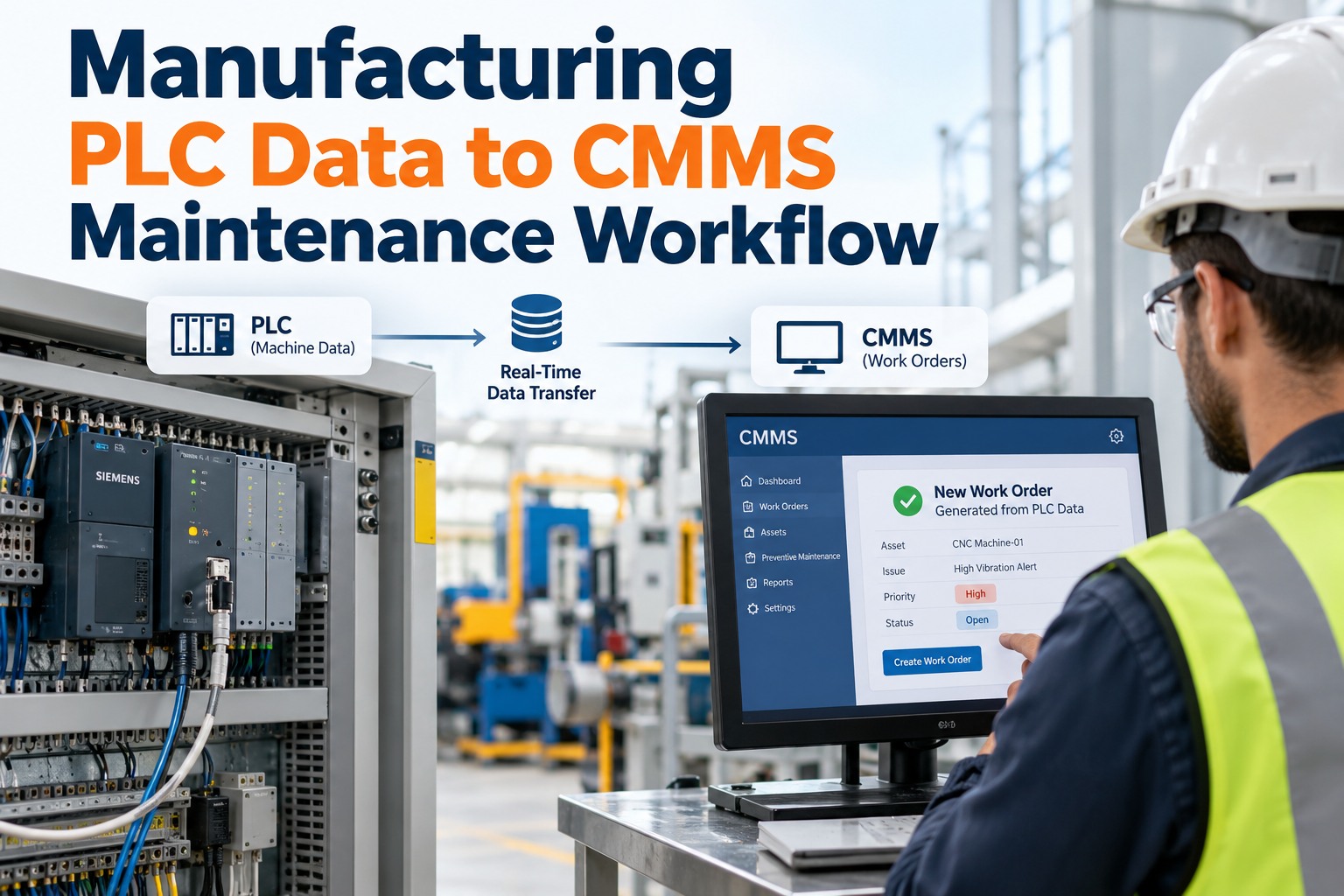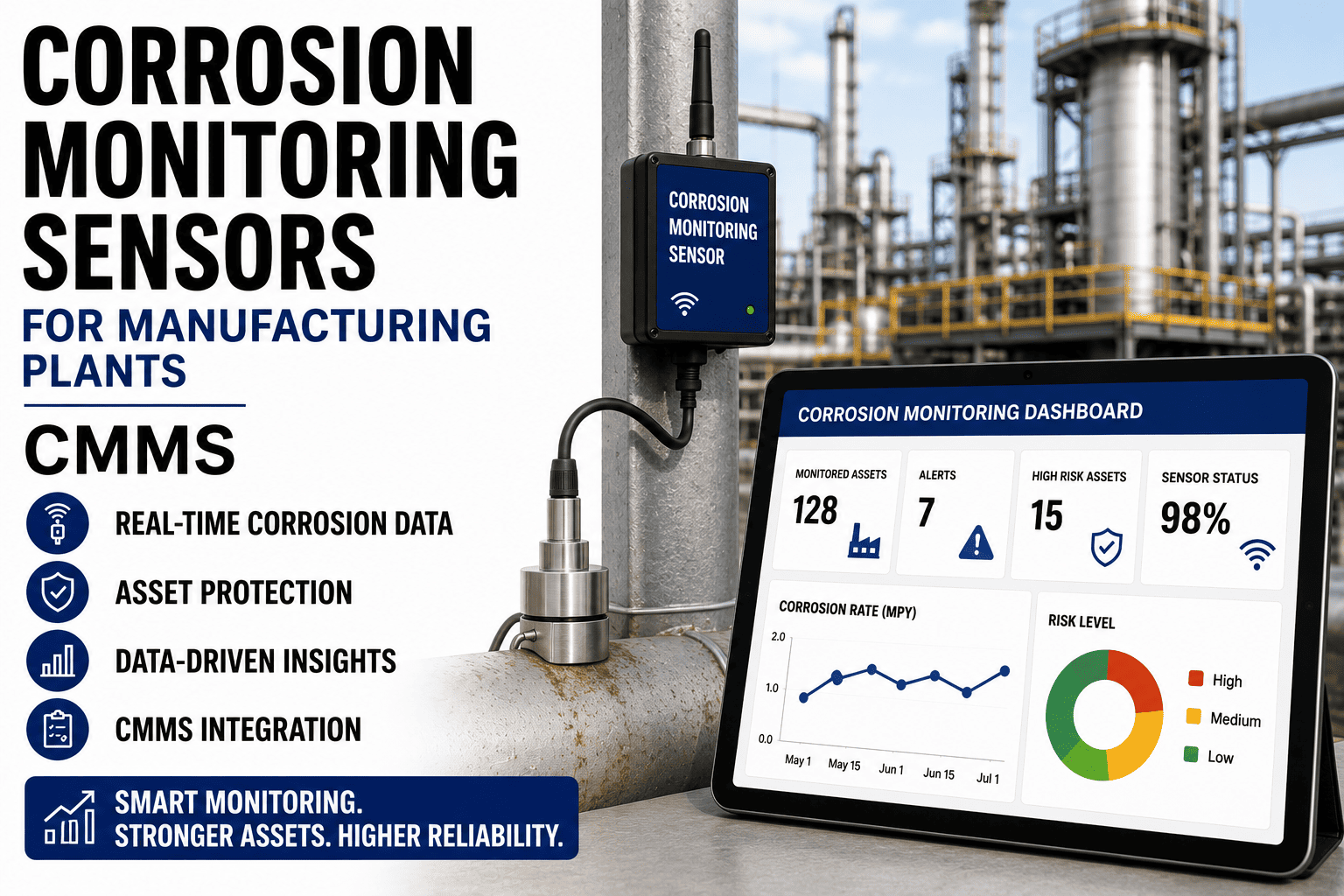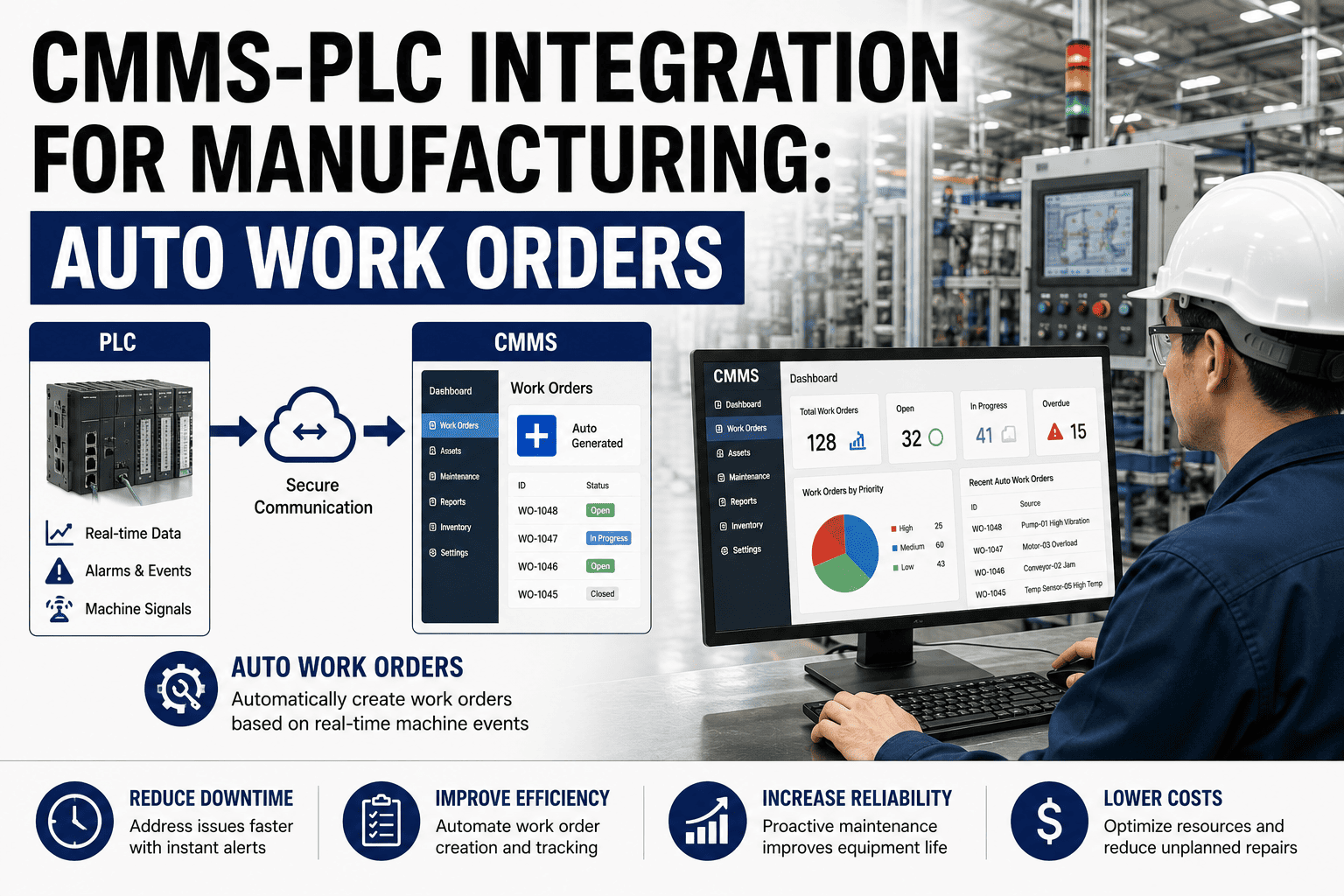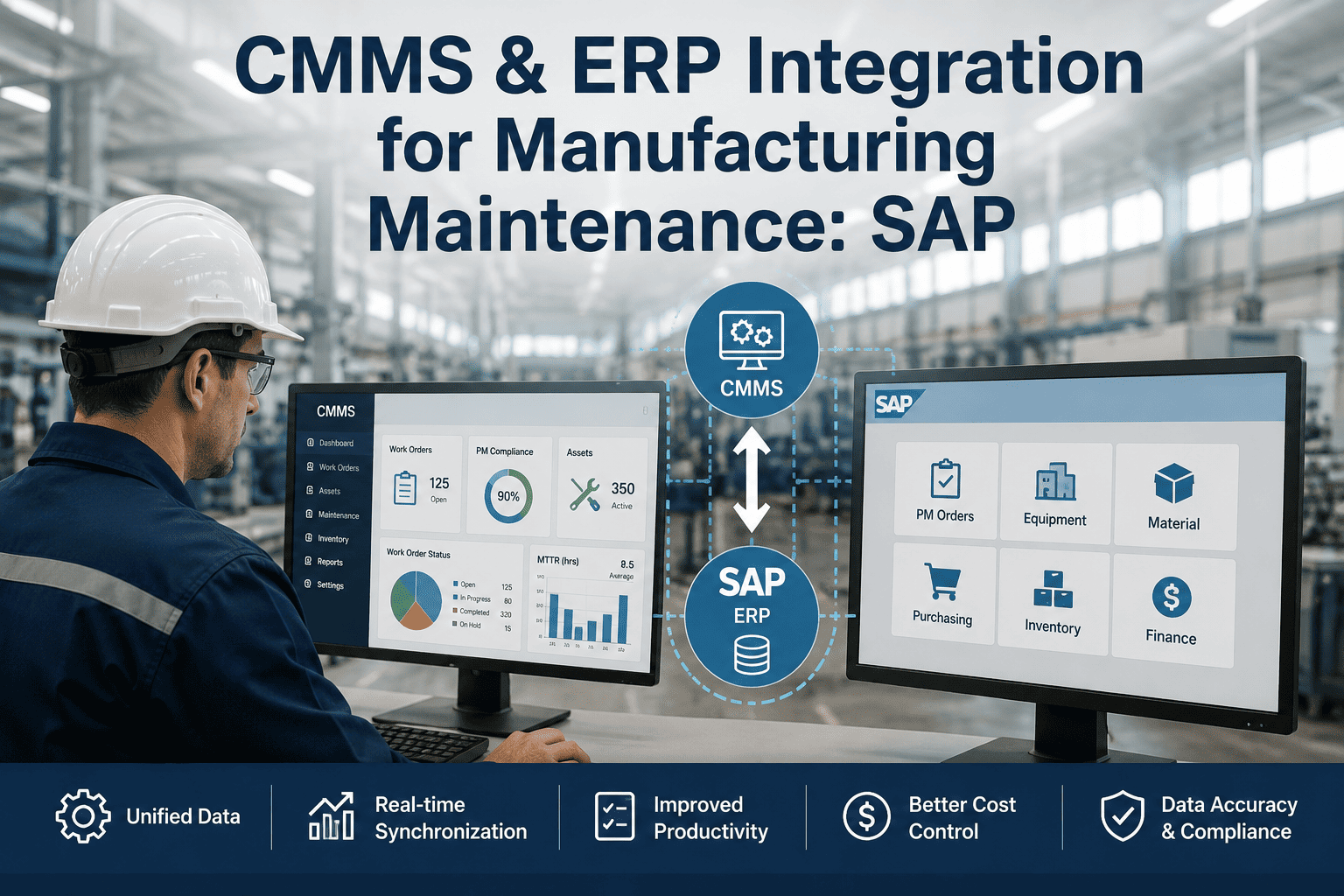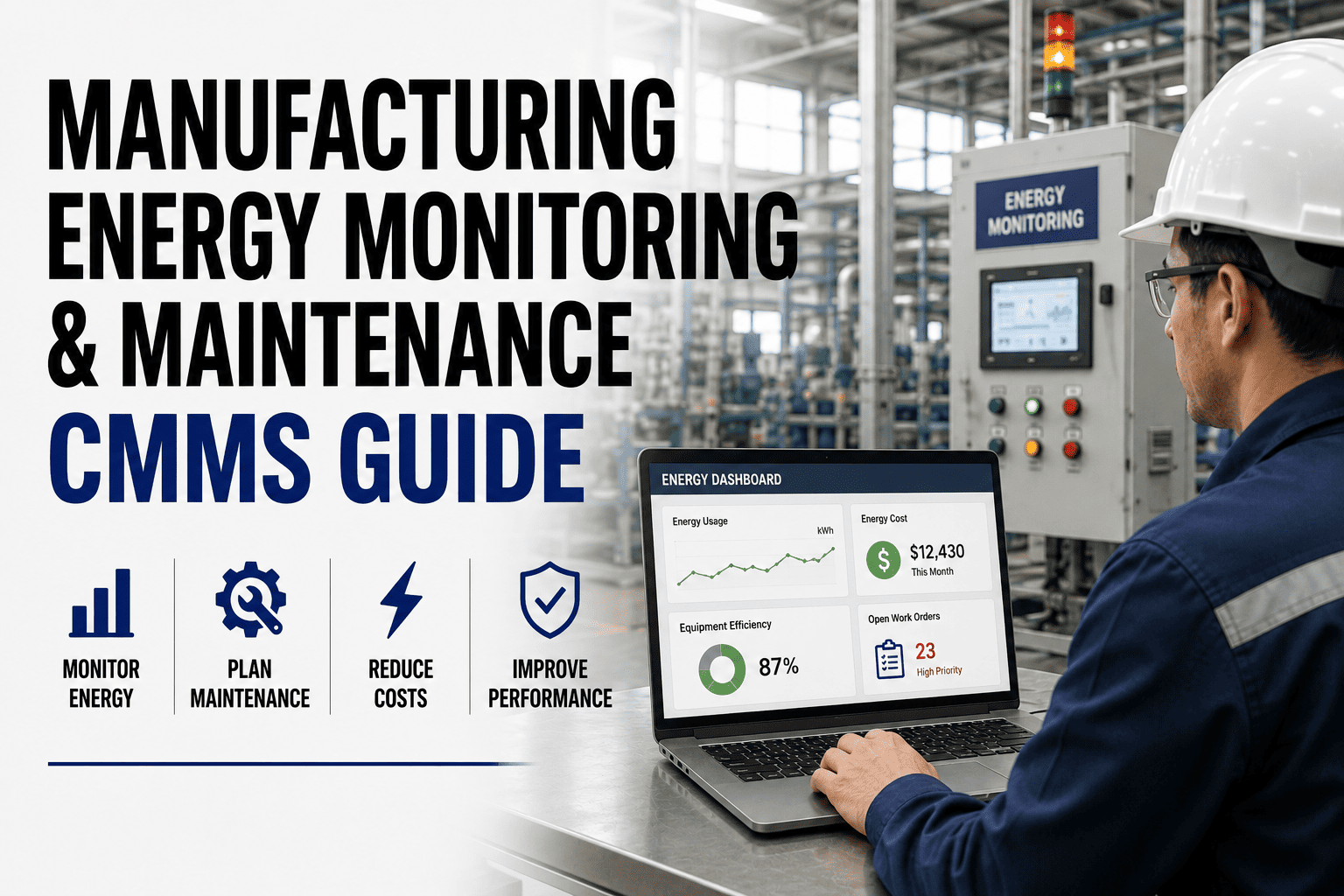
Manufacturing energy monitoring CMMS integration connects real-time power-meter data to work-order, preventive-maintenance and asset-tracking workflows so that energy waste triggers maintenance action — not just a dashboard alert. Plants that link submeter readings to a CMMS typically cut energy-driven maintenance costs 15–25% within the first year because anomalies like motor over-current, compressed-air leaks and bearing friction are caught at the asset level before they become failures. This guide walks through submetering strategy, motor and compressed-air baselines, energy-triggered work orders, ISO 50001 alignment, and how a platform like OxMaint turns energy data into measurable savings. Ready to stop guessing? Start Free Trial and connect your first meters in minutes.
Energy Monitoring × Maintenance
What if every kilowatt of waste automatically triggered a work order?
Energy and maintenance teams chase the same losses from different angles. When your CMMS ingests live power-meter data, compressed-air flow and motor-current readings, waste becomes a ticket — assigned, prioritized and tracked to completion. That is manufacturing energy monitoring with a CMMS at its core.
The Problem
Energy dashboards that nobody acts on
Most plants already own an energy-monitoring system — BMS, SCADA add-on or submeter dashboard — yet 70% of identified savings never materialize because the findings never reach the maintenance team's work-order queue.
| Siloed energy monitoring (status quo) | CMMS-integrated energy monitoring |
|---|---|
| Energy spike shows on a dashboard; email is sent; no one owns the fix. | Spike auto-generates a work order tied to the exact asset and technician. |
| Compressed-air leak survey is a PDF filed in a shared drive. | Each leak becomes a tagged work order with repair-by date and cost impact. |
| Motor efficiency drops 8% over six months — invisible until failure. | Trended kWh/ton breach triggers a PM: re-grease, align, or thermography. |
| ISO 50001 energy reviews are a manual, twice-a-year scramble. | Energy KPIs by asset are live and audit-ready inside the CMMS. |
| Maintenance and energy teams meet quarterly, if at all. | One platform, one source of truth, shared dashboards and alerts. |
Step-by-Step
How to build a manufacturing energy monitoring CMMS strategy in 90 days
A phased rollout prevents data overload and proves ROI before you scale. Here is the timeline reliability teams use to move from spreadsheets to energy-triggered maintenance.
Submeter & baseline the top 20% of assets
Install submeters on equipment that accounts for ~80% of plant load — large motors, compressors, chillers, process heaters. Record nameplate kW, running amps and baseline kWh/ton (or kWh/unit) for each. In OxMaint, tag every metered asset with an energy profile so readings attach to the asset record, not a standalone spreadsheet.
Define thresholds & energy-triggered PMs
Set anomaly rules: kWh/ton > 15% above baseline for 3 consecutive shifts, motor current > 110% of nameplate, or compressed-air pressure-drop > 8%. Each rule generates a specific PM template — thermography inspection, filter change, belt tension check, leak survey — so the right technician is dispatched automatically.
Close the loop & report savings
Track completed work orders against energy trends. If kWh/ton drops after a bearing replacement, quantify the dollar savings and feed it into OxMaint's maintenance analytics dashboard. This closes the energy-maintenance loop and gives plant leadership the ROI proof needed to scale submetering across the facility.
Worked Example
Energy-triggered work orders in action: a 180-asset plant
Consider a mid-size food-packaging plant spending $42,000/yr on energy for a single compressed-air system and conveyor motor line. After linking submeter data to their CMMS, three energy anomalies surfaced in the first quarter — each became a work order within minutes.
Auto-PM: Ultrasonic leak survey
Result: 4 leaks repaired → $6,800/yr saved
Auto-PM: Belt tension + bearing thermography
Result: Worn bearing replaced → $3,200/yr saved + avoided $11K rebuild
Auto-PM: Tube cleaning + refrigerant top-off
Result: Efficiency restored → $4,500/yr saved
Total first-year savings: $14,500 in energy plus $11,000 in avoided catastrophic motor rebuild — a $25,500 payback on a $9,000 submetering and CMMS integration investment.
How OxMaint Helps
OxMaint turns energy data into maintenance action
OxMaint is an AI-powered CMMS and EAM platform built for maintenance and reliability teams. When energy monitoring is integrated, every kilowatt of waste has an owner, a deadline and a verified outcome.
Energy-triggered work orders
Connect any MODBUS, OPC-UA or BACnet meter to OxMaint. When an asset's kWh/ton, motor current or pressure-drop breaches a threshold, a work order is auto-created, routed to the right technician and prioritized by cost impact — no manual data entry, no dashboard watching.
Outcome: Cut energy-driven downtime response from days to under 4 hours.
Energy KPIs by asset
Every asset record carries an energy profile: baseline kW, running kWh, peak demand and cost per unit produced. Trend charts overlay energy use against work-order history so you can see whether a repair actually moved the needle.
Outcome: Identify the 20% of assets consuming 80% of energy waste in one dashboard.
Predictive energy-maintenance PMs
OxMaint's AI engine learns each asset's normal energy signature and flags degradation weeks before a threshold breach. Predictive PMs schedule interventions during planned downtime windows, not mid-shift.
Outcome: Prevent 30–50% of energy-related unplanned downtime before it happens.
ISO 50001 audit-readiness
Energy reviews, significant-energy-use registers and corrective actions live inside the same CMMS as your maintenance records. Every energy-triggered work order is timestamped, assigned and verifiable — turning ISO 50001 surveillance audits from a week of prep into a 20-minute export.
Outcome: Pass ISO 50001 audits with zero manual data compilation.
Cost of Inaction
What unchecked energy waste really costs your plant
Energy is the largest controllable operating cost in most manufacturing facilities — and unmaintained equipment is the largest controllable source of energy waste. The longer it goes unaddressed, the steeper the curve.
See OxMaint on your assets — book a 30-min demo
We will connect a sample meter, show an energy-triggered work order firing in real time, and map the integration to your existing submeters or BMS. No slide deck — just the product on your use case.
FAQ
Manufacturing energy monitoring CMMS — frequently asked questions
What is manufacturing energy monitoring CMMS integration?
It is the connection of real-time energy-meter data — submeters, motor-current sensors, compressed-air flow meters — directly into a CMMS so that energy anomalies automatically generate, prioritize and track maintenance work orders. Instead of an energy dashboard that someone has to check, the CMMS becomes the action layer: a spike in kWh/ton or motor over-current creates a ticket assigned to the right technician with the cost impact attached.
How does CMMS energy integration support ISO 50001?
ISO 50001 requires documented energy reviews, significant-energy-use identification, energy baselines and corrective actions. A CMMS with energy integration stores all of this against asset records: baseline kWh/ton, EnPI thresholds, and every energy-triggered PM and its completion evidence. Audit preparation becomes a report export instead of a multi-day data hunt. You can Book a Demo to see the ISO 50001 report template in OxMaint.
Which assets should I submeter first for energy maintenance?
Start with the top 20% of assets by energy consumption — typically large motors (75 hp+), air compressors, chillers, process heaters and pumps. These assets represent roughly 80% of plant energy spend and offer the largest savings from maintenance-linked actions like leak repair, bearing replacement, filter cleaning and drive alignment. Expand submetering only after the first wave proves measurable ROI.
Can OxMaint connect to my existing energy meters and BMS?
Yes. OxMaint supports MODBUS, OPC-UA, BACnet and REST-API integrations, so data from existing submeters, building-management systems or PLCs flows directly into asset records and triggers work orders. Most plants are live within 2–4 weeks. You can Start Free Trial and connect your first meter today to test the workflow.
What is the typical ROI of energy monitoring with a CMMS?
Plants that integrate energy monitoring into their CMMS report 15–25% energy-cost reductions in the first year, driven mainly by compressed-air leak repair, motor efficiency restoration and optimized PM intervals. A typical 180-asset plant investing $8K–$12K in submetering plus CMMS integration recovers $20K–$40K annually in energy savings and avoided downtime, yielding a 6–12 month payback.
Stop watching energy dashboards. Start fixing energy waste.
Every day without CMMS-integrated energy monitoring is another day of paying for compressed-air leaks, degrading motor bearings and drifting chiller efficiency. OxMaint makes energy waste a work order — assigned, tracked and verified to completion.
Free 14-day trial · No credit card