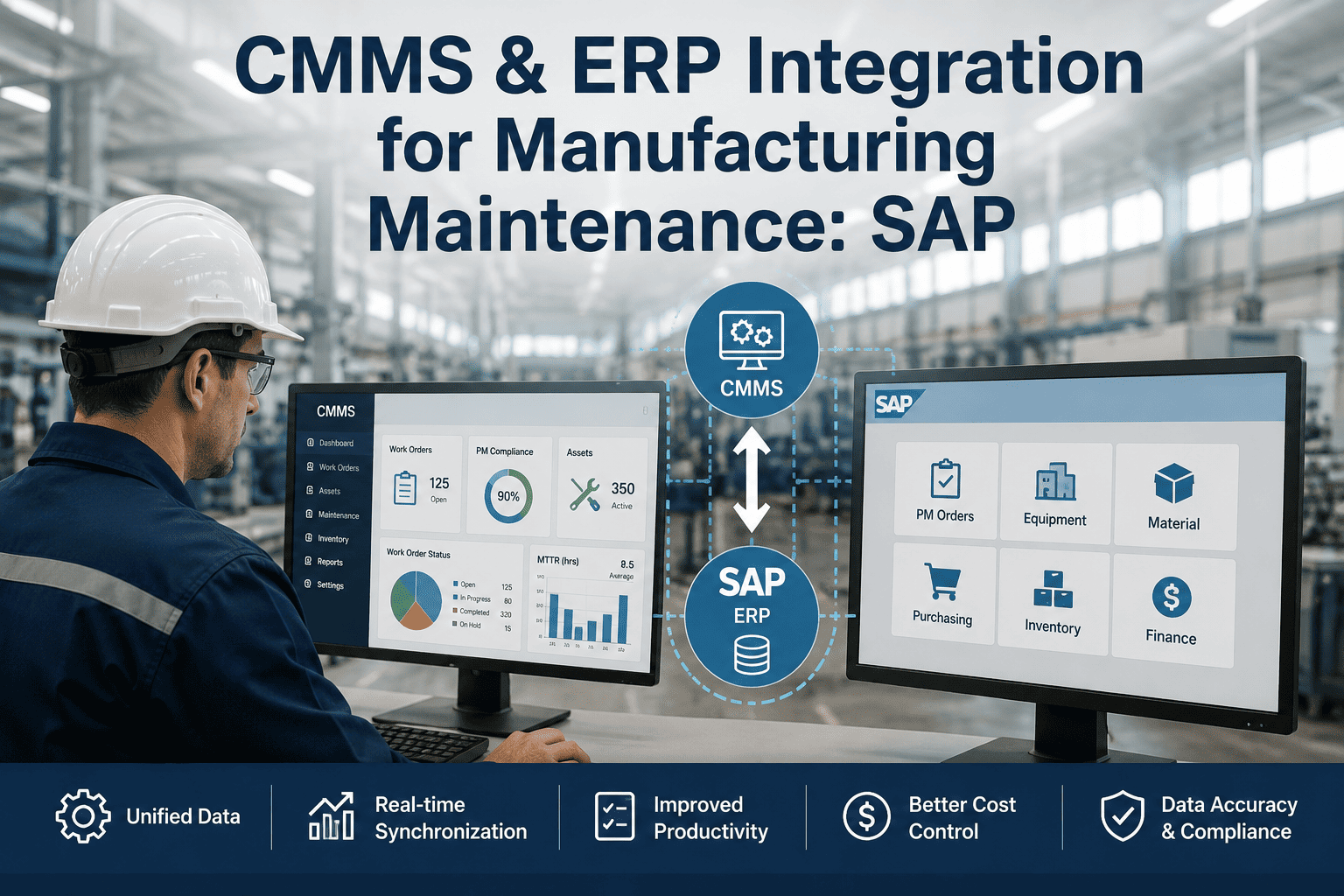
CMMS ERP integration for manufacturing maintenance is where most IT projects overspend — often 2–3× the original budget — because scope, data ownership, and field-mapping rules are never clearly defined before the first connector is built. A well-architected SAP PM CMMS integration synchronizes asset master data, work order cost capture, and spare-parts inventory without forcing technicians into dual data entry or leaving finance with incomplete maintenance spend. This guide covers the integration patterns, critical sync fields, and architecture decisions that separate a clean SAP maintenance CMMS handoff from a six-figure budget drain — and shows how OxMaint makes CMMS SAP integration deployable in weeks, not quarters. Ready to see it on your assets? Start Free Trial or read on.
CMMS SAP INTEGRATION GUIDE
Are your maintenance costs trapped in SAP while your technicians work in spreadsheets?
Manufacturing plants that fail to integrate CMMS with ERP spend 40% more on duplicate data entry, lost parts receipts, and unreconciled work order costs. A properly architected SAP PM CMMS integration eliminates dual entry, gives finance real-time maintenance spend, and gives reliability teams the asset-level analytics ERP was never built to deliver.
WHY INTEGRATION FAILS
Where CMMS ERP integration projects go wrong — and what it costs
Most manufacturing SAP CMMS integration projects don't fail at the API layer. They fail because no one decided, in writing, which system owns each data element before development started.
The typical multiplier when scope is "sync everything" instead of a prioritized field map. Plants that define 12–15 critical fields first deploy in 8–12 weeks.
Of integrated sites still re-key work order costs into SAP because the connector only pushes asset master data one-way, never closing the cost loop.
A 180-asset plant spending $42K/yr on admin labor to reconcile POs, parts receipts, and labor hours between a standalone CMMS and SAP PM.
A mid-sized automotive parts manufacturer spent 14 months and $380K on a SAP PM CMMS integration that synchronized 400+ fields — only to discover technicians still entered work order costs manually because the cost-center mapping was wrong. Scope creep, not technology, was the culprit.
DATA OWNERSHIP
Which system owns what: the field-mapping table that prevents scope creep
Before any connector is built, document the master data flow direction for every critical field. ERP CMMS manufacturing integration succeeds when ownership is unambiguous — one system creates, the other consumes.
| Data Domain | System of Record | Sync Direction | Key Fields |
|---|---|---|---|
| Asset / Equipment Master | SAP PM (functional location) | SAP → CMMS | Func. loc., equipment ID, cost center, criticality |
| Work Orders | CMMS (OxMaint) | CMMS → SAP | WO number, status, labor hrs, actual costs |
| Preventive Maintenance Plans | CMMS | CMMS only | PM schedule, trigger rules, checklist templates |
| Spare Parts Inventory | SAP MM | Bidirectional | Material number, qty, reservation, goods issue |
| Purchase Orders | SAP MM | SAP → CMMS | PO number, line items, receipt status, vendor |
| Maintenance Costs | SAP CO (settlement) | CMMS → SAP | Labor, parts, contractor costs, settlement rule |
| Failure Codes / Root Cause | CMMS | CMMS → SAP (optional) | Failure mode, cause, remedy, downtime minutes |
INTEGRATION ARCHITECTURE
CMMS SAP integration architecture patterns compared
Three patterns dominate ERP maintenance integration. The right choice depends on transaction volume, real-time requirements, and whether your SAP landscape includes SAP PI/PO or SAP Integration Suite.
Point-to-Point REST API
Best for: Single-site plants, <5K work orders/month
Direct REST calls between OxMaint and SAP using OData services. Lowest latency, simplest to debug, but harder to scale across multiple SAP modules or sites. Typical deployment: 6–8 weeks.
Middleware / iPaaS Layer
Best for: Multi-site, SAP PI/PO or Integration Suite
An integration platform (SAP PI/PO, MuleSoft, Boomi) orchestrates message transformation, routing, and error queues. Handles complex mappings and bulk loads. Typical deployment: 12–16 weeks.
Event-Driven / IDoc
Best for: High-volume, real-time cost settlement
SAP IDocs or event streams push goods issues, PO receipts, and cost settlements in near-real-time. Requires SAP ABAP development but delivers the tightest financial reconciliation. Typical deployment: 16–20 weeks.
IMPLEMENTATION ROADMAP
How to deploy SAP PM CMMS integration in 5 phases
A phased rollout that prioritizes the highest-value data flows first — asset master and work order cost capture — typically reaches ROI in 4 months. Here's the timeline a 180-asset plant followed to eliminate dual entry.
Scope & Field Mapping
Define the 12–15 critical fields per data domain. Confirm SAP functional location hierarchy, cost center mapping, and material master alignment. Output: signed integration specification.
Asset Master Sync (SAP → CMMS)
Push functional locations and equipment records from SAP PM into OxMaint. Validate hierarchy, criticality ratings, and cost center assignments. Eliminates asset data drift from day one.
Work Order Cost Capture (CMMS → SAP)
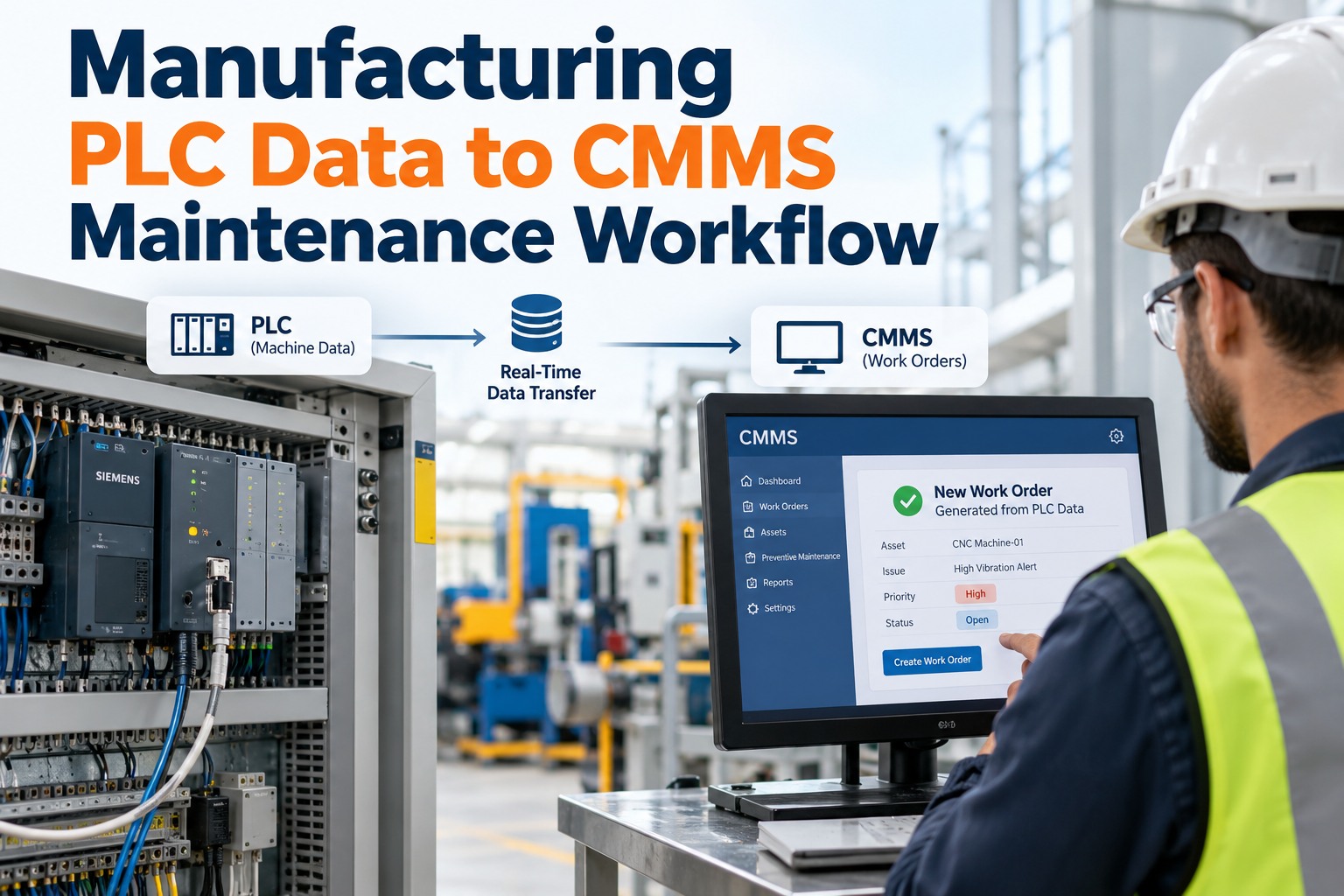
Push completed work order actuals — labor hours, parts consumed, contractor costs — back to SAP for settlement. Technicians enter data once in OxMaint; finance sees it in SAP CO automatically.
Spare Parts & PO Handoff
Enable bidirectional spare-parts sync: SAP goods issues decrement OxMaint inventory; OxMaint parts reservations create SAP purchase requisitions. Closes the phantom-stockout loop.
Failure Analytics & Go-Live
Push failure codes and downtime data from OxMaint to SAP (optional). Validate end-to-end reconciliation, train technicians, and switch off spreadsheet tracking. Measured ROI within 4 months.
THE COST OF DUAL ENTRY
The dual-entry trap: what manufacturing plants lose every month
When technicians log work in a CMMS but costs must be re-entered in SAP — or when parts are issued in SAP but never visible in the maintenance system — the hidden costs compound fast. Here's what a typical 180-asset, 3-line plant bleeds annually.
ANNUAL DUAL-ENTRY WASTE FORMULA
Admin Hours × Loaded Rate × 12 + Unreconciled Parts Cost + Downtime from Stockouts
= $42K–$67K/year for a mid-sized plant
HOW OXMAINT HELPS
OxMaint SAP PM integration: prebuilt connectors that cut deployment to weeks
OxMaint ships with prebuilt SAP PM integration templates that map the 15 most critical fields out of the box — asset master, work order costs, spare-parts sync, and PO handoffs — so your IT team configures, not codes, the connection.
Bidirectional Asset Master Sync
SAP functional locations and equipment records flow into OxMaint automatically. Asset hierarchy, criticality, and cost centers stay aligned without manual rekeying — eliminating 8–12 hrs/week of admin work.
Automated Work Order Cost Settlement
Completed work orders push labor, parts, and contractor costs back to SAP CO for settlement. Finance gets real-time maintenance spend; technicians enter data once — cutting cost reconciliation time by 70%.
Spare-Parts & PO Handoff
SAP goods issues decrement OxMaint inventory in real time; OxMaint parts reservations generate SAP purchase requisitions automatically — eliminating phantom stockouts and $11K+ in unreconciled parts spend.
AI-Powered Predictive Analytics
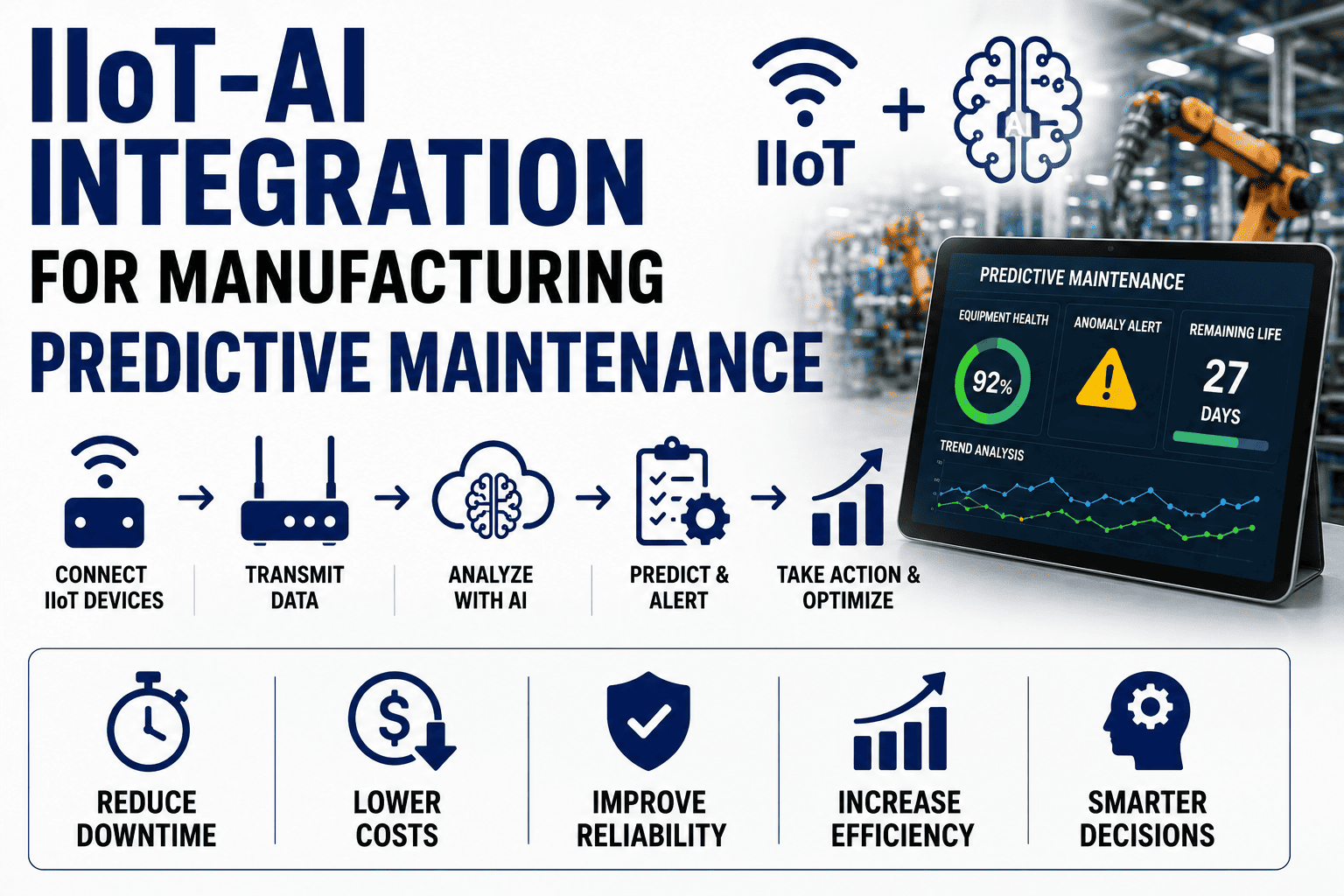
OxMaint's AI layer analyzes work order history, failure codes, and sensor data to predict asset failures before they happen — intelligence SAP PM can't deliver natively — cutting unplanned downtime 30–50%.
"We spent 14 months trying to integrate our old CMMS with SAP PM and gave up. OxMaint's prebuilt connector had asset master and work order costs flowing in 6 weeks. Finance finally trusts our maintenance numbers."
See OxMaint integrated with your SAP landscape — book a 30-min demo
Walk through a live SAP PM CMMS integration: asset master sync, work order cost settlement, and spare-parts handoff on data that looks like yours.
FAQ
CMMS SAP integration: frequently asked questions
Does OxMaint integrate with SAP PM out of the box?
Yes. OxMaint ships with prebuilt SAP PM integration templates that handle the 15 most critical data flows — asset master sync (SAP → OxMaint), work order cost capture (OxMaint → SAP CO), spare-parts goods issue/receipt, and purchase order handoff. Most plants go live in 6–10 weeks with configuration, not custom ABAP development. Book a Demo to see the connector on your data.
How long does a CMMS ERP integration for manufacturing typically take?
A scoped integration focused on asset master and work order cost capture deploys in 8–12 weeks. Full bidirectional spare-parts and PO integration adds 4–6 weeks. Projects that attempt to sync 400+ fields without a prioritized field map typically stretch to 12–18 months and overshoot budgets by 2–3×. Defining the 12–15 critical fields first is the single biggest accelerator.
What is the difference between SAP PM and a CMMS like OxMaint?
SAP PM excels at financial settlement, asset valuation, and enterprise-wide cost center reporting — but it was not built for technician-facing work order execution, mobile inspections, or AI-driven predictive maintenance. OxMaint handles the day-to-day maintenance workflow — work orders, PM schedules, checklists, spare-parts reservations, and failure analytics — and pushes costs back to SAP for settlement. The two systems are complementary, not competing.
Can OxMaint sync spare parts inventory with SAP MM?
Yes. OxMaint supports bidirectional spare-parts sync with SAP MM: SAP goods issues automatically decrement OxMaint inventory, and OxMaint parts reservations generate SAP purchase requisitions. This eliminates the phantom-stockout problem where parts show "available" in SAP but are missing from the shelf, which typically costs a mid-sized plant $11K–$18K per year in wasted downtime.
What data should flow from CMMS to ERP vs ERP to CMMS?
SAP should be the system of record for asset/equipment master data, cost centers, purchase orders, and spare-parts material masters — these flow SAP → CMMS. OxMaint should own work orders, PM schedules, failure codes, and actual maintenance costs (labor, parts, contractors) — these flow CMMS → SAP for settlement. Preventive maintenance plan templates live exclusively in the CMMS; SAP does not need them.
Stop paying for dual entry. Start your OxMaint SAP integration today.
Join manufacturing plants that eliminated 20+ hours of weekly admin work and cut unplanned downtime 30–50% with AI-powered maintenance on top of their SAP investment.
Free 14-day trial · No credit card