Preventive Maintenance · Manufacturing · Free Checklist Guide
Manufacturing Plant Preventive Maintenance Checklist
Daily. Weekly. Monthly. Quarterly. Annual. Every task your plant needs — structured, prioritized, and ready to assign. Stop reacting to failures. Start preventing them.
47%
Reduction in unplanned downtime with structured PM
25%
Lower maintenance costs vs. reactive-only approach
3×
Longer average equipment lifespan with PM programs
89%
Of manufacturers say PM checklists improved compliance
Why It Matters
The Real Cost of Skipping Preventive Maintenance
Reactive maintenance — fixing things after they break — costs 3 to 9 times more than preventing the failure in the first place. For manufacturing plants running continuous or shift operations, every missed PM task compounds into expensive emergency repairs, safety incidents, and production losses.
$260K
Average cost per hour of unplanned manufacturing downtime
Aberdeen Research
82%
Of manufacturers experienced at least one unplanned outage in the last 3 years
Vanson Bourne / Senseye Study
9×
More expensive to repair failed equipment vs. scheduled PM task cost
U.S. Dept. of Energy
800 hrs
Average annual downtime per facility without a PM program
Plant Engineering Survey
The Complete PM Checklist
Manufacturing Plant PM Checklist by Frequency
Use this checklist as your baseline. Each task is categorized by the equipment category and maintenance frequency. In OxMaint, every one of these tasks can be turned into a scheduled work order — automatically assigned to the right technician, with photos, signatures, and completion timestamps.
✓
Lubrication levels — oil, grease, hydraulic fluid
All rotating equipment
✓
Coolant level and temperature check
CNC machines, compressors
✓
Visual inspection for leaks, cracks, unusual wear
Hydraulic & pneumatic systems
✓
Safety guard and interlock functionality test
All production machinery
✓
Emergency stop (E-stop) button test
All machines with E-stop
✓
Conveyor belt tension and alignment check
Material handling systems
✓
Abnormal noise or vibration — document and report
Motors, pumps, gearboxes
✓
Pressure gauge readings within spec
Pneumatic & hydraulic lines
✓
Workstation cleanliness — debris and chip clearance
Machining centers, presses
✓
Electrical panel — indicator lights, no alarm flags
Control panels, PLCs
✓
Filter condition — dust collectors, air filters
HVAC, dust extraction
✓
Spindle warm-up cycle completed before production
CNC lathes, milling machines
✓
Belt drive tension, wear, and alignment inspection
All belt-driven equipment
✓
Lubricate bearings per equipment OEM schedule
Motors, gearboxes, conveyors
✓
Electrical connections — torque check, corrosion inspection
Motor starters, junction boxes
✓
Coolant concentration test and top-up
CNC machining centers
✓
Chain drive lubrication and stretch check
Conveyor drive chains
✓
Air compressor — drain condensate, check belt
Compressed air systems
✓
Hydraulic filter differential pressure check
Hydraulic power units
✓
Forklift / material handling equipment full inspection
Forklifts, pallet jacks
✓
Tool condition audit — worn tooling replaced or flagged
Cutting tools, dies, punches
✓
Weld area — cable insulation, ground clamps, torch condition
Welding stations
✓
Oil sample analysis — send to lab for condition monitoring
Gearboxes, hydraulic units
✓
Thermographic scan of electrical switchgear and panels
MCC rooms, distribution panels
✓
Vibration readings on critical rotating equipment
Motors, pumps, fans
✓
Fire suppression system — monthly function test
Sprinklers, suppression panels
✓
Replace air filter elements — HVAC and machine tool units
HVAC, dust collectors
✓
Crane and hoist — brake, hook, wire rope condition check
Overhead cranes, hoists
✓
CNC machine geometry check — spindle runout, axis backlash
CNC machining centers
✓
Inspect roof, drains, and facility structure
Facilities / building systems
✓
Review open work orders — close out or escalate
Maintenance management review
✓Full oil change — hydraulic units and gearboxes
✓Coupling alignment check — motor to pump/gearbox
✓Pressure relief valve test — all safety valves
✓Battery backup UPS system test and load check
✓Cooling tower — clean basin, inspect fill, check fans
✓Full electrical insulation resistance test (megger)
✓PLC and control system backup and firmware check
✓Full motor rewind inspection and insulation class test
✓Complete boiler inspection — NDE, safety valve, tubes
✓Crane and hoist annual load test — certified inspector
✓Pressure vessel inspection — ASME regulatory compliance
✓Transformer oil analysis and tap changer service
✓Full HVAC system clean, recharge, and efficiency test
✓Review and update all PM procedures and frequencies
What You Gain
What a Structured PM Program Actually Delivers
Plants that implement structured preventive maintenance don't just reduce breakdowns — they transform how maintenance operates. Here's what the data shows from plants that moved from reactive to planned maintenance.
Maintenance Cost per Unit
Paper vs. Digital
Paper Checklists vs. OxMaint Digital PM — Side by Side
Paper / Spreadsheet
Tasks completed but not timestamped or verified
No automatic assignment — manager calls or emails
Missed PM only discovered when equipment fails
No photo evidence — compliance audits are risky
Checklists filed in binders nobody reviews
No visibility into overdue or at-risk tasks
VS
OxMaint Digital PM
GPS-timestamped task completion with digital signature
Auto-assigned to certified technician by schedule
Overdue alerts fire before the window closes
Photo capture, meter readings, and notes per task
Instant audit-ready compliance reports on demand
Live dashboard — every task status visible in real time
❝
We had the checklists on paper for years. After switching to OxMaint, our PM compliance rate went from around 61% to 94% in the first quarter — because the system won't let tasks fall through the cracks. Our last two audits were zero-finding audits.
Maintenance Manager · Tier 1 Automotive Components Plant, Ohio
How It Works
From Checklist to Completed Work Order in 4 Steps
01
Build Your PM Template
Import this checklist into OxMaint or create custom PM templates by asset type, frequency, and required certifications — in minutes, not days.
→
02
Auto-Schedule & Assign
OxMaint creates work orders on your schedule and assigns them to the right certified technician automatically — no manager intervention needed.
→
03
Technician Completes on Mobile
Techs receive tasks on mobile, check off items, add photos and readings, and close the work order with a digital signature — anywhere on the plant floor.
→
04
Track, Report & Improve
Live compliance dashboards, overdue alerts, and audit-ready history reports keep your PM program on track and your management team informed.
Free to Start · No Credit Card · Live in 60 Minutes
Turn This Checklist Into an Automated PM Program
Every task in this guide can be scheduled, assigned, tracked, and reported in OxMaint — automatically. Stop managing maintenance on spreadsheets and whiteboards. Start running a PM program that actually runs itself.
Frequently Asked Questions
PM Checklists for Manufacturing — Top Questions
How often should preventive maintenance be performed in a manufacturing plant?
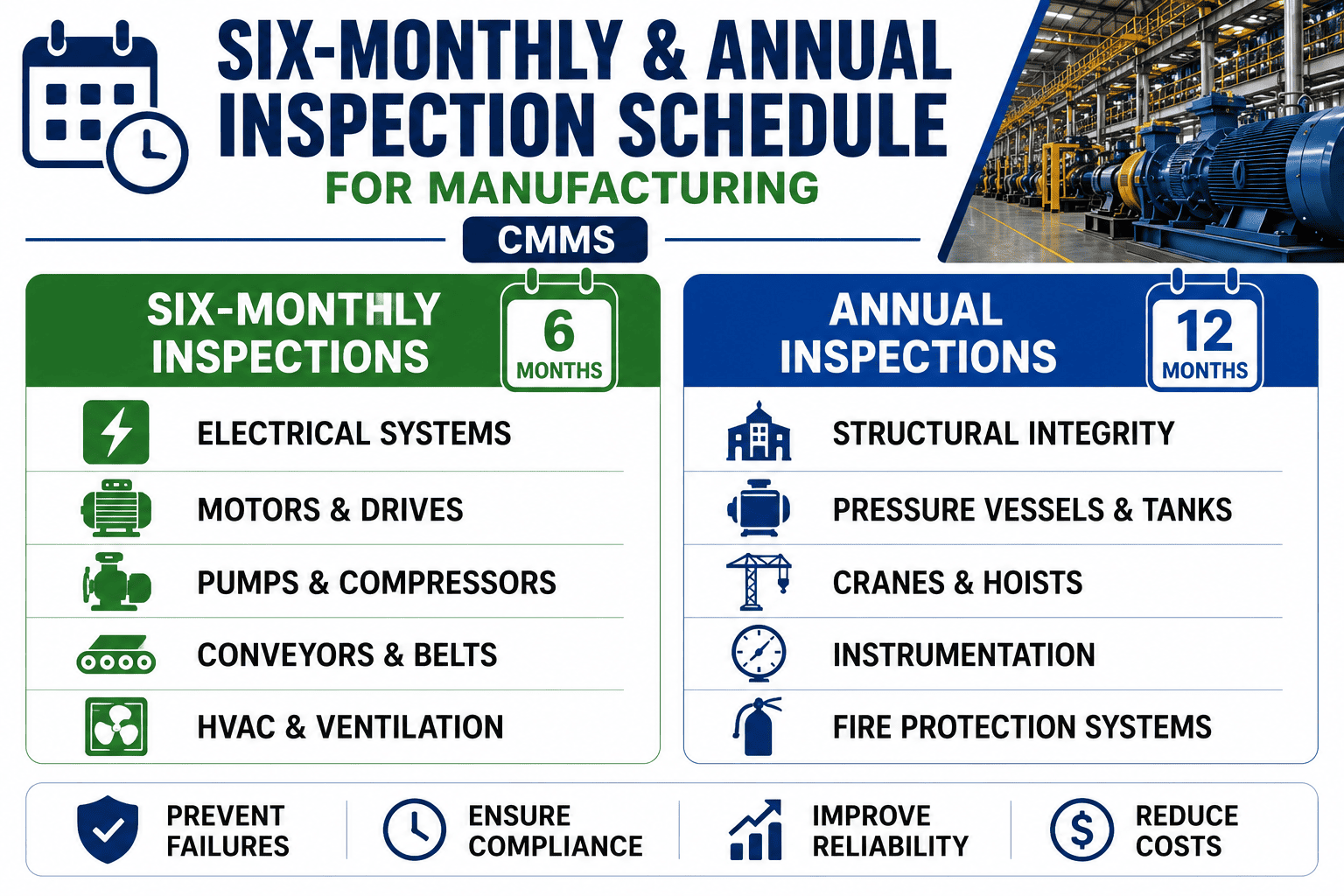
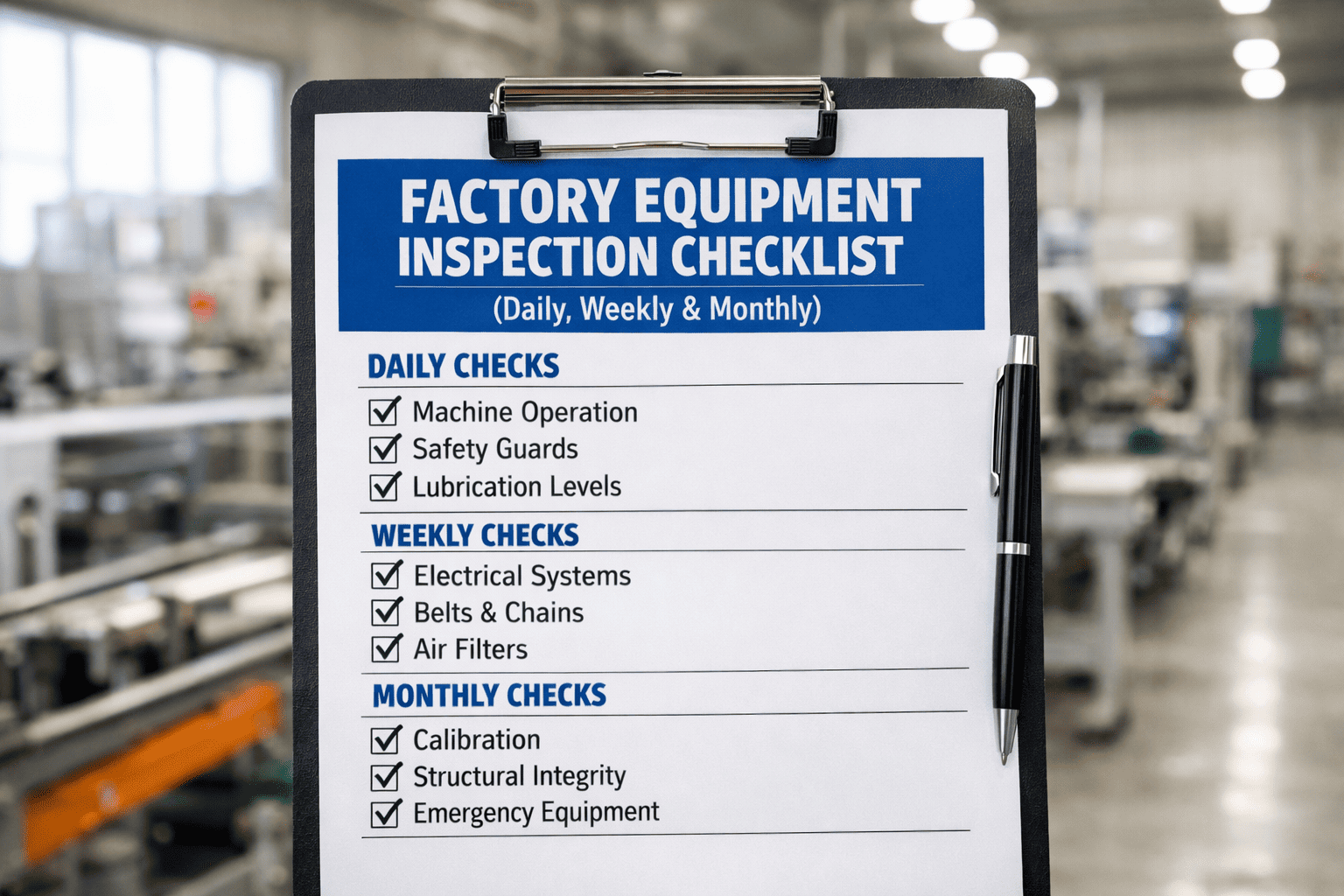
PM frequency depends on equipment criticality, operating hours, and OEM recommendations. As a baseline: daily checks for safety-critical systems and lubricating surfaces; weekly for belts, chains, and coolant systems; monthly for filters, vibration baselines, and electrical scans; quarterly for oil changes and alignment checks; annually for regulatory inspections, boiler certifications, and full overhauls. OxMaint lets you configure any frequency down to runtime hours rather than calendar days.
Start a free trial and configure your first PM schedule.
What is the difference between preventive and predictive maintenance?
Preventive maintenance (PM) is time-based or usage-based — you service equipment on a schedule regardless of condition. Predictive maintenance (PdM) uses condition monitoring data (vibration, temperature, oil analysis) to intervene only when a failure signature appears. Most manufacturing plants benefit from PM as the foundation, with PdM layered on top for critical assets. OxMaint supports both: scheduled PM work orders and condition-triggered maintenance tasks from sensor alerts or meter readings.
How do I get my team to actually complete PM tasks consistently?
The biggest PM compliance killer is administrative friction — technicians not knowing what's due, missing instructions, or no system to log completion. OxMaint eliminates all three: tasks arrive on the tech's mobile device automatically, step-by-step instructions and photos are attached, and digital sign-off is required to close the order. PM compliance rates typically jump from 50–65% on paper to 90%+ within the first quarter of going digital.
See how other plants solved this — book a quick demo.
Can this checklist be customized for my specific equipment and industry?
Yes — this checklist is a best-practice baseline. In OxMaint, every PM template is fully customizable by asset type, manufacturer model, operating environment, and regulatory requirements. You can add custom fields, measurement inputs, photo prompts, and required signatures at the task level. Plants in food processing, pharmaceuticals, automotive, and heavy industrials all have different compliance requirements — OxMaint adapts to each without custom development.