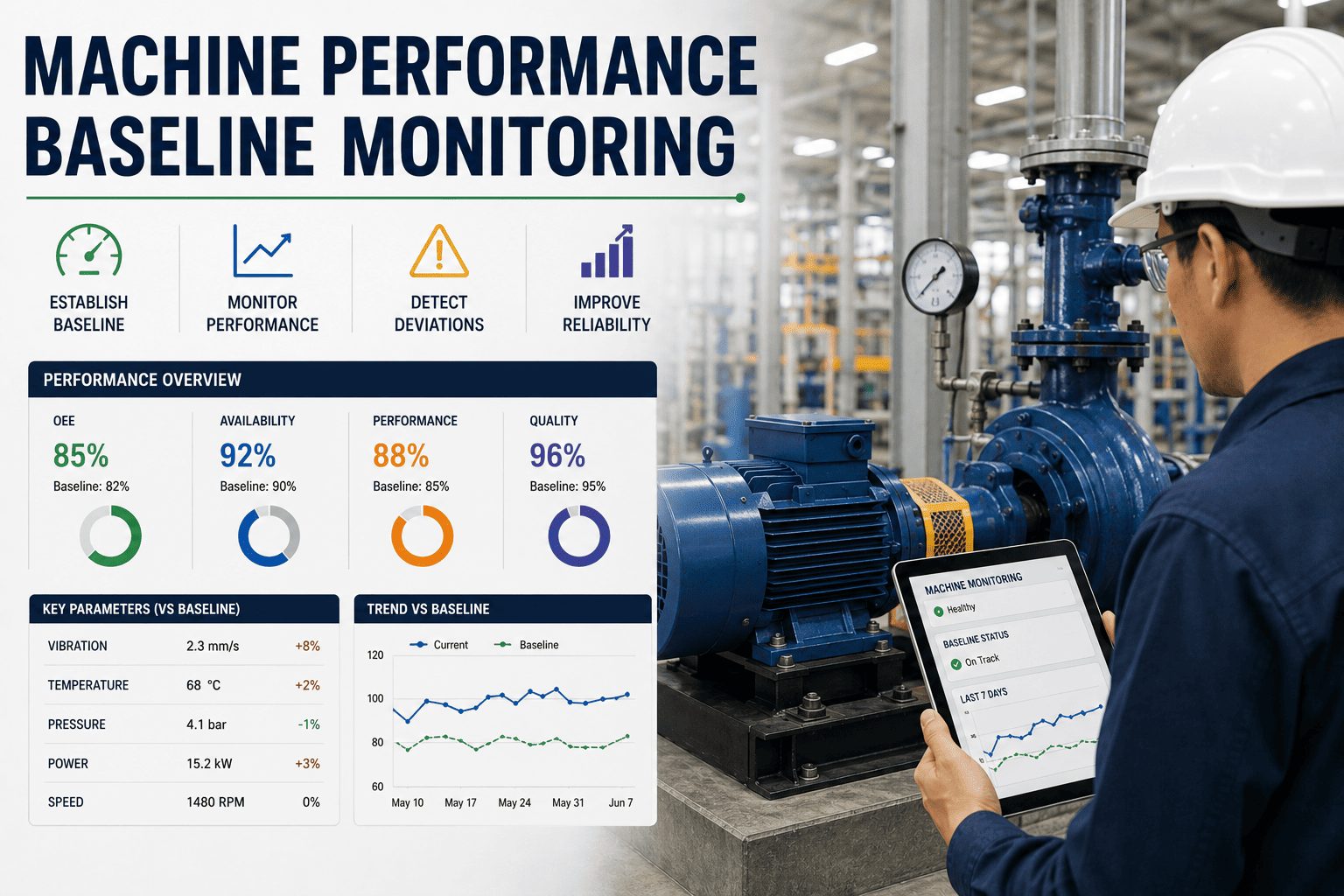
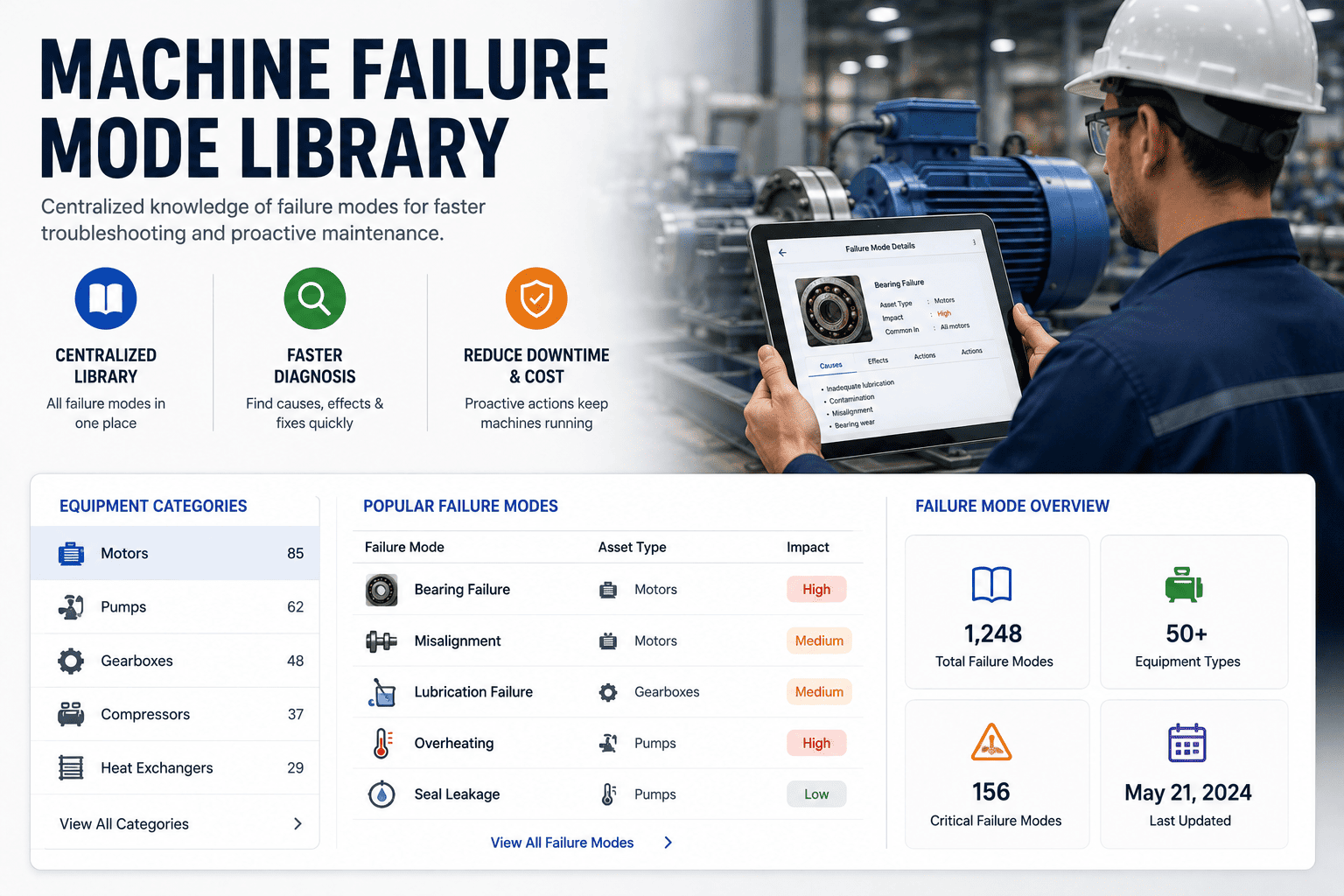
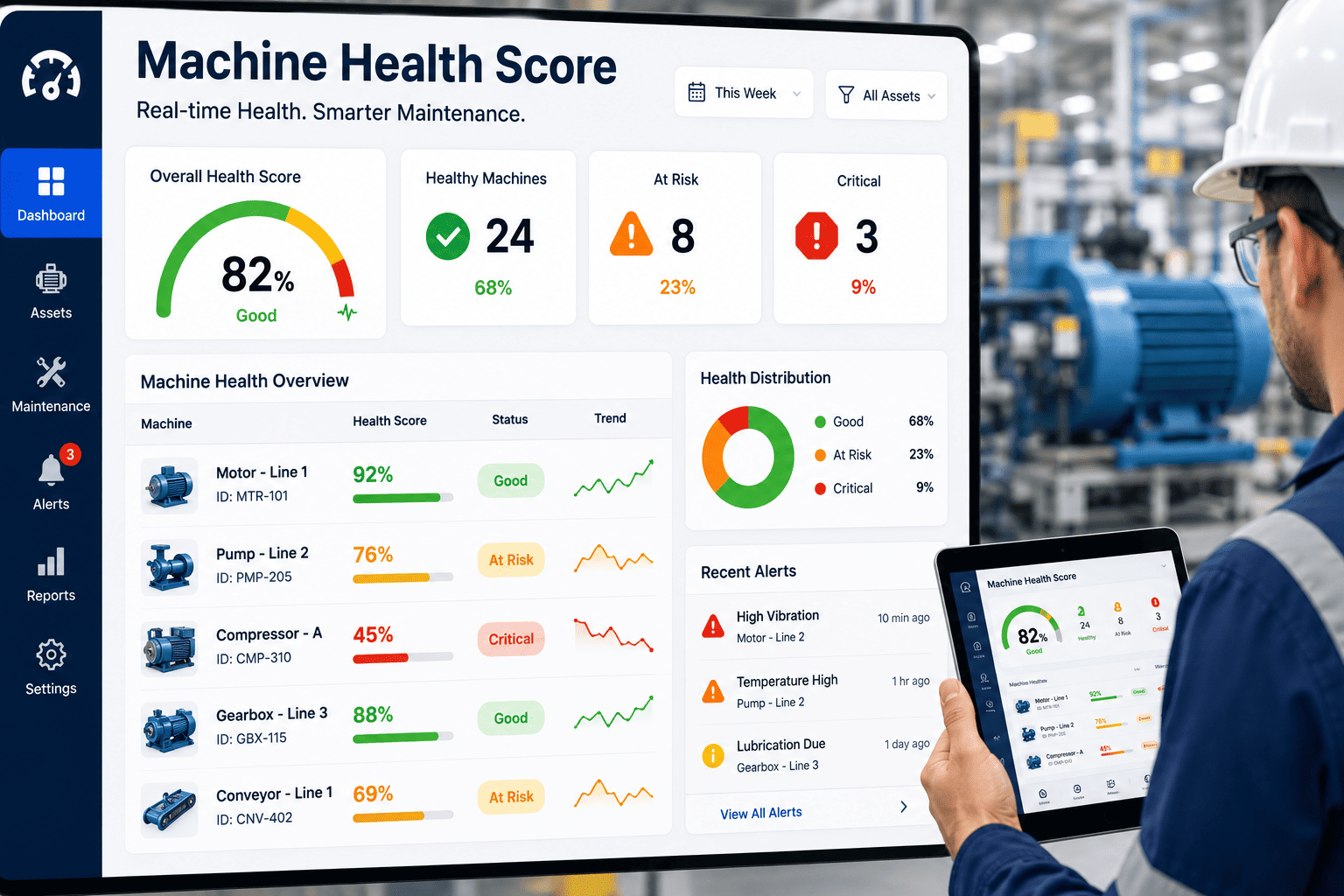
A paper mill does not stop quietly. When a dryer bearing seizes on a linerboard machine running at 1,800 feet per minute, when a recovery boiler smelt-spout plugs during black liquor firing, when a digester pressure transmitter drifts and goes unnoticed — the production line stops, the sheet breaks, and the clock starts counting losses at roughly $220,000 per day of unplanned downtime. Paper is a commodity business running on single-digit margins, which means reliability is not a reliability problem — it is a margin problem. AI-powered condition monitoring, vibration analytics on press rolls, thermal imaging on dryer cans, and predictive analytics on refiner motors are cutting unplanned downtime by 35 to 45 percent and maintenance costs by 25 to 30 percent at the mills that have deployed them. To put that same intelligence onto every critical asset in your mill, start with a free OxMaint account or book a working session with a mill specialist.
$220K
average daily cost of unplanned downtime at a paper or pulp plant
50%
reduction in maintenance downtime achievable with AI-driven condition monitoring
25%
of total paper machine energy consumed by the drying section alone
99%+
machine availability reported on PlantOS-monitored assets across 25+ paper plants
The Paper Machine — Four Sections, Four Failure Profiles, One Continuous Sheet
Every paper machine on the planet is built on the same four-section logic laid down by Fourdrinier in 1806 — but each section fails in its own distinct way. The AI models, sensor types, and maintenance intervals that work on the wet end would be useless on the dryer section. Here is the flow, the risks, and where condition monitoring pays back.
Stage 01
Wet End & Fourdrinier
Headbox distributes pulp slurry onto the forming fabric; table rolls, foils, and suction boxes drain water by gravity and vacuum. Fan pump pulsation or wire tension drift destroys sheet formation.
Top Failure Modes
Fan pump cavitation causing basis weight variation
Forming fabric stretch, wear, or plugging
Suction box seal strip damage and vacuum loss
Foaming, poor drainage, wet end instability
Press rolls squeeze the sheet through nip pressure with felt carrying pressed-out water. Every 1% of water removed here saves 10× the energy it would take to evaporate in the dryer.
Top Failure Modes
Press roll bearing wear and misalignment
Press felt plugging reducing water removal
Doctor blade wear causing sheet marking
Suction press roll shell corrosion
Steam-heated cylinders evaporate remaining moisture across pre-dryer and post-dryer sections. Consumes 25% of total machine energy — the single largest optimization target in the mill.
Top Failure Modes
Steam trap failures and condensate backup
Dryer can bearing overheating and seizure
Dryer felt seam failures, edge lifting
Hood imbalance driving pocket humidity off-spec
Finish: smoothness & gloss
Calender rolls compress the sheet for smoothness and gloss control; reel winds finished paper into the parent reel. Drive train sync and roll surface integrity determine final product quality.
Top Failure Modes
Calender roll surface damage and crowning loss
Reel drum bearing vibration
Drive train gearbox oil contamination
Sheet tension control valve stiction
Where AI Actually Moves the Needle — and How Much
Not every part of a mill benefits equally from AI. The highest-ROI applications are predictive maintenance on rotating equipment, energy optimization in the dryer hood, and chemistry dosing in the wet end. The chart below reflects measured gains from deployed mill systems.
Unplanned downtime reduction
AI-driven condition monitoring on rotating assets
Maintenance cost reduction
Predictive vs. reactive maintenance strategy shift
Equipment failure frequency drop
Vibration, thermal, acoustic signal-based early warning
Chemical consumption reduction
Autonomous wet-end and bleach plant chemistry control
Refining energy savings
AI-tuned mechanical refining with real-time feedback
Mean time to repair improvement
Failure diagnostics delivered pre-work-order, not post
Built For Paper & Pulp Operations
OxMaint Turns Condition Data Into Closed Work Orders — Not Another Dashboard to Ignore
Every vibration alert, every thermal anomaly, every oil analysis flag lands in OxMaint as a prioritised work order with the right craft, the right parts, and the right window tied to the next planned shutdown. No missed alerts, no orphan data, no spreadsheets.
Critical Asset Failure Matrix — What to Watch, How to Catch It
Mill reliability engineers already know which assets kill production. The difference an AI-enabled CMMS makes is turning that knowledge into a systematic detection plan that runs 24/7 without relying on someone remembering to check.
| Critical Asset | Dominant Failure Mode | Best Detection Method | Lead Time Before Failure |
| Refiner Motor |
Bearing wear, rotor imbalance |
Vibration spectrum + motor current signature |
2–8 weeks |
| Fan Pump |
Cavitation, impeller erosion |
Acoustic emission + discharge pressure trend |
1–4 weeks |
| Dryer Can Bearing |
Lubrication breakdown, overheating |
Thermal imaging + vibration envelope |
1–3 weeks |
| Press Roll |
Shell wear, bearing fatigue |
Nip pressure profile + vibration |
Weeks to months |
| Steam Trap |
Stuck open — steam loss |
Ultrasonic inspection + temp differential |
Immediate detection |
| Calender Drive Gearbox |
Gear tooth wear, oil contamination |
Oil analysis + vibration trend |
1–6 months |
| Recovery Boiler Tubes |
Thinning, thermal fatigue cracks |
UT thickness + infrared wall monitoring |
Outage interval |
| Digester Valves |
Erosion, actuator drift |
Valve signature + positioner feedback |
Days to weeks |
Lead time is the quiet superpower of predictive maintenance. Knowing a press roll bearing will fail in three weeks — instead of finding it seized mid-run — lets you schedule the repair into an existing outage window, have the spare on hand, and skip the $220,000 unplanned day.
The High-Risk Zone — Chemical Recovery, Digester & Bleach Plant
Pulp mills run on pressure, heat, and aggressive chemistry. The recovery island and digester area concentrate the worst failure consequences in the smallest physical footprint. These three areas deserve their own maintenance and monitoring strategy.
Black liquor combustion, smelt bed, tube bank integrity
Water-tube failures in contact with molten smelt cause catastrophic smelt-water explosions. BLRBAC guidance mandates strict ESP procedures, mandatory inspection intervals, and hard-wired interlocks.
Tube wall thickness monitoring with baseline comparison
Smelt spout thermal imaging and plug detection
Soot blower wear and steam leak tracking
ESP electrode and rapper mechanism health
Batch and continuous digesters, white liquor circulation
High temperature and high alkalinity drive caustic stress corrosion cracking and thinning on shell welds, nozzles, and heat exchanger tubes. Hidden damage shows up only at inspection turnaround.
Wall thickness UT at documented condition monitoring locations
Kappa number trending tied to equipment performance
Blow valve wear, actuator response time tracking
Heat exchanger fouling and thermal performance
ClO₂, O₂, H₂O₂, alkaline extraction stages
Chlorine dioxide service attacks titanium and stainless grades differently. Washer drum integrity, filtrate tank linings, and tower agitator shafts drive availability of the entire line.
Material-specific corrosion monitoring per stage
Washer drum vibration and drive current signature
Agitator seal leakage and shaft deflection
Chemical metering pump output verification
Frequently Asked Questions
What is the real cost of unplanned downtime in a paper or pulp mill?
Industry analyses place the average daily cost of unplanned downtime at a paper or pulp plant at roughly $220,000. That figure reflects lost tonnage, off-spec product, restart losses, and overtime — not catastrophic events like recovery boiler incidents, which cost multiples more. For deeper analysis of your specific mill,
book a working session.
How does AI-based condition monitoring actually work on a paper machine?
IIoT sensors capture vibration, temperature, acoustics, motor current, and lubrication data continuously from rotating assets. AI models trained on that data detect pattern deviations from healthy baselines — a bearing defect frequency, a thermal creep, a motor current imbalance — and flag them weeks before failure, giving maintenance planners time to schedule the work into an existing window.
Which assets in a mill deliver the fastest ROI on predictive maintenance?
Rotating equipment with catastrophic failure modes pays back fastest — refiner motors, fan pumps, press rolls, dryer can bearings, and calender drive gearboxes. These assets share three traits: high replacement cost, long spare part lead times, and failure modes detectable by vibration and thermal sensors well before they stop the sheet.
Can OxMaint connect to our existing plant historian and DCS?
Yes. OxMaint integrates with plant historians, DCS systems, and existing condition monitoring platforms via standard protocols and APIs. Sensor alerts and AI findings flow into OxMaint as prioritised work orders with context attached — the asset, the symptom, the recommended action, and the history.
Try it free to see a live integration setup.
How much energy does the drying section really consume, and can AI reduce it?
The dryer section consumes roughly 25% of total paper machine energy — the largest single consumer. AI-driven hood balance, pocket humidity, and steam pressure optimization can reduce that consumption measurably while holding moisture profile targets. Drying optimization remains one of the most underutilized AI applications in the industry.
Stop Treating Downtime as a Fact of Life. Start Treating It as a Solved Problem.
The tools, sensors, and AI models exist. The question is whether your maintenance system can actually consume their signals and close the loop with prioritised, completed work orders before the sheet breaks. That is what OxMaint was built to do — for every section of the machine, every asset in the recovery island, every critical pump in the mill.