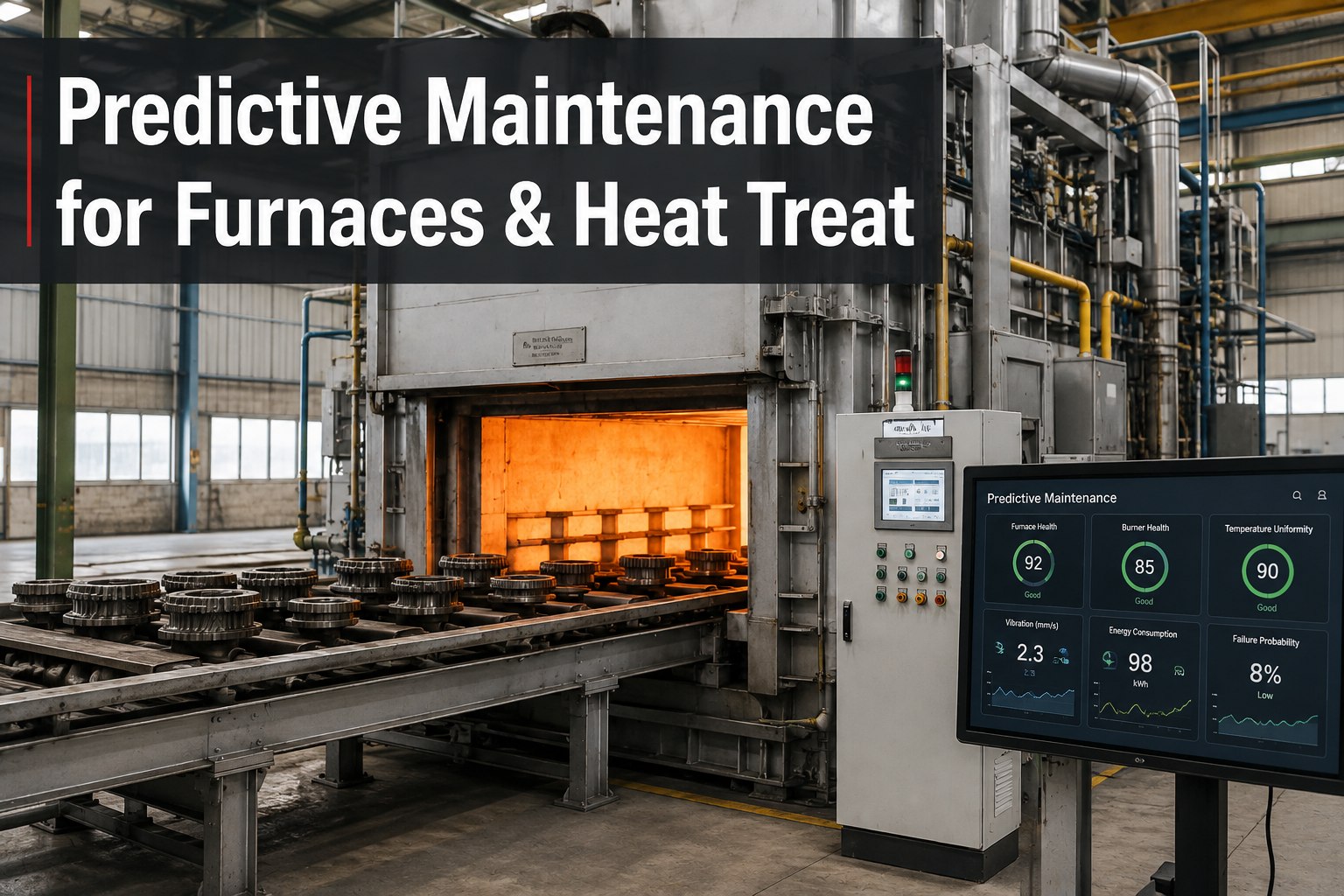
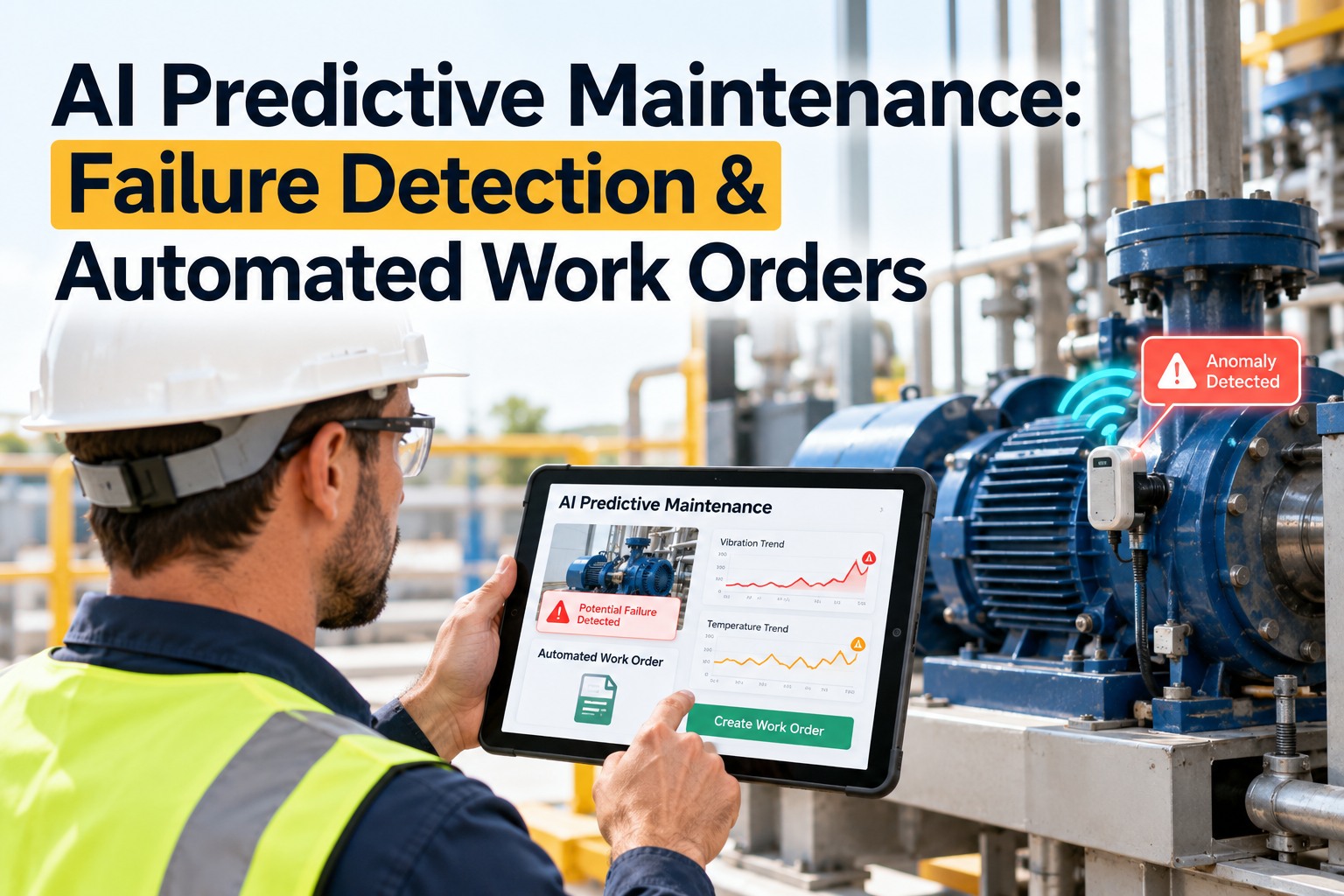
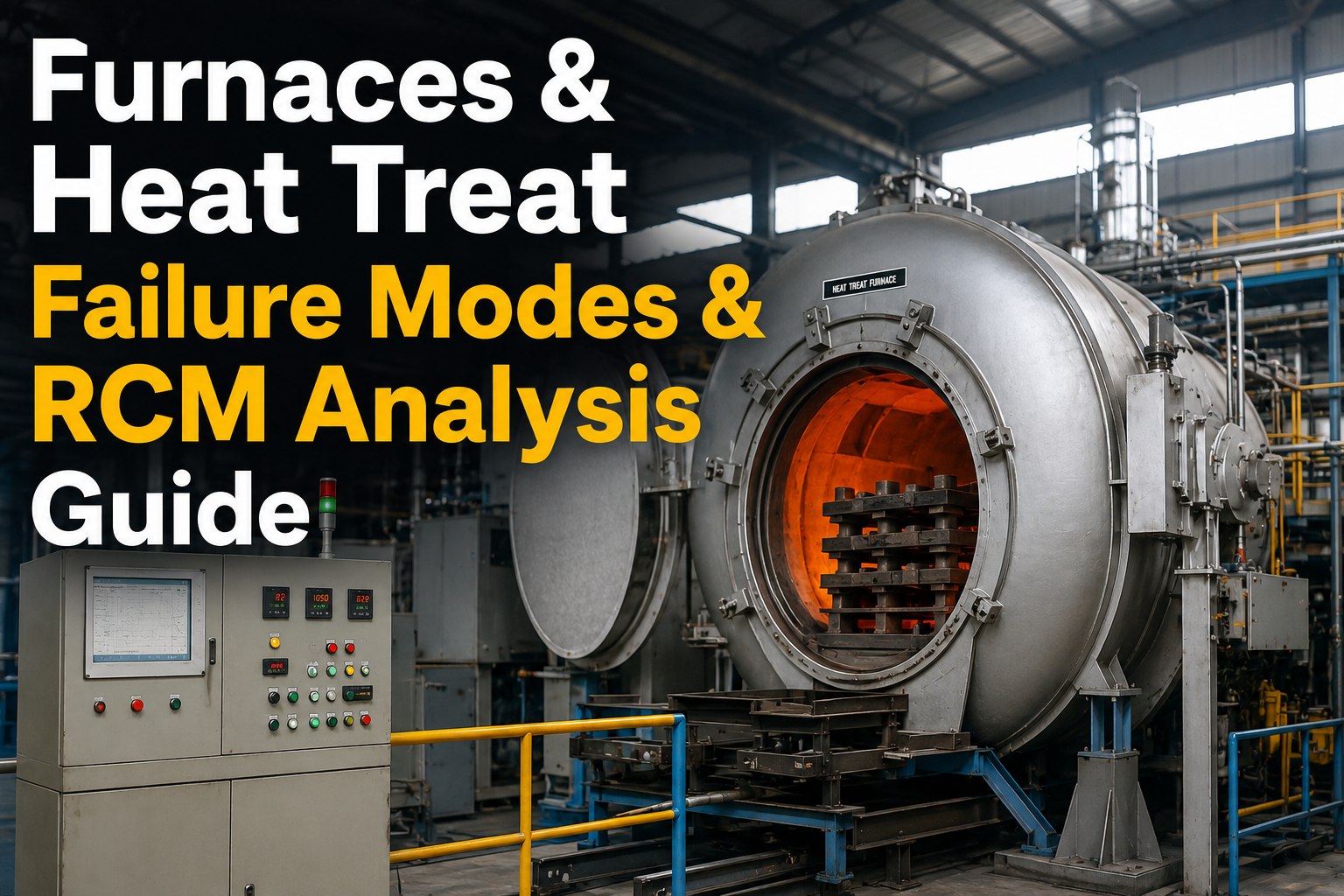
A furnace can fail two completely different ways, and only one of them looks like a breakdown. There's the obvious failure — refractory that erodes until a hot spot burns through the shell, a heating element that opens, a burner that won't light — and there's the invisible one: a thermocouple that has quietly drifted a few degrees, so the furnace holds a temperature it isn't actually at, and an entire heat-treat load comes out under-hardened or over-tempered while every gauge reads normal. In heat treatment, that second failure is the expensive one, because it produces scrapped parts and failed audits with no alarm and no downtime to warn you. Predictive maintenance for furnaces and heat treat has to catch both — the mechanical degradation of refractory, elements, and burners, and the metrological drift of the sensors and uniformity that quality depends on. This guide covers how it works in 2026: the failure modes, the monitoring techniques and what each detects, the pyrometry and uniformity discipline that AMS2750 and CQI-9 demand, and how a CMMS turns a drifting gradient or a rising hot spot into a work order before the campaign — or the load — is lost. Book a live predictive-maintenance demo for your furnace fleet.
A Furnace Fails Twice: On the Shell and On the Sensor
Refractory burns through visibly — but a drifted thermocouple scraps a whole load with every gauge reading normal.
15–25%
More heat loss from a thinned, degrading refractory lining
60–90 d
Lead time refractory thermal-gradient tracking gives before critical
±1°F
TUS recorder accuracy AMS2750 demands — drift this fine still scraps parts
3%
Energy-consumption rise over 4–6 weeks that flags burner or lining decay
Where Furnaces & Heat-Treat Equipment Fail
Predictive maintenance starts with knowing what you're watching for. Furnace failures split into structural degradation, heating-system decline, and the metrological drift unique to heat treatment — each with its own early signature.
Refractory Degradation
The structural mode. Erosion, thermal cracking, spalling, and aging thin the lining, driving heat toward the shell. Unchecked it creates hot spots and, at worst, a burn-through — and thinned lining loses 15–25% more heat.
Burner & Heating-Element Decline
The efficiency mode. Burner-tip erosion enlarges the orifice and degrades flame quality; electric elements drift and open. Both create zone non-uniformity that operators mask by over-firing, driving fuel up.
Thermocouple & Sensor Drift
The invisible mode. Thermocouples degrade and drift with thermal cycling, so the furnace controls to a false reading. No alarm, no downtime — just a load processed at the wrong temperature and scrapped.
Uniformity & Atmosphere Loss
The quality mode. Even with good sensors, damaged insulation or burner imbalance breaks temperature uniformity across the work zone — the exact condition a TUS is designed to catch before parts go out of spec.
The Predictive Techniques · What Each One Detects
No single technique sees everything. Each monitors a different signal and catches a different mode earliest — embedded thermocouples read the refractory from inside, IR reads the shell from outside, uniformity surveys prove the work zone, and combustion data reads the burners. A real program layers them.
Refractory Gradient Monitoring
Reads the lining from inside
Thermocouples embedded at several depths through the wall measure the thermal gradient continuously. As the lining erodes, the outer readings climb — tracking the rate of shift per zone yields a remaining-thickness estimate and 60–90 days of lead time before a critical threshold.
Infrared Shell Thermography
Reads the shell from outside
A thermographer scans the furnace exterior during operation — no downtime — to find hot spots where refractory has thinned or insulation is failing. It maps degradation zone by zone and flags exactly where the lining needs attention before a burn-through.
Temperature Uniformity Survey
Proves the work zone
A TUS places calibrated thermocouples at multiple points in the work zone to verify the furnace holds temperature evenly within tolerance. Governed by AMS2750 and CQI-9, it's the discipline that catches sensor drift and uniformity loss before parts go out of spec.
Combustion & Energy Trending
Reads the burners
Flue-gas oxygen and CO per zone, zone temperature uniformity, and fuel consumed per unit of output reveal burner-tip erosion and lining loss. A specific-energy rise of 3% over 4–6 weeks flags degradation before any single signal alarms.
Map Your Furnace PdM Program in 30 Minutes
Working session with our reliability team — bring your furnace and heat-treat fleet. We'll match failure modes to monitoring techniques, set gradient and uniformity thresholds, and show how OxMaint turns a drifting reading into a work order with parts staged.
The Compliance Dimension · Pyrometry Is Not Optional
Heat treatment is unique among furnace applications: its predictive maintenance is also a regulatory requirement. AMS2750 (aerospace) and CQI-9 (automotive) mandate a pyrometry discipline that is, in effect, a scheduled condition-monitoring program for your sensors and uniformity.
System Accuracy Tests (SAT)
Periodic checks comparing the control sensor against a calibrated reference — the direct catch for thermocouple drift, on a mandated cadence.
Temperature Uniformity Surveys
Scheduled at least annually and after any change to elements, refractory, or control sensors — proof the work zone holds tolerance across its volume.
Calibration & Records
Sensor and instrument calibration certificates and a full audit trail — the documentation an auditor inspects and a customer relies on.
The P-F Interval · Why Early Detection Pays
Every furnace failure travels from first detectable symptom (P) to functional failure (F). Because refractory and burner decline are slow and sensor drift is continuous, the detectable window is wide — wide enough to schedule a reline, a re-calibration, or a burner change instead of scrapping a campaign or a load.
EARLY
Incipient — Gradient & Trend Detect First
Refractory gradient begins to shift, energy consumption ticks up, a sensor starts to drift. Cheapest intervention: recalibration, a burner tune, a patch repair scheduled at leisure. No scrap, months of runway.
DEVELOPING
Progressing — Hot Spots & Uniformity Loss
IR shows a growing shell hot spot, a TUS trends toward tolerance limits, burner non-uniformity widens. Plan the reline or element change for a scheduled outage with materials procured ahead.
CRITICAL
Functional Failure — Burn-Through or Scrap
Refractory burn-through, a failed TUS, or a full load processed out of spec. Forced outage, scrapped product, failed audit, emergency reline. The outcome predictive maintenance exists to prevent.
How OxMaint Runs Furnace Predictive Maintenance
OxMaint is an AI-native CMMS and RCM platform that turns condition data into action — IoT and sensor integration, refractory and combustion trending, auto-generated PM and pyrometry tasks, continuous FMEA and criticality analysis, SAP and Maximo overlay, and cloud reliability reporting that replaces spreadsheet RCM, from one dashboard on desktop or mobile.
Integrate
Thermocouple & DCS Data
Ingest embedded-thermocouple, shell-survey, and combustion data against each furnace over OPC-UA and DCS connectors — no new instrumentation on already-wired furnaces.
Model
Refractory Remaining Life
Track thermal-gradient shift per zone to estimate remaining lining thickness and forecast wear — turning raw thermocouple data into a reline-planning horizon.
Detect
Drift & Hot-Spot Alerts
A shifting gradient, a rising shell hot spot, or a 3% energy-trend drift fires an alert tied to the specific mode — before quality or the shell is compromised.
Schedule
Pyrometry & TUS Cadence
System accuracy tests, TUS, and calibration auto-generate on the AMS2750 and CQI-9 cadence — and after any refractory, element, or sensor change.
Trigger
Auto-Generated Work Orders
An alert converts to a prioritized work order with parts and procedure staged — mobile-first, with offline mode and QR asset tags for the field.
Report
Audit-Ready Compliance
Pyrometry records, calibration certificates, and reliability dashboards in one place — audit-ready for AMS2750, CQI-9, and ISO 55000, with SAP and Maximo overlay.
Catch the Drift Before the Load Is Scrapped
Cut unplanned downtime, extend refractory campaign life, and protect every heat-treat load. See how OxMaint fuses refractory, thermography, and pyrometry data into staged work orders across your furnace fleet. Free forever plan available.
Frequently Asked Questions
What is predictive maintenance for furnaces and heat treat?
It's a condition-based strategy that continuously monitors the real health of a furnace — refractory thermal gradients, shell temperature, thermocouple accuracy, work-zone uniformity, and combustion efficiency — to detect developing faults before they cause a failure or a scrapped load, so maintenance happens on a planned schedule rather than after a breakdown. Furnaces are unusual because they fail two ways: mechanically, through refractory, element, and burner degradation, and metrologically, through sensor drift and uniformity loss that ruins product quality with no visible symptom. Effective PdM covers both, targeting each mode inside its detectable window.
Book a demo to see it on your fleet.
How is refractory condition monitored predictively?
Primarily through thermal-gradient analysis and infrared thermography. Thermocouples embedded at several depths through the furnace wall measure the temperature gradient continuously; as the refractory erodes and the insulating mass thins, the outer readings rise, and tracking the rate of that shift per zone yields a remaining-thickness estimate with roughly 60–90 days of lead time before a critical threshold. From the outside, infrared thermography scans the shell during operation — no downtime — to reveal hot spots where the lining has thinned or insulation is breaking down. On the most critical furnaces, acoustic-emission sensors add early crack detection. Together these let operators plan relines around actual wear instead of a fixed calendar or a catastrophic burn-through.
Why is thermocouple drift so dangerous in heat treatment?
Because it's a failure with no alarm and no downtime. A thermocouple degrades gradually with thermal cycling and begins reading a temperature different from the true one — so the control system holds the furnace at, say, an indicated setpoint while the actual metal temperature is off by several degrees. Every gauge looks normal, the furnace runs, and an entire heat-treat load is processed at the wrong temperature — coming out under-hardened, over-tempered, or otherwise out of specification. The parts may pass visual inspection and fail in service. This is exactly why pyrometry standards mandate system accuracy tests and temperature uniformity surveys: they're the scheduled checks that catch drift and uniformity loss before defective product ships.
Sign up free to schedule pyrometry.
What are AMS2750 and CQI-9, and how do they relate to PdM?
AMS2750 is the pyrometry specification governing thermal processing in the aerospace supply chain, and CQI-9 is the equivalent heat-treat system assessment in the automotive industry. Both mandate a structured regime of temperature sensor control, instrument calibration, system accuracy tests, and temperature uniformity surveys — with defined accuracy tolerances and cadences, including surveys after any change to heating elements, refractory, or control-sensor location. In practice this is a regulatory-driven condition-monitoring program for the furnace's sensing and uniformity: it's predictive maintenance of the measurement system itself, required rather than optional. A CMMS that schedules these tasks, stores the calibration certificates, and keeps the audit trail turns a compliance burden into a managed, always-ready program.
How does OxMaint support furnace predictive maintenance?
OxMaint ingests embedded-thermocouple, shell-survey, and combustion data against each furnace over OPC-UA and DCS connectors, models refractory remaining life from thermal-gradient shift per zone, and fires alerts when a gradient shifts, a shell hot spot rises, or specific energy consumption drifts up around 3% over several weeks. It auto-schedules system accuracy tests, temperature uniformity surveys, and calibration on the AMS2750 and CQI-9 cadence — including after refractory, element, or sensor changes — converts alerts into prioritized work orders with parts staged, and keeps pyrometry records and calibration certificates audit-ready. It runs continuous FMEA and criticality analysis, overlays SAP PM and IBM Maximo, and works mobile-first with offline mode and QR tags. A free forever plan and live demos are available.