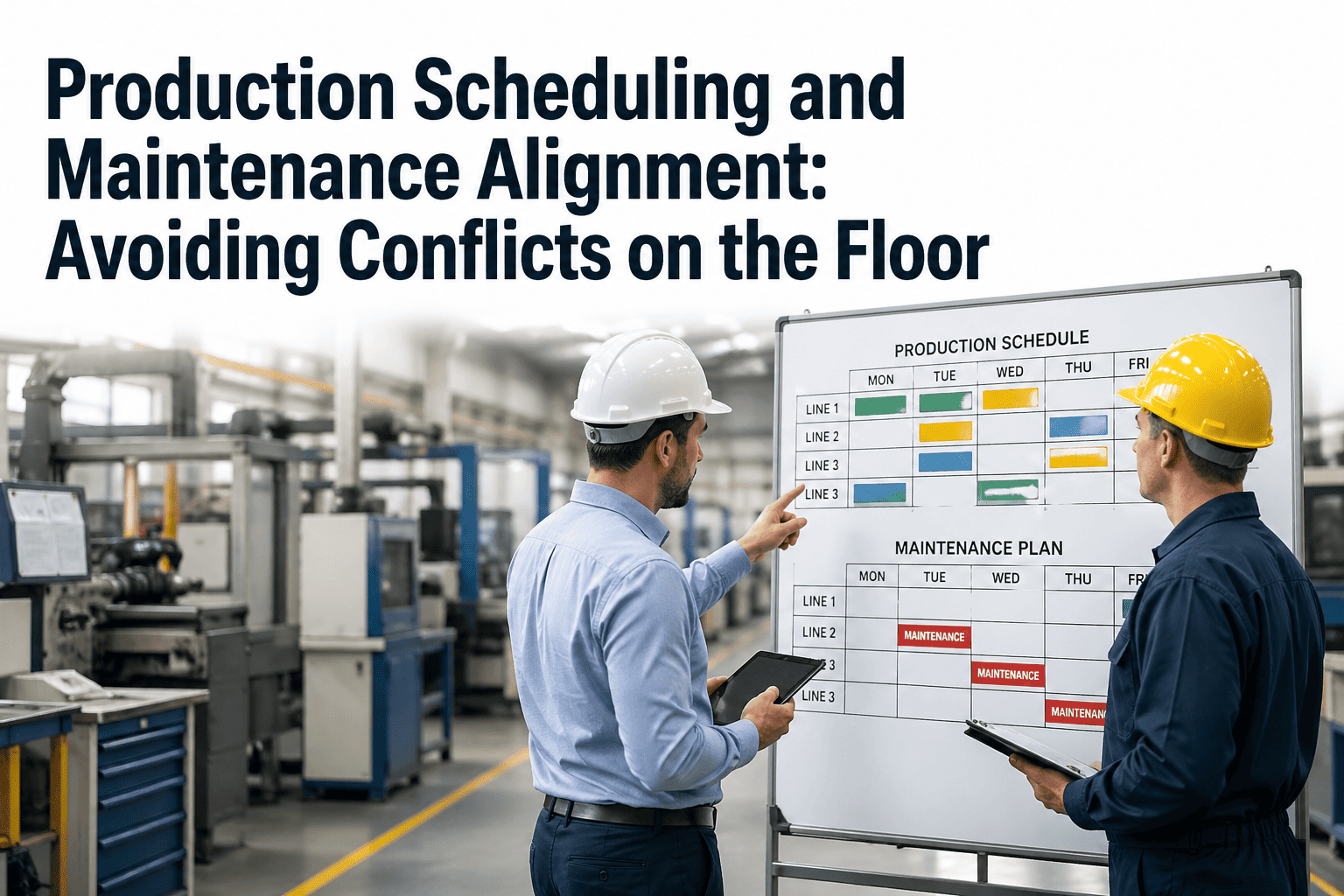
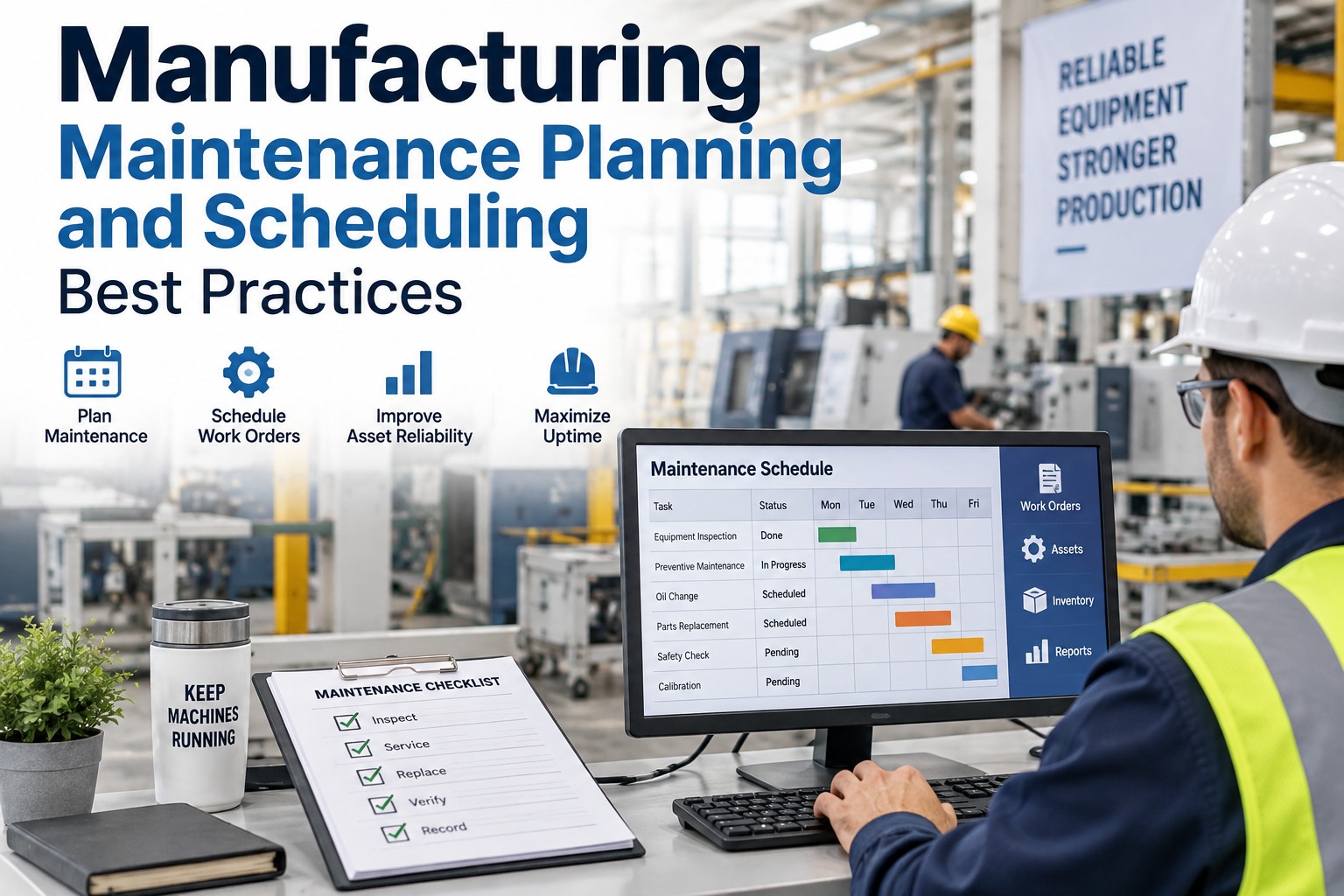
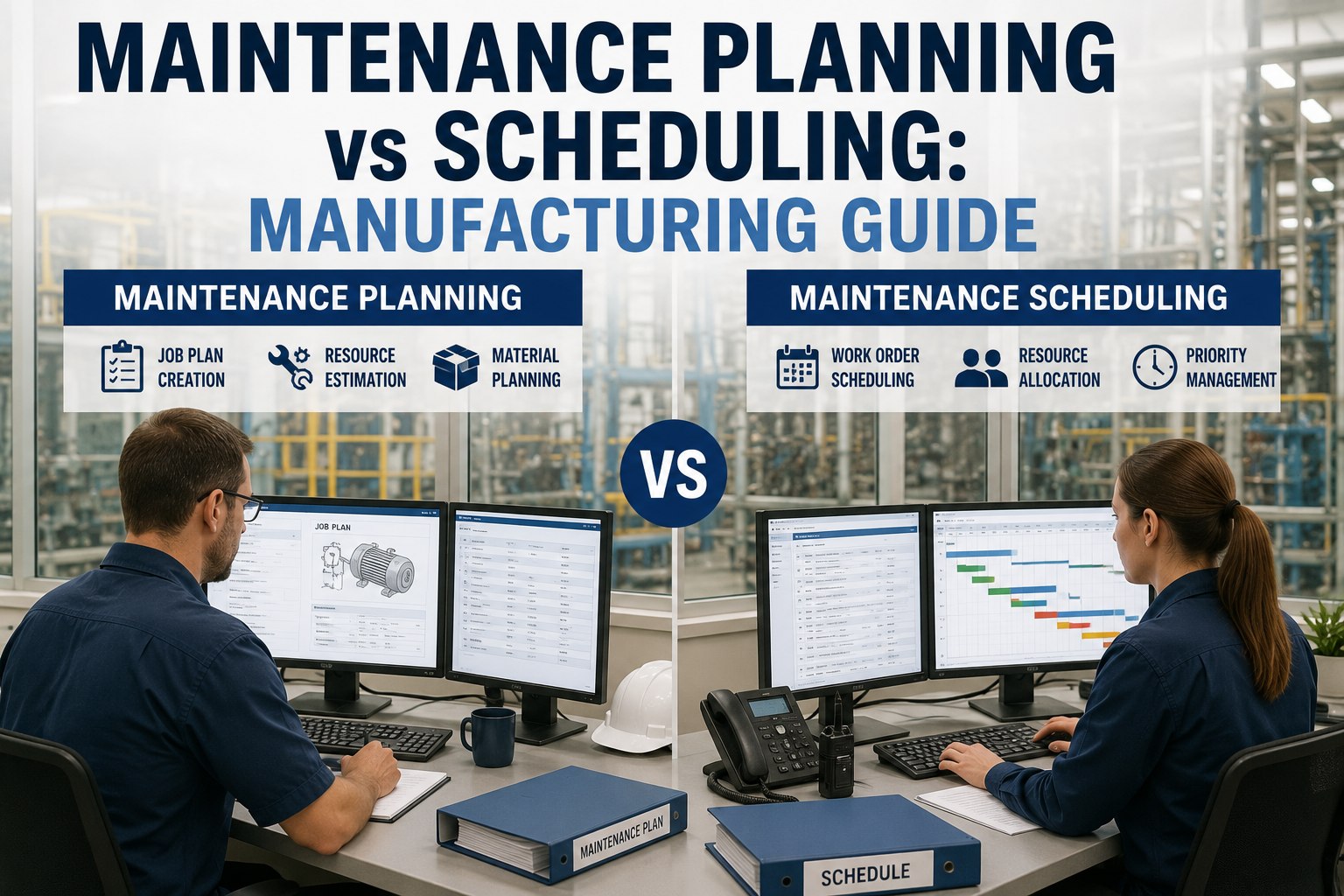
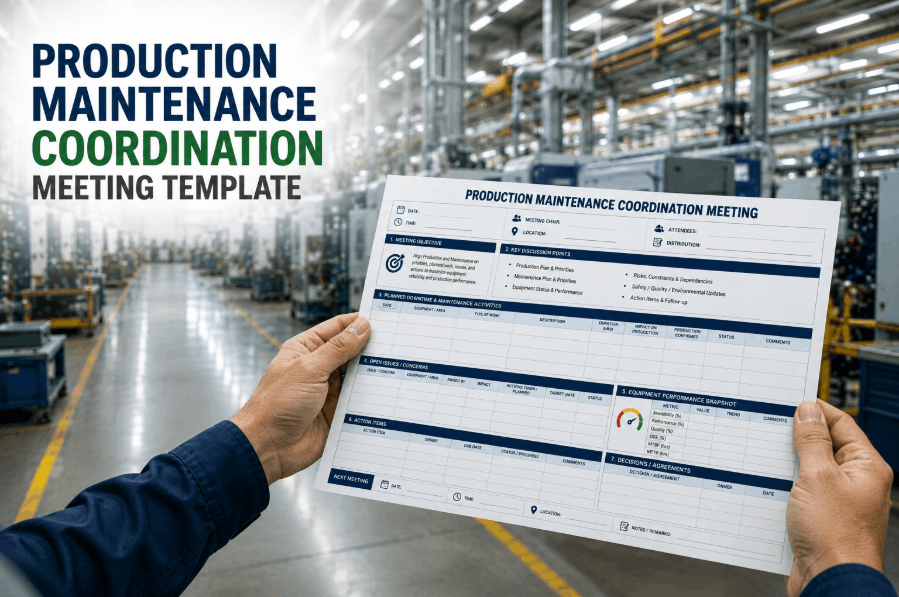
Most production floors run two separate schedules that never meet — one for output, one for maintenance. When a planned PM window collides with a customer deadline, maintenance loses. Again. And again. Until a machine fails mid-campaign, halting production for hours at a cost your spreadsheet never captured. Research shows unplanned downtime costs manufacturers an average of $125,000 per hour, yet the root cause is rarely equipment failure alone — it is a scheduling gap between two teams that should be planning together. This guide gives production planners and maintenance managers a practical framework to align PM windows with production commitments, reduce floor conflicts, and protect both output targets and equipment health. Start aligning maintenance and production in Oxmaint or book a 30-min alignment review to see how your facility can eliminate scheduling conflicts today.
Zero-Conflict Scheduling
Production Scheduling & Maintenance Alignment: Stop the Floor Conflicts
When production and maintenance plan in silos, the floor pays the price. Learn how top manufacturers synchronize PM windows with production runs — cutting emergency breakdowns by 30% and protecting delivery commitments.
$125K
avg cost per hour of unplanned downtime
80%
of stoppages are unplanned — most preventable
30%
fewer deferred PMs with formal alignment process
Why Production and Maintenance Keep Clashing
The conflict is structural, not personal. Production planners build schedules around customer orders, capacity, and throughput targets. Maintenance managers build PM calendars around asset health, manufacturer intervals, and technician availability. Neither calendar is wrong — but when they live in separate systems, they collide on the floor.
Production's pressure
Meet delivery commitments. Maximize machine utilization. Avoid line stoppages during peak demand periods.
Maintenance's reality
Assets need windows. PM deferrals compound. One skipped inspection today becomes an emergency breakdown next week.
The result on the floor
Maintenance is pushed out of the schedule. PMs are deferred. Equipment degrades silently. A forced shutdown mid-campaign costs 10x more than the PM would have.
The Scheduling Gap: Where Money Gets Lost
This is what a disconnected schedule looks like versus an aligned one. The gap between them is where your budget disappears.
Production schedule locked first
Maintenance fits around leftover gaps
PM windows pushed right repeatedly
Asset condition degrades undetected
Emergency breakdown mid-campaign
31+ hours lost, $800K in emergency costs
PM windows visible before production commits
Conflicts resolved in planning meeting, not on floor
Maintenance scheduled in natural production lulls
Asset health tracked in real time
Zero mid-campaign shutdowns
25% fewer emergency repairs annually
Still managing production and maintenance in separate systems?
Oxmaint's unified planning board shows PM windows alongside production orders — conflicts surface before they hit the floor, not after.
3 Approaches to Align PM Windows with Production Schedules
There is no single right answer — the best approach depends on your planning environment, team size, and technology stack. Here are three proven models, ranked by implementation complexity.
Level 1
Weekly Alignment Meeting
Before the production schedule is locked, maintenance and production review upcoming PM windows together. Conflicts are resolved in the meeting room, not on the floor. No technology investment required — implement this week.
Best for: Small plants, simple scheduling environments
Level 2
Shared Digital Planning Board
A single digital calendar shows production orders and PM windows together. Both teams see the same view. Conflicts are flagged visually before commitments are made. Mid-complexity — requires CMMS or scheduling software with shared access.
Best for: Mid-size manufacturers, multi-line operations
Level 3
Integrated CMMS + ERP Scheduling
Your CMMS and ERP share real-time data. When a production planner attempts to book an asset during a scheduled PM window, the conflict surfaces automatically before the booking is confirmed. Most powerful — eliminates human error entirely.
Best for: Large plants, complex multi-asset environments
Key Metrics: How to Measure Alignment Success
You cannot improve what you do not measure. These four KPIs tell you whether your production-maintenance alignment is working or breaking down.
| KPI |
What It Measures |
Industry Target |
Warning Signal |
| PM Compliance Rate |
% of scheduled PMs completed on time |
> 90% |
< 75% indicates chronic deferral |
| Schedule Attainment |
% of production orders completed on schedule |
> 95% |
< 88% points to maintenance conflicts |
| Planned vs. Reactive Ratio |
Scheduled work orders as % of total WOs |
> 65% planned |
< 50% signals reactive firefighting |
| Emergency Work Orders |
Unscheduled break-fix WOs per month |
< 10% of total WOs |
> 20% shows poor alignment |
| MTBF (Mean Time Between Failures) |
Average operating time between failures |
Trending upward monthly |
Flat or declining = deferred PM impact |
Step-by-Step: Building a Conflict-Free Maintenance Window
Follow this five-step process to create maintenance windows that production will actually protect — and that maintenance can actually execute.
01
Map your production rhythm
Identify recurring low-demand periods: shift changeovers, weekly slowdowns, end-of-month gaps. These are natural maintenance windows that do not fight production.
02
Classify assets by criticality
Bottleneck assets get protected windows — maintenance happens only during planned production lulls. Non-critical assets can flex around production demand with reasonable lead time.
03
Set a PM deferral limit
Define the maximum number of days a PM can be deferred before it becomes non-negotiable. Automate escalation alerts when a PM approaches its deferral limit.
04
Make PM windows visible to production planners
Load maintenance windows into the same planning tool production uses. Conflict visibility before commitments are locked is the single highest-impact change you can make.
05
Establish a conflict escalation path
When a genuine conflict exists between a critical order and a critical PM, define who has authority to decide — and what the documented trade-off looks like. Remove ambiguity from the floor.
Real Impact: What Alignment Actually Delivers
Organizations with formal processes for resolving production-maintenance conflicts consistently outperform those without. Here is what the data shows:
30%
Fewer Deferred PMs
Plants with joint planning meetings defer fewer maintenance tasks because conflicts are resolved before they become emergencies.
25%
Drop in Emergency Repairs
Consistent PM execution stops the degradation cycle that leads to unplanned failures — cutting reactive costs that run 3–5x more than planned work.
18%+
Throughput Gains
Integrated scheduling engines that protect bottleneck assets from unplanned outages deliver throughput improvements without capital investment.
1 week
Implementation Start
The simplest alignment approach — a weekly cross-functional meeting — requires no technology and can begin producing results within the first planning cycle.
Frequently Asked Questions
How do we handle a PM window that conflicts with a critical customer order?
Assess the PM deferral risk first. If the PM has already been deferred once and the asset is a bottleneck, the risk of deferral likely outweighs a short delivery delay. Define escalation authority in advance so the floor does not make this call under pressure — that is what leads to catastrophic mid-run breakdowns.
What is the fastest way to start aligning production and maintenance schedules?
Start with a weekly 30-minute joint planning meeting where maintenance shares the upcoming PM calendar before production locks its schedule. This single change — no technology required — consistently reduces floor conflicts within the first two to three weeks of implementation.
How many times can a PM be deferred before it becomes a serious risk?
Industry practice recommends a maximum of one deferral per PM interval for non-critical assets and zero deferrals for bottleneck or safety-critical equipment. A second deferral on any asset should trigger an escalation review with operations leadership to formally accept the risk.
Does Oxmaint integrate with our ERP to show maintenance windows in the production schedule?
Yes. Oxmaint connects bidirectionally with major ERP platforms so that PM windows are visible in your production planning environment in real time. When a planner books an asset during a scheduled window, the conflict surfaces before the booking is confirmed — not after the line stops.
How do we get production leadership to prioritize maintenance windows?
Frame maintenance windows in production's language: cost per hour of downtime, OEE impact, and schedule attainment risk. When production leaders see that a deferred PM on a bottleneck asset risks 20+ hours of lost throughput, the conversation shifts from "can maintenance wait?" to "when is the safest window?"
Ready to End the Production vs. Maintenance Tug-of-War?
Oxmaint gives your production and maintenance teams a single shared view — PM windows, production orders, asset health, and conflict alerts in one platform. Stop firefighting. Start planning.