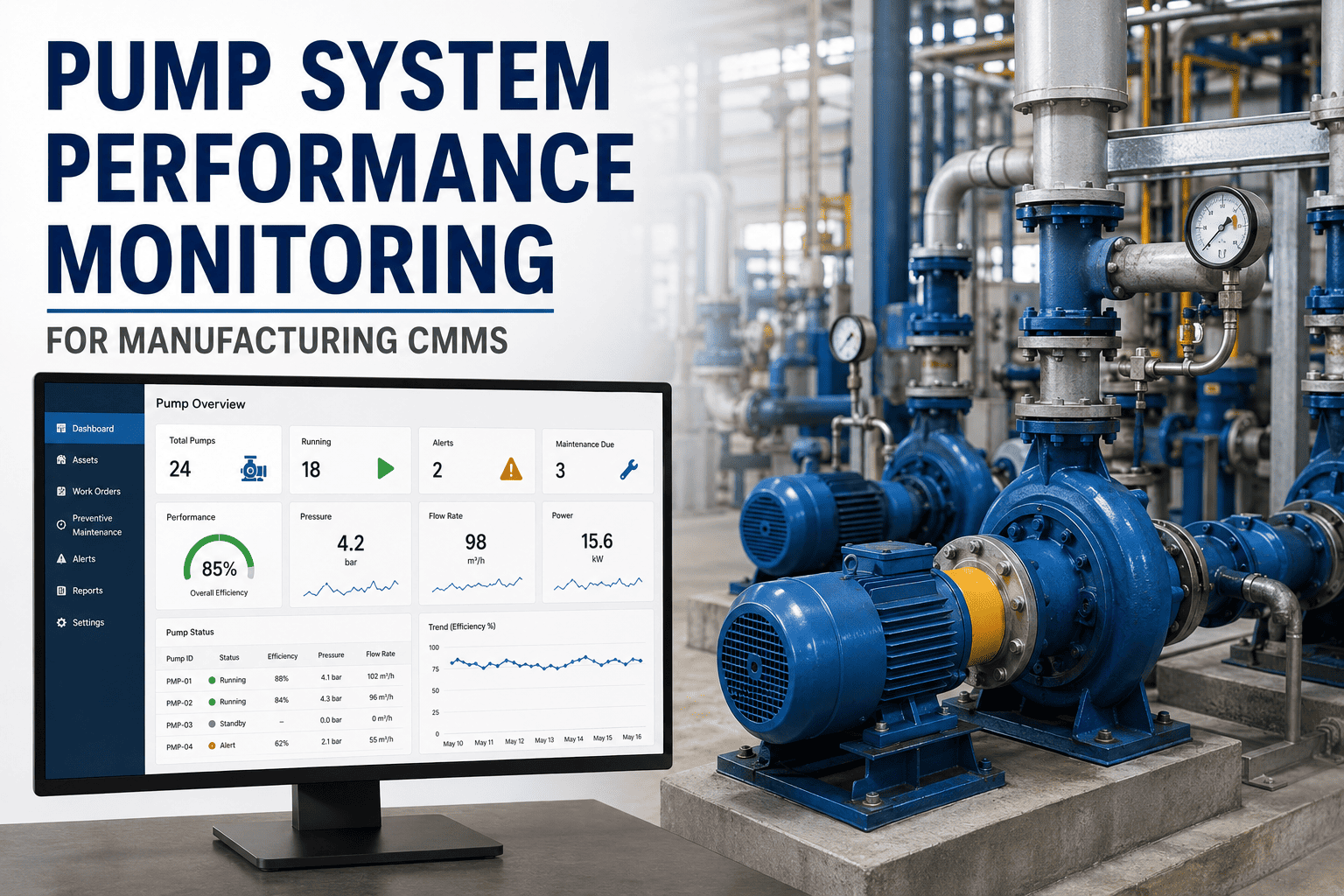
Industrial pumps are the circulatory system of manufacturing — and when one fails without warning, the damage ripples far beyond the pump itself into process shutdowns, contaminated product, damaged seals, and emergency repair bills that dwarf what proactive monitoring would have cost. Pump predictive maintenance using continuous vibration, pressure, flow, and temperature monitoring gives maintenance teams 2–8 weeks of advance warning before centrifugal and positive displacement pumps fail — turning expensive emergency events into planned, low-cost interventions. This guide covers exactly how to implement it, what to monitor, and what the data tells you.
45%
of industrial pump failures are preventable with condition monitoring
2–8 wks
advance warning window provided by vibration analysis
$40K–$200K
typical cost of a single unplanned centrifugal pump failure
3–5×
emergency repair cost vs planned maintenance intervention
Centrifugal vs Positive Displacement Pumps: What You're Monitoring and Why It Differs
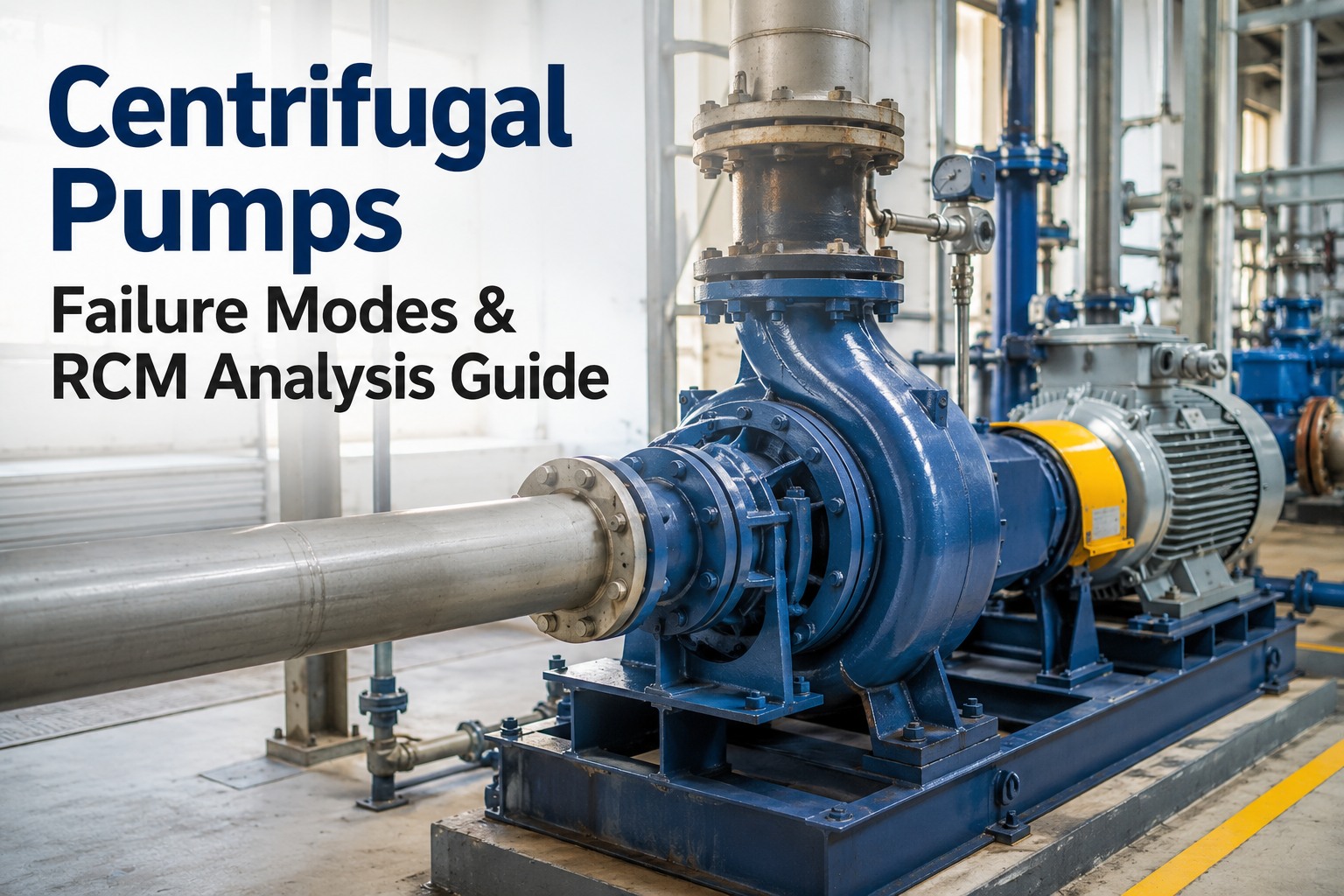
Before selecting sensors or setting alert thresholds, understanding the mechanical differences between pump types is essential — because failure modes, warning signatures, and monitoring parameters differ significantly between centrifugal and positive displacement pumps.
How It Works
Uses a rotating impeller to transfer kinetic energy to fluid, increasing pressure and flow. Continuous rotation at high speed means bearing health, shaft alignment, and impeller condition are the primary reliability drivers.
Primary Failure Modes
Key Monitoring Parameters
Vibration (radial + axial)
Bearing temperature
Suction pressure
Flow rate
Motor current
How It Works
Moves fluid by trapping a fixed volume and displacing it through the system — via pistons, gears, screws, or diaphragms. Operates at lower speeds with higher pressure output. Pressure pulsation patterns and volumetric efficiency are the critical health indicators.
Primary Failure Modes
Diaphragm rupture
Moderate
Key Monitoring Parameters
Discharge pressure
Pressure pulsation
Volumetric efficiency
Vibration (low-freq)
Leakage rate
The Four Critical Parameters to Monitor on Any Industrial Pump
The most information-rich pump monitoring signal. Vibration sensors on the bearing housing capture both overall vibration amplitude and frequency spectrum data. Bearing defect frequencies, impeller pass frequencies, and sub-synchronous vibration patterns each indicate specific fault types — visible weeks before audible symptoms or performance degradation appears.
ISO 10816 Alert Thresholds (Centrifugal Pumps)
Good: <2.3 mm/s RMS
Warning: 2.3–4.5 mm/s
Alert: >4.5 mm/s
Bearing and motor winding temperature are early-warning indicators of lubrication degradation, overloading, and seal friction. A bearing running 15–20°C above its baseline temperature is typically 2–4 weeks from failure. Thermal imaging adds spatial context, revealing hotspots across the entire pump assembly that point sensors cannot capture.
Bearing Temperature Alert Bands
Normal: <70°C
Warning: 70–90°C
Critical: >90°C
Differential pressure between suction and discharge, combined with flow rate measurement, reveals pump efficiency degradation over time. A pump delivering 10% less flow at the same pressure differential is showing early impeller wear or internal recirculation. For PD pumps, pressure pulsation amplitude and pattern are the primary diagnostic signals for valve and seal condition.
Efficiency Degradation Alert
Healthy: >90% of baseline
Watch: 80–90%
Act: <80%
Motor Current Signature Analysis (MCSA) detects pump and motor faults through the electrical current waveform — without any physical contact with rotating parts. Current draw patterns correlate directly with mechanical load: cavitation causes distinctive current pulsations, bearing faults create sideband frequencies, and developing impeller wear shows gradual current baseline drift.
Current Deviation Alert
Normal: ±3% of baseline
Watch: 3–7% drift
Act: >7% drift
Connect Pump Monitoring Alerts Directly to Your Maintenance Workflow
Oxmaint integrates with condition monitoring sensors and SCADA systems to automatically generate pump maintenance work orders when parameters exceed thresholds — with asset history, failure mode context, and parts recommendations included.
Pump Failure Progression: Early Warning to Catastrophic Failure
Pump failures rarely happen without warning. Understanding the failure progression timeline helps maintenance teams set the right alert thresholds and act at the lowest-cost intervention point.
4–8 weeks before failure
2–4 weeks before failure
Days to 1 week
Hours
Detectable by AI
High-frequency vibration sideband emergence
Bearing temp +5°C above baseline
Subtle current draw increase (<3%)
Minor efficiency loss (2–5%)
Schedule planned maintenance
Sensor alerts trigger
Overall vibration level rising
Bearing temp +10–15°C above baseline
Increased noise during operation
Flow rate beginning to drop
Expedite maintenance window
Visual/audible cues
Vibration exceeding ISO alarm limits
Bearing temp >90°C
Audible bearing noise, rattling
Visible seal leakage
Emergency maintenance now
Shutdown required
Catastrophic bearing seizure
Shaft damage or breakage
Seal catastrophic failure
Motor overload trip
Full replacement + root cause
Common Pump Failures and Predictive Indicators
| Failure Mode |
Pump Type |
Primary Sensor Signal |
Warning Lead Time |
Repair Cost (Reactive) |
| Bearing failure |
Both |
Vibration (HF sidebands) + Temperature rise |
3–6 weeks |
$8,000–$35,000 |
| Cavitation |
Centrifugal |
Suction pressure drop + Acoustic emission + Vibration |
Days to weeks |
$15,000–$80,000 |
| Mechanical seal leakage |
Both |
Temperature rise at seal face + Vibration change |
2–4 weeks |
$5,000–$20,000 |
| Impeller wear |
Centrifugal |
Flow rate decline + Efficiency loss + Current change |
4–8 weeks |
$10,000–$50,000 |
| Valve leakage (PD) |
PD only |
Pressure pulsation pattern change + Volumetric efficiency drop |
1–3 weeks |
$4,000–$25,000 |
| Shaft misalignment |
Both |
2× running speed vibration component increase |
Weeks to months |
$6,000–$30,000 |
How AI Changes Pump Monitoring
Traditional threshold-based monitoring alerts when a parameter exceeds a fixed limit. AI-based pump monitoring learns your pump's unique behavioral baseline and detects subtle multivariate pattern changes that indicate developing faults — weeks before any single threshold is breached.
Fixed vibration limit triggers alarm
Single-parameter evaluation only
No baseline learning — same limit for all operating conditions
High false alarm rate during load changes
Alarm fires when damage is already significant
Technician interprets raw sensor data manually
Detects pattern changes at 5–10% of threshold deviation
Correlates vibration, temperature, pressure, and current simultaneously
Learns operating modes — different baselines for different speeds/loads
Low false alarm rate — context-aware anomaly scoring
Flags developing faults 4–8 weeks before threshold breach
Auto-generates work orders with fault type and recommended action
Ready to Stop Reacting to Pump Failures and Start Predicting Them?
Oxmaint connects pump sensor data and CMMS workflows in one platform — giving your maintenance team early fault detection, automatic work order creation, and full pump asset history without switching between systems.
Frequently Asked Questions About Pump Predictive Maintenance
What sensors are most important for centrifugal pump condition monitoring?
Vibration sensors mounted on the bearing housing (radial and axial directions) deliver the most diagnostic information for centrifugal pumps — detecting bearing faults, misalignment, imbalance, and cavitation signatures. Temperature sensors at bearing locations add a complementary early-warning channel. For maximum coverage, pair vibration and temperature with suction/discharge pressure transmitters and a flow meter so you can track hydraulic efficiency over time.
Oxmaint integrates with all major sensor brands and industrial protocols to pull this data into one maintenance dashboard automatically.
How does cavitation damage a centrifugal pump, and how early can monitoring detect it?
Cavitation occurs when suction pressure drops below the fluid's vapor pressure, forming vapor bubbles that collapse violently on the impeller surface — causing pitting, erosion, and progressive material loss. Early cavitation produces a distinctive broadband vibration increase and characteristic acoustic emission signatures detectable with the right sensors. AI-based monitoring can flag developing cavitation conditions 1–3 weeks before impeller damage becomes visible.
Book a consultation to review your current pump monitoring setup and identify any cavitation detection gaps.
Can predictive maintenance be applied to older pumps without built-in sensors?
Yes — wireless vibration and temperature sensor kits can be retrofitted to virtually any existing pump in under an hour, with no modification to the pump itself. Wireless sensors transmit to a local gateway that feeds data to a cloud or on-premise monitoring platform. This approach is widely used to bring predictive monitoring to legacy assets that predate digital instrumentation.
Oxmaint supports retrofitted sensor data ingestion from all major wireless sensor manufacturers, making legacy pump monitoring deployable in days, not months.
How do you set the right alert thresholds for pump vibration monitoring?
Start with ISO 10816 vibration severity standards as your baseline reference, then establish pump-specific baselines during a 2–4 week normal operation period after installing sensors. Thresholds should be set relative to your pump's specific baseline — a pump that normally runs at 1.5 mm/s RMS needs different alert levels than one that runs at 3.5 mm/s. AI-based systems set these thresholds automatically by learning the operating envelope.
Our maintenance specialists can review your current threshold configuration and identify whether you're getting too many false alarms or missing developing faults.
What is the typical ROI timeline for pump predictive maintenance implementation?
Most plants achieve full ROI on pump predictive maintenance investment within 6–12 months, driven by prevention of even one or two major pump failures that would otherwise incur $20,000–$100,000+ in emergency repair, lost production, and secondary damage costs. Ongoing savings come from eliminating over-maintenance — scheduled PM intervals that replace components well before they actually degrade.
Start tracking your pump health data to build the failure history baseline that makes ROI calculation defensible to leadership.
Your Pumps Are Running Right Now — Do You Know Their Health Status?
Oxmaint gives your maintenance team real-time pump health visibility, AI-driven fault detection, and automatic work order creation — all in one platform purpose-built for industrial maintenance operations. Start with your highest-risk pumps and expand from there.