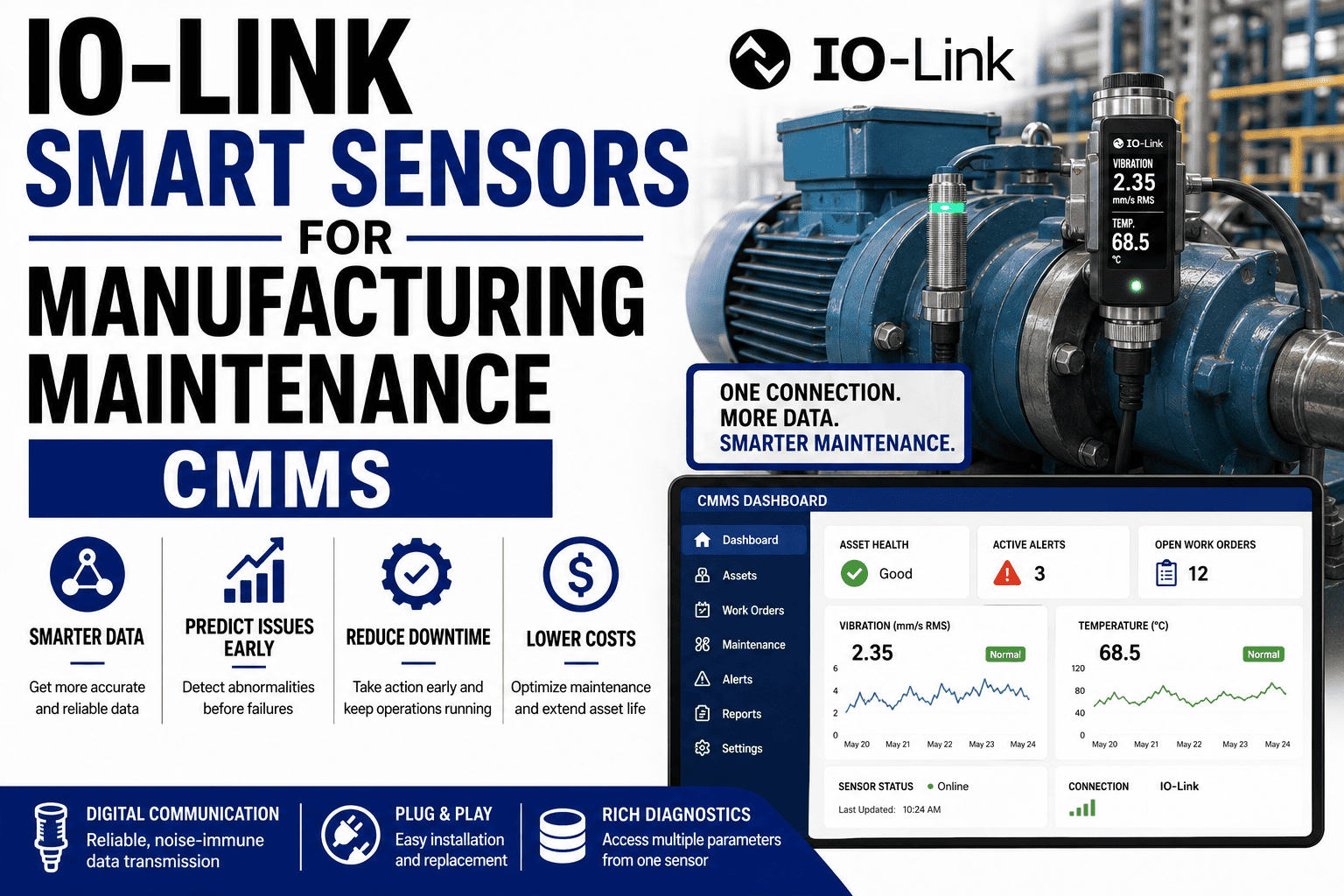
Every smart factory operates on a single, uncompromising promise: continuous uptime. However, as production lines become more complex and interconnected, the margin for error disappears. Robotic Predictive Maintenance (RPM) represents the pinnacle of Industry 4.0, combining autonomous mobility with IoT sensor intelligence to catch failures weeks before they happen. This complete guide explores the technology stack, implementation strategy, and ROI of transitioning to an intelligent, robot-led maintenance ecosystem. Schedule a consultation to build your facility's roadmap.
The Expensive Reality of Reactive Maintenance in 2026
In a high-output environment, "waiting for it to break" is the most expensive strategy a plant can employ. When a critical robotic actuator or conveyor motor fails unexpectedly, the costs ripple through the entire supply chain. Modern manufacturing requires a shift toward Condition-Based Maintenance (CBM), where interventions are dictated by real-time asset health rather than arbitrary calendar dates.
$260K
/hr
Average cost of unplanned downtime in discrete manufacturing sectors
82%
Of asset failures are random, making fixed schedules ineffective
10x
Cost multiplier of emergency repairs over planned predictive interventions
40%
Increase in asset lifespan through precision vibration and thermal care
Predictive vs. Preventive Maintenance: The Key Differences
While preventive maintenance relies on statistics and averages, predictive maintenance relies on actual physics and data. Understanding the difference is critical for justifying the investment in robotic and IoT infrastructure.
The 5 Pillars of an Intelligent RPM Stack
A "Complete Guide" must view predictive maintenance not as a single tool, but as a multi-layered technical architecture. Each pillar must be integrated to ensure that raw sensor data is successfully converted into a completed repair.
01
Ubiquitous IoT Sensing
The foundation involves triaxial vibration sensors, high-frequency acoustic probes, and power quality meters. These sensors monitor the "Digital Twin" of the machine, looking for deviations from the "Golden Batch" operating signature in real-time. This provides the constant stream of raw health data needed for deep analysis.
02
Autonomous Inspection Fleets
Mobile robots provide "contextual data." While fixed sensors monitor internal components, robots patrol the exterior using thermal vision to spot insulation leaks and AI vision to identify corrosion or mechanical misalignment across the plant floor. They act as mobile sensor hubs for assets not yet permanently instrumented.
03
Edge Intelligence & Fog Computing
To eliminate latency, critical failure detection happens at the "Edge." Local processors analyze high-bandwidth vibration data instantly, firing emergency alerts without needing a cloud round-trip, protecting the machine in milliseconds. This is vital for high-speed robotic arms where a collision or seizure can happen in the blink of an eye.
04
Predictive AI (RUL) Engine
Machine learning models calculate Remaining Useful Life (RUL). By correlating data from thousands of similar assets, the AI predicts exactly how many hours of operation remain before a component breaches its safety threshold. This turns "noise" into "calendar dates" for maintenance teams.
05
Automated CMMS Orchestration
The intelligence is useless without execution. Oxmaint CMMS ingests these predictions to auto-generate work orders, check parts availability, and schedule technicians during the next planned changeover window. This removes the "human lag" from the identification-to-repair cycle.
Sign up for Oxmaint to begin.
Is your data driving action? Oxmaint bridges the gap between IoT sensor alerts and technician productivity, reducing administrative overhead by up to 60%.
Start Today
The Sensor Matrix: Choosing the Right Tools
Precision maintenance requires selecting sensors that match the physics of the failure mode. Combining multiple sensor types on a single critical asset dramatically improves prediction confidence and eliminates false positives.
The gold standard for rotating equipment. Triaxial accelerometers detect shaft imbalance, misalignment, and bearing wear through high-frequency spectral analysis. It catches inner-race defects weeks before they are audible.
Identifies heat anomalies caused by electrical resistance or friction. Essential for spotting loose connections, phase imbalance, or poor lubrication before they cause fire hazards or motor burnouts.
Detects high-frequency sound waves emitted by pressurized leaks and early-stage bearing arcing—often weeks before vibration sensors trigger. Perfect for quiet leak detection in noisy environments.
Motor Current Signature Analysis looks for stator faults and broken rotor bars by analyzing electrical waveforms. It provides a non-invasive way to monitor motor health from inside the MCC panel.
In-line monitoring of oil viscosity and metal wear particles. Prevents internal component failure by ensuring lubricant health is always within spec, identifying internal metal fatigue before it causes a seizure.
Mobile AMRs use HD cameras and image recognition to find visual cracks, belt fraying, and fluid leaks during 24/7 automated inspection patrols. They "see" what sensors can't measure directly, like physical corrosion.
Sector-Specific ROI Benchmarks
The impact of robotic predictive maintenance is measurable across all manufacturing verticals. Leaders in these industries use Oxmaint to benchmark their reliability against global Industry 4.0 standards.
Strategic Advantage of Autonomous Mobile Robots (AMRs)
While fixed sensors are powerful, they cannot cover every square inch of a facility. Autonomous inspection robots bridge the "visibility gap" by patrolling the plant floor, overhead walkways, and hazardous zones where human entry is restricted.
Comprehensive Facility Coverage
A single robot can inspect hundreds of non-instrumented motors and gearboxes per shift, identifying visual leaks or unusual noises that would otherwise go unnoticed until failure.
Hazardous Area Safety
Robots perform inspections in high-heat zones, chemical storage areas, and high-voltage corridors, removing the need for humans to enter dangerous environments for routine checks.
Dynamic Anomaly Correlation
By moving through the plant, robots can correlate environmental factors (humidity, ambient temp) with machine health, providing a more nuanced "Digital Twin" of the entire production floor.
Automated Health Auditing
Robots generate a continuous visual and thermal record of the facility, allowing managers to "replay" the deterioration of an asset over months to refine their predictive models.
Closing the Loop with Oxmaint Workflows
Data is only as good as the action it triggers. Oxmaint CMMS ensures that predictive insights don't just sit in a dashboard; they result in a technician arriving with the right tools, parts, and safety documentation.
75%
Fewer unplanned downtime events
50%
Reduction in spare parts inventory costs
40%
Increase in overall asset lifecycle
95%
AI prediction accuracy for critical assets
The Implementation Roadmap: 4 Stages to Success
Most predictive programs fail because they try to do too much at once. We recommend a four-stage roadmap to ensure organizational buy-in and technical stability.
Stage 1: Discovery
Criticality Audit & Baseline
Rank assets by downtime cost and failure frequency
Select sensors based on machine physics and known failure modes
Initialize Oxmaint CMMS asset documentation and maintenance history
Stage 2: Pilot
Connected Asset Monitoring
Deploy IoT gateways and sensors on top-20 critical assets
Commission first inspection robot for exterior patrols and visual logs
Establish "Normal" health baselines using supervised AI learning
Stage 3: Integration
Automated Action Loops
Configure AI to trigger work orders automatically within Oxmaint
Integrate spares inventory with predicted needs to automate purchasing
Roll out mobile reliability apps to the primary maintenance team
Stage 4: Maturity
Autonomous Factory Ops
Scale to secondary and tertiary facility systems across the entire plant
Deploy multi-robot fleet for 24/7 visual and environmental inspection
Continuously refine AI models for zero-fault, self-healing production
Build a Self-Healing Factory with Oxmaint
Don't settle for a reactive future. Oxmaint connects your IoT sensors, autonomous robots, and maintenance engineering team into a single, intelligent command center. Automate your condition-based workflows, extension asset life, and join the elite manufacturers who have mastered Industry 4.0.
Frequently Asked Questions
How do robots and fixed sensors work together?
Fixed sensors provide 24/7, high-frequency internal data (like motor vibration). Robots provide "mobile context"—they travel to areas without sensors to capture thermal images, visual defects, and environmental anomalies that fixed hardware might miss. This dual approach ensures 100% plant coverage without the cost of instrumenting every minor asset.
Can we implement this on legacy machinery?
Absolutely. Modern sensors are battery-powered and bolt-on, requiring no modifications to the machine's electrical system. This allows you to digitize 30-year-old equipment and bring it into the Industry 4.0 fold with zero downtime during installation.
How long does it take to see ROI?
Most factories see significant savings within 3-6 months. The earliest wins typically come from identifying impending failures in critical bottleneck machines that would have caused multi-day shutdowns. Full program ROI is usually achieved within the first year.
What are the data security implications?
Oxmaint uses enterprise-grade encryption for all sensor and robot data. We offer both cloud-based and on-premise edge processing options to meet the strict security requirements of modern industrial facilities, ensuring your proprietary machine data stays within your control.
Does the AI require a data scientist to manage?
No. Oxmaint's AI engine is designed for maintenance professionals. It translates complex frequency spectra into plain-language alerts like "Bearing Wear Detected - 3 Weeks to Failure." Your team doesn't need to be data experts; they just need to be maintenance experts.