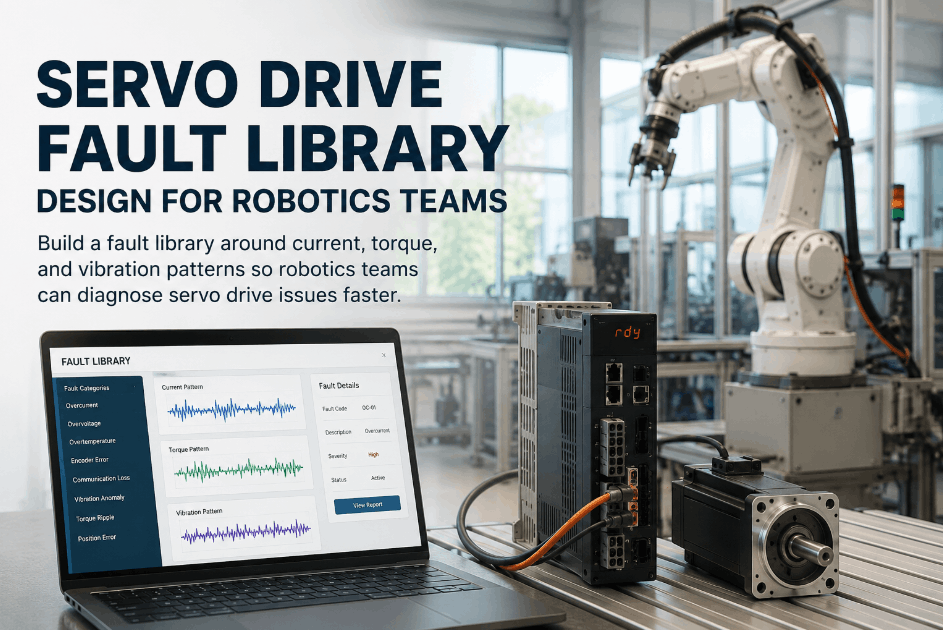
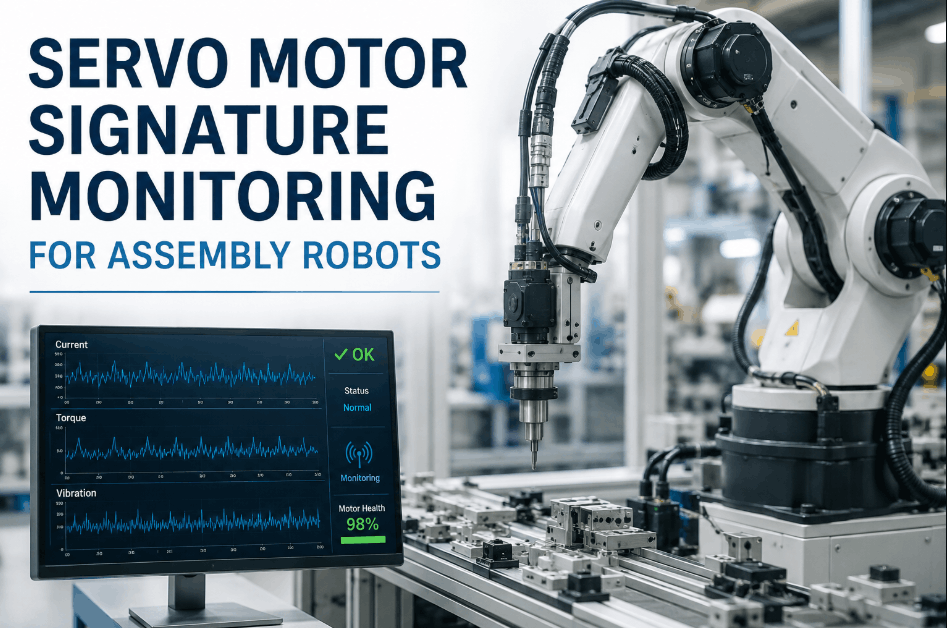
Servo drive faults in robotics applications are rarely random — current spikes, torque anomalies, and vibration signatures repeat in recognizable patterns across joints, axes, and robot cells. Sign Up Free to start building your servo drive fault library inside Oxmaint and connect it to real-time telemetry from your robot assets. Book a Demo to see how robotics teams use structured fault taxonomies and predictive analytics to cut servo drive diagnosis time across production shifts. A well-designed fault library turns repeated servo failures from isolated incidents into a searchable knowledge base that every technician on every shift can act on.
Robotics Maintenance · Servo Systems · 2026
Servo Drive Fault Library Design for Robotics Teams
Build a fault library around current, torque, and vibration patterns so robotics teams diagnose servo drive issues faster and close more work orders on the first visit.
40%+Faster servo fault diagnosis when technicians reference a structured pattern library
55%Reduction in repeat servo failures after fault pattern-driven root cause correction
70%Of servo drive faults share recognizable current or torque signatures across robot cells
30%Lower robot downtime when predictive alerts fire before drive failure reaches production
Where Servo Drive Fault Management Breaks Down Without a Library
Without a structured fault library, each servo drive event is diagnosed in isolation — with resolution time driven by which technician happens to be on shift rather than what the current, torque, and vibration data actually shows. Sign Up Free to map your robot asset hierarchy into Oxmaint and begin cataloguing servo fault signatures.
01
No Pattern Taxonomy for Drive Faults
Risk Window: Multi-axis robot cells
Structural GapWithout a fault taxonomy organized by current, torque, and vibration signatures, technicians diagnose each drive event from scratch — even when the same pattern appeared on a different axis last week.
02
Diagnosis Accuracy Varies by Technician
Risk Window: Cross-shift coverage and technician turnover
Largest VariableServo drive resolution quality depends on individual experience when no shared fault library exists, creating wide variation in diagnosis time and first-visit completion rates across shifts.
03
Repeat Faults Not Linked Across Robot Cells
Risk Window: Similar robot models and shared cell configurations
Pattern LossThe same drive fault appearing on three robots of the same model in the same month is treated as three unrelated events rather than a fleet-level pattern requiring a single systematic fix.
04
Current and Torque Data Not Connected to Work Orders
Risk Window: Data-rich, insight-poor operations
Data GapServo telemetry is often collected but sits in a separate monitoring system, disconnected from the work order and fault history where technicians actually record resolution steps.
05
No Predictive Threshold for Pre-Failure Alerts
Risk Window: High-utilization production robots
Detection GapWithout defined thresholds tied to known fault signatures, the monitoring system cannot flag a developing servo issue before it becomes a production-stopping fault event.
06
Fault Knowledge Lost at Shift Handover
Risk Window: Multi-shift robotics operations
Handover GapDiagnostic findings from a prior shift's servo event often fail to transfer at handover, leaving the incoming technician to restart the diagnosis from a blank work order.
Servo Drive Fault Management — Without vs. With Oxmaint
A structured fault library changes diagnosis speed, first-visit resolution, and repeat failure rates across the robot fleet. Book a Demo to see how Oxmaint connects servo telemetry, fault taxonomies, and work order history into a single asset intelligence layer for robotics teams.
Servo Fault Library Maturity — Where Does Your Robotics Team Score?
Servo fault management maturity ranges from informal technician knowledge to a structured library tied to live telemetry and predictive thresholds. Book a Demo to assess your robotics team's fault management maturity with an Oxmaint solutions engineer.
Servo Drive Fault Library Maturity Framework
Score 5 = predictive pattern library · Score 1 = no structured fault reference
5
Predictive · Telemetry-Linked Fault Library
Current, torque, and vibration thresholds tied to the fault library generate predictive alerts before a drive trips, with work orders pre-populated with the matching fault pattern and resolution steps.
Profile: First-visit closure rates and robot uptime are systematic outcomes of the fault library, not luck of which technician is on shift.
4
Structured Library · Partial Telemetry Integration
A fault library exists and covers most servo drive patterns, but some robot cells still require manual data entry rather than automatic telemetry-to-library matching.
Action: Extend live telemetry integration to remaining cells and configure predictive threshold alerts for top recurring fault signatures.
3
Documented Library · No Telemetry Link
Fault patterns are documented in a shared reference but accessed manually during diagnosis with no automatic matching to live servo telemetry.
Gap: Manual library lookup slows diagnosis under shift pressure and requires the technician to know the right pattern to search for.
2
OEM Documentation Only · No Internal Library
Servo fault diagnosis relies on OEM manuals and individual technician experience with no internal library capturing fleet-specific patterns or resolution history.
Risk: OEM documentation covers general fault codes but not the specific current and torque signatures that recur on your robot configuration and duty cycle.
1
No Fault Reference Framework
Servo faults are diagnosed entirely from individual technician memory with no shared documentation, pattern library, or telemetry connection in place.
Risk: Diagnosis quality and speed are determined by who is on shift — knowledge walks out the door at every retirement or resignation.
Stop Diagnosing Servo Faults From Memory.
Oxmaint connects your robot telemetry to a structured fault library so every technician on every shift reaches the right diagnosis faster — regardless of experience level.
How Oxmaint Supports Servo Drive Fault Library Design for Robotics Teams
Oxmaint connects robot asset hierarchies, live telemetry feeds, and work order resolution history into a unified platform where servo fault patterns are captured, organized by signature type, and matched to incoming alerts automatically. Sign Up Free to configure your robot asset structure and begin building your fault library. Book a Demo to see servo pattern detection running against live robot telemetry data.
Fault Pattern Taxonomy
Signature-Based Classification
Organize faults by current, torque, and vibration type
Oxmaint structures servo faults by measurable signature type rather than error code alone, so technicians can match live telemetry anomalies to resolution steps from prior events on similar drives and axes.
Telemetry-to-Work Order Link
Live Data Integration
Connect PLC and sensor data directly to fault records
Oxmaint integrates with PLC and IoT sensor feeds so servo telemetry anomalies automatically open a work order with the matched fault pattern pre-populated, reducing diagnosis start time from the first moment of the event.
Fleet-Level Pattern Detection
Cross-Cell Correlation
Identify patterns across robot models and cell configurations
When the same fault signature appears across multiple robots of the same model or configuration, Oxmaint surfaces the pattern as a fleet-level issue and generates a proactive corrective work order before the next cell goes down.
Predictive Threshold Alerts
Pre-Failure Detection
Alert before the drive trips, not after
Defined thresholds tied to known servo fault signatures generate predictive alerts when live current, torque, or vibration data enters a pre-failure range — giving robotics teams time to schedule intervention before a production stoppage occurs.
"
We had three different technicians diagnosing what turned out to be the same torque saturation pattern on our welding robots — each approaching it differently and taking anywhere from 40 minutes to three hours to close. Once we built the fault library in Oxmaint and tied it to our servo telemetry, that same pattern is now identified and resolved in under 25 minutes regardless of who is on shift.
Robotics Maintenance Supervisor — Automotive Assembly Plant, 12-Cell Robot Line, Michigan
Frequently Asked Questions
What should a servo drive fault library include for robotics teams?
A servo drive fault library should catalogue fault signatures by current anomaly type, torque deviation pattern, and vibration profile — each linked to the resolution steps that closed similar events on the same or equivalent drive hardware.
How does Oxmaint connect servo telemetry to fault library records?
Oxmaint integrates with PLC and IoT sensor feeds so telemetry anomalies automatically match to the closest fault pattern and open a pre-populated work order, without requiring the technician to manually search the library first.
Can Oxmaint detect a servo fault pattern across multiple robot cells?
Yes. When the same fault signature appears across robots of the same model or configuration, Oxmaint surfaces it as a fleet-level pattern and generates a proactive corrective work order before additional cells are affected.
Does building a fault library in Oxmaint require replacing existing robot monitoring tools?
No. Oxmaint integrates with existing sensor and PLC monitoring infrastructure, adding the fault library and pattern matching layer on top of the telemetry sources already in place.
How does the fault library improve cross-shift consistency for robotics teams?
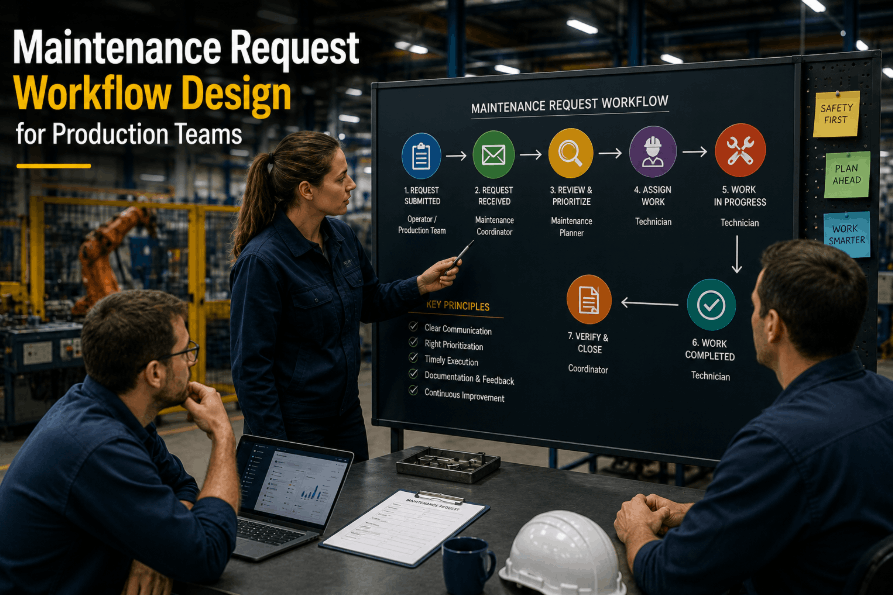
Every resolved work order enriches the shared library, so the incoming shift accesses the same pattern reference and resolution history that the outgoing shift used — eliminating the diagnosis restart cycle at handover.
Give Every Technician the Same Servo Fault Diagnosis Capability — Not Just the Most Experienced One.
Oxmaint connects robot telemetry to a structured fault library so servo drive diagnosis is faster, first-visit closure rates improve, and repeat faults across the robot fleet are caught before they recur.