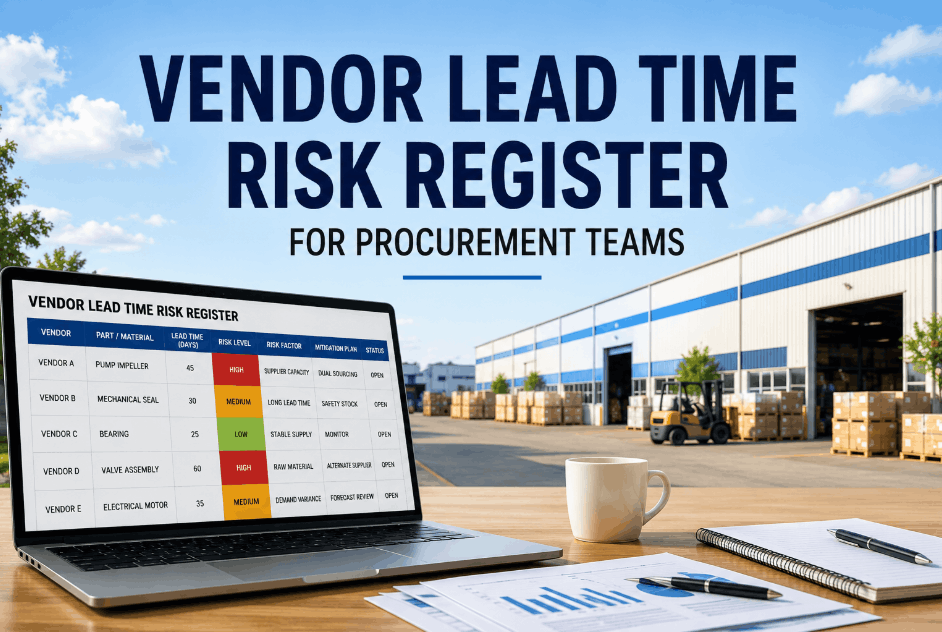
Vendor lead time is one of the most consequential variables in maintenance procurement — and one of the least systematically tracked. When a critical spare has a quoted lead time of three weeks but the actual delivery history shows six, the gap between assumption and reality creates shutdown delays, emergency sourcing costs, and unplanned downtime events that never appear in vendor scorecards. Procurement teams using Sign Up Free on OxMaint can build structured vendor lead time risk registers that connect historical delivery performance to upcoming maintenance schedules, surface supply gaps before they affect work order execution, and drive accountability into vendor relationships before the next critical shortage occurs. A well-maintained vendor lead time risk register turns procurement from a reactive ordering function into a proactive supply chain defense for plant operations.
Why Vendor Lead Time Risk Undermines Maintenance Planning
Most procurement teams manage lead time as a static field on a parts record — set once during supplier onboarding and rarely updated against actual delivery performance. The result is safety stock calculations, reorder triggers, and shutdown staging plans built on assumptions that no longer reflect supply chain reality. Book a Demo to see how OxMaint connects vendor delivery history to parts records and maintenance schedules, ensuring procurement teams act on real lead time performance — not outdated estimates.
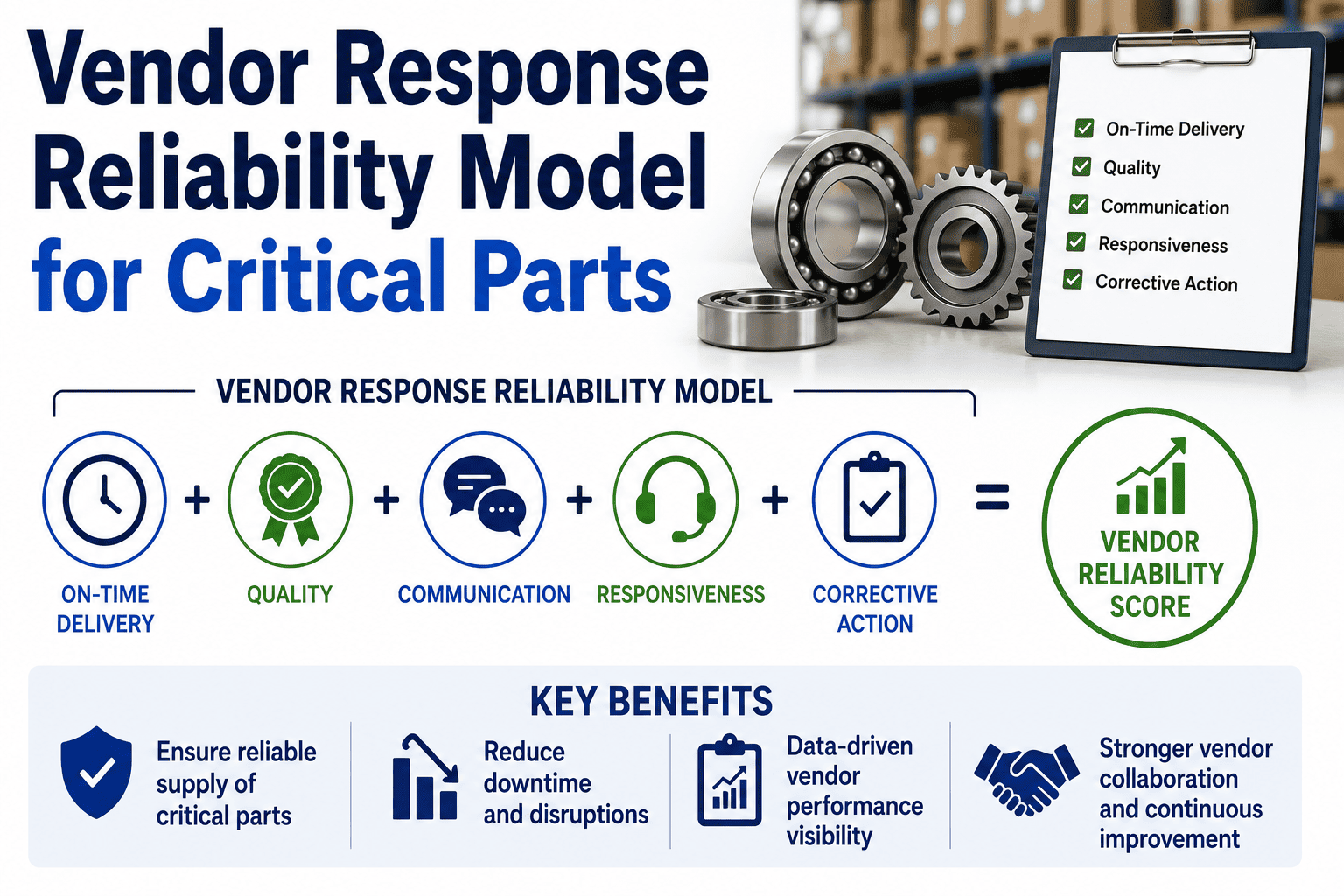
Six Components of a Vendor Lead Time Risk Register
A robust lead time risk register captures more than quoted delivery windows. It tracks actual performance, surfaces variance patterns, and connects supply risk to specific assets and maintenance schedules. Sign Up Free to start logging vendor delivery data in OxMaint and build the performance baseline your risk register requires.
Quoted vs. Actual Lead Time by Vendor and Part
Tracking the variance between quoted lead time and actual delivery date by vendor and part number builds the empirical foundation of the risk register. Vendors with consistent positive variance should drive safety stock increases and earlier reorder triggers for affected parts.
Vendor Risk Tier Classification
Not all vendor lead time risk carries equal consequence. Classifying vendors by delivery reliability, single-source dependency, and the criticality of parts they supply enables tiered monitoring — high-risk vendors receive more frequent review cycles and trigger earlier procurement actions.
Single-Source and Sole-Supplier Exposure
Parts available from only one vendor carry compounded lead time risk — any supplier disruption creates an unavoidable gap. The risk register should flag single-source dependencies and drive alternative supplier qualification or strategic stock increase for affected critical parts.
Scheduled Demand Alignment — Shutdowns and Major PMs
Lead time risk scores increase significantly when a parts requirement is tied to an immovable deadline — a planned shutdown, a regulatory inspection, or a seasonal maintenance window. The risk register must cross-reference vendor performance data against upcoming high-stakes maintenance events.
Open PO Status and Expected Receipt Monitoring
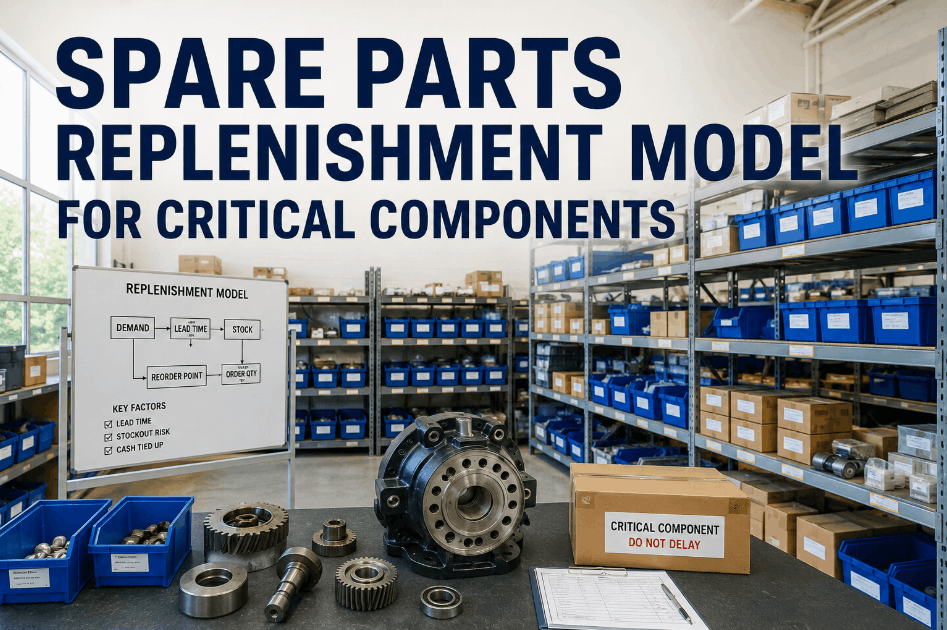
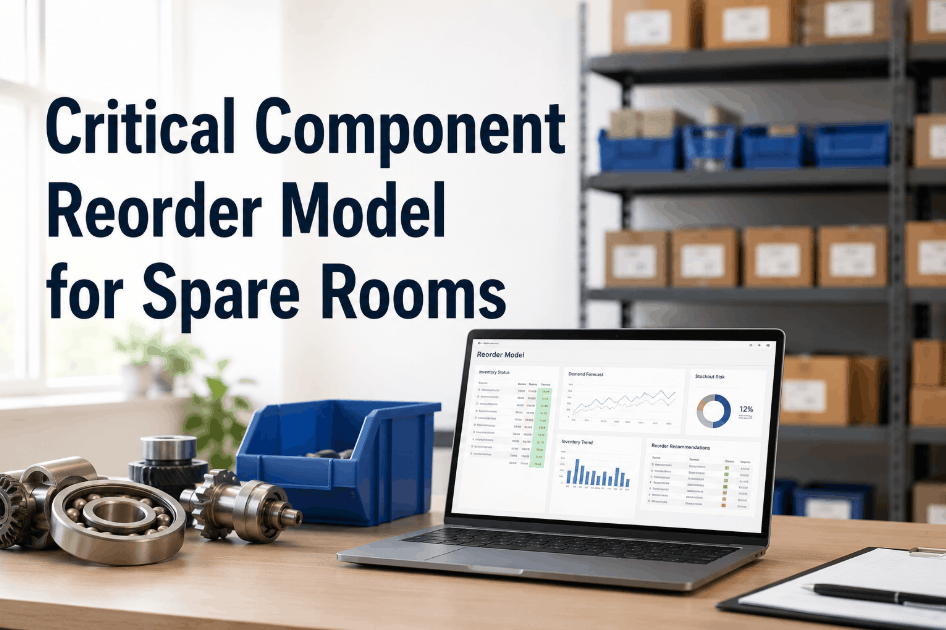
A risk register without live PO status data is a historical document, not a planning tool. Tracking open orders against expected receipt dates and comparing arrival projections to job schedule timelines enables real-time procurement intervention when lead time gaps appear.
Corrective Action and Mitigation Tracking
A risk register only delivers value when identified risks generate documented responses. Recording vendor escalations, alternative sourcing actions, safety stock adjustments, and supplier qualification activities ensures risk findings translate into procurement decisions — not just documented concerns.
Vendor Lead Time Risk Profiles by Supply Category
Different supply categories carry distinct lead time risk drivers and require different mitigation strategies. Mapping your vendor portfolio against these profiles identifies where procurement exposure is highest. Book a Demo to explore how OxMaint tracks vendor delivery performance and links supply risk to asset maintenance records and work order schedules.
| Supply Category | Primary Lead Time Risk Driver | Typical Lead Time Range | Risk Tier | OxMaint Mitigation Lever |
|---|---|---|---|---|
| OEM Critical Spares | Single-source, long manufacturing cycles | 8–24 weeks | High | Early PO triggers + safety stock alerts |
| Electrical and Control Components | Supply chain volatility, import dependency | 4–16 weeks | High–Medium | Vendor scorecard reviews + alternate sourcing tasks |
| Mechanical Wear Parts | Demand surges during shutdown periods | 1–6 weeks | Medium | Shutdown pre-order work orders in CMMS |
| Consumable Materials | Low individual risk but high-frequency ordering | 1–2 weeks | Low | Automated reorder triggers via OxMaint inventory |
| Repairable and Exchange Spares | Repair cycle unpredictability | Variable (2–12 weeks) | Medium–High | Repair status tracking linked to asset records |
How Unmanaged Lead Time Risk Compounds Maintenance Costs
Lead time risk does not stay contained in the procurement function. It cascades into maintenance scheduling, shutdown planning, asset reliability, and ultimately production performance — each stage amplifying the original supply chain gap into a larger operational failure. Sign Up Free to connect your vendor delivery data to OxMaint's work order and asset management system and build the lead time visibility that stops this cascade before it starts.
Building a Vendor Lead Time Risk Register with OxMaint
Log Vendor Lead Time Data Against Parts Records
Record quoted lead time and actual delivery date for each PO in OxMaint. Over time, this builds a vendor performance baseline that replaces estimated lead times with empirically accurate procurement planning data.
Classify Vendors by Risk Tier and Dependency Level
Use OxMaint's parts and vendor records to flag single-source dependencies, classify vendor risk tiers, and link high-risk suppliers to the critical assets they support. Risk classification drives monitoring frequency and mitigation priority.
Align Open POs with Upcoming Maintenance Schedules
Compare open PO expected receipt dates against work order and shutdown schedules in OxMaint. Gaps between projected arrival and job start dates trigger procurement escalation tasks before the maintenance window is at risk.
Generate Vendor Escalation Work Orders for At-Risk Parts
Convert lead time risk findings into actionable work orders in OxMaint — vendor follow-up tasks, alternate sourcing requests, safety stock increase approvals, and supplier qualification initiation — with ownership assignment and completion tracking.
Report Vendor Performance Trends for Procurement Review
Use OxMaint's reporting dashboards to track lead time variance trends by vendor, part category, and supply risk tier. Monthly procurement reviews driven by objective performance data replace informal vendor assessments with accountable, data-based supplier management.
Frequently Asked Questions: Vendor Lead Time Risk Register for Procurement Teams
What is a vendor lead time risk register?
A vendor lead time risk register documents historical delivery performance, lead time variance, single-source dependencies, and mitigation actions by supplier and part — giving procurement teams the data to act on supply risk before it disrupts maintenance execution.
How does OxMaint support vendor lead time risk management?
OxMaint tracks vendor delivery history against parts records, aligns open PO timelines with maintenance and shutdown schedules, and converts lead time risk findings into escalation work orders with owner assignment and completion tracking.
What is single-source vendor risk in maintenance procurement?
Single-source risk exists when a critical spare is available from only one supplier. Any delivery failure from that vendor creates an unavoidable supply gap. The risk register flags these parts for safety stock increases or alternative supplier qualification.
How does lead time risk affect shutdown planning?
Parts arriving after a shutdown window opens compress the maintenance schedule, force overtime, or defer critical work. Aligning open PO timelines with shutdown dates in OxMaint surfaces delivery risk weeks in advance — when procurement options are still viable.
How often should the vendor lead time risk register be reviewed?
High-risk vendor categories benefit from weekly review cycles during active shutdown preparation. Monthly reviews tied to procurement planning meetings are appropriate for standard supply categories where lead time variance is moderate.