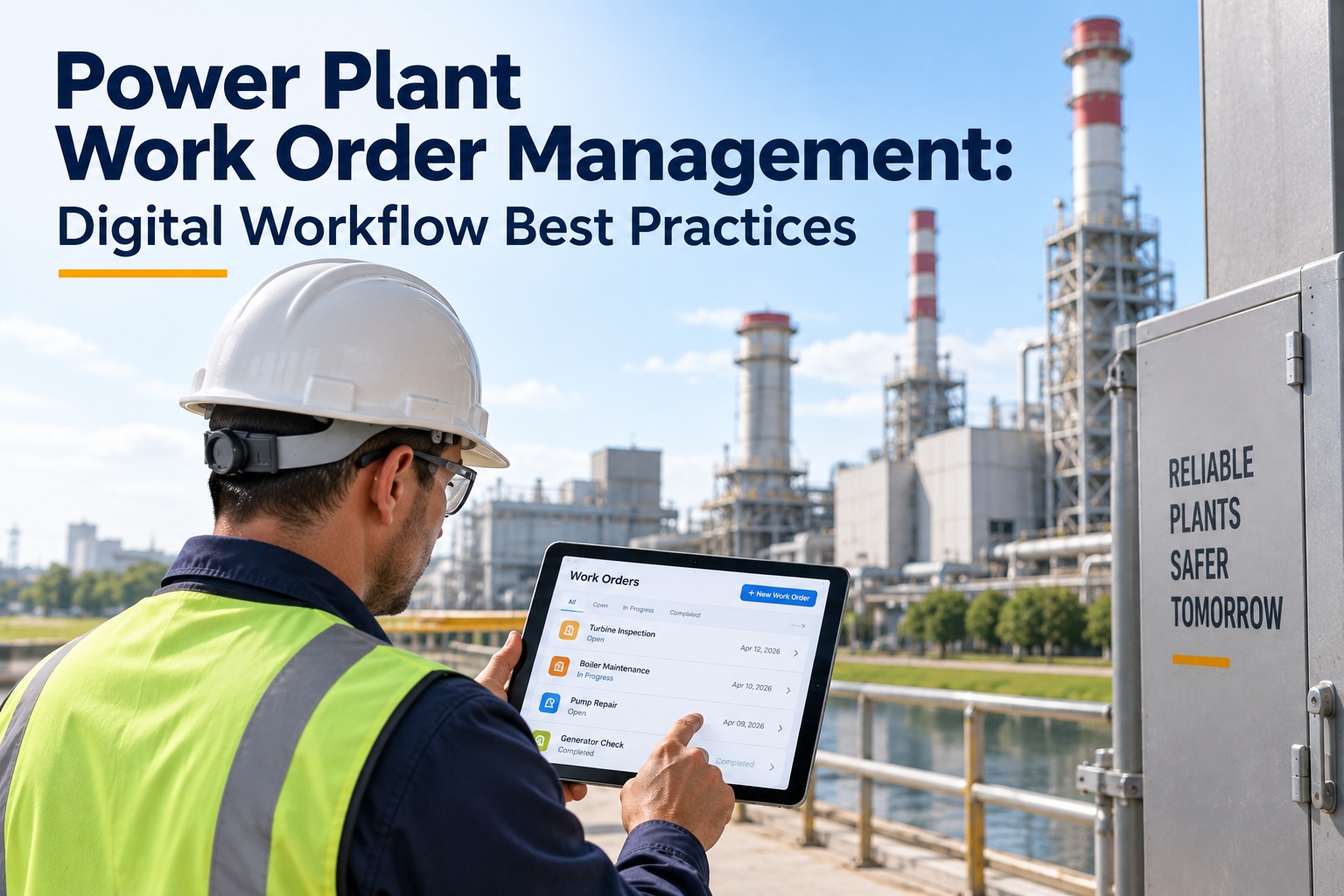
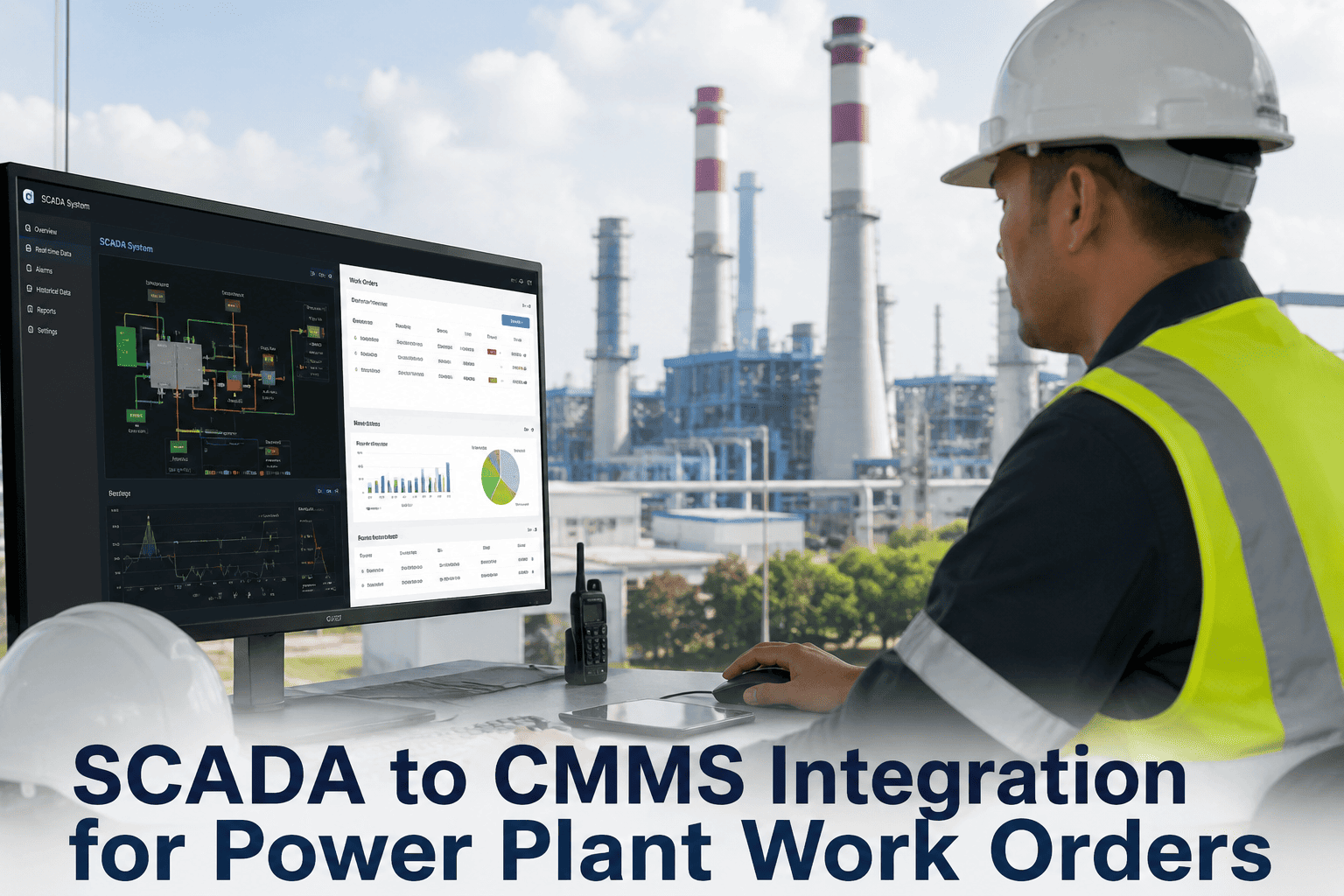
At 2:14 AM, a turbine bearing begins its slow degradation spiral — vibration amplitude climbing 12% over 72 hours, invisible to any human on shift. By 6:00 AM, a work order is created, parts reserved, and a technician notified — all without a single human making a decision. This is not a future promise. This is agentic AI in a live power plant maintenance workflow, and Oxmaint is the CMMS platform where it runs today.
Agentic AI · Power Plant Maintenance · Autonomous Operations
Agentic AI for Autonomous Power Plant Maintenance
Power plants lose an estimated $1.4 trillion annually to unplanned equipment failures. Agentic AI systems now detect, decide, and dispatch maintenance actions — without waiting for a human to initiate the process.
60%+
Reduction in human coordination overhead
<15 sec
Work order creation — down from 45 min–4 hrs
30–50%
Reduction in unplanned downtime — within 12 months
$50K–250K
Cost per unplanned outage hour in power generation
The Shift
From Reactive Alarm to Autonomous Action
Most power plant maintenance teams are still operating in a world where an alarm fires, a human reviews it, decides what to do, and creates a work order. Agentic AI collapses that entire chain into milliseconds.
Traditional CMMS Workflow
Alarm fires at 2:14 AM
Control room operator acknowledges — 15 min delay
On-call supervisor called, reviews laptop data
Decision made to create work order — 45 min in
Work order created manually, parts checked
Technician assigned — up to 4 hrs after first signal
4 hours lost. Every time. On every shift.
Agentic AI — Oxmaint
Anomaly detected from live sensor stream — 2:14 AM
AI cross-references asset history and digital twin
Failure mode identified: bearing cage fatigue — 91% confidence
Parts availability confirmed in CMMS storeroom
Priority-2 work order created with parts, safety steps
Technician notified with full repair context — 2:14 AM + 14 seconds
Zero human touchpoints. Zero coordination delay.
See It Live
Your Plant Runs 24/7 — Your Maintenance Intelligence Should Too
Oxmaint's agentic layer detects anomalies, generates work orders, and dispatches technicians autonomously — while your maintenance manager sleeps. No manual CMMS entry. No coordination lag. Live in under 60 minutes.
How It Works
The Autonomous Maintenance Cycle — End to End
Agentic AI is not an alarm dashboard. It is a coordinated system that perceives, reasons, decides, and acts — across every asset in your plant, simultaneously, without fatigue.
01
Perceive
Thousands of IoT sensors stream vibration, temperature, pressure, and current data in real time. No polling gaps. No sampling delays. Every signal ingested continuously — turbines, boilers, pumps, compressors, transformers.
02
Reason
LSTM machine learning models compare live readings against historical baselines and failure pattern libraries. The agent queries full asset history — previous repairs, load cycles, parts used — to confirm diagnosis and rule out false positives before any action triggers.
03
Decide
Unlike rule-based automation, the agent makes judgment calls: defer a PM because sensor data shows healthy conditions, or accelerate a PM because early-stage wear is detected 3 weeks ahead of schedule. Context-driven, not calendar-driven.
04
Act
Work order created and populated — asset, failure mode, parts list, safety procedures, technician skill requirement — in under 15 seconds. Optimal technician selected based on skill, proximity, availability, and overtime implications. Parts reserved from storeroom.
05
Learn
Every completed repair feeds back into the model. The agent learns from each outcome — was the diagnosis right? Was the failure window accurate? Were the right parts used? Confidence improves across every asset over time without manual retraining.
06
Report
Full audit trail generated automatically — every anomaly, every decision, every work order, every outcome. Compliance documentation and reliability reports produced without administrative input from the maintenance team.
Traditional AI vs. Agentic AI
The Three Generations of Maintenance AI
| Capability |
Gen 1 — Reactive CMMS |
Gen 2 — Predictive Analytics |
Gen 3 — Agentic AI (Oxmaint) |
| Failure detection |
After failure occurs |
Alerts when threshold breached |
Detects degradation patterns weeks early |
| Work order creation |
Manual — 45 min to 4 hrs |
Still manual after alert |
Autonomous — under 15 seconds |
| Technician dispatch |
Phone calls, manual assignment |
Manual after alert reviewed |
Optimal assignment — skill, location, availability |
| Parts management |
Checked manually before repair |
Checked manually after alert |
Verified and reserved automatically |
| PM scheduling |
Fixed calendar intervals |
Threshold-triggered alerts |
Condition-based, context-aware timing |
| Administrative load |
High — all manual |
Moderate — alerts reduce some burden |
30–40% reduction from day one |
| Human role |
Initiates every action |
Reviews alerts, still decides |
Manages exceptions, reviews AI recommendations |
Measurable Outcomes
What Agentic AI Delivers in Power Plant Operations
30–40%
Administrative Load Reduction
Work order creation, parts chasing, compliance binders — all automated from day one. Maintenance planners shift to exception management and strategy, not paperwork.
20–35%
Wrench-Time Improvement
Technicians receive complete, structured work orders with asset history and parts ready — instead of arriving without context. Less time figuring out what to do. More time fixing it.
40–60%
Reduction in Unplanned Failures
Plants connecting condition monitoring to an AI-integrated CMMS see this reduction within 12 months — without capital equipment replacement. Data quality is the key factor.
250%+
ROI Within 24 Months
Documented across industrial agentic AI deployments. The combination of avoided downtime costs, reduced emergency repairs, and labor optimization delivers measurable returns quickly.
Common Questions
Agentic AI in Power Plant Maintenance — FAQs
Does agentic AI replace maintenance engineers and technicians?
No — it eliminates administrative burden, not skilled roles. Engineers shift to analyzing AI recommendations and managing exceptions. Technicians receive better information, full asset history, and clearer priorities at the point of repair. Plants report 20–35% wrench-time improvement as crews execute planned tasks instead of emergency firefighting.
Book a demo to see the human-AI workflow in Oxmaint.
We already have a CMMS. What does an agentic layer add?
Traditional CMMS is a passive record-keeper — it stores what happened. Oxmaint's agentic layer is active — it detects what is about to happen, decides what to do, and initiates the action autonomously. The difference is moving from a filing cabinet to an autonomous operations coordinator.
Start a free trial to see the difference firsthand.
How does agentic AI handle PM scheduling differently from rule-based automation?
Rule-based systems follow fixed logic: "When PM is due, generate a work order." Agentic AI evaluates context: if sensor data shows an asset running well, the PM may be safely deferred. If early-stage wear is detected 3 weeks before the scheduled PM, it is accelerated. The agent makes judgment calls that no fixed rule can replicate.
See condition-based PM scheduling in a live demo.
How long does it take to go live with Oxmaint's agentic maintenance platform?
Under 60 minutes for initial deployment. Oxmaint is designed to ingest IoT and AI signals automatically — no lengthy integration project required. The data foundation builds over time, and AI model confidence improves as your asset history accumulates.
Start your free trial today.
What data infrastructure is needed before deploying agentic AI?
Three foundations matter most: structured asset data, a connected platform where maintenance and operations teams share information, and defined governance for how AI recommendations are reviewed. The plant that starts building this data foundation in 2026 will be operationally ready for full autonomous maintenance by 2030.
Our team assesses your readiness in a 30-minute call.
From Detection to Dispatch — Automatically
Stop Losing Hours Between Anomaly Detection and Maintenance Action
Every minute between a detected anomaly and a dispatched technician is compounding risk in your plant. Oxmaint's agentic AI closes that gap to seconds — autonomously generating work orders, reserving parts, and assigning the right technician while your team focuses on the work that requires human judgment.