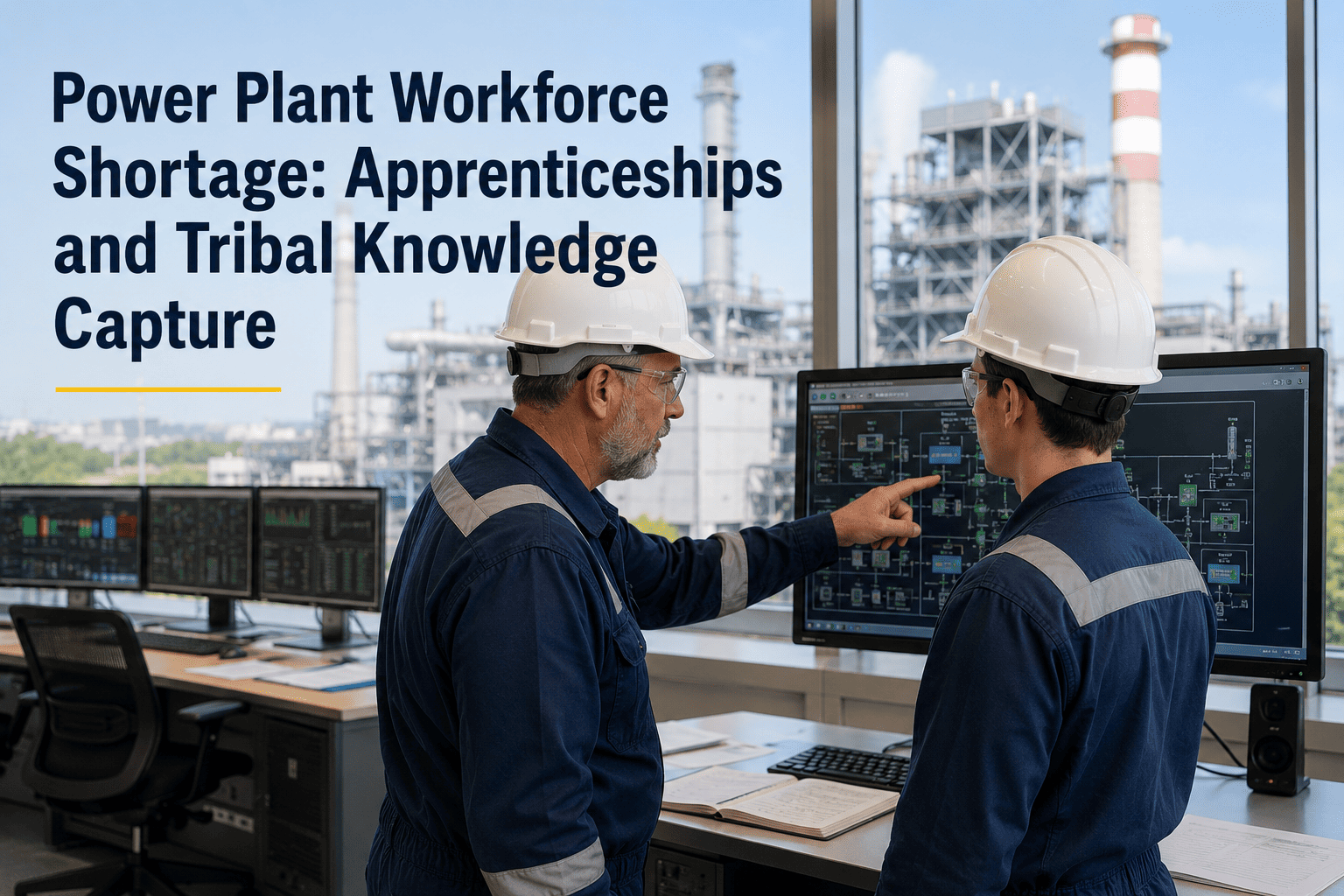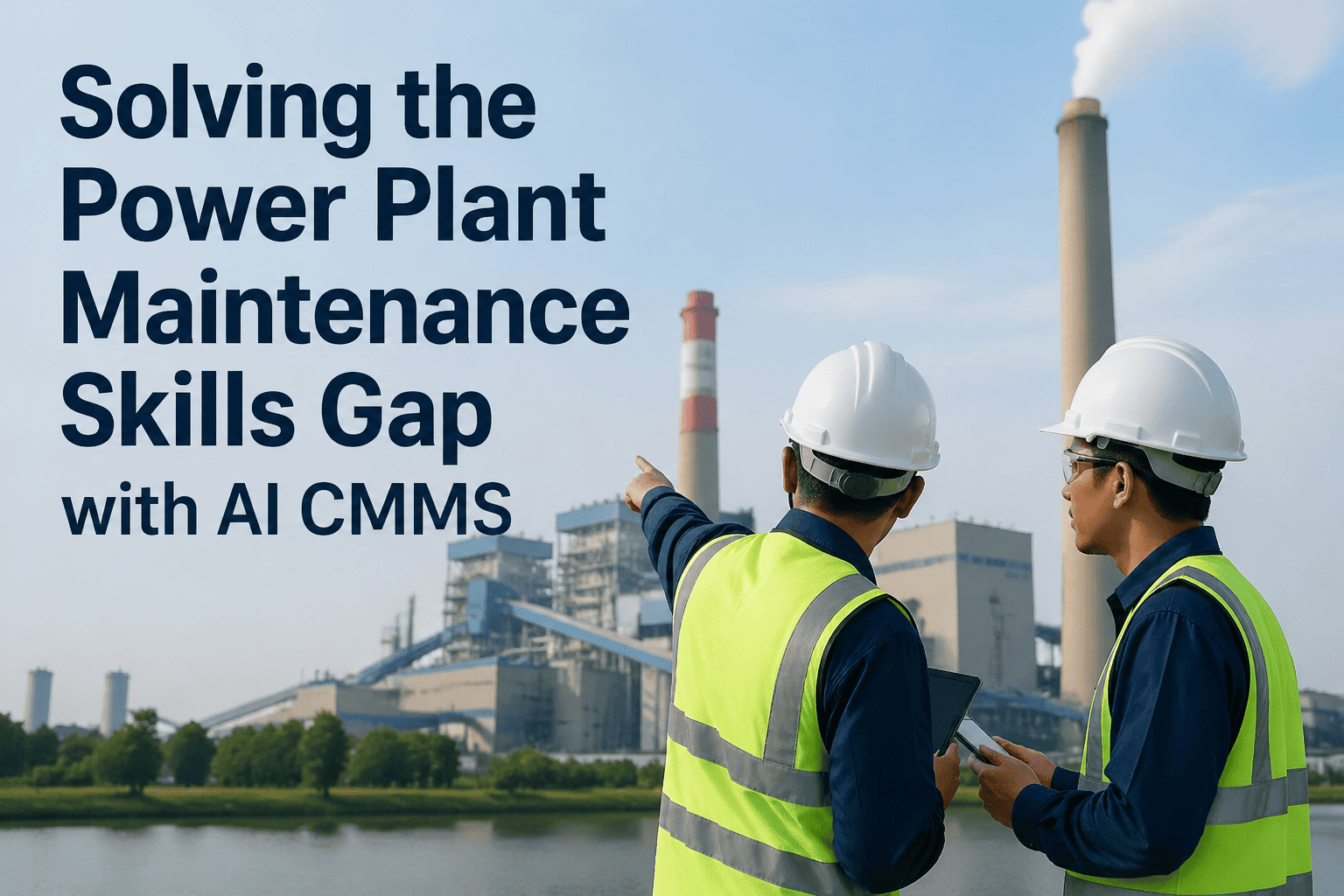
Power plant maintenance teams are shrinking. Over the next five years, an estimated 40% of experienced technicians in fossil and combined-cycle facilities will reach retirement eligibility — taking with them decades of vibration analysis intuition, bearing replacement sequences, and the unwritten rules of when to trust a predictive alert versus when to override it. The replacement pipeline is not keeping pace. Junior technicians entering the field have strong digital literacy but lack the pattern recognition that comes from hearing a pump degrade over three seasons. This knowledge gap does not appear in balance-of-plant reports. It shows up as extended repair times, repeated work orders, and the slow normalization of “call the retired guy” as a maintenance strategy. Oxmaint’s AI-powered CMMS platform captures institutional knowledge at the point of execution, guides junior teams through complex procedures step by step, and flags when a work order deviates from historical best practices — turning workforce attrition from a risk into a manageable variable.
The Four Knowledge Gaps That Shut Down Plants — And How AI Bridges Each One
Power plant maintenance knowledge is not a document problem. It is a context problem. The difference between a 30-year technician and a 3-year technician is not knowing which procedure to follow. It is knowing which procedure to follow at 2 AM on a Sunday when the bearing temperature trend does not look quite right. AI CMMS platforms close four specific knowledge gaps that accelerate unplanned downtime.
Diagnostic Pattern Recognition
Experienced techs hear a pump and know if it will last the week. AI captures vibration signatures, temperature curves, and pressure differentials from thousands of work orders — then guides junior techs through the same diagnostic logic step by step.
Work Execution Sequence
Senior techs know the shortcuts, the tool staging order, and the hidden fastener that seizes if removed too early. AI CMMS stores optimal sequence data from completed work orders and prompts junior crews before common mistakes happen.
Risk vs. Run Decisions
The retired technician’s phone still rings because he knows when a pump can run another month. AI learns from historical run-to-failure and successful deferral cases, giving junior supervisors data-driven confidence for the same decisions.
Troubleshooting Path Efficiency
Inexperienced teams follow decision trees from start to finish. AI CMMS suggests the most likely root cause based on current symptoms and similar past work orders, cutting diagnostic time by more than half on common fault modes.
Live Knowledge Capture Dashboard — What AI-Guided Maintenance Looks Like
When every work order becomes a training asset, the maintenance system improves with every repair. The feed below shows how Oxmaint captures decisions, guides actions, and builds institutional memory in real time on a combined-cycle gas turbine auxiliary system.
Stop Losing Decades of Experience to Retirement. Start Capturing It in Every Work Order.
Oxmaint turns every repair into a training asset. Junior technicians get step-by-step guidance. Senior technicians leave a permanent knowledge legacy. Your maintenance team gets smarter with every completed work order.
AI CMMS Capabilities That Build Workforce Competency Faster
Traditional CMMS platforms are record-keeping systems. AI-powered CMMS platforms are training systems. The difference is visible in how each capability actively transfers knowledge from experienced technicians to the rest of the team.
| Capability | How It Builds Competency | Knowledge Transfer Mechanism | Time to Proficiency Impact |
|---|---|---|---|
| AI-Guided Work Instructions | Step-by-step prompts with conditional logic | Senior technician decision paths captured as workflows | -40% training time for complex procedures |
| Similar Case Retrieval | Previous work orders with same symptom patterns | Historical diagnostic and repair data searchable by symptom | -50% troubleshooting time on repeats |
| Predictive Maintenance Signals | Alert interpretation guidance for junior teams | Senior tech notes on false positives and critical thresholds | Higher trust in PdM program execution |
| Procedure Deviation Detection | Real-time alerts when steps are skipped or reordered | Best-practice enforcement without supervisor presence | Fewer repeat failures from procedure errors |
| Retirement Knowledge Harvesting | Structured capture during final 90 days of employment | Critical asset procedures, contacts, and unwritten rules retained | Zero knowledge loss per retiree with full capture |
Six Maintenance Practices That Keep Knowledge Flowing — Even As Technicians Leave
Procedure Adherence Logging
Record every deviation from standard procedure with reason code. Deviations that produce better outcomes become the new standard. Deviations that produce failures become training cases.
Work Order Review With AI Tagging
Supervisors review completed work orders and tag decision points worth preserving. AI learns which steps produced successful outcomes across similar asset types and conditions.
Repeat Failure Pattern Analysis
AI identifies work orders repeated on same asset within 90 days. Each repeat represents either a training gap or a procedure gap — both are fixable through knowledge capture.
Junior Tech Skill Gap Assessment
Compare junior technician procedure completion metrics against experienced technician baselines. Focus training resources on specific skill gaps, not generic courses.
90-Day Knowledge Harvesting Plan
AI CMMS identifies critical assets, complex procedures, and unwritten rules associated with retiring technicians before their last day. Structured capture ensures zero knowledge loss.
Case Library Growth Tracking
Monitor searchable case count month over month. Every new work order adds diagnostic intelligence that future junior techs can access before calling a retired colleague.
"The plants that are managing the skills gap successfully have stopped trying to hire their way out of it. They have accepted that the experienced workforce will shrink and they have built systems to capture knowledge before it walks out the door. The difference between plants that struggle and plants that thrive is not the average age of the maintenance team. It is whether their CMMS is a passive record of what happened or an active system for teaching the next generation how to do it right the next time. AI-guided work instructions, similar case retrieval, and retirement harvesting turn workforce attrition from an existential threat into a manageable transition. The technology exists. The question is whether leadership treats knowledge transfer as a maintenance strategy or as a farewell speech."