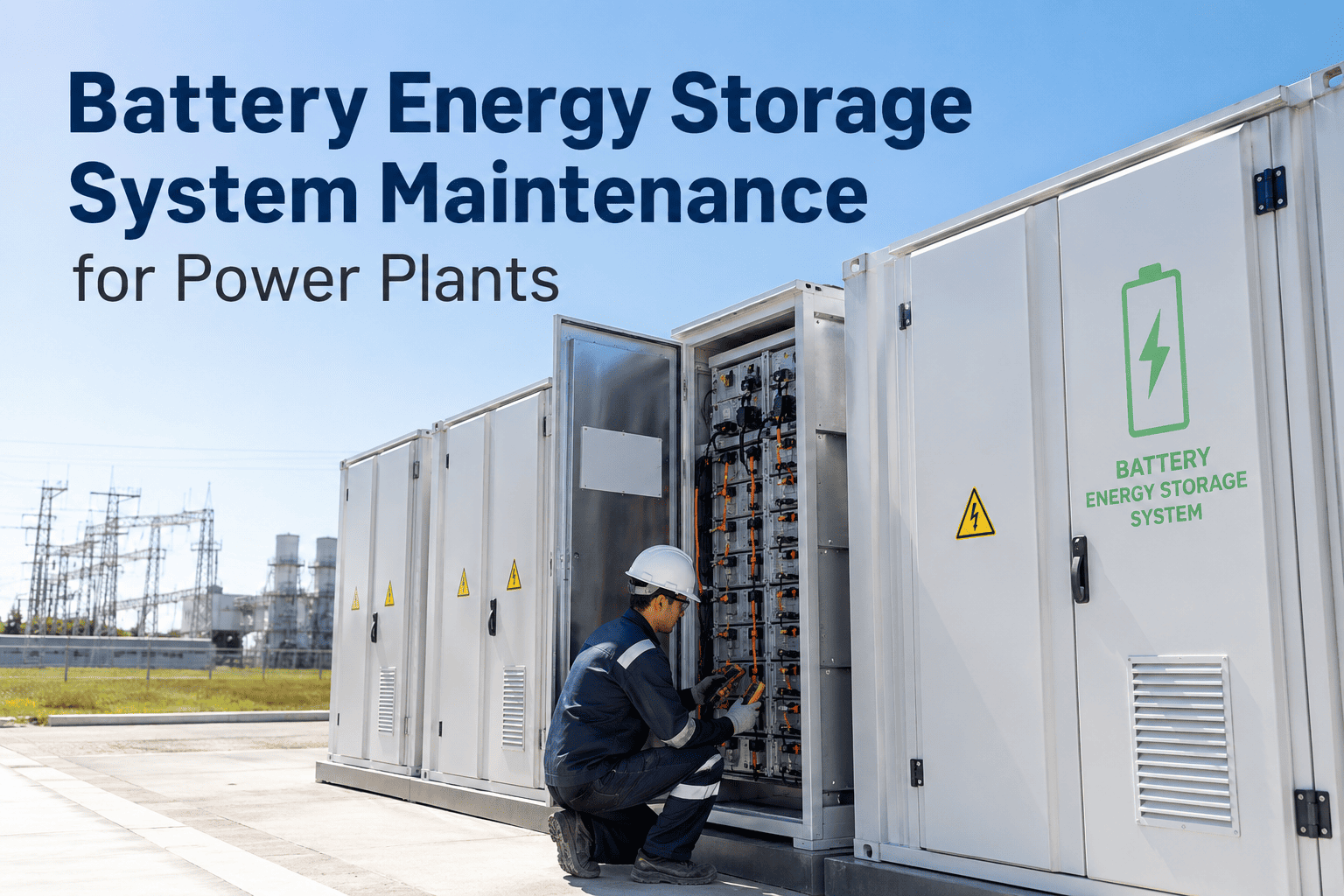
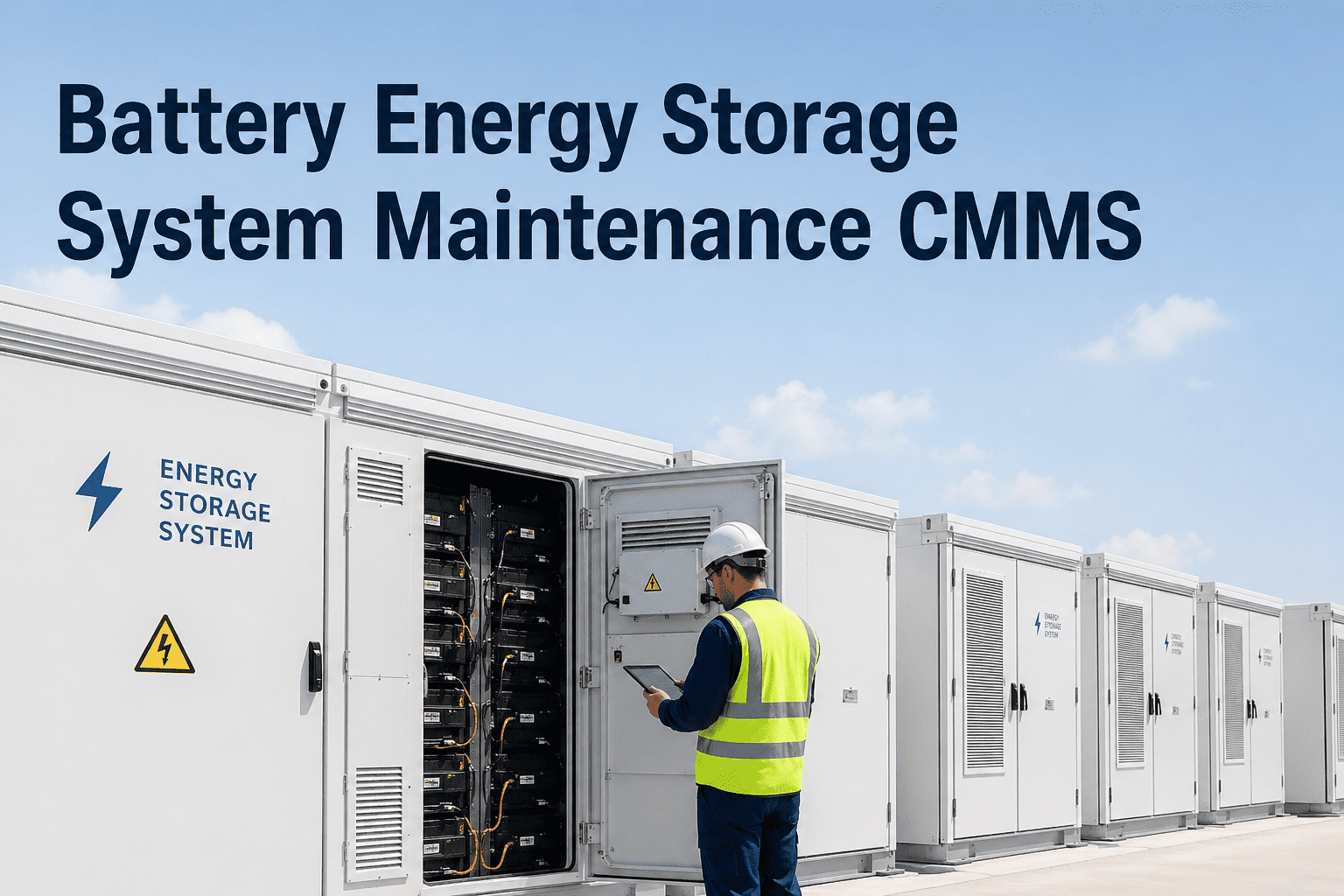
Battery Energy Storage Systems represent some of the highest-value and most failure-sensitive assets in the modern energy portfolio — yet most operators are still managing lithium-ion battery health through manual inspection rounds, disconnected BMS exports, and calendar-based maintenance schedules that have no visibility into what is actually happening inside each cell. A single thermal event in an unmonitored rack can cascade into a full system shutdown, a fire suppression activation, or a complete battery string replacement costing $180,000 or more. OxMaint delivers a purpose-built BESS maintenance and monitoring platform that tracks State of Charge, State of Health, cell balancing deviation, and thermal gradients in real time — then converts every anomaly into a structured work order before it becomes an emergency. Create your free OxMaint account and connect your first BESS site in under one hour — no integration engineers required. If you manage a portfolio of energy storage assets and want to see how AI-driven battery degradation tracking works against your actual system data, book a 30-minute live demo with our BESS operations specialists today.
Energy Storage O&M — Predictive Maintenance AI
Battery Energy Storage System (BESS) Maintenance & Monitoring
From SOC drift to thermal runaway precursors — OxMaint monitors every health signal across your battery fleet, predicts failures weeks before they occur, and closes the loop with automated work orders and compliance documentation.
92%
Thermal event prediction accuracy
3.5x
Longer battery string lifespan with proactive balancing
45%
Reduction in unplanned BESS outages in year one
$220K
Avg. battery replacement cost avoided per event
State of Charge
SOC
Continuous SOC deviation tracking across all strings. OxMaint flags strings operating outside the safe charge window and predicts accelerated capacity fade before it compounds into system-level derating.
State of Health
SOH
OxMaint tracks capacity retention across every charge cycle. When a string's SOH trajectory forecasts 70% threshold breach within 90 days, replacement planning triggers automatically — eliminating emergency procurement delays.
Cell Balancing Deviation
CBD
Cell voltage imbalance is the leading cause of premature capacity fade. OxMaint identifies outlier cells within each module and schedules balancing interventions before imbalance spreads to adjacent cells in the string.
Thermal Management
TMS
18°C
24°C
26°C
34°C
22°C
25°C
41°C
23°C
27°C
Thermal gradient mapping across all rack zones detects cooling system degradation and hot-spot formation up to 14 days before a thermal event. OxMaint triggers HVAC work orders the moment temperature deviation exceeds configurable thresholds.
Battery Degradation: What Your Calendar Schedule Cannot See
Calendar-based BESS maintenance assumes uniform degradation. Real lithium-ion chemistry degrades unevenly — driven by cycle depth, temperature stress, and imbalance events that only continuous monitoring can detect.
Capacity Retention Over Operational Life
100%
85%
70%
With OxMaint monitoring
Calendar-only maintenance
Year 1Year 3Year 5Year 7Year 10
2–3%
Normal annual capacity degradation for well-managed lithium-ion BESS under continuous monitoring
6–9%
Accelerated degradation rate when thermal stress and cell imbalance events go undetected and unaddressed
70%
SOH replacement threshold — most operators discover this point during an emergency, not a planned outage
40%
Of total BESS lifecycle cost is battery replacement — OxMaint extends replacement intervals by an average of 2.1 years
How OxMaint Manages the Full BESS Maintenance Lifecycle
Monitoring without action is just expensive data collection. OxMaint connects every battery health signal to a structured maintenance workflow — from anomaly detection through technician execution and audit-ready documentation.
01
BMS & SCADA Integration
OxMaint connects to all major BMS platforms — Fluence, Tesla Megapack, BYD, CATL, Powin, Stem, and custom OPC-UA or Modbus systems. Cell-level voltage, temperature, SOC, and SOH data streams into the platform continuously without manual data export.
02
AI Anomaly Detection
Machine learning models trained on lithium-ion failure signatures establish a dynamic baseline for every string, module, and cell group. Deviations from baseline — not just threshold breaches — trigger early warnings that calendar inspection would never surface.
03
Automated Work Order Creation
Every flagged anomaly generates a structured work order with the affected asset, deviation type, recommended intervention, priority level, and assigned technician — without any manual dispatch. Emergency events trigger immediate mobile alerts to on-call personnel.
04
Mobile Field Execution
Technicians receive structured inspection checklists specific to the failure mode — cell balancing verification, HVAC inspection, torque checks, or thermal camera protocols — and close work orders with photo documentation directly from the BESS enclosure.
05
Degradation Trend Reporting
Monthly and quarterly SOH trajectory reports give asset managers visibility into which strings are approaching replacement thresholds — enabling proactive procurement, budget planning, and warranty claim preparation months before an emergency replacement would occur.
BESS Failure Modes OxMaint Is Built to Prevent
Lithium-ion BESS failure is rarely sudden. Every major failure event is preceded by weeks of measurable signal degradation that structured monitoring would catch. Here is where the damage originates.
01
Thermal Runaway
$400K–$2M per event
The most catastrophic BESS failure mode. Triggered by overcharge, external short, or mechanical damage — but always preceded by elevated cell temperatures and accelerating internal resistance. OxMaint detects the thermal precursor signature 10–21 days before runaway conditions develop.
02
Cell Imbalance Cascade
Reduces string capacity 15–40%
When a single cell in a string degrades faster than its neighbors, the BMS forces the entire string to operate at the degraded cell's limits. OxMaint monitors inter-cell voltage delta at every cycle and schedules balancing before cascade degradation compounds.
03
Cooling System Degradation
Accelerates SOH loss by 3x
HVAC failures and blocked airflow paths create localized thermal hotspots that accelerate electrolyte decomposition in adjacent cells. OxMaint cross-references thermal map data against HVAC maintenance records to identify cooling system decline before it becomes a battery problem.
04
BMS Communication Fault
Creates blind spots in 100% of monitoring
When BMS communication channels fail silently, operators lose visibility into the affected strings entirely — operating blindly at full power throughput. OxMaint detects data stream gaps and missing telemetry as first-class failure events requiring immediate investigation.
05
Capacity Derating Events
Breaks revenue contracts & grid commitments
When total system SOH falls below contract capacity thresholds, operators face grid penalty payments and offtake agreement breaches. OxMaint projects 90-day SOH trajectory per string, giving asset managers 12+ weeks of advance notice before dispatch capacity commitments are at risk.
06
Electrolyte Lithium Plating
Internal short risk, undetectable by visual inspection
Low-temperature charging or overcharge events deposit metallic lithium on graphite anodes — creating internal short-circuit risk invisible to surface inspection. OxMaint tracks charge rate vs. temperature correlation and flags operating conditions conducive to plating before damage accumulates.
Compliance & Safety Documentation Built for BESS Operations
BESS facilities operate under a growing body of safety and grid compliance requirements. OxMaint maintains audit-ready documentation for every standard your facility must satisfy.
IEC 62619
Safety Requirements for Secondary Lithium Cells
OxMaint maintains structured inspection records satisfying IEC 62619 safety management documentation requirements for stationary energy storage applications across all lithium chemistries.
NFPA 855
Standard for ESS Installation
Thermal event precursor monitoring and automated emergency notification workflows align with NFPA 855 operational requirements for utility-scale and commercial BESS installations.
UL 9540A
Test Method for Battery System Thermal Runaway
OxMaint thermal monitoring records and anomaly response documentation support the ongoing operational compliance evidence required for UL 9540A certified installations post-commissioning.
NERC CIP
Critical Infrastructure Protection Standards
For grid-connected BESS participating in ancillary services markets, OxMaint maintains cybersecure access controls and complete asset change management records satisfying NERC CIP obligations.
Measured Outcomes for BESS Operators
Battery storage operators who deploy OxMaint's predictive maintenance platform consistently report these results within the first 18 months of deployment across utility-scale and commercial BESS portfolios.
Compliance Report Prep Time
We had three separate thermal anomaly events in our first operating year that we only discovered after the fact because our BMS dashboard was not generating actionable alerts. OxMaint flagged a fourth event fourteen days before the temperature threshold was breached — we replaced the cooling fan assembly during a scheduled window, and avoided what would have been a six-figure replacement event and a grid penalty.
— Asset Manager, 120MWh Grid-Scale BESS, Southwest US
Frequently Asked Questions
Which BMS and BESS OEM platforms does OxMaint integrate with?
OxMaint connects to all major utility-scale BESS platforms including Fluence Gridstack, Tesla Megapack, BYD ESS, CATL EnerD, Powin Stack, Stem Athena, and Wartsila Greensmith. Any system exposing data via OPC-UA, Modbus TCP, or REST API can be integrated. Most integrations are fully operational within 24 to 48 hours of credential provisioning without requiring vendor engineering support.
How does OxMaint monitor cell balancing deviation across large battery strings?
OxMaint ingests cell-level voltage telemetry from the BMS and calculates inter-cell delta voltage, delta SOC, and temperature variance across each module at every monitoring cycle. Statistical outlier detection flags cells deviating beyond configurable thresholds from the string mean. Trend tracking identifies cells with accelerating divergence — which is the leading indicator of capacity fade — rather than only flagging cells that have already breached a threshold.
Can OxMaint manage both lithium-ion and non-lithium BESS chemistries?
Yes. OxMaint supports lithium-ion chemistries including LFP, NMC, NCA, and LTO, as well as vanadium redox flow batteries, zinc-based storage, and lead-acid backup systems. Each chemistry type has configurable health metric thresholds, degradation models, and inspection templates calibrated to its specific failure signatures and operational envelope.
How does OxMaint support thermal runaway prevention specifically?
OxMaint monitors thermal gradients across all rack zones and correlates temperature trends with charge/discharge rate patterns. The AI model identifies the specific combination of elevated internal resistance, rising resting temperature, and charging voltage anomalies that precede runaway conditions in lithium-ion chemistry — typically 10 to 21 days before a thermal event would develop. When a thermal precursor signature is detected, the platform automatically creates an urgent inspection work order and sends mobile alerts to the designated safety response team.
Does OxMaint generate the documentation required for NFPA 855 and IEC 62619 audits?
Yes. OxMaint maintains a complete, timestamped record of every thermal monitoring result, anomaly detection event, inspection completion, and corrective action across the system lifecycle. Pre-built report templates generate NFPA 855 operational compliance documentation and IEC 62619 safety management records in a format ready for direct submission to auditors and insurance reviewers — without manual data assembly.
How quickly does the predictive AI become accurate after installation?
OxMaint's AI begins generating anomaly alerts from day one using pre-trained models calibrated to your BESS chemistry and OEM configuration. High-confidence predictive failure warnings with time-to-event estimates typically emerge within 4 to 8 weeks as the system establishes your site-specific operating baselines. Customers who provide 6 or more months of historical BMS data during onboarding see actionable predictions in the first week of deployment.
Stop discovering failures after they cost you
Give Your BESS Portfolio a Maintenance Platform That Sees the Failure Coming
OxMaint connects BMS telemetry, AI health prediction, automated work orders, and compliance documentation in one platform built for battery energy storage operations. Protect your cells. Extend your strings. Meet every audit. Eliminate the emergency replacements destroying your project economics.