Choosing a CMMS for a single power plant is complicated enough. Choosing one for a fleet of eight or twelve plants — across different states, different generation technologies, and different regulatory jurisdictions — is a different category of decision entirely. The wrong choice locks you into a system where each site runs its own data structure, management can never get a consolidated view, and every KPI report is stitched together by someone manually reconciling exports from three different systems. The right choice gives you corporate-level reporting and standardization without stripping plant-level teams of the autonomy they need to run their shift safely. In 2026, the shortlist of CMMS platforms that genuinely serve multi-site power generation fleets is shorter than the vendor community would have you believe — most were built for single-site manufacturing and adapted badly for multi-unit energy assets. This page evaluates the leading options against the criteria that actually matter for a fleet rollout, and explains why Oxmaint is increasingly the choice for operators running two or more generating sites who need real standardization, not just a shared login.
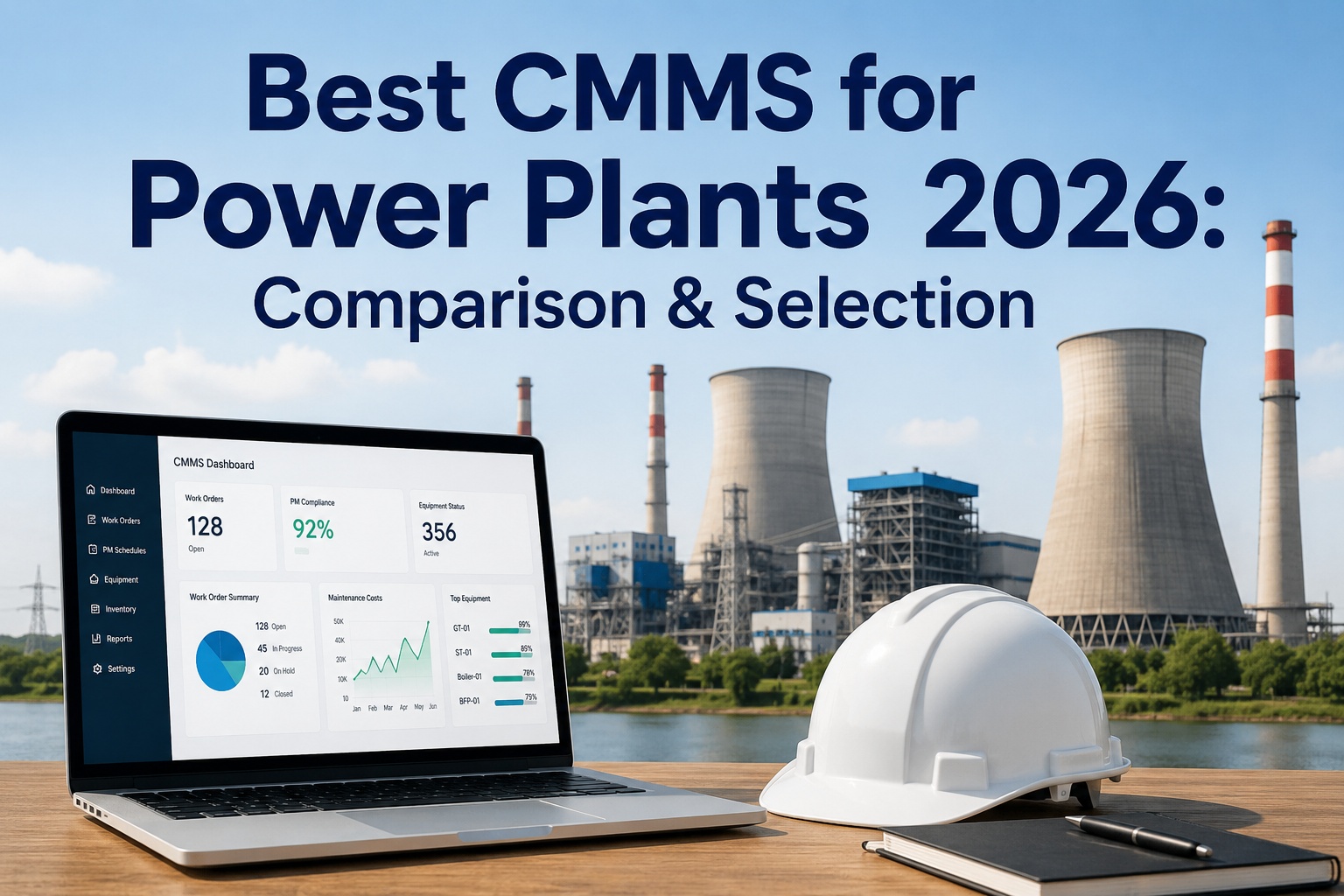
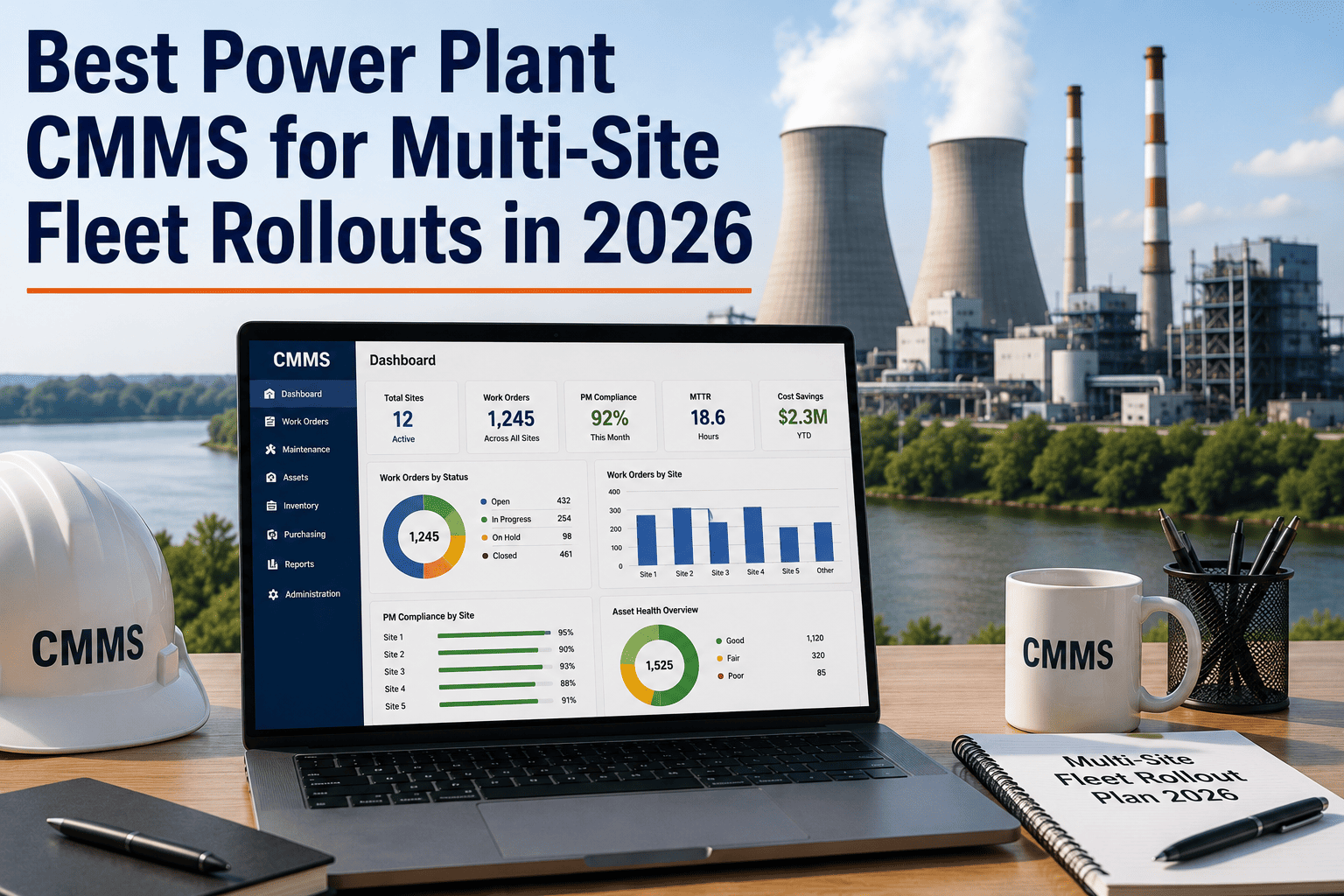
Best Power Plant CMMS for Multi-Site Fleet Rollouts in 2026
Corporate standardization, central reporting, plant-level autonomy, and SSO — the criteria that separate real fleet-ready CMMS platforms from single-site tools that scaled badly.
The Eight Criteria That Define a Fleet-Ready CMMS
Most CMMS vendors will tell you they support multi-site. These eight criteria separate the platforms that genuinely do from the ones that just have a "site" dropdown.
The platform must support a tree structure: fleet — plant — unit — system — equipment. Assets must be reportable at every level. A CMMS where "site" is just a filter on a flat asset list is not a multi-site CMMS.
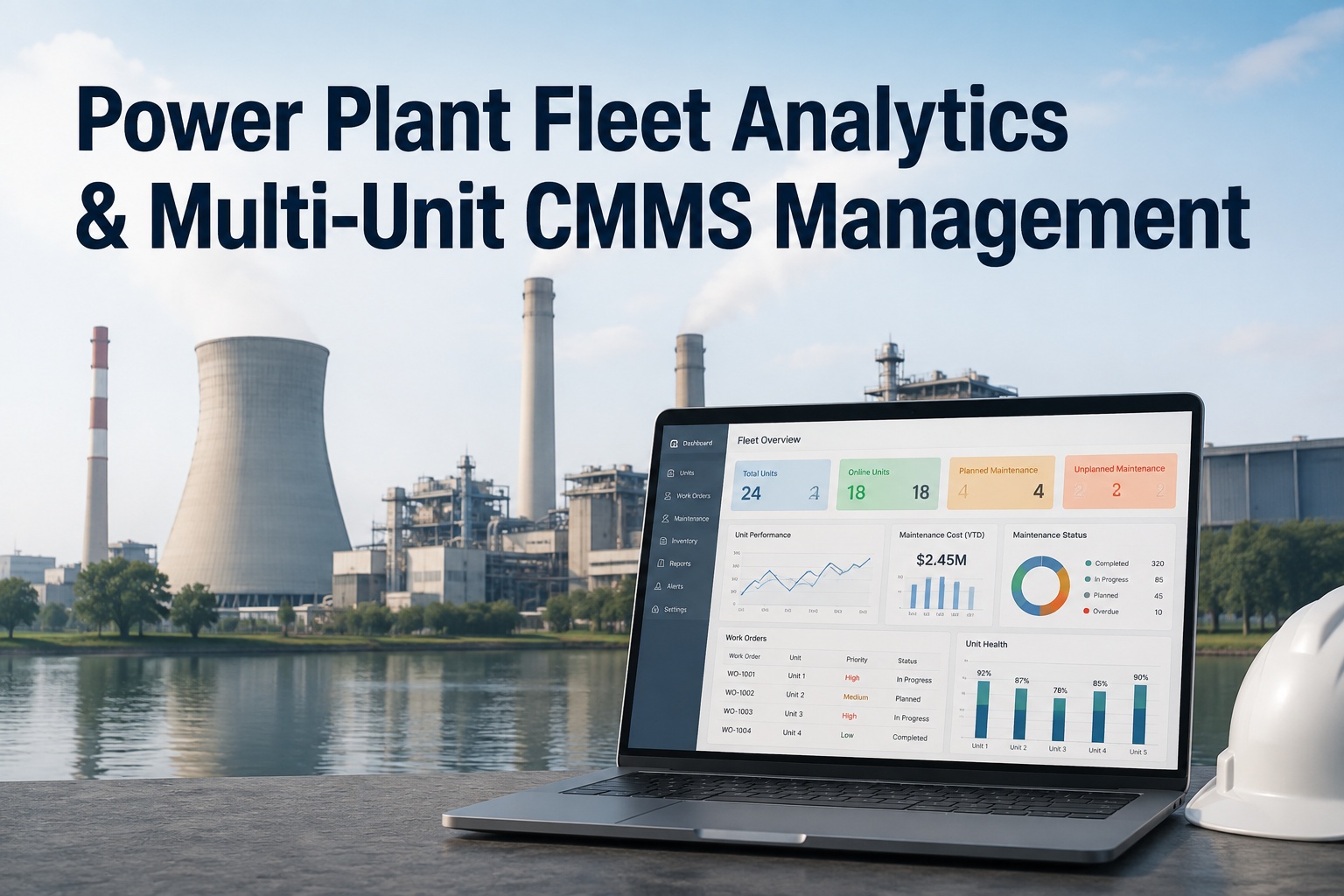
Corporate management needs to see MTTR, PM compliance, work order backlog, and critical equipment health across all sites in one view — without running reports from each plant and combining them manually. This is non-negotiable for a fleet of more than two sites.
The fleet should run a common PM framework — same task structure, same documentation standards — but individual plants need to adjust frequencies and add local tasks without breaking the corporate template. Rigid top-down libraries are as bad as no standards at all.
Technicians should see their plant's work orders. Planners see their plant plus read access to peer sites. Corporate reliability engineers see the fleet. SSO via Active Directory or SAML is the baseline — separate login credentials per site per person is an IT maintenance nightmare.
A power plant CMMS that requires a desktop to close a work order is not operationally viable. Technicians in the field need to complete, photograph, and sign off jobs from a phone or tablet — with offline capability for areas of the plant without reliable connectivity.
Oil analysis, vibration, thermography, and DGA results should trigger work orders automatically when thresholds are crossed — not via a manual review cycle. A CMMS that requires a human to read a report and create a work order has broken the predictive maintenance loop.
Planned outages are the highest-cost, highest-risk events in a power plant year. The CMMS must support outage scope management — backlog to outage, resource leveling across sites, critical path visibility — not just a list of work orders with a shutdown tag.
Statutory inspections, insurance surveys, and environmental audits all require an immutable record of what was done, when, and by whom. The CMMS must provide a locked audit trail per asset — not a work order list that can be retrospectively edited or deleted.
One CMMS. Every Plant. A Single View of Fleet Health.
Oxmaint was built for multi-site operations from the ground up — not adapted from a single-plant product. Corporate reporting, standardized PMs, and plant-level autonomy in one platform.
How Leading CMMS Platforms Perform Against Fleet Rollout Criteria
| Criteria | Oxmaint | IBM Maximo | SAP PM | Infor EAM | UpKeep |
|---|---|---|---|---|---|
| Corporate asset hierarchy | Full fleet tree | Full | Full | Full | Limited |
| Cross-site KPI dashboard | Built-in | Requires BI tool | Requires SAP BI | Configurable | Not available |
| Condition-based WO triggering | Built-in | Requires APM module | Requires PM add-on | Add-on required | Not available |
| Mobile-first field interface | Native offline | Mobile available | Poor mobile UX | Mobile available | Strong mobile |
| SSO / SAML integration | Standard | Standard | Standard | Standard | Limited |
| Oil / DGA testing integration | Native module | Third-party only | Not standard | Custom config | Not available |
| Implementation timeline (fleet) | 8–16 weeks | 12–24 months | 18–36 months | 6–12 months | 4–8 weeks |
| Power plant specialization | Purpose-built | Generic industrial | Generic ERP | Generic industrial | SMB focus |
Assessment based on publicly available product information and typical implementation experience as of 2026. Enterprise deployments vary significantly based on configuration scope.
How a Multi-Site Fleet CMMS Rollout Actually Works
Define the corporate asset hierarchy, configure the fleet-plant-unit-equipment structure, agree on master data standards (naming conventions, criticality taxonomy, PM frequency tiers), and load the first site's asset register as the template for all subsequent sites.
Launch one site first — typically the most complex or the most willing. Train the local team, run the first full PM cycle in the system, process work orders end-to-end, and identify configuration issues before rolling out the structure to the remaining sites.
Roll the validated configuration to remaining sites, import historical asset data and work order records, configure SSO and role-based access, and enable cross-site KPI dashboards. Each site gets a dedicated launch day with local training.
Corporate reliability engineers use cross-site benchmarking to identify outliers, share best-practice PM tasks across sites, and drive data quality improvements. The fleet view is now a live management tool, not a monthly report produced by someone pulling exports.
Multi-Site CMMS Selection — FAQ
What is the biggest mistake organizations make when selecting a fleet CMMS?
Evaluating based on feature lists rather than live fleet rollout experience. Most enterprise CMMS platforms have a checkbox for every feature — but "multi-site support" on a feature list is very different from a platform that has been configured and operated across a fleet of generating assets by people who understand the operational context. Ask vendors for references from multi-site power generation clients with similar fleet sizes.
How long does a multi-site CMMS rollout typically take?
For a well-prepared fleet with clean master data, 8–16 weeks to get all sites live on a modern cloud-based CMMS. Legacy enterprise platforms like SAP PM or IBM Maximo typically require 18–36 months for full fleet deployment. The difference is primarily implementation model — cloud-native platforms with pre-built power plant asset templates are dramatically faster than configuring a generic ERP module. Book a demo to see Oxmaint's implementation timeline for a fleet like yours.
How does plant-level autonomy work alongside corporate standardization?
The architecture uses inherited templates with local override capability. Corporate defines the master PM library, asset criticality taxonomy, and reporting structure. Plant teams can add local tasks, adjust frequencies within a permitted range, and create site-specific work instructions — but cannot change the base template in ways that break cross-site comparability. This balances standardization with operational reality.
What data needs to be prepared before a CMMS rollout starts?
At a minimum: a clean asset register with unique tag numbers per equipment item, criticality ratings, equipment specifications, and an existing PM schedule (even if it is in a spreadsheet). Historical work order data is valuable but not required for go-live. The cleaner the input data, the faster and cheaper the rollout. Start a free trial to access Oxmaint's asset import templates.
Can Oxmaint support plants with both SAP and non-SAP environments in the same fleet?
Yes. Oxmaint operates as a standalone CMMS or as a maintenance execution layer that feeds data into an existing ERP. For fleets where some sites have SAP and others do not, Oxmaint can run the field maintenance workflow for all sites while pushing work order cost data to SAP where it exists. This avoids forcing a full ERP migration to achieve fleet standardization.
Stop Running a Different CMMS at Every Plant. Run One Fleet.
The first plant to standardize on Oxmaint becomes the template for every plant that follows. Fleet-wide KPIs, shared PM libraries, and a single view of asset health — without the 18-month implementation timeline of legacy enterprise platforms.