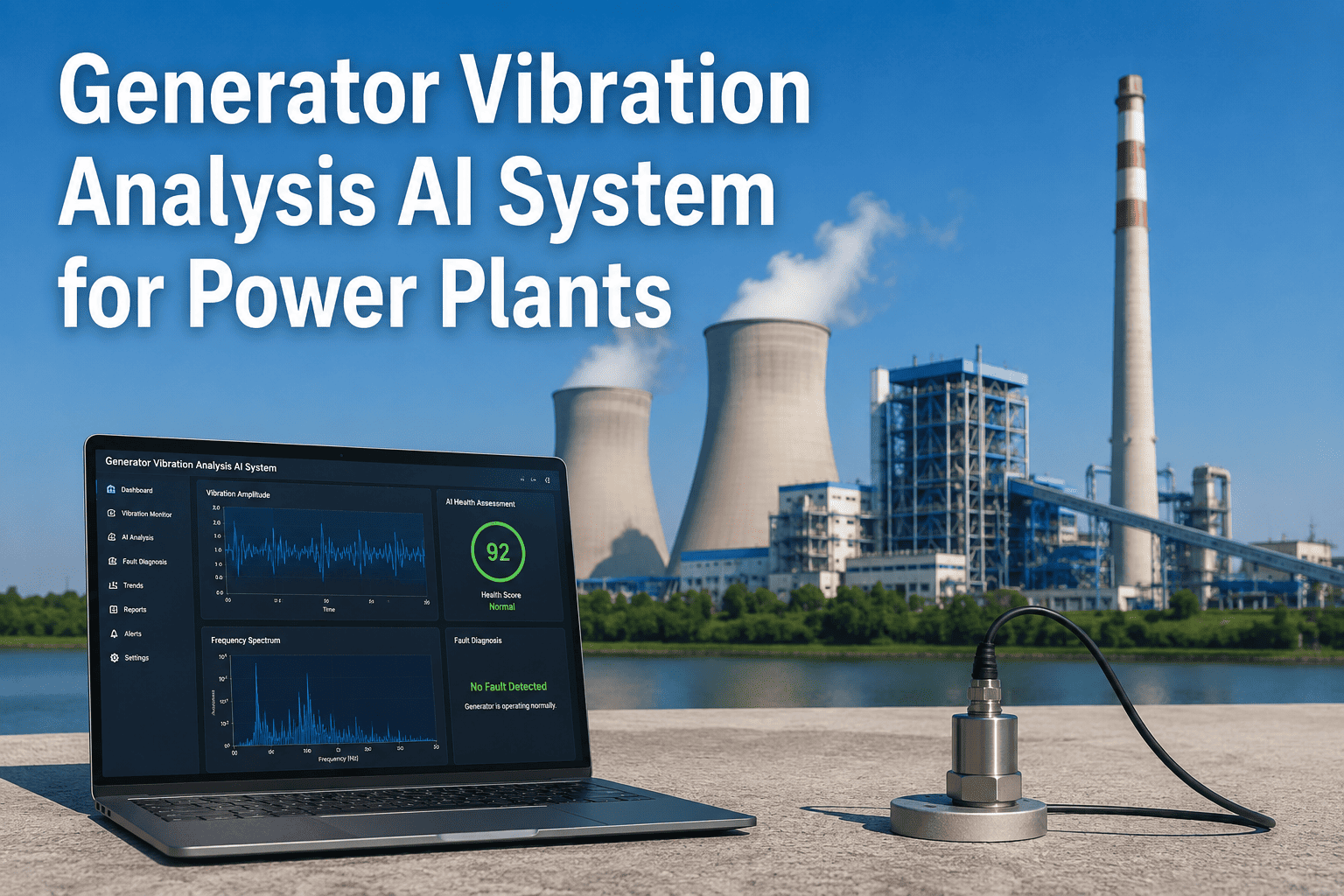
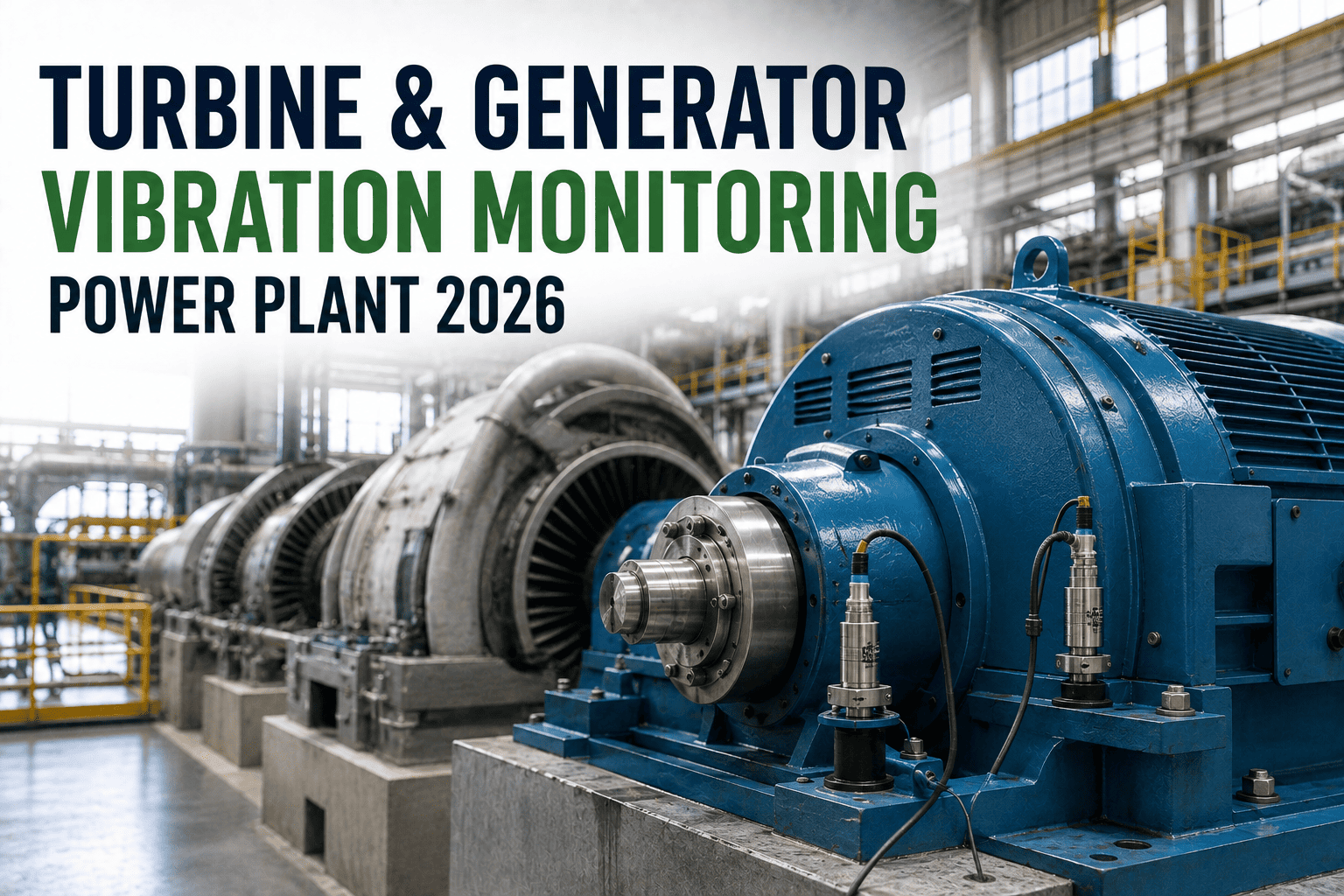
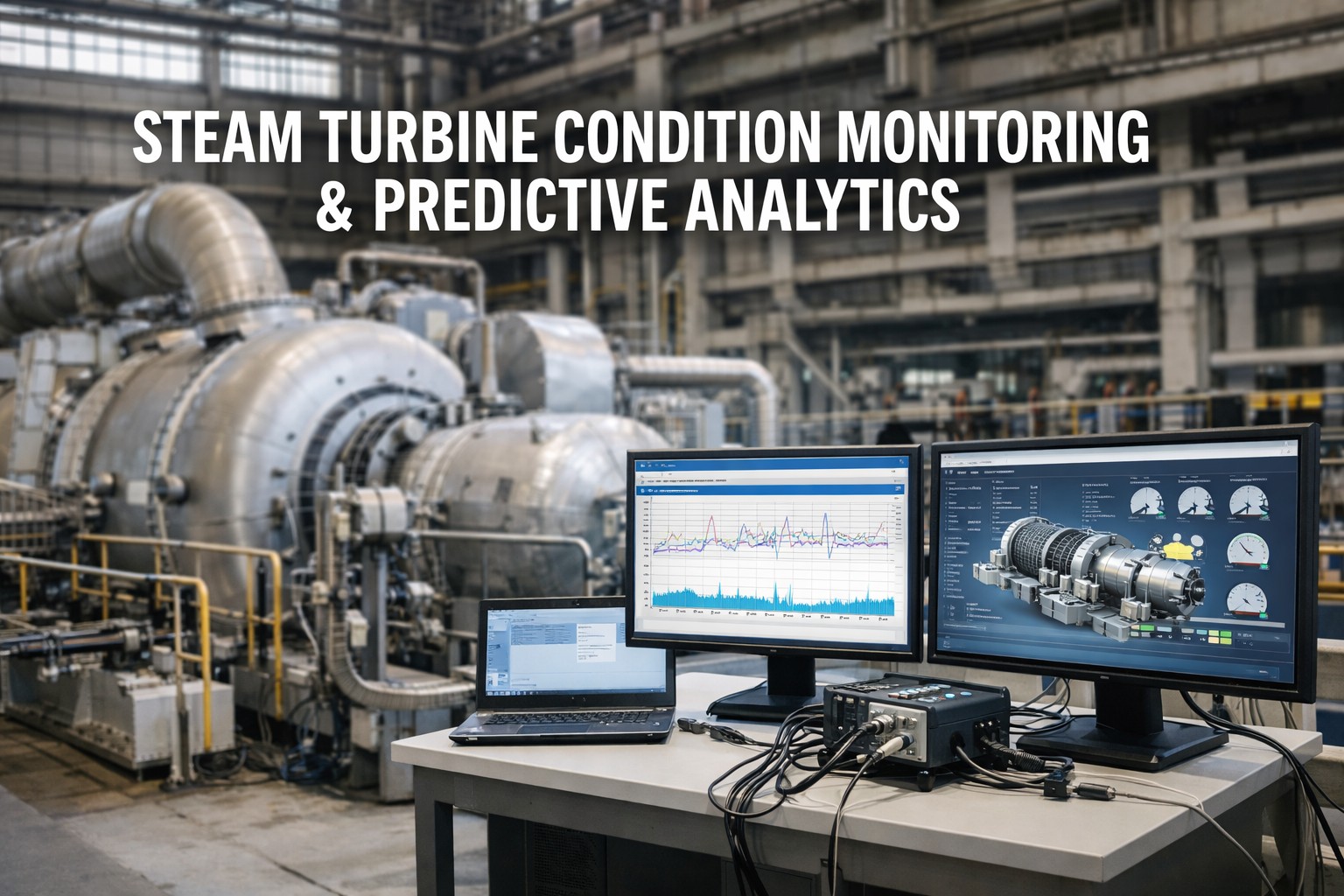
A generator producing 150 MW of electricity is mechanically inseparable from the turbine driving it — yet most power plant monitoring programs treat them as separate systems with separate alarm sets and separate maintenance schedules. This gap is where the most expensive generator failures originate: bearing degradation that starts in the turbine-generator coupling manifests in the generator frame as a vibration pattern that neither the turbine monitor nor the generator monitor alone would flag as critical. OxMaint's AI Vibration Analytics platform monitors the complete turbine-generator train as a single mechanical system — correlating vibration signatures from every bearing position simultaneously to detect rotor imbalance, bearing wear, alignment faults, and looseness weeks before they trigger a forced outage. See how OxMaint catches generator faults before they shut down your unit.
Generator Vibration Faults Cost More Than Turbine Faults — Because They're Harder to See Coming
Generator bearing replacements and rotor rewinds are among the longest-lead-time repairs in power generation. The earlier a fault is detected, the more options the operations team has.
$4.2M
Average cost of an unplanned generator rotor replacement and associated outage
8–16 wks
Lead time for replacement large generator rotors — ordered at standard lead time
21–42 days
Advance detection window OxMaint AI provides for bearing and alignment faults
The 4 Generator Faults AI Vibration Analysis Detects First
Each fault type produces a distinct vibration signature — identifiable in the frequency spectrum weeks before the fault becomes audible or visible.
Vibration Signature: Rising energy at bearing defect frequencies (BPFO, BPFI, BSF) — appears in high-frequency spectrum before broadband noise floor rises
Generator journal bearings operate in a flooded oil film — damage begins microscopically as the oil film breaks down at high load or elevated temperature. OxMaint detects the characteristic vibration impulses from metal-to-metal contact developing within the bearing weeks before the fault produces detectable temperature rise or audible noise.
Undetected cost: $280K–$850K bearing seizure and journal damage
Detected early: $8,000–$25,000 planned bearing replacement
Vibration Signature: Dominant 1× running speed peak growing in amplitude — typically accompanied by phase shift confirming mass redistribution on the rotor
Rotor imbalance in generators develops from several sources: winding insulation degradation that redistributes mass, partial discharge eroding conductor insulation material, or contamination accumulation in rotor cooling passages. OxMaint tracks the 1× vibration vector (both amplitude and phase) over time — detecting the slow drift that indicates developing imbalance months before it reaches trip levels.
Undetected cost: $650K–$2.1M rotor rewind or replacement
Detected early: $45,000–$120,000 planned rotor balancing or targeted repair
Vibration Signature: Sub-harmonics at 0.5× and 1.5× running speed — loose components generate impacts at fractions of running frequency before gross looseness develops
Looseness in generator end-turn support structures, bearing pedestals, or stator core lamination stacks produces a characteristic vibration pattern that escalates rapidly once initiated. What begins as a loose fastener can progress to stator core damage — one of the most expensive generator failure modes — within weeks. OxMaint detects the subharmonic signature and flags it for immediate inspection before progression occurs.
Undetected cost: $900K–$3.5M stator core restack or replacement
Detected early: $2,000–$8,000 fastener inspection and retorque
Vibration Signature: Elevated 2× harmonic at coupling — angular misalignment produces twice-per-revolution excitation that grows as the misalignment angle increases
Turbine-generator coupling misalignment is particularly damaging because the forces are transmitted across the coupling to both machines simultaneously — accelerating bearing wear at both the generator drive-end bearing and the turbine exciter-end bearing in parallel. OxMaint monitors the 2× vibration component at all bearing positions simultaneously, identifying misalignment before it causes bearing damage in either machine.
Undetected cost: $180K–$650K bearing damage across multiple machines
Detected early: $12,000–$35,000 planned alignment correction
How Frequency Spectrum Analysis Identifies Generator Faults
Normal Generator
Normal operating spectrum — 1× dominant, harmonics low, bearing frequencies near noise floor
Bearing Fault
Bearing fault developing — BPFO and BPFI peaks rising while 1× remains stable. OxMaint flags this pattern 21–42 days before failure
Misalignment
Misalignment pattern — 2× amplitude approaching 1× level. OxMaint confirms misalignment when this pattern persists across multiple measurement cycles
Case Study: Regional Power Plant Detects 6 Developing Generator Faults in One Year
2
Bearing outer race faults detected 28–35 days before projected failure — both units scheduled for bearing replacement during planned weekend outages. Combined savings: $1.4 million vs. emergency repair scenario.
2
Coupling misalignment conditions identified and corrected during scheduled maintenance windows — preventing progressive bearing damage across both the generator and turbine drive-end bearings on each unit.
1
Rotor imbalance detected via 1× phase drift over 14 weeks — rotor dispatched for balancing during a planned combustion inspection outage that was already scheduled. No additional outage required.
1
End-turn looseness identified via subharmonic vibration growth — inspection confirmed loose blocking material. Retorque and re-wedge completed in 18 hours. Estimated stator core damage prevented: $2.8 million.
Total savings in Year 1: $4.6M in avoided failures and unplanned outage costs — against an annual OxMaint subscription cost of less than 2% of that figure.
Your Generator Fleet is Already Telling You What's Wrong
The vibration data exists — in your existing proximity probes, accelerometers, and bearing temperature sensors. OxMaint connects to your current instrumentation and begins correlating fault signatures from the first day of deployment. No rip-and-replace required.
Generator Fault Detection: Signal, Lead Time, and Cost Summary
| Fault Type |
Primary Signal |
Supporting Signal |
Detection Lead |
Cost if Undetected |
Early Intervention |
| Journal bearing wear |
BPFO/BPFI vibration peaks |
Bearing drain temp rise |
21–42 days |
$280K–$850K |
$8K–$25K bearing job |
| Rotor imbalance |
1× amplitude + phase drift |
Stator vibration, current draw |
14–35 days |
$650K–$2.1M |
$45K–$120K balance/repair |
| Coupling misalignment |
2× vibration at coupling |
Bearing temp both machines |
14–28 days |
$180K–$650K |
$12K–$35K alignment |
| End-turn looseness |
0.5× and 1.5× sub-harmonics |
Partial discharge activity |
7–21 days |
$900K–$3.5M stator restack |
$2K–$8K retorque/re-wedge |
| Stator core looseness |
2× at frame / 100 Hz |
Core temp, slot temperature |
10–21 days |
$1.2M–$4.2M core replacement |
$15K–$60K core tightening |
| Winding partial discharge |
PD pulse count + magnitude |
1× vibration drift, temp |
4–12 weeks |
$600K–$2.1M rewind |
$40K–$150K targeted repair |
How OxMaint AI Monitors Generators: From Raw Signal to Work Order
Step 1
Continuous Data Collection
Vibration data streams from proximity probes (rotor position), accelerometers (housing vibration), and temperature sensors at every bearing — integrated with generator output current, voltage, and power factor from protection relays via SCADA.
Step 2
Dynamic Baseline Per Asset
OxMaint builds a 90-day statistical baseline for each sensor on each generator — accounting for load-dependent vibration changes, seasonal temperature effects, and post-outage baseline resets. Anomalies are measured against expected values, not fixed thresholds.
Step 3
Fault Pattern Recognition
The AI engine cross-correlates vibration spectrum changes with bearing temperature, electrical signature, and load — identifying fault patterns that match bearing wear, imbalance, looseness, or misalignment with a false positive rate near zero. Single-sensor anomalies are logged, not escalated.
Step 4
Automatic Work Order
Confirmed fault pattern creates a CMMS work order pre-populated with fault type, affected component, vibration trend charts, deviation magnitude, and recommended corrective action — placed in the planner's queue within minutes of pattern confirmation.
Frequently Asked Questions
What is the difference between vibration monitoring and predictive maintenance for generators?
Vibration monitoring collects data and displays it on a dashboard. Predictive maintenance automatically analyzes that data against a dynamic baseline, identifies fault patterns, and generates work orders — without requiring a human to review every trend. OxMaint provides predictive maintenance, not just monitoring.
See the difference in a free trial.
How does OxMaint avoid false vibration alarms that cause alert fatigue?
OxMaint requires multi-signal confirmation before escalating to a work order — vibration alone is not enough. A 2× vibration increase at peak load that correlates with nothing else is logged as a watch item. A 2× increase alongside rising bearing temperature and no change in load is confirmed as misalignment. This approach reduces false positives to near zero while maintaining 21–42 day detection lead times for real faults.
Book a demo to see the confirmation logic in action.
Can OxMaint detect generator winding faults, not just mechanical vibration faults?
Yes. OxMaint integrates partial discharge monitoring data, winding temperature array data, and motor current signature analysis (MCSA) alongside vibration — detecting developing winding insulation faults 4 to 12 weeks before they produce detectable mechanical effects. Electrical and mechanical fault detection are correlated in a single asset health model.
How long does it take to deploy OxMaint on an existing generator fleet?
Most deployments are complete in 2–4 weeks. If your plant already has vibration transducers and SCADA connectivity, OxMaint connects via OPC-UA or OSIsoft PI integration with no new hardware required. For generators without existing instrumentation, wireless accelerometers can be mounted in under two hours per machine.
Does OxMaint monitor the complete turbine-generator train or only the generator?
OxMaint monitors the complete rotating train — steam or gas turbine, coupling, and generator — as a single mechanical system. Vibration data from all bearing positions is correlated simultaneously, which is how misalignment and coupling faults are identified before they damage bearings on either machine.
Start a free trial to see the full train monitoring dashboard.
Start Detecting Generator Faults 3–6 Weeks Before They Force an Outage
OxMaint connects to your existing generator instrumentation and begins identifying bearing wear, rotor imbalance, misalignment, and looseness from the first week of live monitoring — with automatic work orders the moment a fault pattern is confirmed.