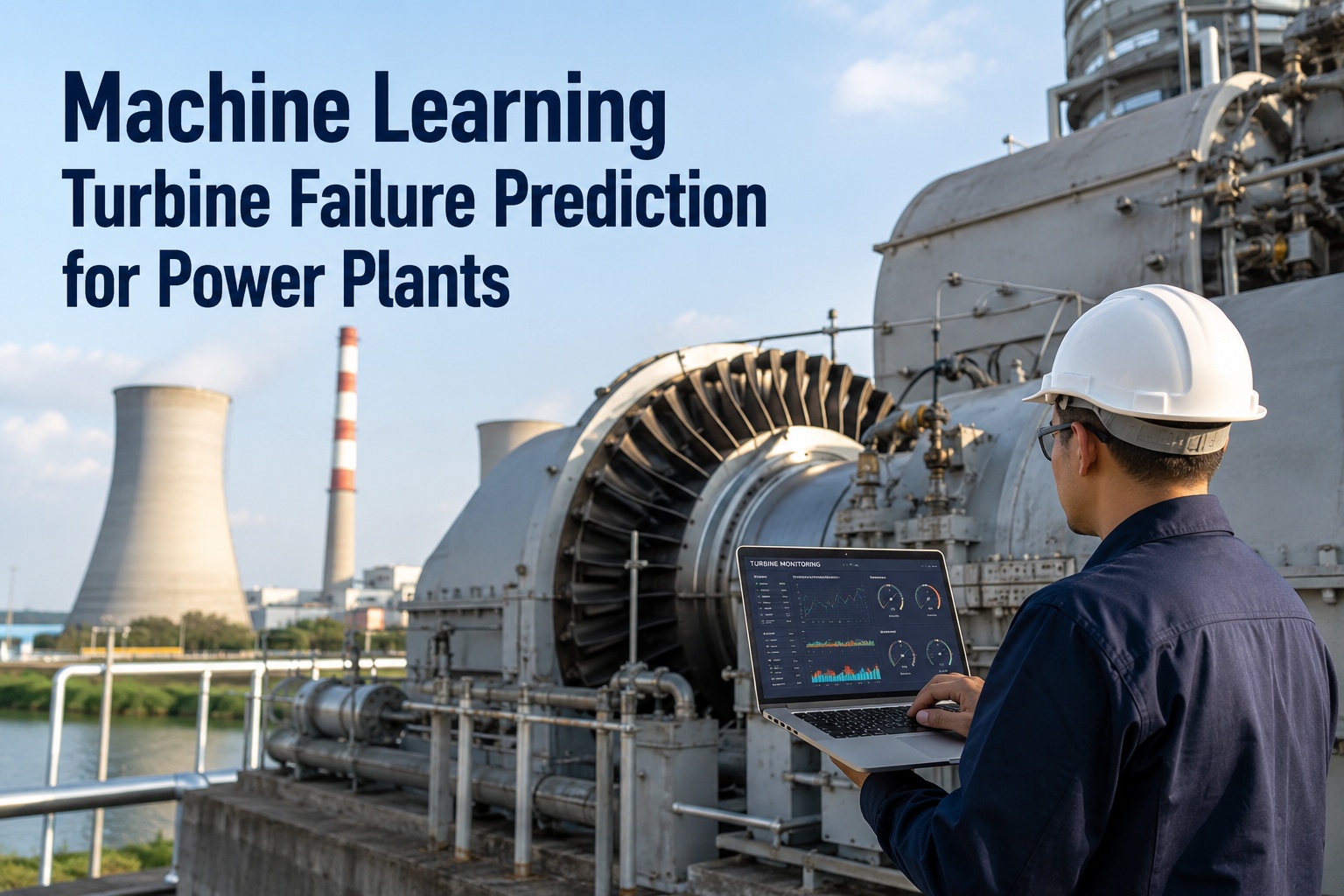
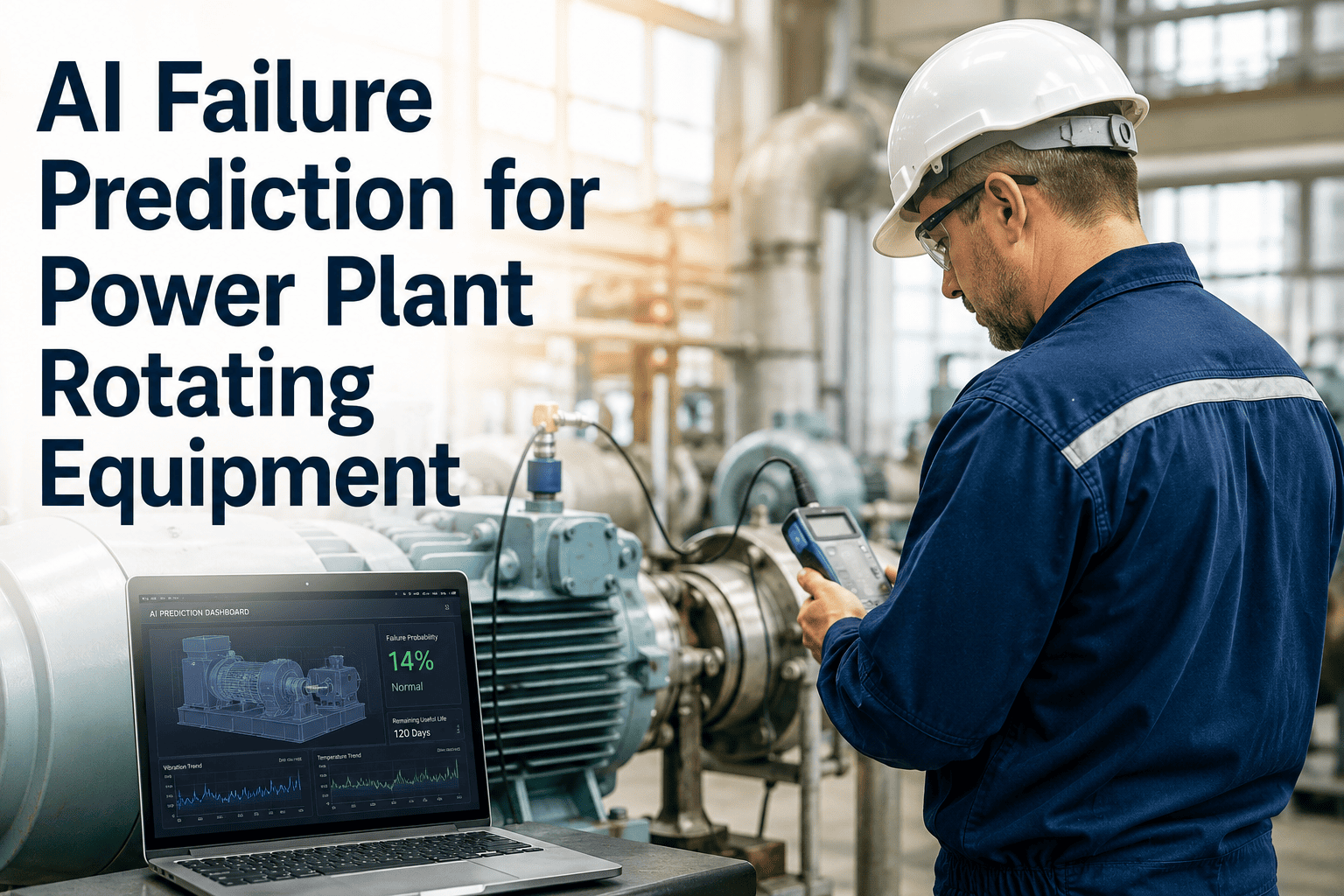
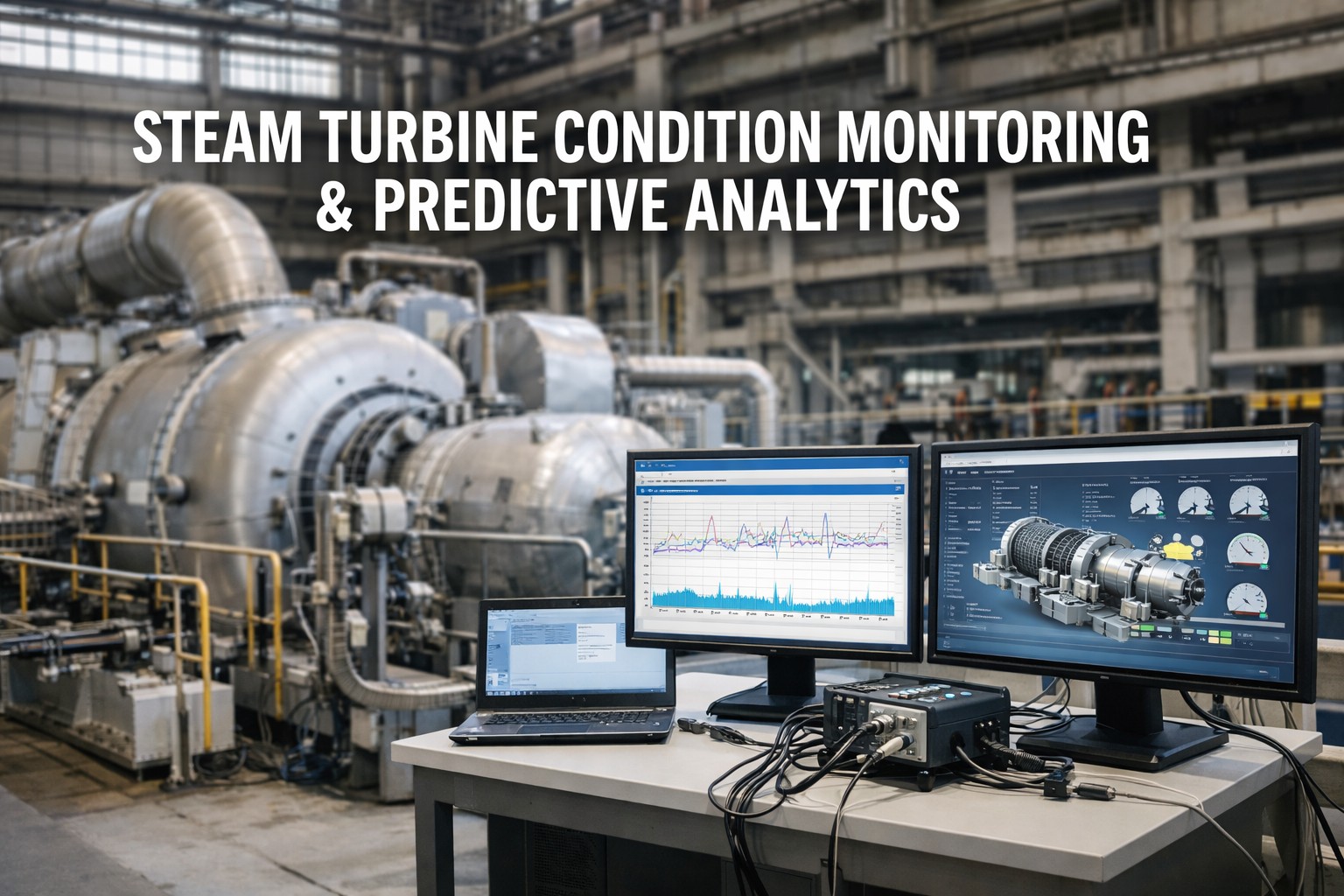
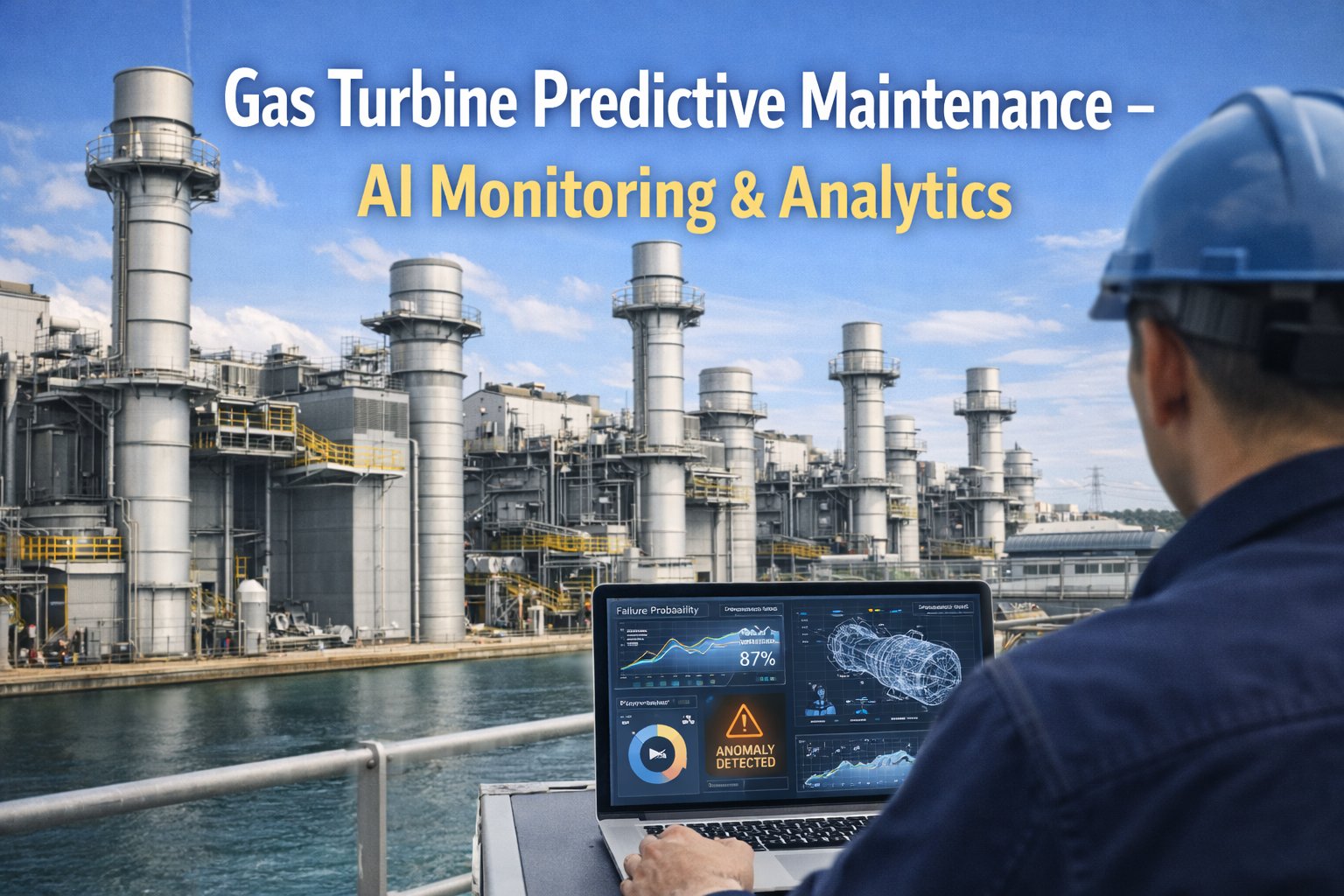
Steam turbine failures are among the most costly events in power generation — combining multi-million dollar repair bills, extended outage durations measured in weeks, and potential safety incidents that no plant wants on record. Yet the majority of turbine failures share a common thread: the warning signals were present in sensor data long before the failure event, and no system was in place to read them. AI-powered turbine failure prediction platforms like OxMaint are closing that gap — analyzing vibration signatures, bearing temperatures, and performance parameters in real time to give engineering teams actionable intelligence before a minor fault becomes a catastrophic breakdown.
Steam Turbine Failure Analysis & AI Prediction
How power plant engineers use root cause analysis and AI fault prediction to stop turbine failures before they cascade — with real-world outcomes from monitored installations.
The Anatomy of a Turbine Failure: What the Data Shows
Turbine failures don't occur in isolation — each major failure mode has a characteristic data signature that evolves over time. Understanding these patterns is the foundation of both root cause analysis and predictive prevention.
Uneven mass distribution causes synchronous vibration at 1x running speed. Progressive — worsens as deposits accumulate on blades or erosion removes material asymmetrically.
Causes dominant 2x vibration component. Often develops after maintenance interventions — couplings, bearing replacements — if alignment verification is inadequate.
Subsynchronous vibration at 0.45–0.49x shaft speed. Caused by journal bearing instability — can escalate to catastrophic rotor contact within hours if undetected.
Wet steam droplets erode leading edges of LP turbine blades at high velocity. Wall thickness loss accelerates until blade structural integrity fails — often without external warning signs.
Repeated start-stop thermal cycling creates low-cycle fatigue cracks in blade roots and disc bores. Cracks propagate under centrifugal stress until catastrophic fracture.
HP blade operation above design temperature causes permanent dimensional change over thousands of operating hours. Efficiency loss precedes structural failure by months.
Contaminated or degraded lube oil causes accelerated bearing surface wear. Oil viscosity, debris particle count, and temperature trends all signal bearing health deterioration.
Excessive axial load from steam path issues or seal degradation overloads thrust bearings. Axial position monitoring is the critical detection parameter for this failure mode.
Oil cooler fouling, pump degradation, or filter blockage reduces oil pressure and flow. Any sustained oil pressure deviation must trigger immediate investigation.
Key Monitoring Parameters: What AI Watches Continuously
AI turbine monitoring works by correlating dozens of parameters simultaneously — something no operator can do manually across a full shift. These are the most critical signal channels that OxMaint monitors for each failure mode.
| Parameter | Units / Range | Failure Mode Detected | AI Alert Threshold Logic | Typical Lead Time |
|---|---|---|---|---|
| Shaft Vibration (1x) | mm/s — baseline ± 25% | Rotor imbalance, mass loss | Trend rate + amplitude threshold | 3–8 weeks |
| Shaft Vibration (2x) | mm/s — baseline ± 20% | Misalignment, coupling faults | Frequency ratio + directional analysis | 2–6 weeks |
| Subsynchronous Vibration | 0.4–0.49x running speed | Oil whirl, whip onset | Frequency pattern match + amplitude | Hours to days |
| Bearing Metal Temperature | °C — design limit ± 10°C | Lubrication failure, overload | Rate of rise + absolute threshold | Hours to weeks |
| Axial Position | mm — ± 0.5mm band | Thrust bearing overload | Drift rate + position limit | Days to weeks |
| Steam Path Efficiency | % — design baseline | Blade erosion, fouling, leakage | Efficiency degradation rate | Weeks to months |
| Lube Oil Pressure | bar — design minimum | Oil system faults, pump degradation | Sustained deviation from setpoint | Minutes to hours |
| Differential Expansion | mm — design limits | Thermal transient damage risk | Rate exceedance during startups | Real-time during startups |
All 8 Parameters. Monitored Simultaneously. Alerts in Under 2 Minutes.
OxMaint ingests all critical turbine monitoring channels from your existing DCS and historian — no additional hardware — and applies AI pattern analysis to detect developing faults and generate prioritized work orders automatically.
Root Cause Analysis: The AI Advantage Over Traditional Methods
Traditional turbine RCA happens after failure. You disassemble the unit, send samples to a lab, and spend 4 to 8 weeks determining what went wrong — after the damage is already done and the cost is already incurred. AI-assisted RCA works in real time, classifying failure causes while the turbine is still running.
Documented Outcomes: AI Turbine Monitoring in Practice
These are representative outcomes from plants that have deployed AI-based turbine condition monitoring — drawn from industry studies and operator-reported results across thermal power installations globally.
"Every turbine failure I've investigated had at least two and usually four or five detectable precursors in the sensor record. The gap isn't technology — modern turbines are instrumented. The gap is analysis bandwidth. A single AI system monitoring every channel, every second, closes that gap completely. It's not about replacing engineers; it's about giving them eyes they don't have time to use manually."
— Rotating Equipment Specialist, 20 years in thermal power plant diagnostics
Your Turbines Are Telling You Something. Are You Listening?
Every hour your turbines run without AI monitoring, the data is there — vibration signatures, temperature trends, efficiency deviations — and no one is reading all of it. OxMaint gives you the analysis layer that catches what your team cannot, automatically, continuously. See a live turbine monitoring dashboard in 30 minutes.