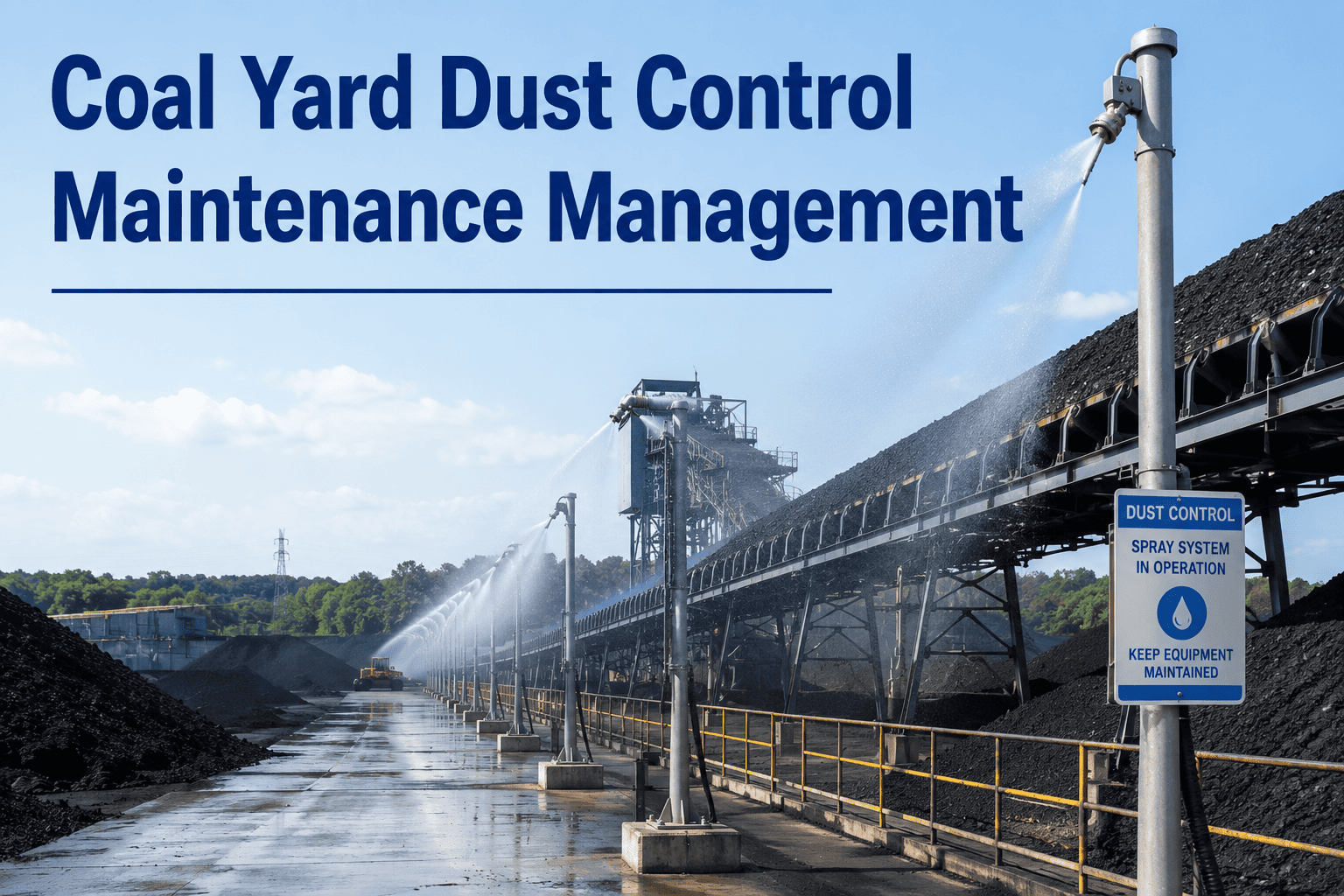
Coal yards are among the most maintenance-intensive and safety-critical environments in power generation — managing millions of tons of material annually across conveyor networks, spray systems, crusher stations, and haul roads, all while keeping fugitive dust within EPA and OSHA limits. When a dust suppression pump fails silently, when a conveyor transfer point spray nozzle clogs undetected, or when a road sweeper inspection gets missed during a busy coal delivery week, the result is an opacity violation or a coal dust explosion risk that no one saw coming. Managing dust control in a coal yard requires a maintenance system purpose-built for high-frequency, multi-asset inspection cycles — one that routes work orders automatically when PM is overdue, tracks spray pump runtimes, and keeps environmental inspection records audit-ready. A CMMS brings order to what is otherwise a reactive, inspection-by-memory operation. See how OxMaint manages coal yard dust control assets end to end.
Coal Handling · Dust Suppression · Environmental Compliance · Work Order Management
Coal Yard Dust Control Maintenance Management
Dust suppression pumps. Conveyor spray bars. Haul road wetting systems. Fog cannons. Every asset on a different inspection cycle — managed from one system with automatic work orders, overdue alerts, and environmental compliance records built in.
!
Coal dust explosions at transfer points are the leading cause of fatal incidents in coal yard operations
!
OSHA and MSHA have increased enforcement of PM2.5 and PM10 fugitive dust emission standards since 2023
!
A failed dust suppression pump at one transfer point can generate a visible opacity violation within 15 minutes
Asset Coverage
Every Dust Control Asset in Your Yard — Scheduled and Tracked
A coal yard dust control program is only as strong as the maintenance behind it. Spray systems that aren't calibrated drift. Pumps that aren't inspected fail at peak coal delivery. Roads that aren't treated generate visible dust clouds that trigger community complaints and regulator attention.
Dust Suppression Pumps
High-pressure pumps feeding spray bars, fog cannons, and road wetting systems are the backbone of every dust control program. Seal failures and bearing wear are the two most common failure modes — both predictable with runtime-based PM.
Conveyor Spray Bars
Transfer points between conveyors — tripper cars, crusher feed, bunker loading — generate the highest dust concentrations. Spray bar nozzles clog with coal fines, reducing coverage and creating blind spots in dust suppression.
Fog Cannon Systems
Fog cannons at stockpile faces and reclaim zones produce ultra-fine droplets (1–10 microns) that agglomerate with airborne coal dust particles without over-wetting the coal. Oscillation motors and nozzle arrays require periodic alignment checks.
Haul Road Wetting Systems
Roads used by coal delivery vehicles and front loaders are major sources of fugitive dust. Fixed sprinkler arrays and mobile water trucks operate on schedules tied to wind speed, temperature, and delivery frequency.
Enclosed Transfer Point Seals
Belt skirt seals and transfer chute liners prevent coal from spilling and dust from escaping at conveyor loading points. Wear-through creates both a spillage problem and a fugitive dust source that bypasses spray systems entirely.
Yard Sweepers and Vacuums
Mechanical sweepers and industrial vacuums collect settled coal fines from yard surfaces — fuel that would otherwise become airborne under vehicle movement. Vehicle hours tracking drives maintenance intervals accurately.
One System for Every Dust Control Work Order in Your Coal Yard
OxMaint auto-generates PM work orders for spray pumps, fog cannons, conveyor seals, and road wetting systems — with overdue escalation, environmental inspection records, and mobile completion for field teams.
Environmental Compliance
Inspection Records That Stand Up to OSHA and EPA Scrutiny
Coal yard environmental compliance is documentation-intensive. Regulators expect evidence of routine dust control inspections, corrective actions on deficiencies, and spray system performance records. Paper inspection logs fail at every one of these requirements — they can't be searched, they can't be linked to corrective work orders, and they disappear when the inspector who kept them retires.
What Regulators Ask For
Records of routine dust suppression inspections with dates and findings
Evidence of corrective actions for identified deficiencies
Spray system performance logs showing water application rates
Documentation that opacity events were investigated and addressed
What OxMaint Provides
Timestamped, signed digital inspection records for every dust control round
Auto-generated corrective work orders linked to the inspection finding that triggered them
Pump runtime and flow rate logs pulled from sensor integration or manual rounds
Searchable audit export by equipment type, date range, or inspection outcome
Work Order Intelligence
How a CMMS Changes Dust Control Maintenance from Reactive to Proactive
Without CMMS
Spray pump fails at transfer point 4
Dust visible from public road — community complaint filed
OSHA inspector visits — no inspection records available
Notice of violation issued — $45,000 fine
Emergency pump replacement — 3x standard cost
With OxMaint CMMS
Bearing vibration alert triggered on pump — 3 weeks before failure
Work order auto-generated with parts list and technician assignment
Preventive bearing replacement completed — pump back online same shift
Inspection record stored — available instantly for any regulatory inquiry
Zero community complaints, zero dust events, zero enforcement exposure
Inspection Frequency Reference
Coal Yard Dust Control Maintenance Schedule
| Equipment |
Daily |
Weekly |
Monthly |
Quarterly |
| Dust suppression pumps |
Runtime log |
Seal / bearing inspect |
Flow rate calibration |
Full pump service |
| Conveyor spray bars |
Nozzle flow check |
Pressure verify |
Nozzle clean / replace |
Bar alignment check |
| Fog cannon systems |
Operational status |
Oscillation verify |
Nozzle array clean |
Fan / motor inspect |
| Haul road sprinklers |
Coverage confirm |
Head condition check |
Pressure test |
Distribution line flush |
| Transfer point seals |
Visual check |
Skirt tension check |
Wear thickness measure |
Chute liner inspect |
| Yard sweepers |
Pre-use inspection |
Filter clean |
Brush wear check |
Full service per hours |
Common Questions
Coal Yard Dust Control CMMS — FAQs
Can OxMaint handle both planned inspections and reactive work orders for dust control failures?
Yes. OxMaint manages both preventive inspection schedules and corrective work orders in the same system. When a field inspection identifies a clogged spray nozzle or a failing pump seal, a corrective work order is created immediately from the mobile app with the finding, location, and priority already populated.
Start a free trial to configure your dust control assets.
How does OxMaint support OSHA and EPA coal yard dust inspections?
Every inspection completed in OxMaint generates a timestamped, signed digital record linked to the specific asset inspected. At audit time, records are searchable by equipment type, date range, or finding — and export as a complete evidence package within minutes rather than requiring manual compilation from paper logs.
Can the system trigger work orders based on wind speed or environmental conditions?
Can contractors performing dust control inspections be assigned work orders in OxMaint?
Yes. Contractors are given access to OxMaint's mobile app with permissions scoped to their assigned assets and work order queue. Their completed work orders carry the same timestamped, signed format as permanent staff — maintaining documentation continuity across the workforce.
Does OxMaint track spare parts inventory for dust control consumables like nozzles and seals?
Yes. OxMaint's inventory module tracks stock levels for high-turnover consumables — spray nozzles, belt skirt material, pump seals, filter elements. Minimum stock alerts prevent dust control maintenance from being delayed by missing parts.
See the inventory module in your free trial.
Manage Every Dust Control Asset in Your Coal Yard — From One Work Order System
OxMaint automates PM scheduling for spray pumps, fog cannons, conveyor seals, and road wetting systems — with mobile inspection completion, overdue escalation, and audit-ready environmental records.