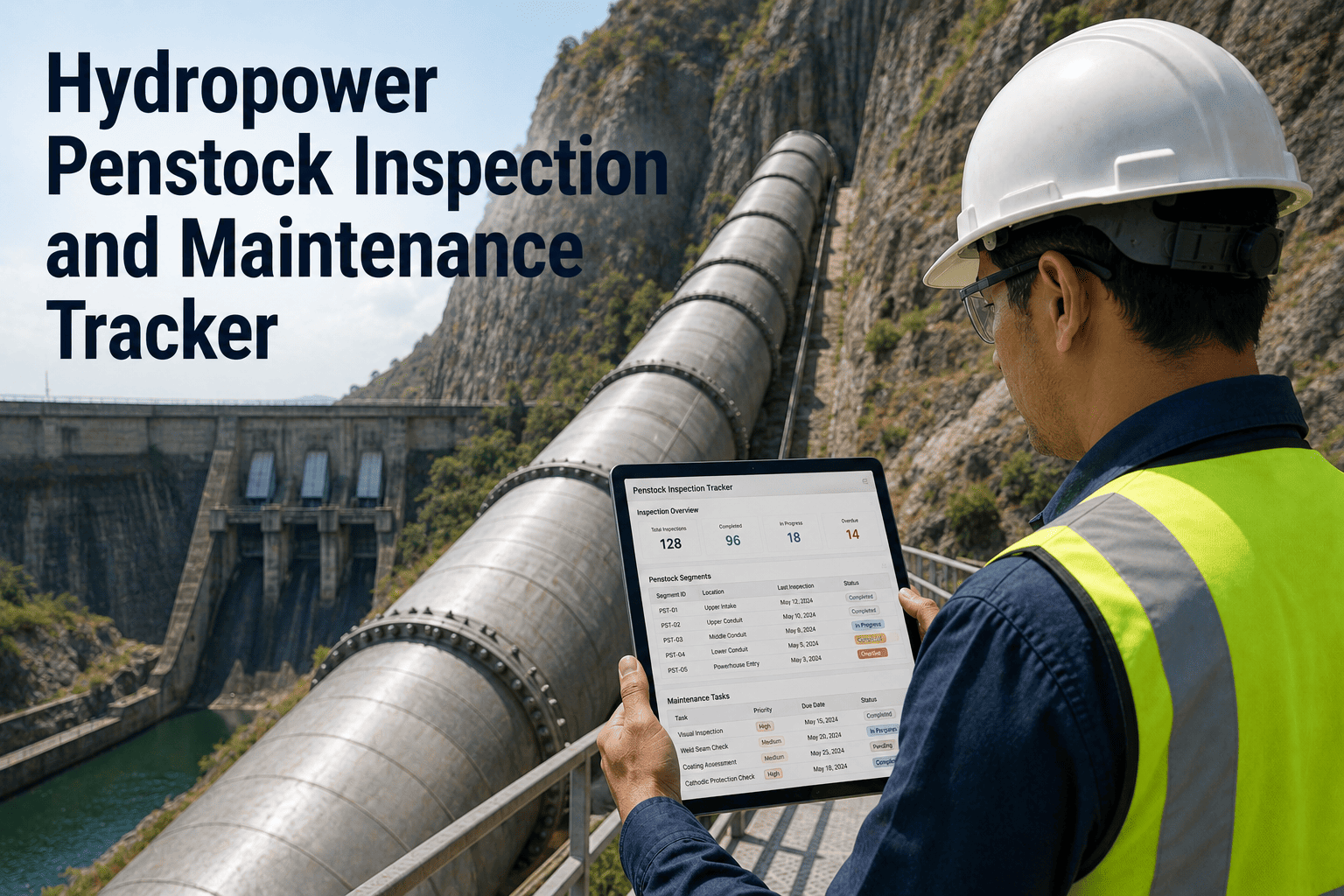
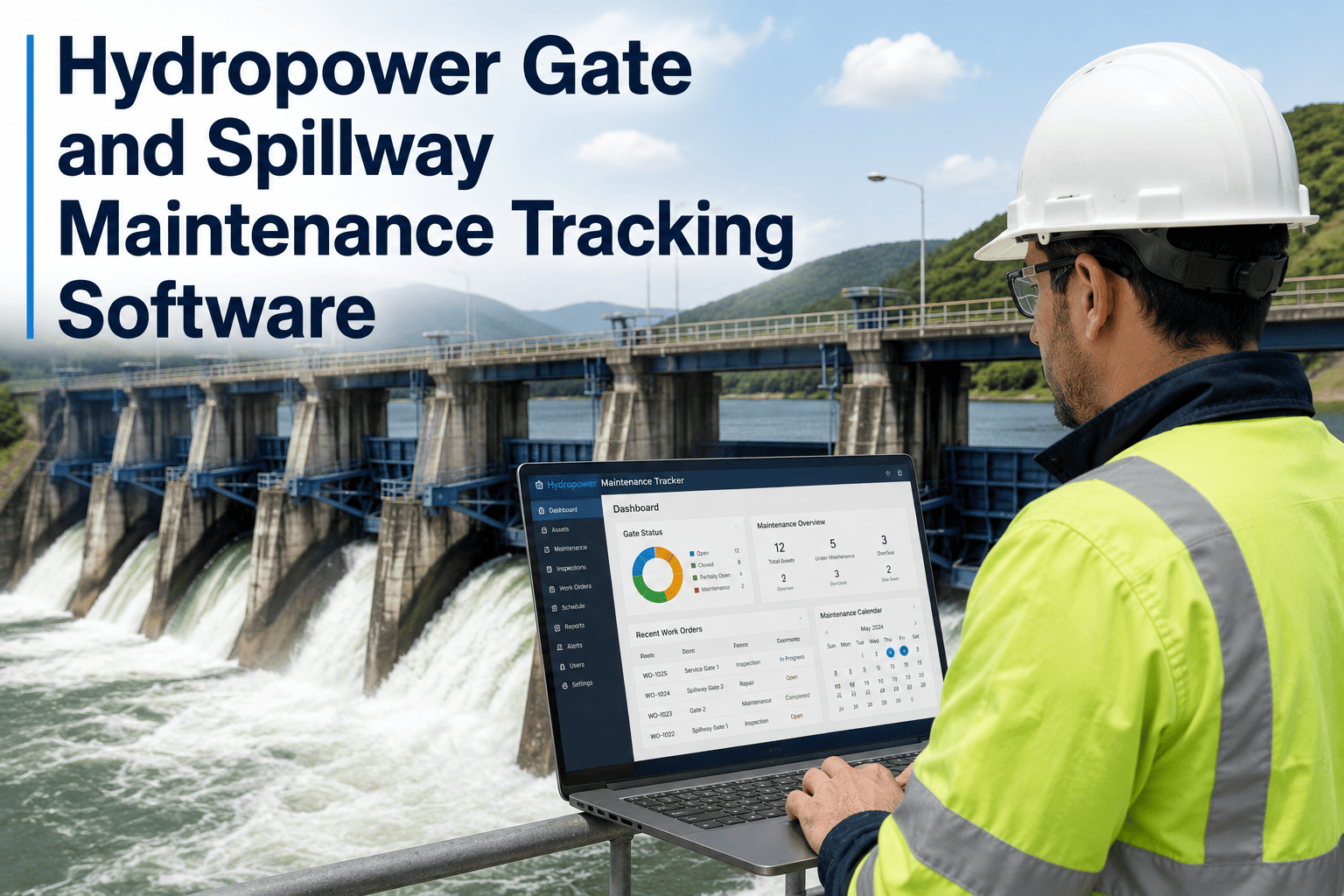
A penstock carries pressurized water from the reservoir to the turbine — and when it fails, it does not fail gradually. Corrosion pitting, weld deterioration, wall thinning, and expansion joint degradation all develop over years of inspection cycles, visible only to teams that systematically track thickness readings, seepage observations, and coating condition across every inspection zone. Without a structured maintenance tracker, penstock inspections produce paper reports that get filed and forgotten, with no trending, no condition-based work orders, and no visibility into remaining service life until a crisis forces the question. Start a free OxMaint trial to build a structured penstock inspection and maintenance record, or book a demo to see the hydropower asset module with real penstock configuration examples.
Inspection Management · Hydropower · Penstock Safety
Hydropower Penstock Inspection and Maintenance Tracker
Track thickness readings, corrosion findings, seepage notes, coating condition, and safety work orders — structured by inspection zone, compliant with FERC Part 12, ASME B31.3, and NACE SP0169.
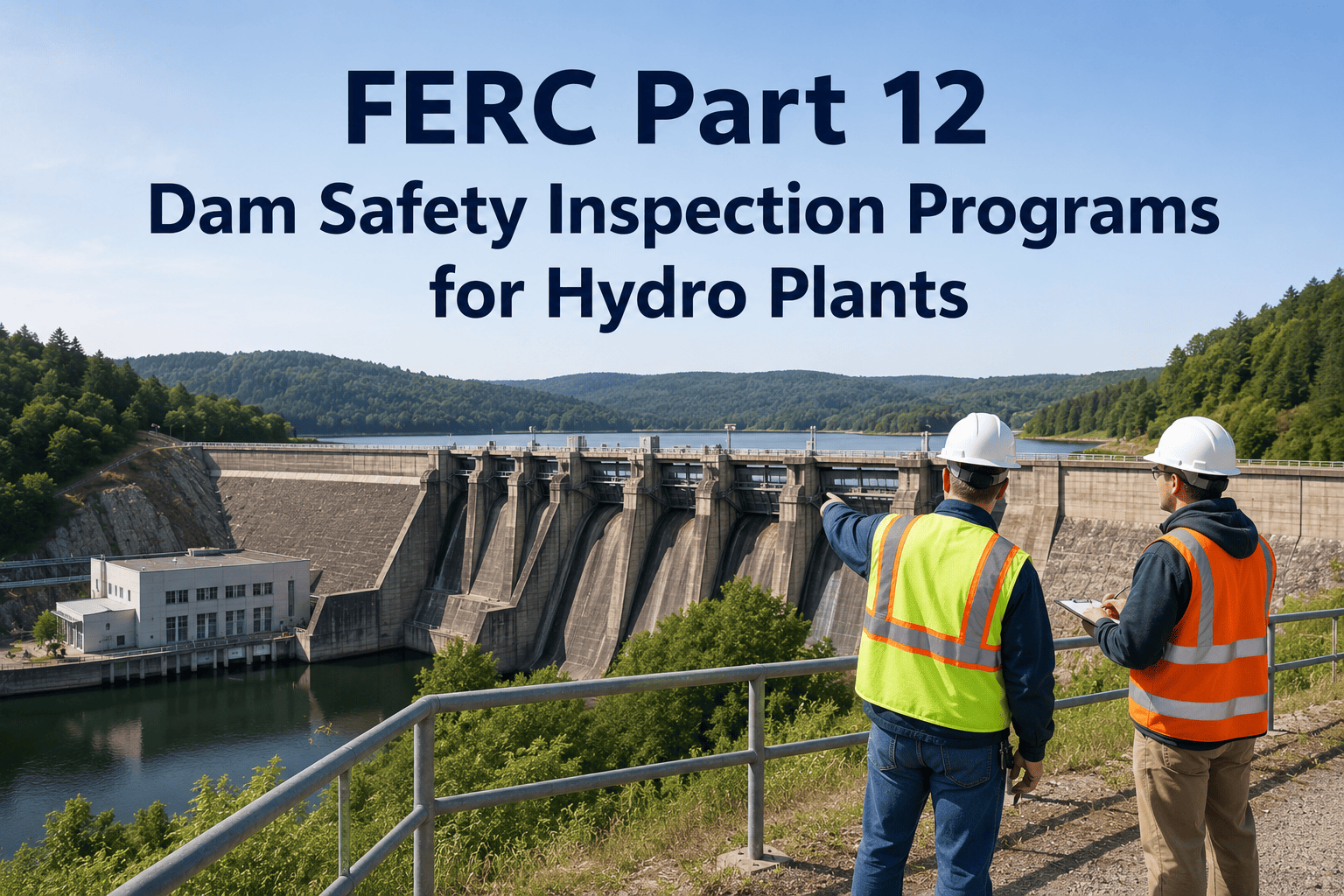
FERC Part 12
ASME B31.3
NACE SP0169
AWS D1.1
USACE EM 1110
What Makes Penstock Inspection Different from Every Other Asset Class
A penstock is not inspected quarterly. It may be dewatered and internally inspected once every 5 years — making each inspection the single opportunity to capture data that must last until the next cycle. A missed reading, an unlogged seepage observation, or a coating deficiency not photographed in 2024 becomes an unknown in 2029 when the same zone is inspected again with no baseline to compare against.
5
Years
Between internal penstock inspections — every inspection must produce data that survives to the next cycle in retrievable, comparable form
10%
Wall Loss
Corrosion pitting exceeding 10% of wall thickness triggers mandatory engineering review and immediate FERC notification under Part 12 requirements
40–60
Years
Operating life of hydropower penstocks — long-cycle assets where degradation trends matter more than any single inspection snapshot
30+
Check Points
Critical inspection points across 6 sections required by FERC Part 12 penstock inspection standards for full regulatory compliance documentation
How OxMaint Structures Penstock Inspection Data
OxMaint registers each penstock as a parent asset with individual inspection zones — identified by station, elevation, or clock position — as child assets. This structure makes every thickness reading, seepage note, and coating assessment retrievable, comparable, and traceable to a specific technician, date, and instrument calibration record.
Penstock — Parent Asset
Unit, elevation range, material, commissioning date, design pressure
Zone A — Intake
UT thickness readings
Seepage log
Coating condition
Zone B — Upper Shaft
Weld inspection
Crack observation
Photo documentation
Zone C — Mid-Shaft
Corrosion rating
Wall thickness trend
Support block check
Zone D — Expansion Joints
Seal condition
Joint movement
Corrosion at flanges
Corrosion rate calculated from successive readings
Remaining service life projected per zone
FERC-ready inspection report generated automatically
OxMaint's hydropower module tracks penstock thickness readings, corrosion findings, seepage notes, and coating tasks — with zone-level trending, FERC Part 12 compliance documentation, and automated work order generation from inspection findings.
Penstock Inspection Checklist: 30 Critical Points Across 6 Sections
This checklist reflects the minimum inspection scope for FERC Part 12 compliance. OxMaint delivers these as structured digital checklists with mandatory photo capture, condition rating fields, and automatic work order generation for any finding that exceeds predefined thresholds.
Atmospheric gas testing completed and recorded
Entry permit signed with responsible supervisor
Emergency retrieval equipment staged and tested
Isolation and lockout verified — inlet valve closed and locked
Lighting, ventilation, and communication equipment operational
Shell free of longitudinal or circumferential cracks
No corrosion pitting exceeding 10% wall loss at any zone
Ultrasonic thickness measurements within acceptable limits at all stations
Weld seam integrity — no evidence of cracking or delamination
Ovality measurements within design tolerance
Interior coating continuity rated by zone — holiday detection if specified
Active corrosion pitting photographed and measured
Cathodic protection readings recorded at all test stations
Seepage staining and moisture ingress at each zone documented
Coating work order generated for any zone rating below threshold
Expansion joint seal condition rated and photographed
Joint movement within designed range — no binding or locking
Support block and saddle condition — no cracking or settlement
Anchor block integrity — no visible concrete cracking or displacement
Main inlet valve operates freely through full travel range
Access hatches sealed and corrosion-free
Air release and vacuum relief valves functional
Manholes and flanges leak-free after dewatering
All deficiencies rated by severity and assigned corrective work order
Inspection report compiled with technician signature and instrument calibration records
FERC Part 12 submission package generated from OxMaint records
Next inspection interval confirmed and scheduled in CMMS
Frequently Asked Questions
How does OxMaint handle ultrasonic thickness readings across multiple inspection zones?
Each inspection zone is a child asset in OxMaint. Thickness readings are recorded against the specific zone with technician attribution, instrument calibration ID, and date. OxMaint then calculates corrosion rate from successive readings at each zone and projects remaining service life — giving engineers data-driven replacement planning rather than calendar estimates.
Start a free trial to configure your penstock zone structure.
Can OxMaint automatically generate FERC Part 12 compliance documentation from inspection records?
Yes. OxMaint compiles inspection findings, technician signatures, instrument records, and condition ratings into a structured report that meets FERC Part 12 documentation requirements — eliminating the manual binder compilation that typically follows dewatered penstock inspections.
Book a demo to see a sample compliance report output.
Does OxMaint support mobile data capture in confined space environments with no connectivity?
OxMaint's mobile application is designed for offline field use — critical for penstock interiors where cellular connectivity is absent. Technicians capture readings, photos, and condition ratings offline, with all data syncing to the platform when the device returns to a connected environment after the inspection.
How does OxMaint handle inspection findings that require immediate corrective action?
Any inspection finding that exceeds a configurable threshold — corrosion rating, wall thickness loss, or structural deficiency — automatically generates a priority work order assigned to the responsible engineering team. Threshold values are configurable per inspection type and asset class, and notifications go to the relevant supervisor in real time.
Can OxMaint track coating maintenance schedules between major penstock inspections?
Yes. Coating tasks, cathodic protection readings, and external corrosion monitoring activities can be scheduled as standalone preventive maintenance work orders between full penstock inspections. OxMaint tracks coating work order history per zone alongside the structural inspection record — giving a complete corrosion management picture for each penstock section.
Build the Penstock Inspection Record That Protects Your Dam for the Next 20 Years
OxMaint structures penstock inspection data by zone, tracks corrosion rates over inspection cycles, generates FERC-compliant reports, and converts every finding into an actionable work order — so your next inspection starts with a real baseline, not a blank sheet.