A utility-scale solar farm with 50 MW of capacity and 40 central inverters can generate hundreds of alarms per day — fault trips, communication losses, MPPT deviations, ground faults, and insulation alerts that range from critical production losses to harmless transients. Without a structured triage workflow, O&M teams acknowledge alarms and move on, while inverters sit faulted and strings produce zero output. The revenue impact is invisible until a quarterly review reveals what the SCADA dashboard already knew: weeks of silent underperformance caused by unactioned alarms. Start a free OxMaint trial to route inverter alarms to structured work orders, or book a demo to see alarm-to-dispatch workflows for your site configuration.
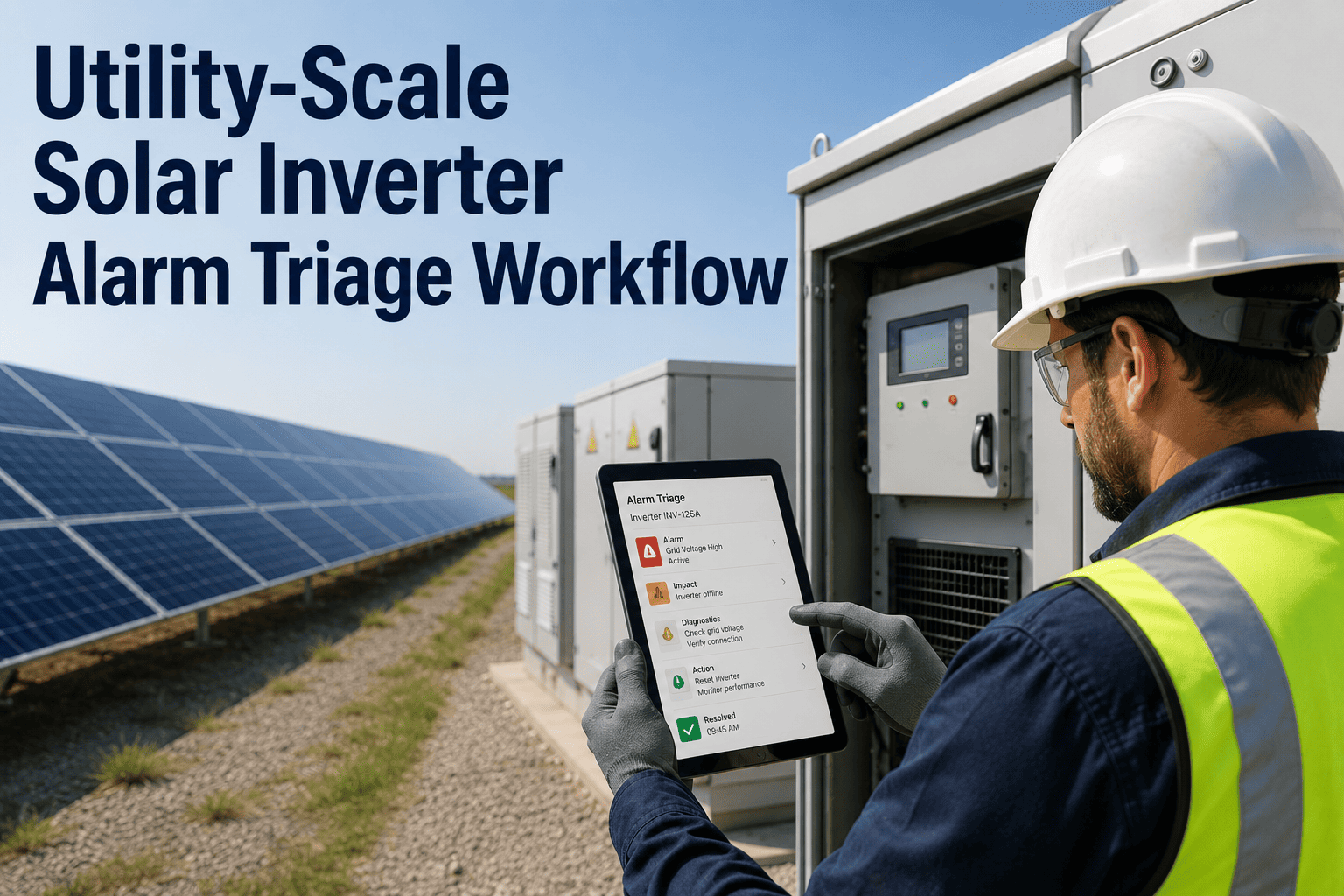
Utility-Scale Solar Inverter Alarm Triage Workflow
Prioritize inverter alarms by production impact, route corrective work orders, track warranty status, and close the loop — from fault detection to verified resolution.
Why Solar Inverter Alarms Slip Through Without a Triage System
Most solar O&M teams rely on SCADA dashboards to surface inverter faults — but SCADA monitoring and maintenance action are two completely separate workflows. The alarm fires, an operator acknowledges it, and without a mandatory corrective work order, the inverter stays faulted while the team responds to the next alert. OxMaint closes that gap by converting alarms into structured, assigned, trackable work orders at the point of fault detection.
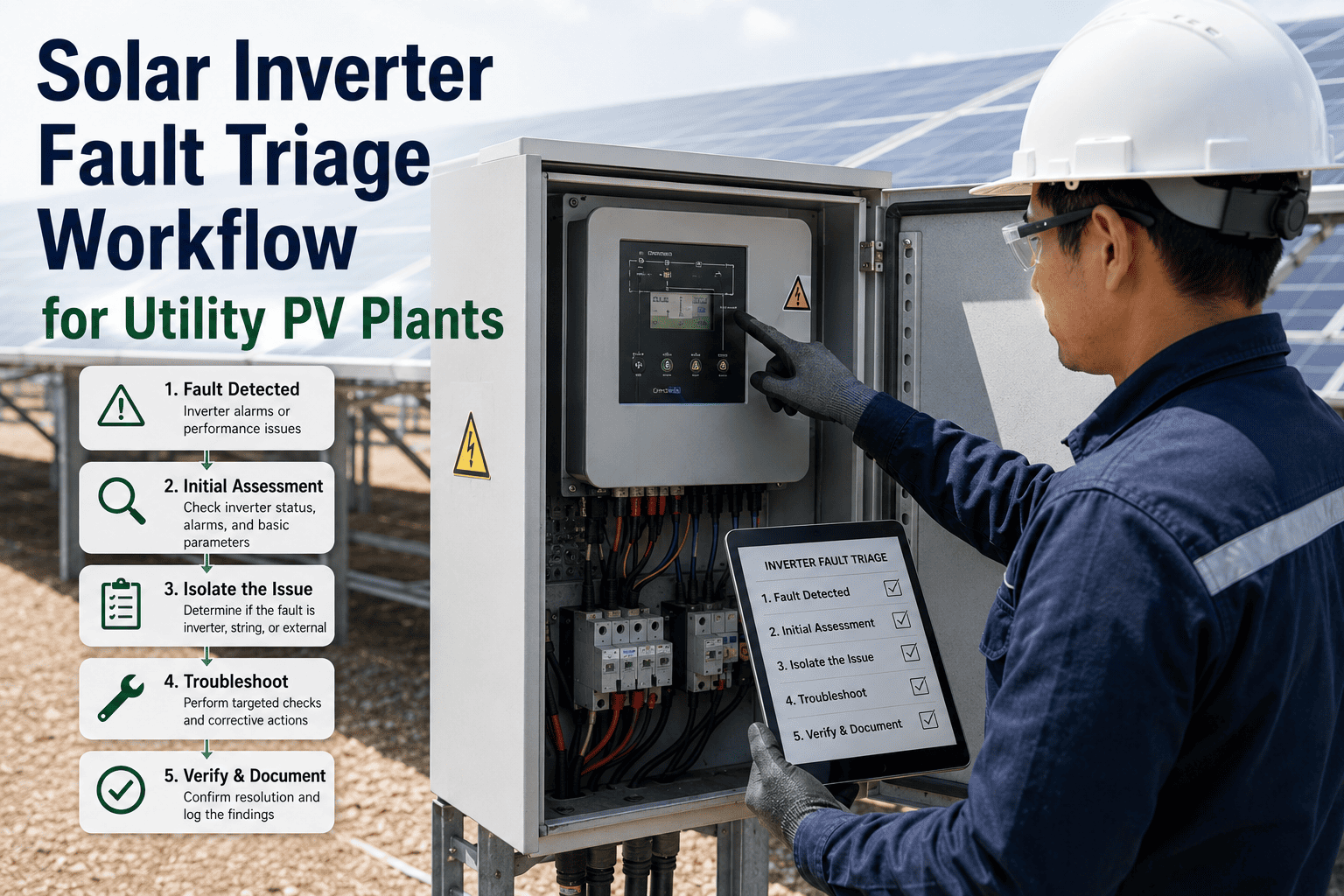
The 5-Step Inverter Alarm Triage Workflow
Not all inverter alarms require the same response speed. A 500kW central inverter offline during peak irradiance hours has a completely different urgency profile than an overnight communication fault. Here is how structured triage assigns the right response to every alarm type.
Faults classified into: critical (inverter offline, grid fault, DC arc), performance (MPPT deviation, clipping, string imbalance), warning (communication dropout, temperature high), and informational (calibration reminder, firmware update). Each class triggers a different triage path.
OxMaint calculates estimated production loss in kWh and revenue terms for each active fault based on inverter capacity, current irradiance, and time offline. A fault generating $1,200/day of lost revenue gets different dispatch priority than one generating $120/day.
Before dispatching a technician, OxMaint checks the inverter's fault history for recurring patterns and verifies current warranty status against the inverter registry. Recurring faults under warranty are flagged for OEM escalation rather than field repair — preventing warranty voiding from unauthorized interventions.
Work order dispatched to the nearest available technician with the relevant inverter model certification. The work order includes: fault history, previous corrective actions on this unit, OEM recommended procedure, spare parts required from inventory, and safety isolation requirements.
Resolution documented with root cause, parts consumed, time to restore, and technician notes. OxMaint trends fault frequency per inverter model and flags units with abnormal alarm rates for proactive assessment — catching systematic failure patterns before they become fleet-wide outages.
OxMaint converts inverter alarms into prioritized, contextualized work orders — with production impact calculations, warranty checks, and technician routing built into every fault response.
Inverter Alarm Priority Reference: What Requires Immediate Dispatch
Use this reference to evaluate whether your current alarm response protocols are properly prioritized. OxMaint applies these severity tiers automatically based on fault type and production impact.
| Alarm Type | Severity | Response Time Target | Work Order Action | Warranty Check |
|---|---|---|---|---|
| Inverter fully offline — grid fault | Critical | Within 2 hours | Emergency WO with immediate dispatch | Required before intervention |
| DC arc fault detected | Critical | Immediate shutdown + 4 hours | Safety isolation WO + corrective repair | Required — OEM notification |
| MPPT efficiency deviation greater than 5% | High | Same-day response | Scheduled WO with string analysis | Check if under performance warranty |
| Inverter temperature alarm | High | Within 4 hours | Inspection WO with thermal imaging | Relevant if cooling system covered |
| Communication dropout (single inverter) | Medium | Within 24 hours | Diagnostic WO — comms check | Not typically applicable |
| String-level production imbalance | Medium | Within 48 hours | Planned WO with IV curve trace | Check panel degradation warranty |
| Calibration reminder or firmware alert | Low | Next PM cycle | Add to existing PM work order | Not applicable |
Frequently Asked Questions
OxMaint connects solar inverter alarms to prioritized work orders — with production impact scoring, warranty verification, and technician routing — so no fault goes unactioned and no revenue loss goes untracked.