A standby generator is only as reliable as its last maintenance record — and most failures surface not during operation, but during the idle months between tests. Fuel varnishing in diesel injectors, battery sulfation, dried crankshaft seals, and coolant degradation all progress silently while generators sit waiting for a grid event that demands instant, flawless response. At power stations, the stakes are particularly high: emergency generators must start within 10 seconds and sustain full load for hours under NFPA 110 requirements, yet facilities commonly discover non-compliance only when a real outage exposes years of inadequate maintenance. Load testing, fuel sampling, battery load testing, and automatic transfer switch verification are not optional tasks — they are the operational proof that backup power will actually work. OxMaint CMMS manages generator PM schedules, tracks fuel quality data, automates load test reminders, and generates NFPA 110-ready compliance records that satisfy AHJ inspections — start building your compliance record today at app.oxmaint.ai.
Emergency Readiness · NFPA 110 · Power Station Maintenance
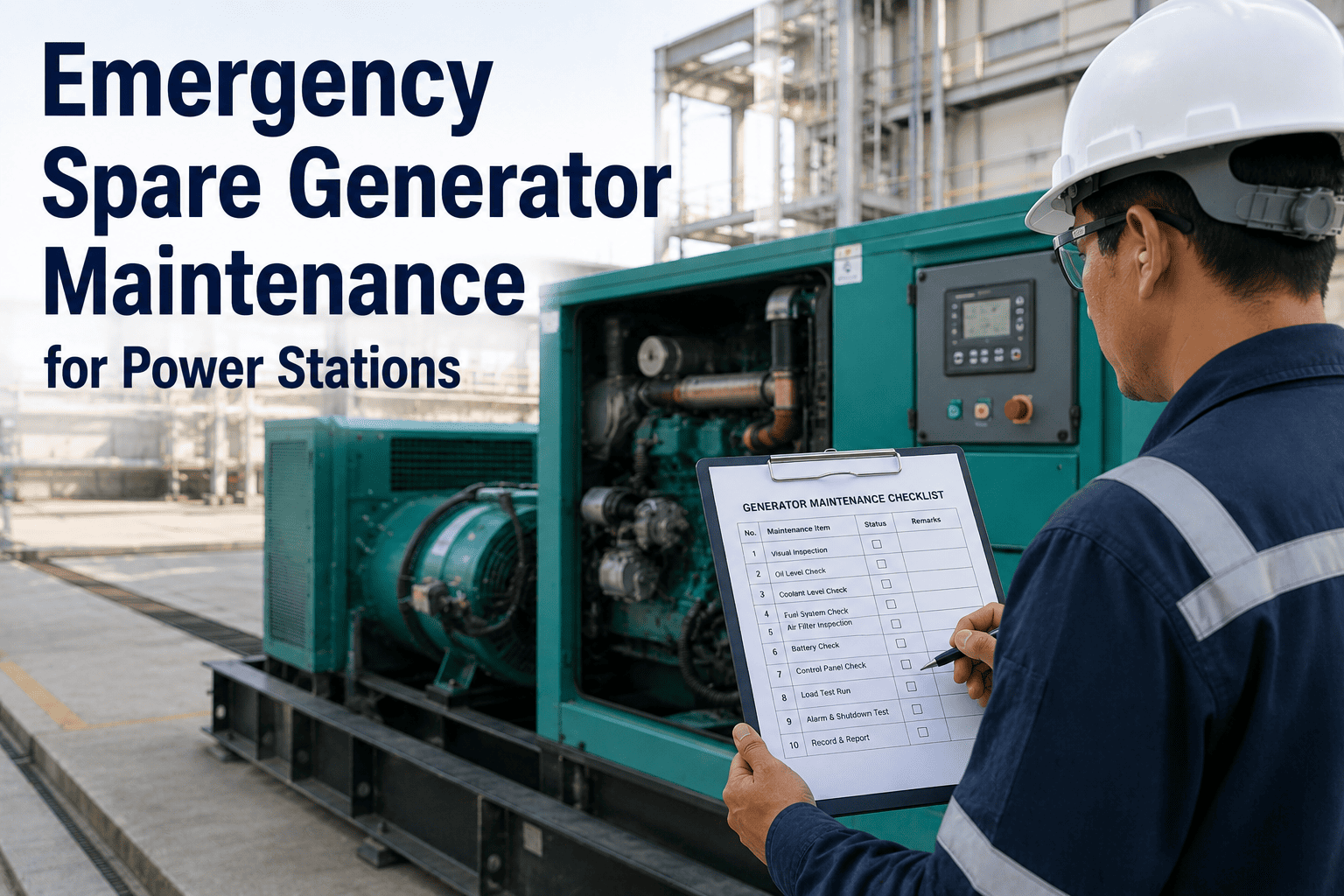
Emergency Spare Generator Maintenance for Power Stations
A structured preventive maintenance checklist covering load testing, fuel system integrity, battery inspections, transfer switch verification, and corrective work order tracking for standby generator reliability.
10 sec
NFPA 110 start-to-load requirement for emergency generators
30 min
Minimum monthly load test duration at 30%+ rated load
75%
Minimum fuel level required for emergency readiness at all times
12 mo
Maximum diesel storage before fuel quality testing is mandatory
Weekly and Monthly
Routine Readiness Checks
Routine checks confirm the generator can start and transfer load on demand. These short inspections catch the most common standby failures — dead batteries, low fuel, coolant leaks — before a grid event exposes them.
Weekly Startup and Visual Inspection
Verify generator starts and runs for 5–10 minutes — confirm no fault codes on controller, no abnormal exhaust smoke, and stable voltage and frequency output on panel meters
Frequency: Weekly · Record: Start log · Technician: Electrical Technician
Check engine oil level, coolant level, and fuel tank level — fuel level must be maintained at minimum 75% capacity for emergency readiness; log all fluid levels and top up as required
Frequency: Weekly · Record: Fluid level log · Technician: Generator Operator
Inspect for fuel, oil, and coolant leaks at engine, fuel lines, and radiator connections — evidence of any active leakage must be tagged as a deficiency with a corrective work order issued immediately
Frequency: Weekly · Record: Leak inspection log · Technician: Generator Technician
Monthly Load Test (NFPA 110)
Run generator under load for minimum 30 minutes at 30% or greater of rated kW — NFPA 110 requires documented monthly exercise under load; no-load tests are insufficient for exercising injectors and cooling systems
Frequency: Monthly · Record: Load test report with kW readings · Technician: Certified Generator Tech
Record voltage output, frequency, oil pressure, coolant temperature, and exhaust temperature during load test — compare against rated specifications and prior month baseline to detect performance degradation trends
Frequency: Monthly · Record: Performance parameter log · Technician: Electrical Technician
Verify automatic transfer switch (ATS) operation — confirm transfer from utility to generator occurs within 10 seconds of simulated utility failure; record transfer time and retransfer time after test
Frequency: Monthly · Record: ATS transfer time log · Technician: Licensed Electrician
Quarterly Service
Fuel System, Battery, and Engine Maintenance
Quarterly tasks address the failure modes that develop during idle periods — the conditions that make standby generators unreliable precisely when they are needed most.
Fuel System Integrity
Fuel sampling and quality test — draw a fuel sample and test for water content, microbial contamination (Diesel Bug), and Accelerated Stability Number; fuel stored beyond 12 months must be polished or replaced
Frequency: Quarterly · Technician: Fuel Systems Specialist
Fuel filter replacement — replace primary and secondary fuel filters per manufacturer schedule; clogged filters cause fuel starvation under load that mimics electrical faults and prevents full power delivery
Frequency: Quarterly or 250 hours · Technician: Generator Technician
Day tank level and transfer pump operation — verify day tank auto-fill system operates correctly; transfer pump failure during extended outage depletes day tank and causes generator shutdown under load
Frequency: Quarterly · Technician: Mechanical Technician
Fuel system leak check — inspect all fuel lines, tank fittings, and injector return lines for seepage; even minor diesel leakage is a fire and environmental hazard in power station environments
Frequency: Quarterly · Technician: Generator Technician
Battery and Cooling System
Battery load test — test battery under cranking load to verify it delivers adequate cold cranking amps; surface-charge voltage does not indicate cranking capacity; load test is the only reliable method to detect sulfation
Frequency: Quarterly · Technician: Electrical Technician
Battery terminal cleaning and torque verification — clean any corrosion from terminals with baking soda solution, apply anti-corrosion compound, and retorque terminal bolts to specification to ensure low-resistance connections
Frequency: Quarterly · Technician: Electrical Technician
Coolant pH and freeze point test — test coolant with test strips or refractometer; degraded coolant with low pH causes internal corrosion of cylinder liners and radiator; replace coolant when pH falls below 7.5
Frequency: Quarterly · Technician: Generator Technician
Radiator core inspection and cooling fan belt check — inspect radiator fins for debris blockage, check cooling fan belt tension and condition, verify thermostat operation; overheating is a leading cause of load test failure
Frequency: Quarterly · Technician: Mechanical Technician
Annual Full System Test
Load Bank Test and Transfer Switch Verification
Annual load bank testing under full rated load is the only method to prove a generator will sustain the power station's actual emergency load. Visual inspections and monthly no-load tests cannot detect cooling capacity limits or fuel system flow restrictions that only appear at full power.
Full Load Bank Test
Perform load bank test at 100% rated kW for minimum 2 hours — record output voltage, frequency, oil pressure, coolant temperature, and exhaust temperature every 15 minutes; any parameter deviation triggers immediate shutdown and investigation
Frequency: Annual · Record: Annual load bank test certificate · Technician: Certified Load Bank Technician
Test automatic and manual transfer switch under full load bank — verify transition from utility to generator and back occurs without load interruption exceeding specification; document transition voltage and time
Frequency: Annual · Record: Transfer switch test report · Technician: Licensed Electrician
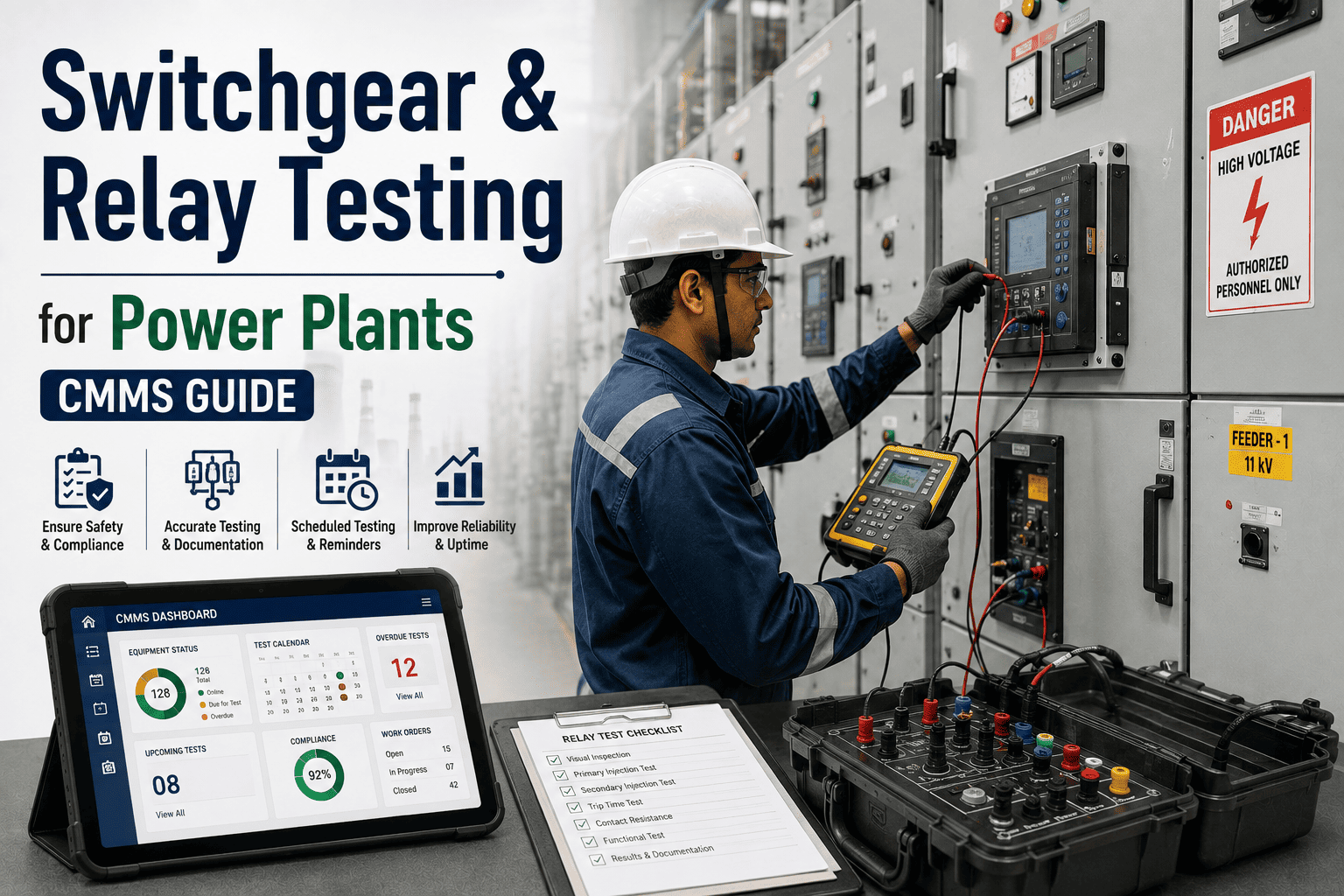
Verify all protective relay settings — overcurrent, overvoltage, undervoltage, and ground fault relays must be verified against the protection coordination study; outdated relay settings can prevent generator from connecting under fault conditions
Frequency: Annual · Record: Relay settings verification form · Technician: Protection Engineer
Complete engine service — oil and oil filter change, air filter replacement, spark plug or injector inspection per manufacturer hours-based schedule — annual service keeps engine warranty current and prevents age-related failures
Frequency: Annual or per hours · Record: Engine service record · Technician: Generator OEM Technician
Common Questions
Emergency Generator Maintenance FAQs
Why do standby generators fail during actual outages even though they pass weekly tests?
Weekly no-load tests only confirm the generator starts and produces voltage at idle. They cannot detect fuel system flow restrictions, cooling capacity limits, or battery sulfation that appears only under full load. Monthly load tests at 30%+ rated kW and annual full load bank tests are required to verify actual emergency capacity per NFPA 110. Track all results in
OxMaint.
How long can diesel fuel be stored before it degrades?
Untreated diesel degrades significantly after 6–12 months of storage — oxidation creates gum and varnish deposits that clog injectors, and microbial growth (Diesel Bug) from water condensation forms sludge that blocks fuel filters. Test fuel quarterly and treat with stabilizers; fuel exceeding 12 months storage should be polished or replaced before relying on it for emergency operation.
What does NFPA 110 require for emergency generator maintenance documentation?
NFPA 110 requires written records of all tests and inspections including weekly visual checks, monthly load tests with kW data, transfer switch operation tests, and annual full load bank tests. Records must be retained for AHJ review. Digital CMMS platforms automatically generate this documentation with technician timestamps, eliminating the paperwork burden of NFPA compliance.
How often should generator batteries be replaced?
Generator starting batteries typically require replacement every 2–3 years regardless of visual condition. Battery voltage looks normal on a surface charge but cranking capacity drops significantly as plates sulfate. Quarterly load testing with a battery load tester is the reliable way to verify cranking capacity; replacement should be proactive at the 2-year mark for critical standby applications.
How does OxMaint support emergency generator compliance at power stations?
OxMaint's emergency power module automatically schedules weekly, monthly, quarterly, and annual generator tasks, sends mobile alerts when tests are due, captures load test readings with technician sign-off, and exports NFPA 110-formatted compliance reports. Visit
app.oxmaint.ai to see how power station teams use it to eliminate missed inspections and audit failures.
Your Generator Must Work When It Matters Most
OxMaint digitizes emergency generator maintenance from weekly checks to annual load bank tests — with automated scheduling, mobile work orders, and NFPA 110 compliance records that satisfy AHJ inspectors.