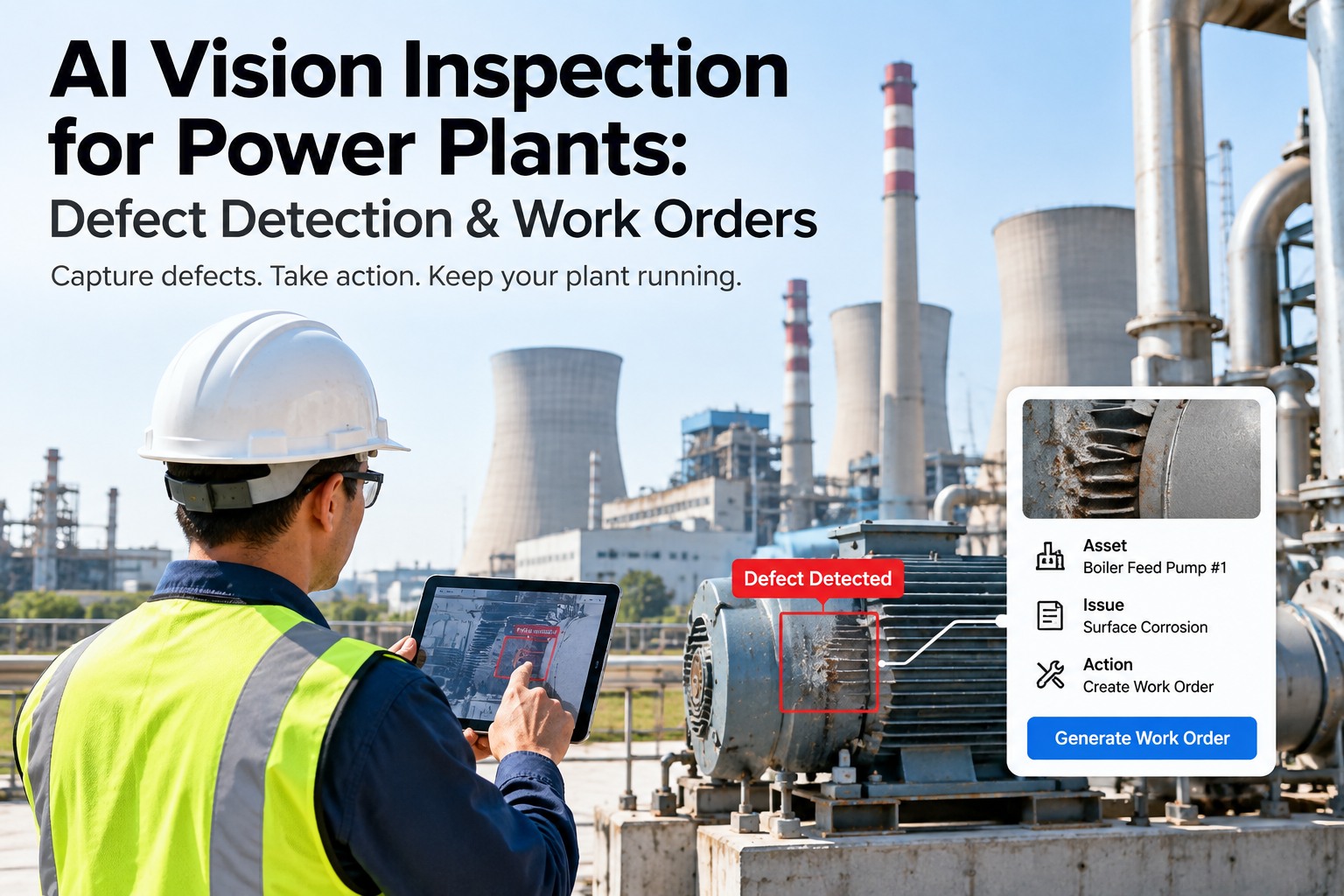
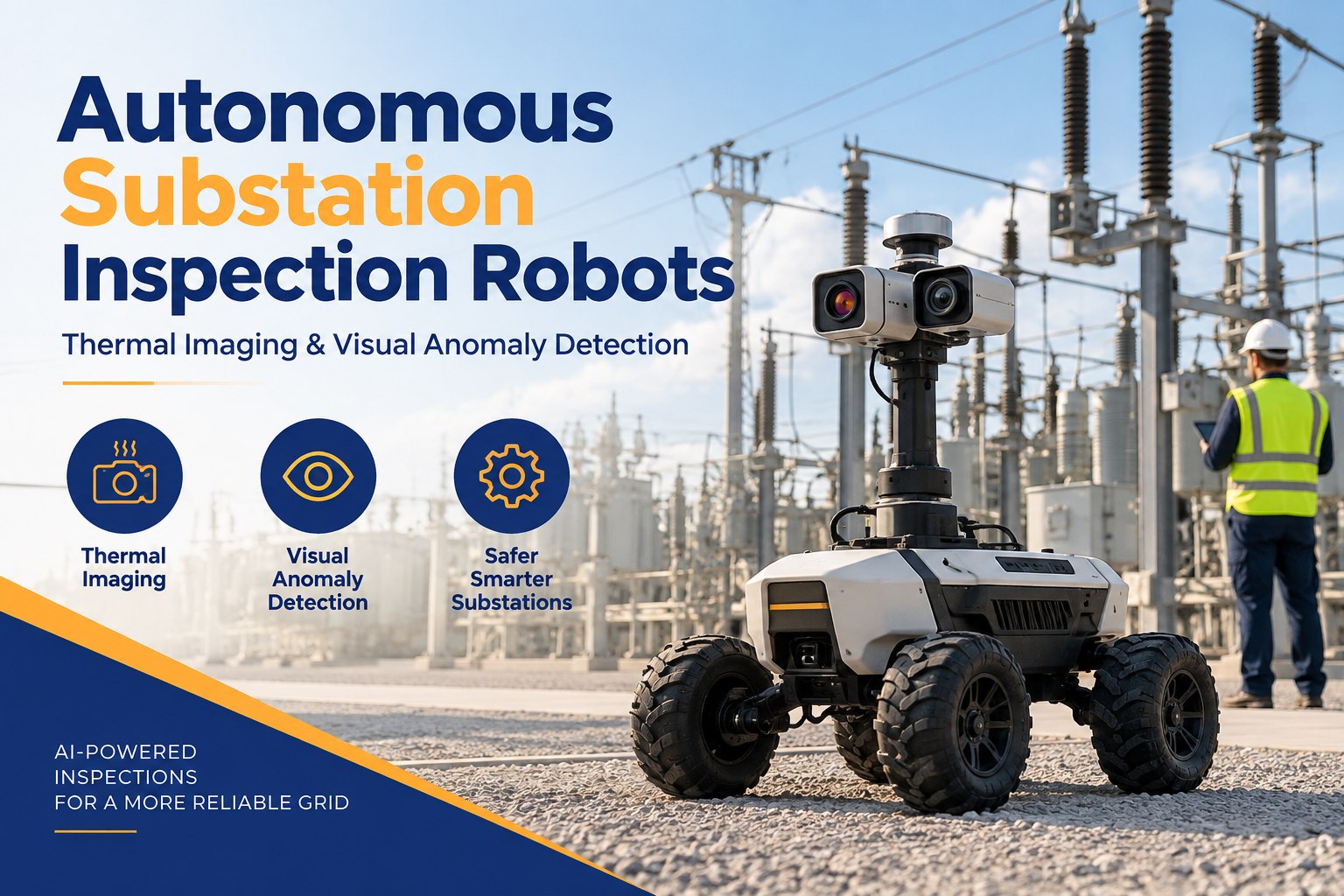
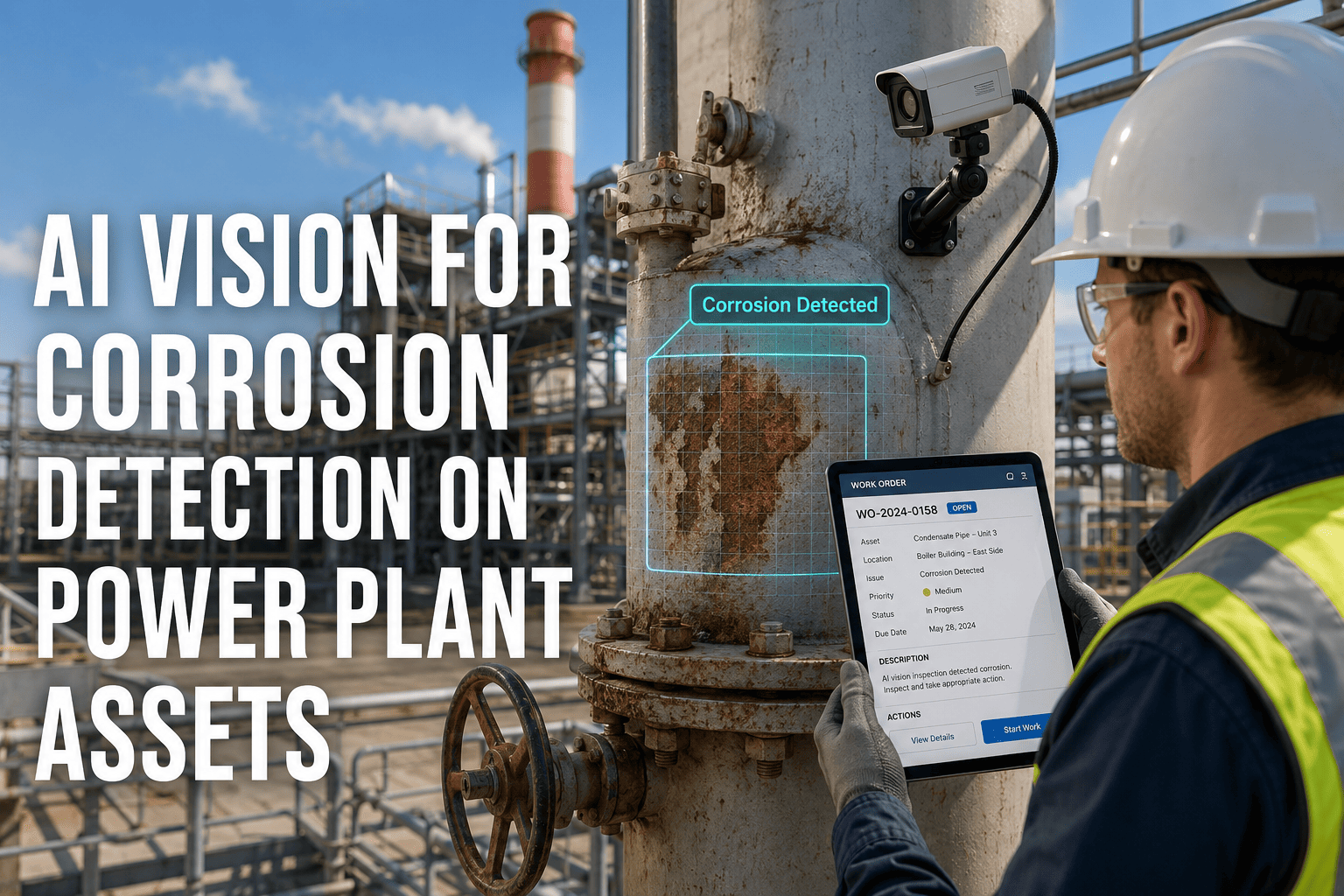
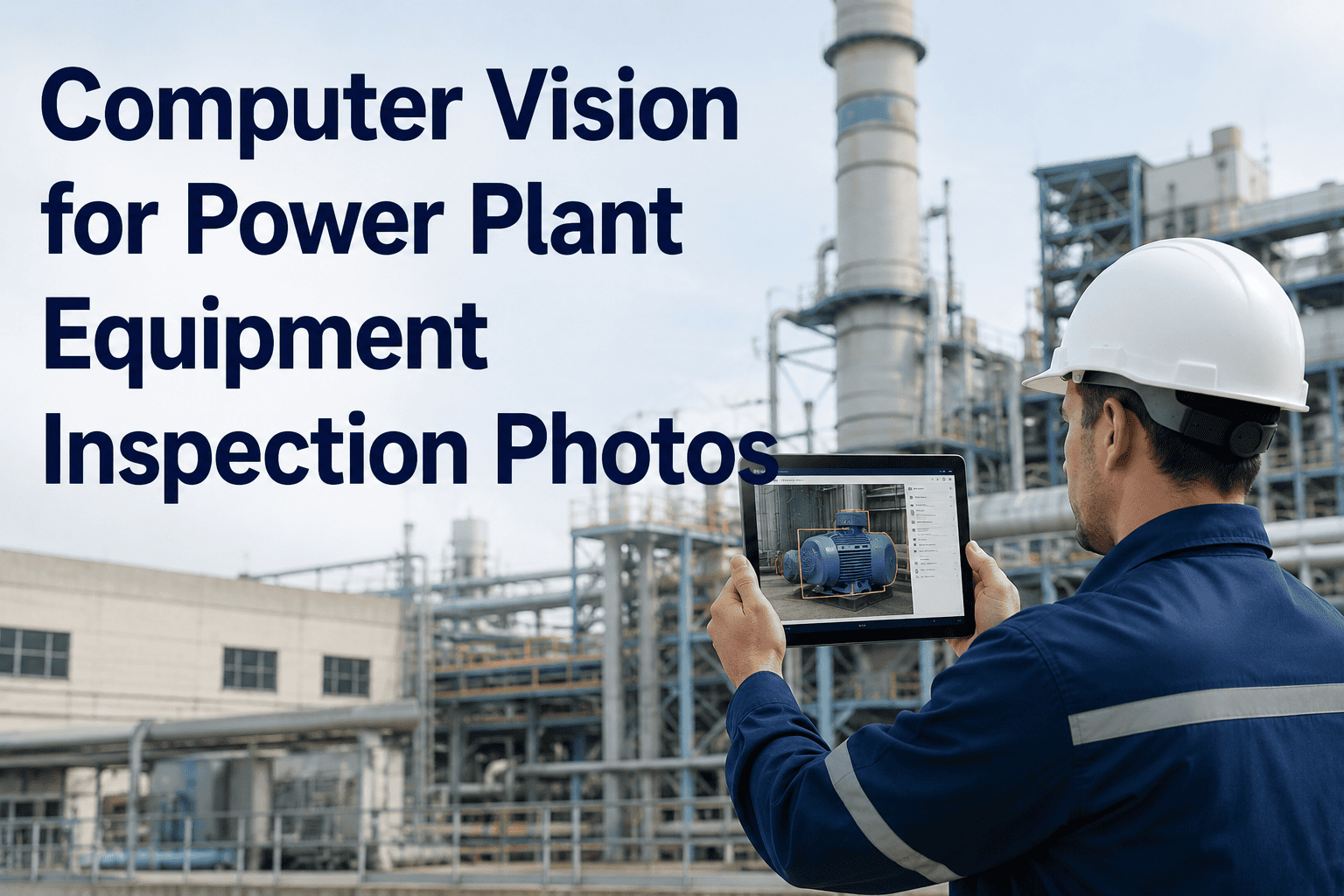
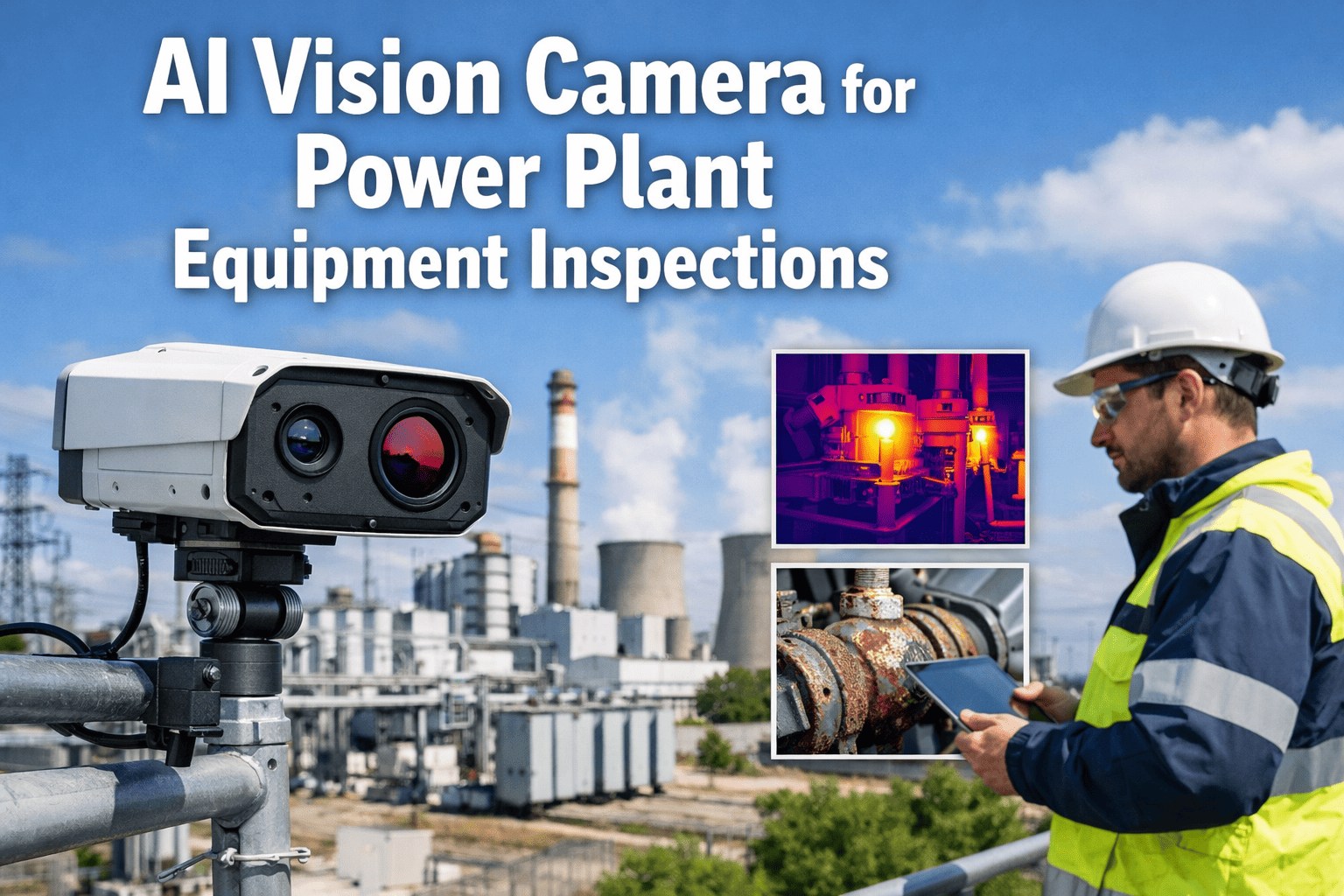
A hairline crack in a superheater tube. Early-stage pitting corrosion on a coolant pipe. A thermal hot spot growing quietly inside a switchgear panel. These defects exist for weeks — sometimes months — before a human inspector finds them. By then, the damage has compounded, the repair is larger, and the outage is longer. AI computer vision changes the timeline entirely. It reads camera and robot feeds continuously, flags anomalies the moment they form, and routes findings directly to OXmaint CMMS as prioritized work orders your team can act on before the defect becomes a failure. Sign up free on OXmaint to connect visual AI inspection data to your plant's maintenance workflow today.
Market Signal
$89.7B
projected AI Visual Inspection market size by 2033 — up from $15.5B in 2023
98.4%
classification accuracy achieved by CNN-based pitting corrosion detection on gas pipelines
50%
reduction in undetected defects when AI vision replaces manual visual inspection rounds
48ms
average inference time per frame in real-time pipeline anomaly detection systems — faster than a blink
Why Manual Inspection Fails
Human Eyes Miss What the Data Already Shows
The average power plant technician reviewing remote visual inspection footage watches hours of video to find seconds of relevant content. Research on nuclear superheater inspections documents this directly — anomaly features appear in very short segments of long footage, and identifying them requires sustained, unbroken concentration that fatigues within the hour. Manual inspection mistake rates in industrial settings range between 10% and 20%. In a power plant, that error rate isn't a quality metric — it's a risk register entry.
AI computer vision doesn't fatigue. It processes every frame at the same threshold, applies the same detection model to every image, and flags deviations that are invisible to the human eye — sub-millimeter cracks, 0.5°C thermal gradients, early-phase corrosion patterns that appear as subtle texture changes before they're visible as discoloration.
20%
of total plant revenue lost annually to poor quality and undetected defects — the documented cost of quality failures in industrial facilities
3–4%
of Gross National Product consumed by corrosion damage annually across industrial sectors worldwide
10–20%
human inspector error rate under sustained visual inspection conditions — the baseline AI is measured against
Four Defect Types AI Vision Catches That Manual Rounds Routinely Miss
Each defect category has a different visual signature, a different detection method, and a different consequence when missed. Computer vision models are trained on each independently — and OXmaint routes each finding to the right technician with the right context.
Surface Defect
Stress Corrosion Cracks
CNN models applied to nuclear superheater and boiler tube RVI footage detect crack features with mAP@0.5 of 0.80 — operating at 20-21 frames per second. Detects cracks invisible without magnification before they propagate into pressure vessel failures.
Key assets: Superheaters, Boilers, Steam Generators, Pressure Vessels
Electrochemical Degradation
Pitting Corrosion
Custom CNN trained on 576,000 pipeline images distinguishes corroded from non-corroded surfaces with 98.44% accuracy. Identifies pitting in its earliest phase — when the corrosion depth is still measurable in microns, not millimeters.
Key assets: Coolant Pipes, Heat Exchangers, Feedwater Lines, Condensers
Thermal Anomaly
Hot Spot Detection
Infrared camera feeds processed through deep learning models detect thermal gradients of 0.5°C or less — catching overheating bearings, electrical hot spots, and cooling system anomalies before they trigger alarms or cause component failure.
Key assets: Turbine Bearings, Switchgear, Generator Windings, Motor Housings
Structural Integrity
Surface Leaks and Weeps
Computer vision models trained on YOLO and Mask R-CNN architectures identify fluid weeps, staining patterns, and moisture accumulation on pipe surfaces and flanges — detecting leak initiation before visible dripping or pressure loss occurs.
Key assets: Valve Flanges, Pipe Joints, Pump Seals, Condenser Tubes
How AI Computer Vision Actually Works on Plant Equipment
The architecture is straightforward. Cameras mounted on inspection robots, fixed monitoring stations, or UAVs capture continuous image and thermal video feeds. Deep learning models — trained specifically on power plant defect patterns — analyze each frame in real time. Findings route into OXmaint as structured work orders.
1
Image Capture
RGB, thermal, and depth cameras capture continuous feeds from robot payloads, fixed mounts, or UAV passes at configured inspection frequencies.
2
AI Model Inference
CNN and transformer-based models analyze each frame in 48ms or less — classifying surface condition, thermal state, and structural integrity against trained baselines.
3
Anomaly Flagged
When deviation exceeds threshold — a crack signature, corrosion texture, thermal gradient, or leak indicator — the model classifies defect type, severity, and asset location.
4
OXmaint Work Order
The detection event creates a prioritized work order in OXmaint — pre-populated with asset ID, defect type, image evidence, and recommended action. The right technician is notified immediately.
Stop Reviewing Footage. Start Receiving Findings.
OXmaint connects AI visual inspection outputs to automated work orders, asset trend histories, and compliance records — turning image data into maintenance actions your team sees immediately on their mobile devices.
Manual Inspection vs. AI Computer Vision: Side by Side
Manual Visual Inspection
Crack in superheater tube visible on RVI footage for 40 minutes before technician catches it during 3-hour tape review session.
Early-phase pitting corrosion on coolant pipe goes undetected for 6 months. Detected when weeping begins and a supervisor notices staining during walkthrough.
Switchgear hot spot grows undetected because thermal camera images are reviewed weekly, not continuously.
Inspection record is a handwritten log entry with timestamp and technician initials. No image evidence attached. Audit requires hunting down the original notebook.
VS
AI Computer Vision + OXmaint
Same crack flagged in 48ms from the moment the camera frame is captured. Work order in OXmaint before the robot has completed its pass.
Pitting detected in week 2 by texture-change analysis on the coolant pipe camera feed. Condition-triggered work order scheduled before any visible weeping occurs.
Thermal model alerts at 0.5°C deviation. Switchgear panel hot spot flagged and maintenance triggered three weeks before it reaches operational threshold.
Every detection creates a timestamped record with image evidence, defect classification, and work order outcome — automatically available for audit without manual assembly.
AI Model Types Deployed for Power Plant Defect Detection
Different defect types require different model architectures. Modern power plant visual inspection systems deploy a layered stack — each model optimized for its detection task.
Convolutional Neural Networks (CNN)
Corrosion detection, crack classification, surface texture analysis
Backbone of industrial defect detection. ResNet, MobileNet, and DenseNet variants achieve 94–98% accuracy on power plant surface defect datasets.
YOLO Object Detection
Real-time leak detection, valve state monitoring, structural anomalies
YOLOv8 variants process pipeline and pipe joint inspection feeds at real-time speeds — detecting weeps, staining, and physical damage on moving robot camera streams.
Thermal Infrared Deep Learning
Hot spot detection, heat rate degradation, insulation failures
IR-specific CNN models trained on power plant thermal baselines detect sub-degree temperature anomalies — catching overheating motors and electrical faults in their earliest phase.
Transformer-Based Vision Models
Multi-scale defect detection, anomaly across large structural surfaces
Vision transformers capture long-range spatial dependencies — effective for detecting deformation patterns and structural anomalies across boiler walls and containment surfaces.
Power Plant Equipment Where CV Defect Detection Delivers Most
Gas Turbine Blades
Failure cost: $2.4M+
Micro-crack and thermal coating degradation detected during borescope inspection passes — weeks before blade fracture risk.
Boiler Tubes and Superheaters
Failure cost: $28M+
CNN crack detection on RVI footage with mAP@0.5 accuracy of 0.80 — automated review of footage that previously required 3+ hours of technician attention.
Coolant and Feedwater Pipelines
Failure cost: $500K–$4M
Pitting corrosion detection at 98.4% accuracy from continuous camera feeds — identification at texture-change stage, not weeping stage.
Electrical Switchgear and Panels
Failure cost: $180K–$2M
Thermal anomaly detection from IR camera feeds flags arc flash precursor conditions before protection systems trip.
Generator and Motor Housings
Failure cost: $5M+
Thermal and vibration signature imaging detects winding degradation and bearing overheating before protection relay thresholds are reached.
Frequently Asked Questions
How accurate is AI computer vision for power plant defect detection?
Accuracy varies by defect type and model architecture, but documented performance is high. CNN-based pitting corrosion detection on gas pipeline images achieves 98.44% classification accuracy. Deep learning crack detection on nuclear superheater RVI footage achieves mAP@0.5 of 0.802 with F1-score of 0.778, operating at 20-21 frames per second. Thermal anomaly models detect temperature deviations of 0.5°C or less. Compared to human inspector error rates of 10–20% under sustained inspection conditions, AI vision provides a substantial and consistent accuracy advantage.
Start free on OXmaint to begin connecting inspection outputs to your maintenance workflow.
What cameras and feeds does OXmaint accept for AI visual inspection?
OXmaint operates as an asset-agnostic CMMS that receives condition-based findings via API from any AI visual inspection platform — whether the source is a mounted fixed camera, a quadruped robot payload like ANYmal, a UAV, a borescope system, or an existing CCTV network connected to an inference engine. The platform does not require a specific camera vendor or inspection system. Any platform that can generate a structured anomaly alert with asset ID and defect classification can route findings into OXmaint work orders automatically.
Can AI vision detect defects that aren't in its training data?
Modern open-set detection frameworks and foundation models like SAM (Segment Anything Model) have significantly reduced the dependence on exhaustive defect-specific training datasets. Unsupervised anomaly detection approaches compare current images against a learned "normal" baseline — flagging any deviation, even for defect types never seen during training. This is particularly valuable for power plants where rare failure modes may not have large labeled image datasets available. OXmaint routes all anomaly flags as work orders, regardless of whether the defect type was pre-classified.
How does AI visual inspection create compliance documentation?
Every AI vision detection event that routes through OXmaint creates a timestamped, digitally signed work order record — including the source image or thermal frame, the defect classification, the asset ID, and the maintenance action taken. For NERC GADS equipment event reporting, NRC inspection requirements, and EPA compliance documentation, this generates a continuous audit trail that is complete before any audit cycle begins. Inspection records are no longer assembled manually from handwritten logs — they accumulate automatically as the AI and maintenance team work.
Book a demo to see how this works in practice.
Ready to Deploy AI Visual Inspection?
Your Cameras Are Already Watching. AI Makes Them See.
Connect computer vision defect detection outputs to automated work orders, asset trend analytics, and compliance records — and stop losing inspection findings in dashboards and footage queues no one has time to review.