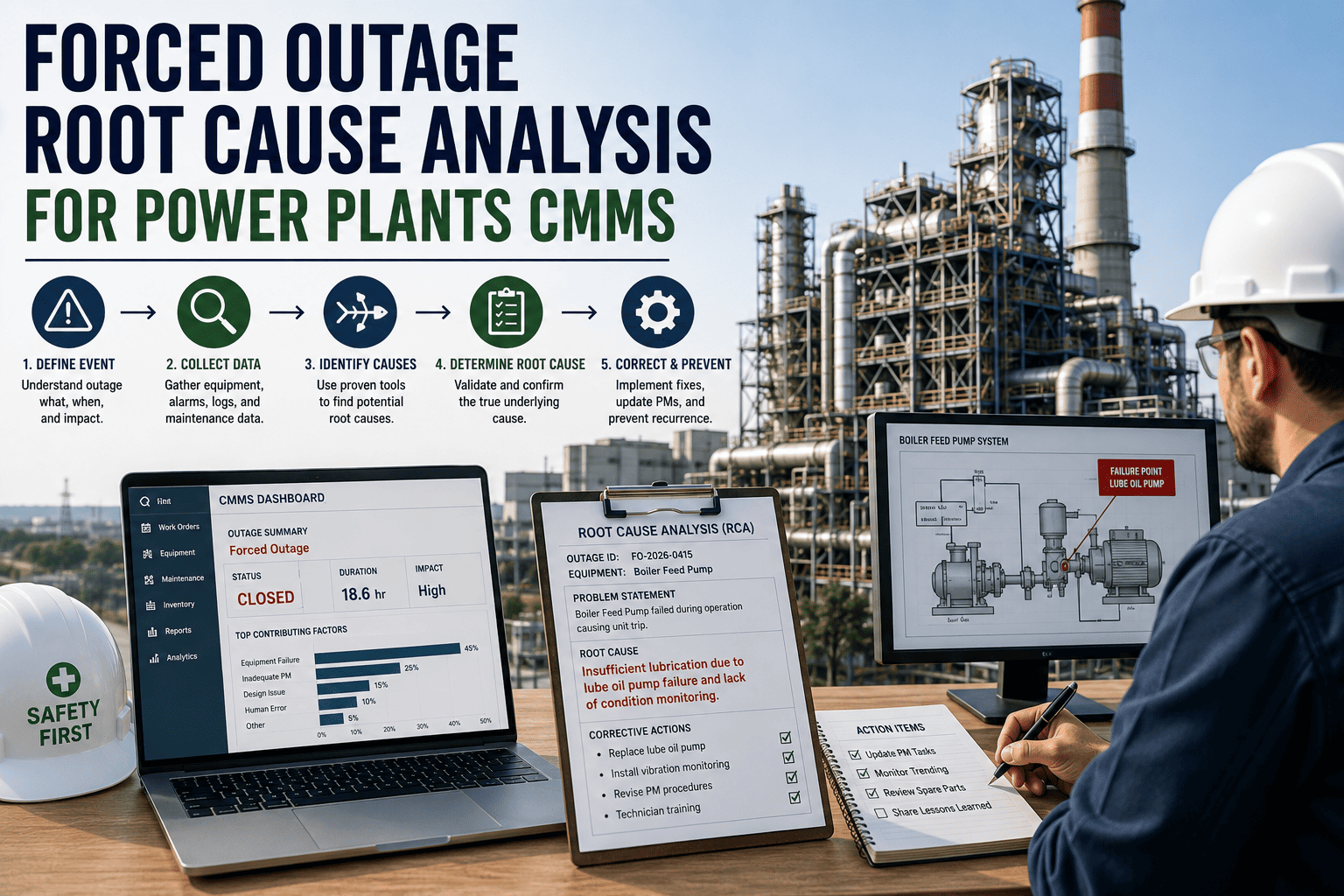
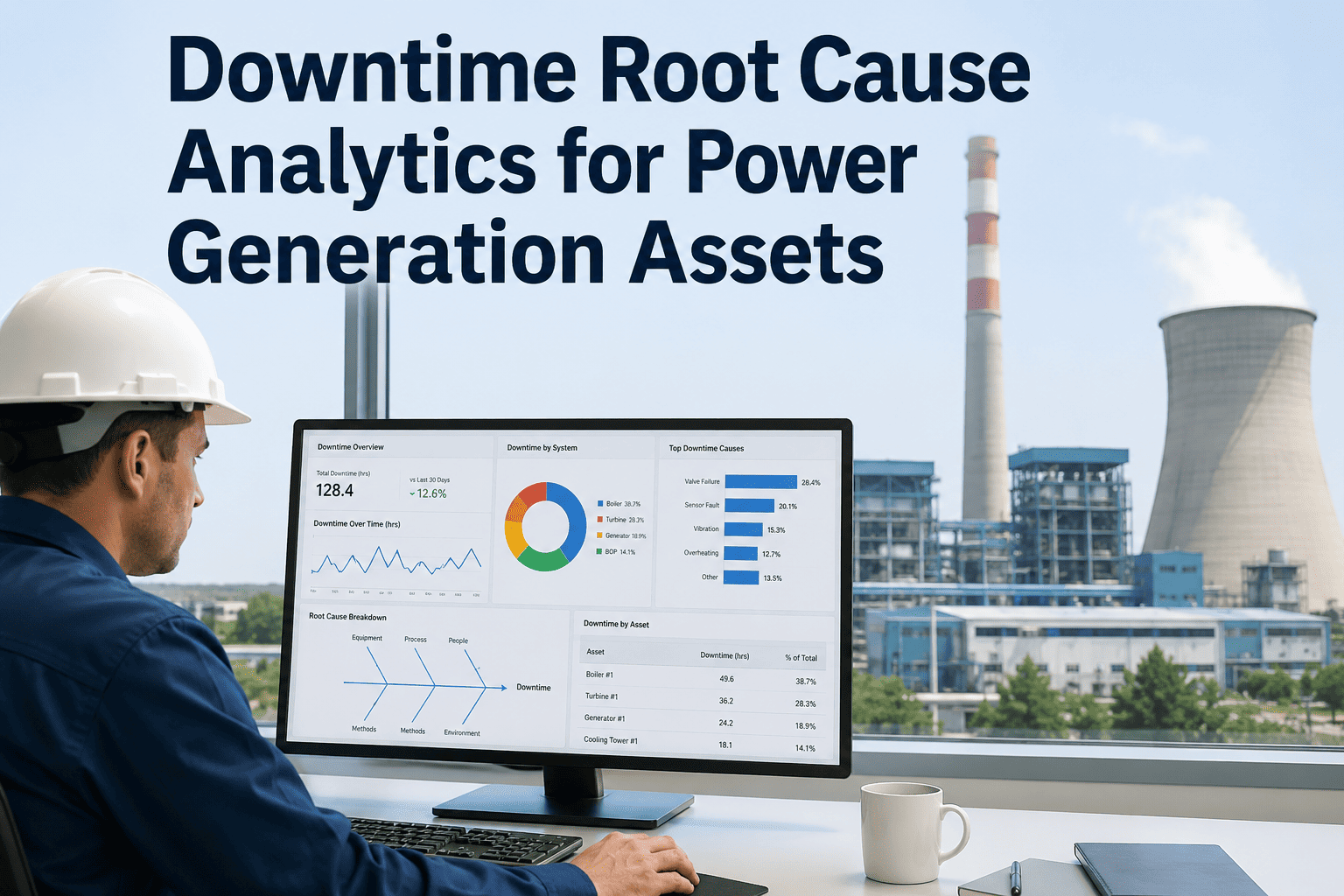
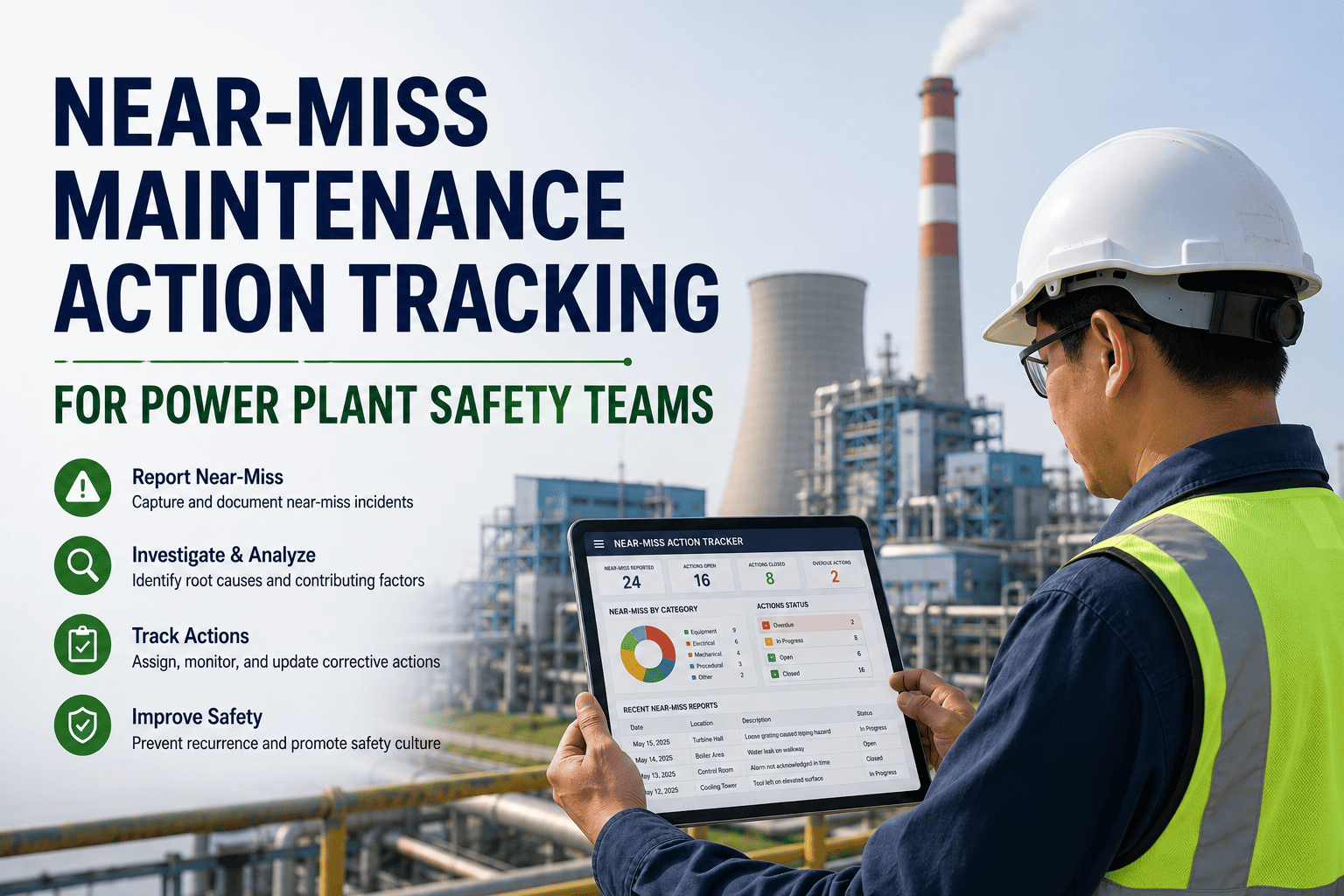
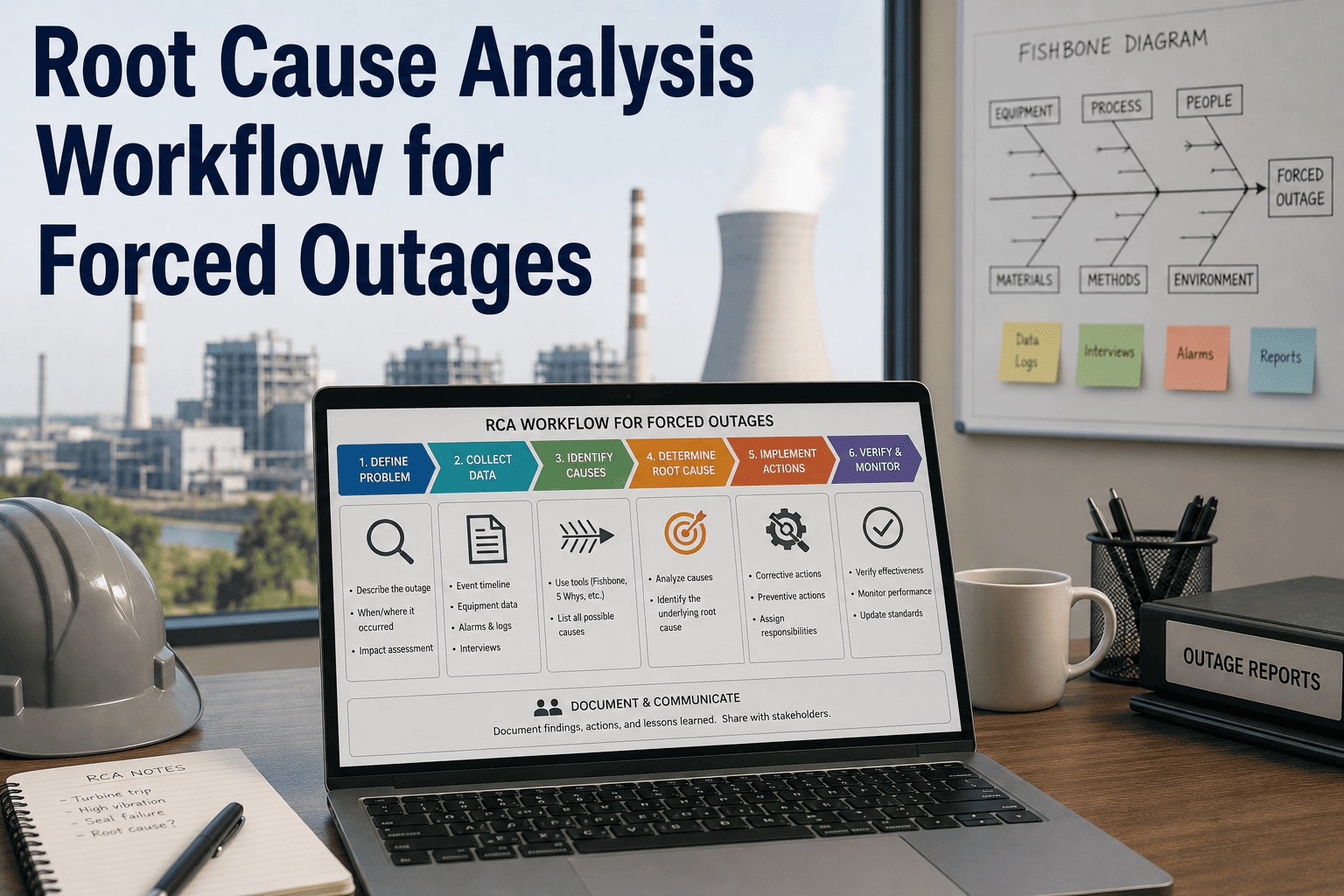
Power plants operate in one of the most unforgiving safety environments in any industry — where a single unresolved incident can cascade into equipment failure, personnel injury, regulatory shutdown, or grid disruption. Yet most generation facilities still manage safety events through disconnected spreadsheets, paper logs, and informal investigations that produce no lasting corrective action. Incident data sits in silos, root causes go unaddressed, and the same failure modes repeat year after year. OxMaint changes this entirely by giving power plant safety teams a structured, digital platform to capture every incident, conduct rigorous root cause analysis, assign and track corrective actions, and identify systemic trends before they turn into crises. If your facility is still running on reactive safety management, it is time to build a system that actually closes the loop. Sign Up Free and start your first structured incident investigation today, or Book a Demo to see how OxMaint fits your power generation operation.
Safety Management — Power Plant Operations
Incident Management & Root Cause Analysis for Power Plants
Every unresolved incident in a power plant is a future catastrophe waiting to happen. OxMaint transforms how operations teams capture, investigate, and eliminate the root causes driving safety events — before they escalate into shutdowns, injuries, or regulatory action.
70%
of power plant incidents are repeat events with the same root cause
$4.2M
average cost of a single major unplanned outage event
48hrs
average delay before formal RCA begins after a critical incident
60%
reduction in repeat incidents with structured RCA implementation
Why Power Plants Struggle with Incident Management
Most power generation facilities run on aging incident reporting systems — paper forms, disconnected spreadsheets, or generic safety apps never designed for high-stakes industrial environments. When a turbine trips at 2 AM, the last thing a shift supervisor needs is a slow, confusing reporting workflow. The result: incomplete data, delayed investigations, and corrective actions that never close.
Challenge 01
Incomplete Incident Capture
Near-misses go unreported because the process is too cumbersome. Without near-miss data, safety teams are blind to the warning signals that precede major events. Studies across utility operations show that for every serious injury, there are 300 near-miss incidents that went unlogged.
Challenge 02
No Structured RCA Process
Investigations are handed to the most senior technician available, conducted differently every time, and documented in formats that cannot be searched or compared. Patterns hiding across hundreds of past incidents remain invisible because no structured methodology connects them.
Challenge 03
Corrective Actions That Never Close
RCA findings generate action items that get assigned but never tracked. Responsibility is unclear, deadlines slip, and the same corrective measure appears in three separate reports over two years — still incomplete. The investigation exists; the fix does not.
Challenge 04
Compliance Gaps Under Scrutiny
OSHA, NERC, and NRC audits demand documented evidence of incident investigation and corrective action completion. Scattered records across email threads and shared drives cannot satisfy a regulatory reviewer — and the resulting citations carry significant financial and operational consequences.
RCA Methods Built for Power Generation
Effective root cause analysis in power plants requires methodologies matched to the complexity of the equipment and the severity of consequences. OxMaint supports the three frameworks most widely adopted by utility and generation teams.
Method 01
5 Why Analysis
Why did the generator trip?
Overtemperature protection activated
↓
Why did temperature spike?
Cooling water flow was restricted
↓
Root Cause Reached
Filter blockage missed during last PM — corrective action assigned
Best for: Equipment failures, process deviations, single-point failures
Method 02
Fault Tree Analysis
AND Gate
Protection Activated
Operator Delay
Best for: Safety-critical events, regulatory-required investigations
How OxMaint Handles the Full Incident Lifecycle
From the moment an event is reported to the moment corrective actions are verified complete, OxMaint keeps every stakeholder aligned and every record audit-ready. No incident falls through the cracks.
1
Instant Incident Capture
Field teams log incidents, near-misses, and unsafe conditions from any mobile device in under 90 seconds. Structured forms ensure every critical data point is captured at the source — location, time, equipment involved, personnel, and initial severity classification.
2
Automatic Escalation & Assignment
Severity thresholds trigger automatic notifications to the right investigation leads. High-severity events immediately alert department heads and safety officers. No manual routing, no missed alerts, no guesswork about who owns the investigation.
3
Structured RCA Investigation
Investigators work through guided 5 Why, fishbone, or fault tree templates directly within OxMaint. Every finding, contributing factor, and root cause determination is timestamped and linked to the originating incident record — creating a complete, reviewable audit trail.
4
Corrective Action Tracking
Every RCA output generates tracked corrective actions with assigned owners, due dates, and completion criteria. Automatic reminders prevent deadline slippage. Managers see real-time completion status across all open actions on a single dashboard.
5
Trend Analysis & Reporting
OxMaint aggregates incident data across time, location, equipment type, and cause category. Safety teams identify recurring patterns before they become serious events. One-click compliance reports satisfy OSHA, NERC, and internal audit requirements instantly.
Measured Outcomes for Power Generation Facilities
Power plants that implement structured incident management and RCA workflows with OxMaint see consistent, measurable improvements across safety performance, compliance readiness, and operational reliability within the first two quarters.
Before OxMaint
70%
of incidents recur due to unresolved root causes
After OxMaint
28%
recurrence rate — 60% reduction in repeat events
Before OxMaint
48hrs
average time to begin formal investigation
After OxMaint
4hrs
average time to structured RCA initiation
Before OxMaint
34%
corrective action completion rate within deadline
After OxMaint
91%
on-time corrective action completion rate
Before OxMaint
6hrs
to compile a single compliance audit report
After OxMaint
8min
to generate a complete, formatted audit report
Platform Capabilities Designed for Power Plant Safety Teams
OxMaint's incident management module is built around the operational reality of power generation — shift-based teams, complex equipment hierarchies, multi-site operations, and strict regulatory obligations.
Near-Miss Reporting
Mobile-first near-miss capture with structured fields, photo attachment, and GPS location tagging. Reduces reporting friction so field teams actually submit events they would otherwise let slide.
AI-Assisted RCA
OxMaint analyzes historical incident records and surfaces similar past events, common contributing factors, and corrective actions that resolved comparable failures — giving investigators a head start on every new RCA.
Multi-Site Incident Dashboard
Aggregate safety performance across every generation unit, substation, or facility in your portfolio. Compare incident rates, open corrective actions, and RCA completion status across sites in a single view.
Regulatory Report Builder
Pre-built report templates aligned to OSHA 300/300A, NERC reliability standards, and NRC reporting requirements. Generate compliant documentation without reformatting or manual data assembly.
Severity Classification Engine
Automatically classifies incidents by severity based on configurable criteria — equipment type, personnel involvement, environmental impact, and production consequence — ensuring every event receives the right level of investigation response.
Safety Trend Analysis
Rolling trend reports identify whether incident rates, specific cause categories, or equipment-related events are increasing or decreasing month over month. Spot deteriorating safety performance before it becomes a crisis.
We had years of incident reports that were completely useless because they were all in different formats with no structured cause analysis. OxMaint gave us a consistent investigation framework across all three of our plants — and within six months we had identified four systemic equipment issues we had no idea were connected.
— Safety Director, Combined Cycle Power Generation Facility
The Near-Miss Problem No Power Plant Can Afford to Ignore
Heinrich's Safety Triangle — foundational to industrial safety management — establishes that for every major injury in a workplace, there are 29 minor injuries and 300 near-miss incidents. In power generation, where the consequences of major events include fatalities, equipment destruction, and grid disruption, near-miss data is the single most valuable safety asset a facility can collect.
1
Major Incident — Equipment damage, injury, or outage
29
Minor Incidents — Recorded but rarely fully investigated
300
Near-Misses — The warning signals that prevent major events when captured
OxMaint's near-miss reporting workflow makes submitting a near-miss event as fast as sending a text message. When reporting is easy, reporting culture improves. When near-miss data accumulates, patterns emerge. When patterns surface, root causes get addressed before anyone gets hurt. Sign up for OxMaint and build a near-miss reporting culture that actually works.
Ready to eliminate repeat incidents?
Give Your Power Plant a Safety Management System That Closes the Loop
OxMaint connects incident capture, structured RCA investigation, corrective action tracking, and trend analysis in one platform built for power generation. Every incident becomes a learning event. Every root cause gets resolved. Every audit becomes a formality.
Frequently Asked Questions
How does OxMaint support regulatory compliance for power plants?
OxMaint maintains a complete, timestamped audit trail of every incident, investigation, and corrective action. Pre-built report templates cover OSHA 300/300A logs, NERC reliability reporting requirements, and NRC event documentation standards. Auditors receive complete documentation without manual preparation.
Can OxMaint handle multi-unit or multi-site power plant operations?
Yes. OxMaint supports unlimited facilities, generation units, and organizational hierarchies within a single account. Safety managers can view incident data for a single asset, a single plant, or the entire portfolio — filtered by site, equipment type, severity, or time period.
What RCA methodologies does OxMaint support?
OxMaint supports 5 Why analysis, Fishbone (Ishikawa) diagrams, and Fault Tree Analysis templates. All three are configurable to match your facility's investigation standards. Custom investigation templates can also be built for specialized equipment or regulatory requirements.
How quickly can a power plant team get up and running?
Most facilities are capturing incidents and running their first RCA investigations within one week of account setup. OxMaint's implementation team provides onboarding support, template configuration, and training for safety coordinators and field teams.
Book a demo to see a live walkthrough tailored to your operation.
Does OxMaint integrate with existing plant CMMS or ERP systems?
OxMaint connects with leading CMMS and asset management platforms, allowing incident records to link directly to equipment records, maintenance histories, and work orders. This integration eliminates duplicate data entry and gives investigators full equipment context during RCA.
How does AI-assisted RCA work in OxMaint?
When an investigator begins a new RCA, OxMaint's AI scans historical incident records for similar events, matching on equipment type, location, failure mode, and cause category. It surfaces relevant past investigations, successful corrective actions, and recurring contributing factors — so investigators start informed, not from scratch.