Power plant maintenance teams are under constant pressure to reduce downtime, extend equipment life, and cut costs — all at the same time. IoT sensor integration makes all three possible by giving you real-time visibility into the health of every critical asset on your plant floor. From vibration anomalies in turbines to overheating bearings in boiler feed pumps, the right sensors catch failures weeks before they occur, giving your team time to plan, prioritize, and act. This guide walks you through every aspect of deploying IoT sensors in a power plant environment — from sensor types and asset coverage to seamless integration with your CMMS. Ready to see how it works in your plant? Book a demo with our team and get a personalized walkthrough.
Your Power Plant Has Hundreds of Failure Points.
Most Go Undetected Until It's Too Late.
IoT sensors change that. Real-time data from vibration, temperature, pressure, and acoustic sensors — fed directly into your CMMS — lets you predict failures before they happen, not react after they cost you millions.
Traditional Maintenance Is Flying Blind
Reactive maintenance waits for breakdowns. Calendar-based PM ignores actual equipment condition. Neither approach gives you the one thing you need most: early warning.
Reactive Maintenance
Equipment fails. You scramble. Emergency repairs, unplanned downtime, and replacement parts at premium prices. Average incident cost: $400K–$2M.
Calendar-Based PM
Maintenance happens on schedule, whether needed or not. Wastes resources on healthy equipment. Misses wear on overworked assets between scheduled windows.
IoT Predictive Maintenance
Sensors continuously stream health data. AI detects anomalies weeks before failure. Maintenance is scheduled precisely when needed — no sooner, no later.
4 Sensors Every Power Plant Needs
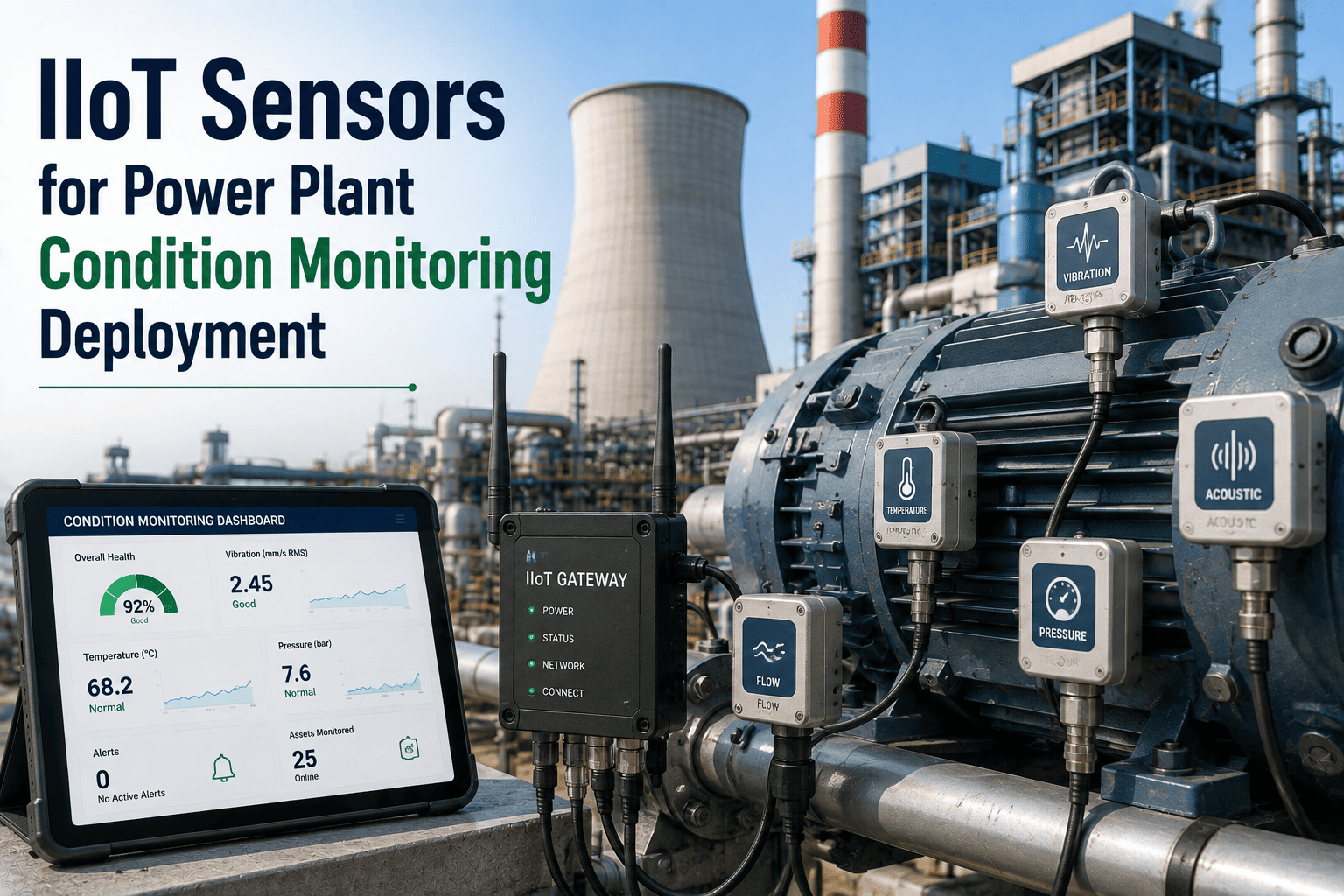
Each sensor type captures a different failure signature. Together, they create a complete picture of equipment health that no single data point can provide.
Vibration Sensors
Detect bearing faults, misalignment, imbalance, and gear tooth wear through frequency analysis. Subtle changes in vibration amplitude or harmonic patterns appear weeks before a catastrophic failure.
Temperature Sensors
Overheating is the silent killer of industrial equipment. RTDs and thermocouples monitor bearings, windings, and lubrication systems, confirming whether anomalies detected by vibration sensors are mechanical or thermal in nature.
Pressure Sensors
Pressure deviations in steam lines, hydraulic systems, and cooling circuits signal leaks, blockages, or component wear. Continuous monitoring prevents dangerous overpressure events and catches slow-developing leaks before they escalate.
Acoustic Emission Sensors
Detect ultrasonic signatures from cavitation in pumps, air and steam leaks, and crack propagation in structural components. These sensors pick up failure signals that vibration sensors can miss entirely — especially in slow-speed equipment.
From Raw Signal to Maintenance Action
Data alone doesn't prevent failures. It's what happens to that data between the sensor and your maintenance team that makes the difference.
Sense
IoT sensors mounted on critical assets continuously stream vibration, temperature, pressure, and acoustic data — 24 hours a day, 7 days a week.
Transmit
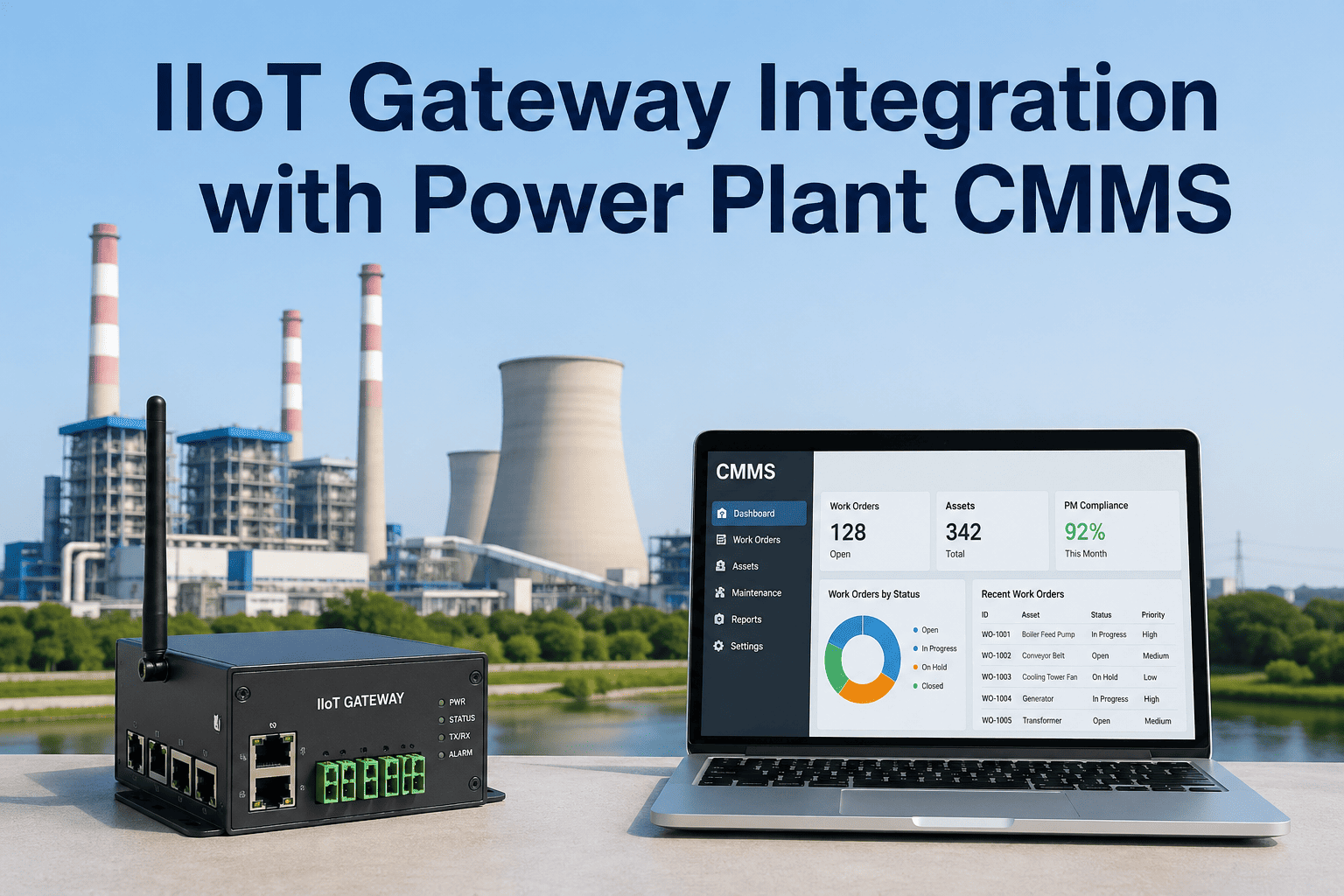
Data flows via LoRaWAN, Wi-Fi, or wired connections to edge gateways, then up to cloud analytics — with AES-128 encryption protecting every packet.
Analyze
AI algorithms cross-correlate multi-sensor data, detect anomaly patterns, and calculate failure probability scores — filtering noise from real warning signals.
Act
OxMaint CMMS automatically generates work orders, notifies technicians, and schedules maintenance at the optimal time — integrated into your existing workflow.
Which Plant Assets Benefit Most
Not all assets carry equal risk. Prioritize sensor deployment on equipment where failure impact is highest and early detection creates the most value.
Where OxMaint Turns Sensor Data into Action
Sensors tell you something is wrong. OxMaint tells your team exactly what to do about it — automatically generating work orders, checklists, and parts requests.
Live Sensor Dashboards
Real-time health scores for every monitored asset, updated continuously from sensor streams. One glance tells you which equipment needs attention today.
Threshold-Based Alerts
Configure vibration, temperature, or pressure thresholds per asset. When sensor readings cross limits, OxMaint instantly notifies the right technician and creates a work order.
Auto Work Order Generation
Sensor anomaly detected? OxMaint creates a complete work order with task lists, required parts, reference documents, and priority classification — no manual input needed.
Trend & Wear Analysis
Track sensor readings over time to visualize degradation curves. Predict exactly when a bearing, seal, or component will need replacement — months in advance.
Mobile Technician App
Field technicians receive sensor-triggered work orders on their phones, complete digital checklists, and log readings on-site — with photo and timestamp documentation.
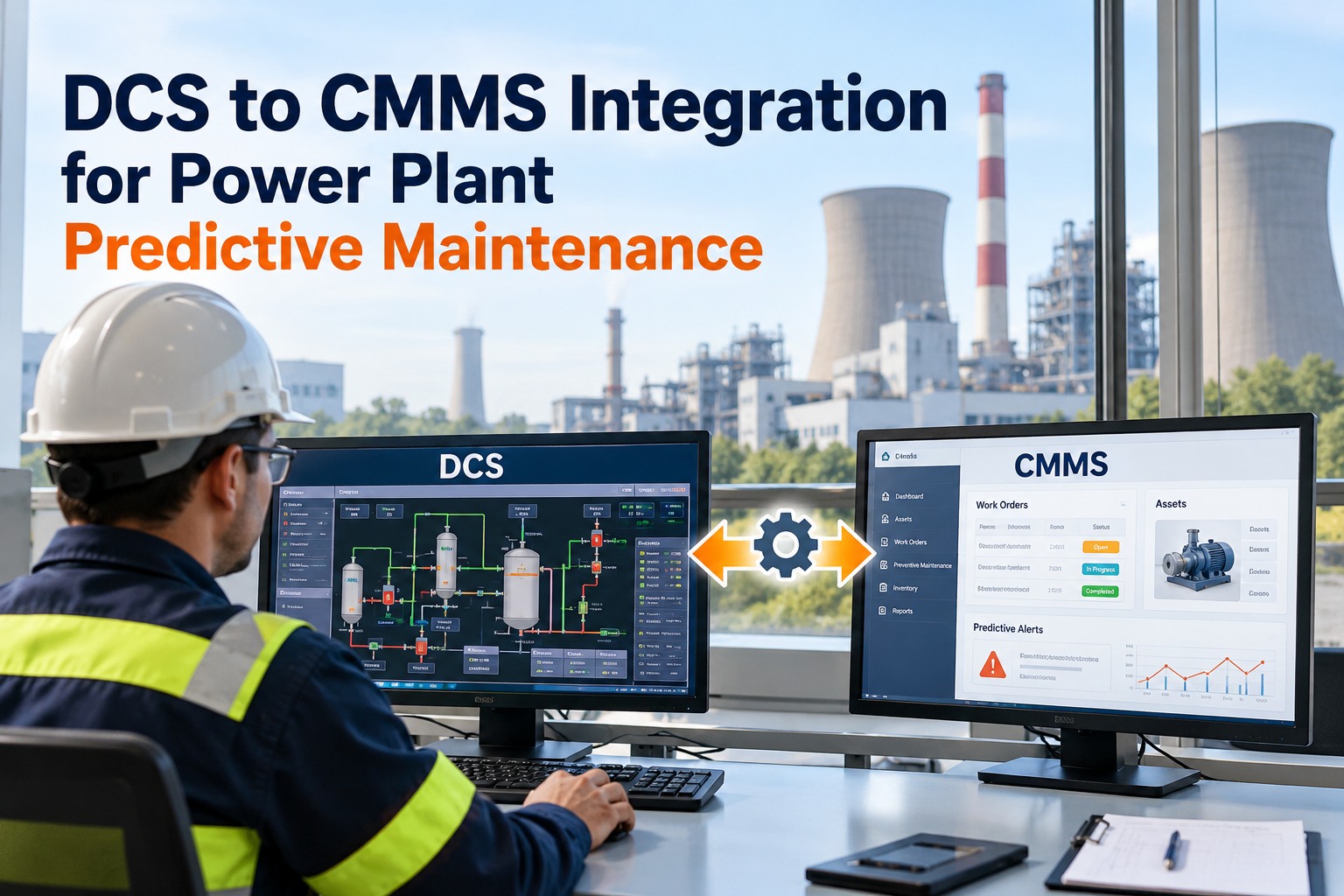
SCADA & Historian Integration
OxMaint connects with your existing plant historian and SCADA systems, pulling sensor data automatically without requiring manual imports or parallel data entry.
What IoT-Connected Maintenance Delivers
Maintenance costs reduced through elimination of unnecessary PM and prevention of emergency repairs
Equipment uptime improvement when sensor data replaces calendar-based scheduling
Data extraction reduced from multi-day manual process to a 5-minute automated job
Energy efficiency improvement from optimized operations based on real sensor feedback
Deploy in 4 Weeks, Not 4 Months
The biggest barrier to IoT adoption is complexity. OxMaint's guided onboarding eliminates that barrier with a structured rollout that delivers results fast.
Pilot Asset Selection
Identify 3–5 high-risk assets for initial sensor deployment. Define baseline operating parameters — normal vibration ranges, temperature limits, pressure specs — for each.
Sensor Mounting & Connectivity
Install wireless IoT sensors on selected assets. Configure gateway connectivity (LoRaWAN or Wi-Fi). Verify data streams are flowing cleanly to the OxMaint platform.
Threshold Configuration & Alerts
Set alert thresholds per asset based on OEM specs and historical data. Configure work order routing so the right technician receives the right alert for each asset type.
Team Training & Go-Live
Train maintenance staff on the mobile app and dashboard. Go live with automated work order generation. Begin tracking sensor data trends and refining alert thresholds.
Frequently Asked Questions
Can IoT sensors work with our existing plant historian or SCADA?
Yes. OxMaint integrates with major plant historians and SCADA systems including OSIsoft PI, Wonderware, and Ignition. Data flows automatically without manual export or import workflows.
How do wireless sensors handle harsh industrial environments?
Industrial IoT sensors are rated IP67 or IP68 for dust and moisture resistance, operate across wide temperature ranges, and are certified for use in hazardous zones (Class I, Div I). LoRaWAN connectivity extends up to 100 meters from the gateway with range extenders available for larger plants.
What is the typical payback period for IoT sensor deployment?
Most plants recover their full IoT investment within 6–12 months. The ROI calculation is straightforward: preventing even a single unplanned turbine or pump failure — which typically costs $400K–$2M — exceeds the cost of a full plant-wide sensor deployment.
How many sensors does a typical power plant need to start?
A practical pilot program typically begins with 10–20 sensors on the highest-risk assets: steam turbines, boiler feed pumps, and transformers. This provides immediate value while your team learns the system before scaling to full-plant coverage.
Does OxMaint handle the sensor data security?
OxMaint uses AES-128 encryption for all sensor data transmission and stores data on secured cloud infrastructure with role-based access controls. All data pipelines meet industrial cybersecurity standards for critical infrastructure.
Can we add sensors to older legacy equipment?
Absolutely. Wireless IoT sensors are designed specifically for retrofitting onto legacy assets without any wiring changes or modifications to existing control systems. If the machine is running, a sensor can be mounted on it.
Stop Reacting. Start Predicting.
Join power plants worldwide using OxMaint's IoT-connected CMMS to detect failures early, reduce maintenance costs, and keep generation running without interruption.
Typical setup time: 4 weeks. Average ROI realized: within 6 months.