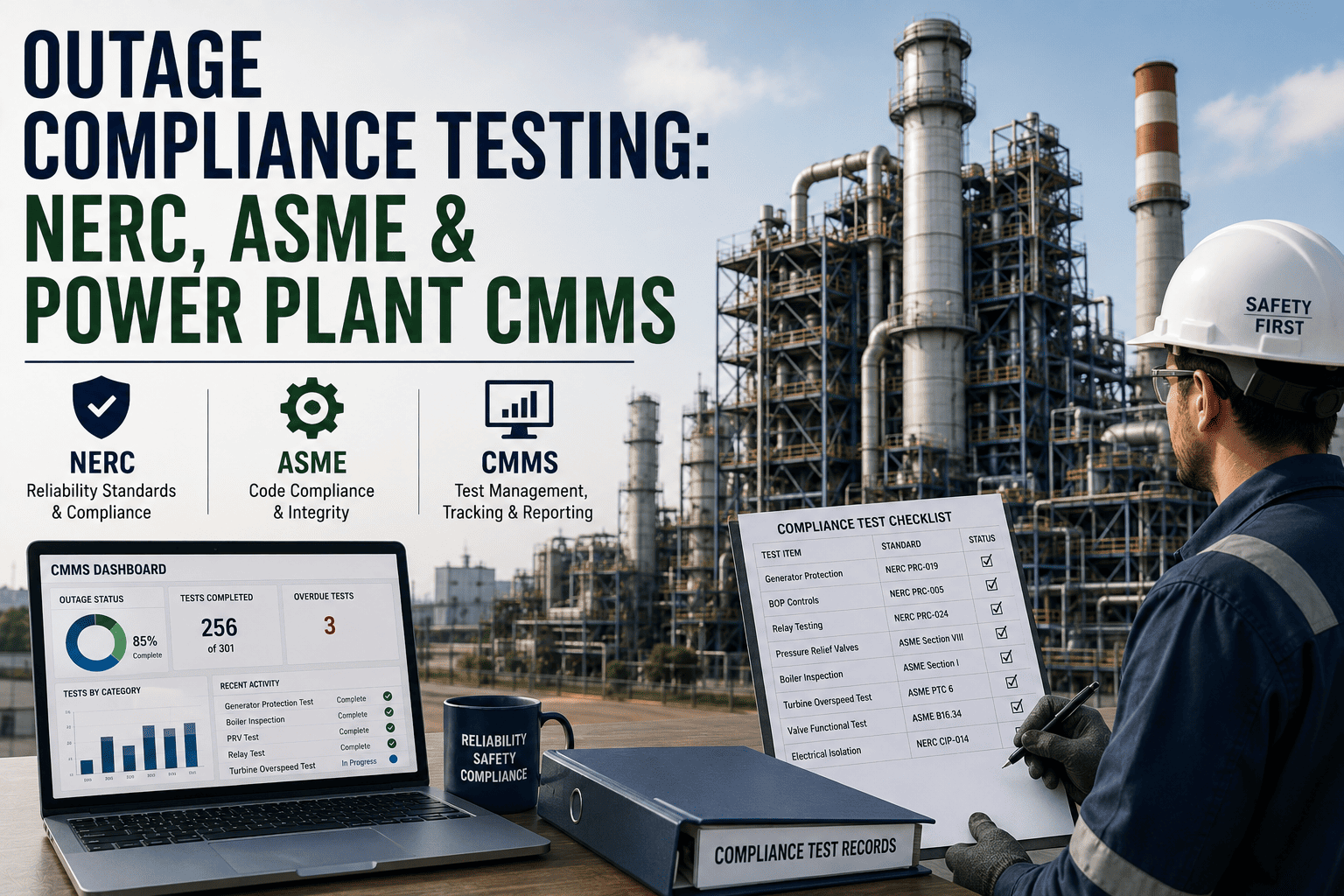
Every regulated power plant is sitting on a ticking compliance clock — CEMS calibration windows, RATA deadlines, SCR catalyst inspections, ESP rapper cycles, baghouse differential pressure checks, and scrubber pH rounds all running on different schedules, across different systems, tracked by different people. When one deadline slips, a notice of violation follows. The problem isn't that plant teams don't know what needs to be done — it's that there's no single system holding every deadline, every equipment record, and every technician accountable in one place. A compliance maintenance calendar integrated with CMMS changes that: auto-generating every inspection task from permit conditions, sending alerts 30 days before each RATA, and stamping every completed task as a permit-linked audit record. This is how plants go from scrambling before EPA audits to passing them without preparation. Start managing your emissions compliance calendar on OxMaint.
Environmental Compliance · CEMS · SCR · ESP · Baghouse · Scrubber
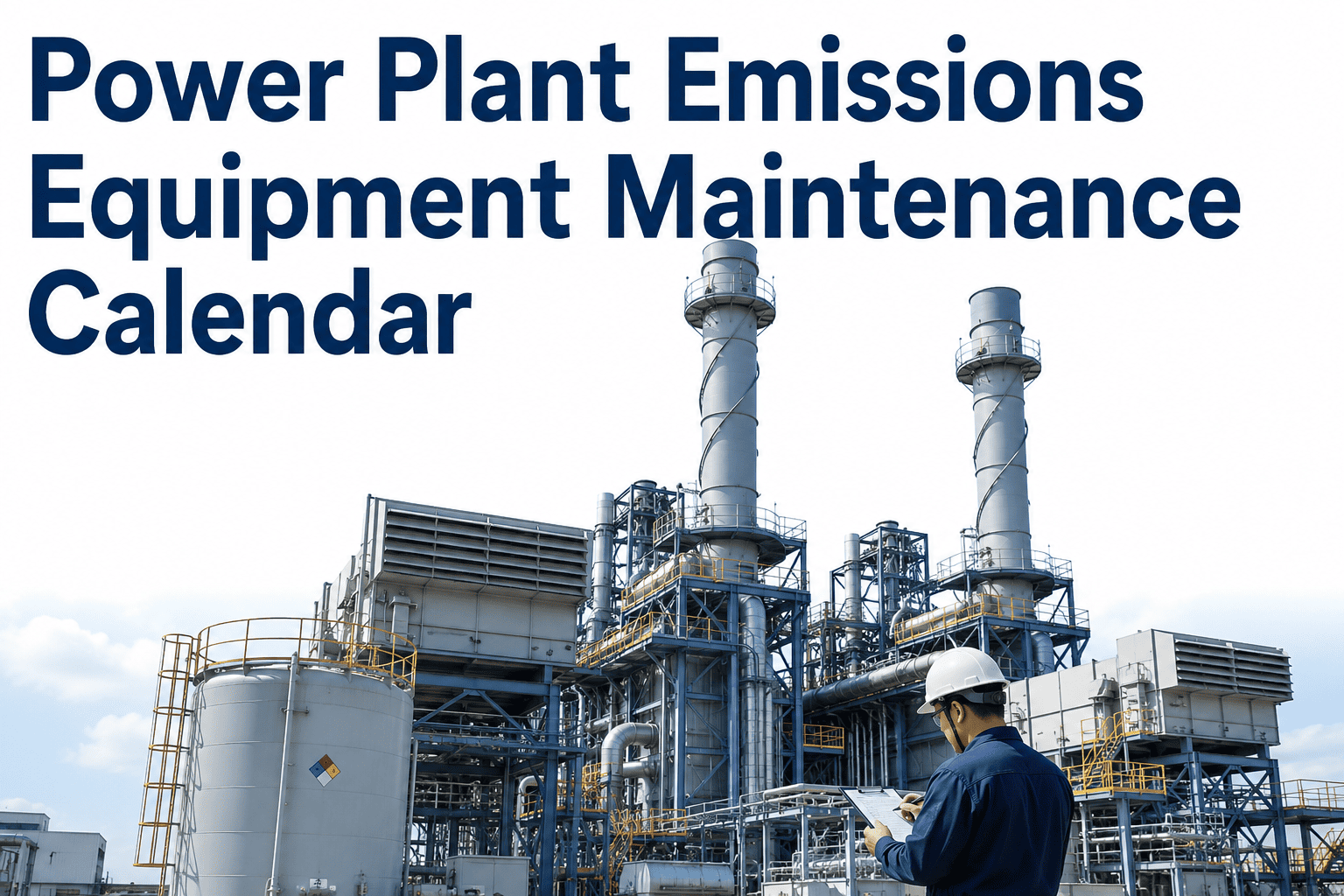
Power Plant Emissions Equipment Maintenance Calendar
One calendar. Every CEMS calibration, SCR inspection, ESP rapper cycle, baghouse differential check, and scrubber pH round — auto-scheduled from permit conditions, tracked to completion, stored as compliance evidence.
68%
of CEMS downtime caused by missed preventive maintenance
70%+
reduction in analyzer downtime with structured PM calendar
3,100+
plants now under mandatory CEMS coverage globally
21 days
typical CMMS configuration time for full emissions asset setup
The Compliance Gap
Why Spreadsheet Schedules Fail Emissions Teams
CEMS downtime doesn't just create data gaps — it creates substitute data periods that regulators scrutinize. A missed quarterly analyzer calibration, a skipped SCR catalyst activity test, or an ESP rapper cycle that nobody recorded becomes the evidence gap that triggers enforcement. Most plants know what to do. The failure is in execution, tracking, and proof.
01
No Centralized Deadline View
RATA deadlines, QA tests, FGD inspections, and CEMS calibrations live in separate spreadsheets owned by separate people. One person's absence creates a compliance blind spot.
02
No Permit-Linked Evidence
Completing a task in a paper log proves nothing to an auditor. Compliance requires timestamped, signed work orders linked to specific permit conditions — not notebooks.
03
No Early Warning System
Deadlines appear without warning. Teams discover a RATA window closes in 3 days only when someone reviews the permit manually. By then, scheduling the reference method test is nearly impossible.
04
No Cross-System Visibility
A PM failure on a scrubber pump affects SO₂ readings. A baghouse differential that goes uninspected leads to opacity exceedances. No one sees the connection until the exceedance report arrives.
Five Equipment Types, One Calendar
What Gets Scheduled and Why Each One Matters
Each emissions control system operates on its own maintenance rhythm, driven by equipment wear rates, regulatory test frequencies, and permit conditions. A compliant plant tracks all five — automatically.
CEMS
Continuous Emissions Monitoring
Daily: drift check
Weekly: zero/span calibration
Quarterly: RATA
Annual: audit trail review
Missed calibration = substitute data period = permit exposure
SCR
Selective Catalytic Reduction
Weekly: ammonia slip check
Monthly: catalyst activity
Annual: catalyst layer inspection
Catalyst degradation = NOx limit exceedance within hours
ESP
Electrostatic Precipitator
Daily: rapper cycle verify
Monthly: TR set performance
Quarterly: hopper heater check
Annual: electrode inspection
TR section failure = PM10 opacity spike = violation notification
BGH
Baghouse Filter System
Daily: differential pressure
Monthly: bag leak detection
Annual: bag replacement assess
Bag failure without detection = sustained opacity exceedance
FGD
Scrubber / FGD System
Daily: pH and flow rate
Monthly: absorber internals
Quarterly: pump vibration
Annual: mist eliminator wash
Scrubber pump failure = SO₂ limit breach within one operating hour
OxMaint CMMS
Auto-Generate Your Full Emissions Compliance Calendar from Permit Conditions
OxMaint maps every CEMS calibration, RATA window, FGD inspection, and ESP maintenance interval directly to your Title V permit — sending alerts 30, 14, and 7 days before each deadline and creating signed audit records at every task completion.
How OxMaint Works
From Permit Condition to Compliance Record — Automatically
1
Map Permit Conditions to Assets
Each CEMS analyzer, FGD absorber, SCR reactor, ESP field, and baghouse compartment is registered in OxMaint with its permit parameter limits attached — SO₂ threshold, NOx limit, opacity standard, and reporting frequency.
2
Activate Maintenance Schedules from Templates
OxMaint's emissions template library activates daily calibration checks, monthly FGD inspection rounds, quarterly RATA reminders, and annual permit compliance reviews — without manual scheduling configuration.
3
Alert Before Every Deadline
Automated alerts notify the responsible technician and supervisor at 30, 14, and 7 days before each compliance deadline. Escalation rules prevent deadlines from being silently missed when the assigned technician is unavailable.
4
Execute via Mobile, Stamp as Compliance Evidence
Technicians complete CEMS rounds and FGD inspections in the OxMaint mobile app with offline capability. Every completed task is timestamped, signed, and automatically linked to the relevant permit condition as an audit-ready record.
5
Export Audit Reports in Regulator-Ready Format
EPA quarterly excess emission reports, annual permit compliance summaries, and inspection records export by permit condition, date range, or equipment type — in PDF and XML formats accepted by EPA portals.
Before vs. After
What Changes When Your Calendar Is Integrated with CMMS
| Compliance Task |
Manual / Spreadsheet |
OxMaint CMMS Calendar |
| RATA scheduling |
Manual reminder, often late |
Auto-alert at 30 / 14 / 7 days |
| CEMS calibration records |
Paper log, no permit link |
Digital, permit-tagged, signed |
| ESP rapper cycle tracking |
Control room log, no accountability |
Work order with technician sign-off |
| FGD pump service evidence |
Notebook entry, hard to retrieve |
Searchable by asset, date, or permit |
| Audit preparation time |
Days of manual compilation |
Single export in minutes |
| CEMS downtime events |
Discovered after the gap occurs |
Predicted and prevented via PM schedule |
Common Questions
Emissions Maintenance Calendar — FAQs
How does OxMaint generate the compliance calendar from permit conditions?
Each permit condition — test frequency, calibration interval, inspection requirement — is entered as a parameter in OxMaint's asset record. The system auto-generates recurring work orders based on those intervals and links every completed task back to its permit clause.
Start a free trial to configure your plant's permit schedule.
Does the system cover both EPA 40 CFR Part 75 and state Title V requirements?
Yes. OxMaint's compliance calendar accommodates federal CEMS requirements under 40 CFR Part 75 and state-specific Title V obligations simultaneously. Asset records hold both sets of conditions, and audit exports can be filtered by regulatory framework.
What happens if CEMS instruments are offline during a calibration window?
OxMaint logs every planned and unplanned CEMS downtime event with timestamps and reason codes, automatically generating substitute data period records required for quarterly 40 CFR Part 75 submissions. The system also tracks availability percentage across the reporting period.
Book a demo to see CEMS availability reporting configured live.
Can the calendar handle multi-unit plants with different permit conditions per unit?
Yes. Each generation unit maintains a separate asset hierarchy with its own permit conditions, maintenance schedules, and reporting obligations. Cross-unit compliance dashboards show aggregate status while unit-level drill-downs show individual compliance positions.
How long does it take to configure OxMaint for a full emissions compliance programme?
Most plants complete CEMS, FGD, SCR, and ESP asset configuration within 21 days using OxMaint's pre-built emissions equipment templates. The OxMaint team handles integration configuration and permit mapping during onboarding.
Book a scoping call to get your deployment timeline.
Stop Preparing for EPA Audits. Start Passing Them Automatically.
OxMaint integrates every CEMS calibration, RATA deadline, SCR inspection, ESP rapper cycle, and FGD round into one permit-linked maintenance calendar — with automated alerts, mobile execution, and instant audit export.