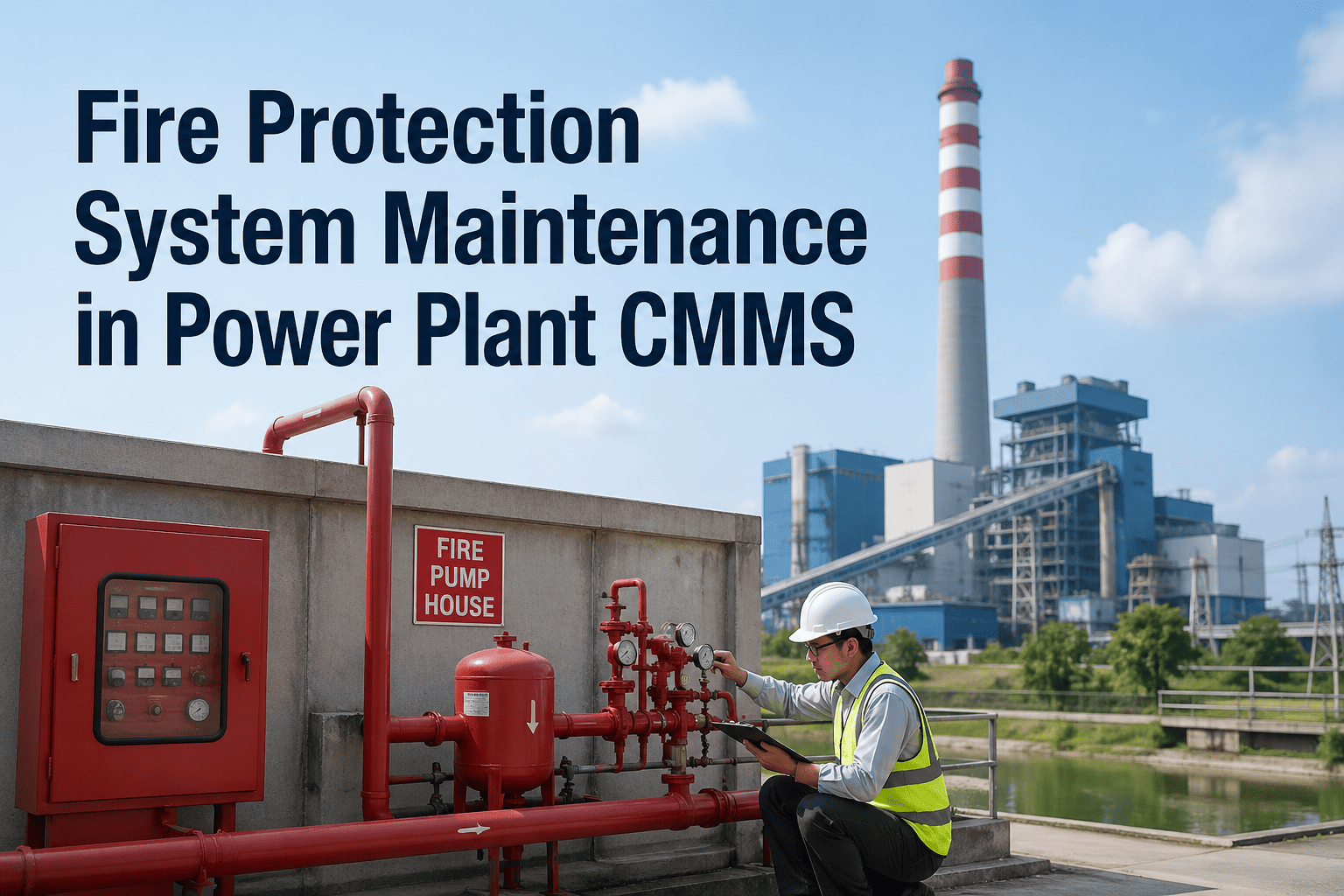
Fire protection systems in power plants operate under extreme thermal stress, chemical exposure, and continuous vibration — conditions that make scheduled maintenance not just a regulatory checkbox, but a direct line between operational continuity and catastrophic loss. NFPA 25, NFPA 72, and OSHA 1910.157 govern inspection frequencies and test documentation across sprinkler systems, deluge valves, fire suppression agents, and detector networks. Yet most plant teams still rely on spreadsheets, manual logbooks, or standalone inspection apps that never connect test data to asset history or trigger follow-up work orders. A dedicated CMMS solves the gap — every fire system asset gets a maintenance schedule, every inspection generates a timestamped record, and every failed test automatically escalates before the next regulatory audit. Book a demo to see how Oxmaint structures fire protection maintenance schedules across multi-unit power plant portfolios.
Why This Matters
An uninspected deluge valve that fails during a turbine hall fire is not an equipment problem — it is a documentation and scheduling failure. CMMS-driven fire protection maintenance keeps every test on schedule, every failure escalated, and every record audit-ready before the inspector arrives.
70%
of fire suppression failures in industrial facilities are traced to missed preventive maintenance — NFPA data
NFPA 25
mandates quarterly, annual, and 5-year inspection cycles — each with distinct documentation requirements
$2M+
average regulatory penalty exposure per major power plant for undocumented fire system inspection failures
48 hrs
typical window for plant to provide fire system inspection records during an OSHA or FM Global audit
Why Standard Spreadsheets Fail Fire Protection Teams
Fire protection maintenance has three properties that break generic scheduling tools. First, test frequencies are asset-specific and cycle-layered — a wet pipe sprinkler system needs quarterly inspections, annual flow tests, and five-year internal pipe inspections, all tracked independently. Second, failed tests create mandatory escalation chains: a failed detector test cannot close until the device is replaced and retested. Third, audit trails must survive personnel turnover — if the technician who ran last year's deluge valve test leaves, the record has to exist independently of that person. Spreadsheets fail all three. CMMS solves all three.
01
Missed Cycle-Specific Test Windows
Annual and five-year inspections fall off the calendar when they are not tied to asset records. NFPA 25 five-year internal pipe inspection requirements are routinely missed on static spreadsheets because no one owns the escalation.
02
Failed Tests With No Mandatory Follow-Through
A sprinkler head that fails a quarterly inspection gets noted on paper. The note does not automatically generate a corrective work order, assign an owner, or block the inspection record from closing until resolution is documented.
03
Audit Records Stored in Personal Files
Fire system inspection history lives in the email of the last safety officer. When that person leaves, the audit trail disappears. Regulators view missing records the same as missing maintenance.
04
No Advance Warning Before Compliance Deadlines
NFPA and FM Global inspection windows have specific advance-notice requirements. Without automated alerts tied to asset inspection history, compliance deadlines surface only when they are already overdue.
Fire Protection Asset Classes and CMMS Maintenance Mapping
A well-structured CMMS maps each fire protection asset class to its NFPA-required inspection intervals, assigns responsible technicians, and links every completed test to the asset record. The table below covers the core asset classes found in a utility-scale power plant and the maintenance tasks each requires.
How CMMS Structures the Fire Protection Maintenance Cycle
1
Asset Registry with Inspection History
Every fire protection asset — each sprinkler zone, each detector, each deluge valve — gets an asset record in the CMMS with location, installation date, and full inspection history. This makes audit retrieval a search, not an excavation.
2
Automatic PM Schedules Tied to NFPA Intervals
Preventive maintenance work orders generate automatically based on calendar intervals, meter readings, or regulatory cycle triggers. Quarterly sprinkler inspections, monthly fire pump no-flow tests, and annual suppression agent checks never fall through the cracks.
3
Compliance Alerts Before Deadline Exposure
The system flags upcoming inspection windows 30, 14, and 7 days in advance. Safety managers see overdue and at-risk inspections on a single dashboard without manually tracking spreadsheet dates.
4
Failed Test Escalation to Corrective Work Order
When a technician records a failed test — detector sensitivity below threshold, deluge valve trip failure, suppression agent weight low — the CMMS automatically generates a corrective work order assigned to the responsible team with a priority tag and SLA timer.
5
Audit-Ready Documentation on Demand
Every inspection record is timestamped, technician-attributed, and linked to the asset. When the NFPA inspector or FM Global auditor requests documentation, the safety manager exports the complete record set in minutes, not days.
See It In Action
Stop Managing Fire Protection Compliance on Spreadsheets
Oxmaint automates NFPA inspection schedules, escalates failed tests to corrective work orders, and delivers audit-ready documentation before the inspector arrives — all from a mobile-friendly platform your technicians use in the field.
Compliance Comparison: Paper Logs vs CMMS-Managed Fire Protection
Without CMMS
Inspection dates tracked manually in shared spreadsheet
Failed tests noted in paper log — no automatic follow-up
Audit prep takes 2–3 days of manual file assembly
Compliance alerts sent by email, missed when inbox is full
Records tied to individual personnel files
No visibility into overdue inspections across multiple units
With Oxmaint CMMS
PM work orders auto-generated per NFPA interval per asset
Failed test triggers corrective WO with SLA timer automatically
Audit export ready in minutes — full timestamped record set
30/14/7-day advance alerts routed to safety manager dashboard
Records stored in CMMS — independent of staff turnover
Portfolio dashboard shows all overdue inspections across every unit
Results Power Plant Safety Teams Report at 90 Days
100%
Inspection Coverage
Every fire protection asset on a scheduled NFPA-aligned PM cycle with no manual tracking required
-78%
Overdue Inspections
Advance alerts and auto-generated work orders eliminate the backlog of missed inspection windows
3 min
Audit Retrieval Time
Full inspection history per asset available on demand — not assembled from scattered files
Zero
Unresolved Failed Tests
Every failed inspection auto-escalates to a corrective work order that cannot close without documented resolution
Frequently Asked Questions
How does Oxmaint handle layered inspection cycles for the same asset?
Each asset can carry multiple PM schedules running concurrently — monthly, quarterly, annual, and multi-year cycles all tracked independently. A fire pump can have weekly no-flow checks, monthly flow tests, and annual full-flow tests as separate work order series without conflict.
Can technicians complete fire protection inspections on mobile without internet access?
Yes. The Oxmaint mobile app supports offline inspection completion. Records sync automatically when connectivity is restored, maintaining the full timestamp and technician attribution required for NFPA audit purposes.
How does the system manage failed test escalation to corrective work orders?
When a technician marks a test result as failed or out-of-spec during an inspection, the CMMS automatically creates a linked corrective work order with the asset, failure description, and assigned team. The originating inspection record stays open until the corrective WO is closed and verified.
Does Oxmaint support multi-unit or multi-site fire protection portfolios?
Yes. A portfolio dashboard shows fire protection inspection status across every unit or site, with overdue and at-risk tasks highlighted by location. EHS managers see compliance exposure across the entire portfolio without logging into each site separately.
How quickly can a power plant team deploy fire protection schedules in Oxmaint?
A standard single-plant fire protection setup — asset import, PM schedule configuration, and technician onboarding — typically completes in one to two weeks. Multi-site portfolios run four to six weeks depending on asset volume and existing documentation quality.
Every Fire Protection Asset. Every Inspection. Every Audit — Documented and On Schedule.
Oxmaint gives power plant safety teams automated NFPA inspection schedules, instant failed-test escalation, and audit-ready records for every fire protection asset — without spreadsheets, manual reminders, or last-minute file assembly.