Power plant water treatment systems operate under zero-failure expectations — a deteriorating RO membrane, a miscalibrated dosing pump, or a demineralizer resin that hasn't been tested in 90 days can silently degrade boiler feedwater quality until a forced outage makes the problem impossible to ignore. The challenge isn't that plant teams don't know water quality matters — it's that dozens of interdependent assets across the treatment train operate on different PM intervals, are monitored by different teams, and produce maintenance records stored in different places. When a dosing pump drifts off calibration and no one catches it until the chemistry report flags elevated conductivity, the corrective path leads through an equipment audit that might take days. CMMS designed for water treatment asset management prevents this by scheduling every calibration, backwash cycle, resin test, and analyzer verification automatically — so the degradation pattern is caught in the data, not in the boiler. See how OxMaint manages power plant water treatment assets.
Water Treatment · Asset Management · Power Plant CMMS
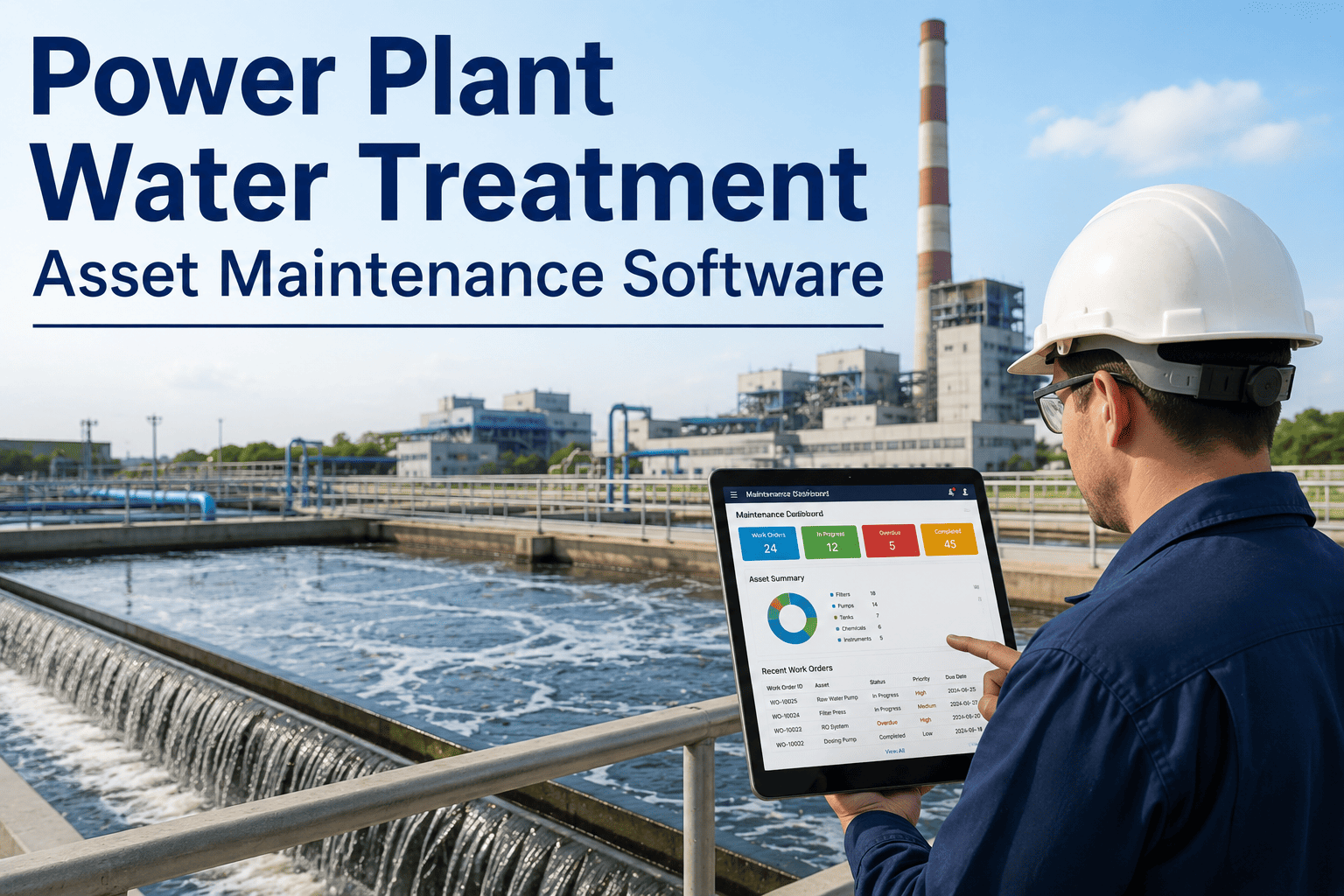
Power Plant Water Treatment Asset Maintenance Software
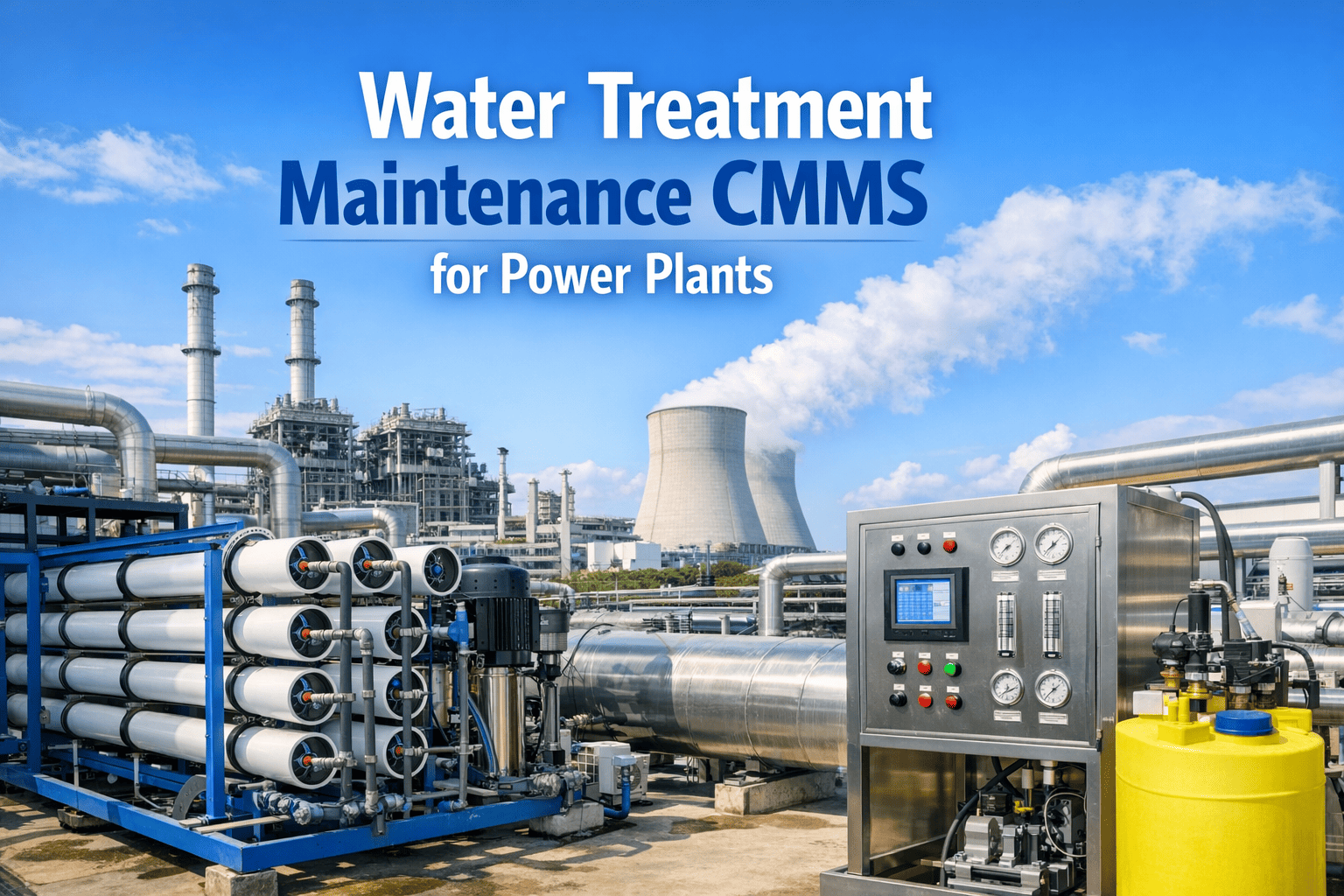
RO skids. Demineralizers. Dosing pumps. Analyzers. Backwash systems. Every asset in your water treatment train — tracked, scheduled, and maintained with automatic work orders before equipment failures degrade feedwater quality or force a boiler outage.
The most common water treatment failures are predictable: RO membrane fouling causes low permeate flow weeks before complete blockage. Dosing pump calibration drift shows in conductivity trends before chemistry violations occur. Demineralizer resin exhaustion signals through rising outlet conductivity. Every one of these failure modes has a PM task that prevents it.
Asset Coverage
Six Asset Types, One Maintenance System
Power plant water treatment trains are complex systems where every component's performance affects every other. A fouled RO membrane increases pressure on the high-pressure pump. A drifting pH dosing pump throws off antiscalant chemistry. An unserviced backwash valve prevents proper filter regeneration. OxMaint tracks all six major asset categories in a single system.
Water Treatment Process Train
Raw Water Intake
Strainer clean · Level check
→
RO Skid
Membrane clean · Pressure test · Flux monitoring
→
Demineralizer
Resin test · Conductivity check · Regeneration log
→
Dosing Systems
Pump calibration · Tank level · Chemical analysis
→
Storage and Distribution
Tank inspect · Quality verify · Alarm test
Analyzers monitor quality at each stage — pH, conductivity, turbidity, dissolved oxygen — with OxMaint calibration schedules keeping every instrument accurate
Maintenance Schedules
What Gets Scheduled and When — For Every Asset in the Train
DailyPermeate flow and conductivity log
WeeklyDifferential pressure across membrane elements
MonthlyNormalized flux and salt rejection calculation
QuarterlyChemical cleaning if flux degraded more than 15%
AnnualMembrane integrity test and element inspection
DailyOutlet conductivity — rising value signals resin exhaustion
WeeklySilica leakage check on mixed bed units
MonthlyResin sample — capacity and fouling analysis
QuarterlyRegeneration chemical consumption review
AnnualFull resin bed inspection and replacement assessment
DailyChemical tank levels — antiscalant, pH, biocide
WeeklyPump output calibration — dose rate vs setpoint
MonthlyDiaphragm and check valve inspection
QuarterlyFull pump service and tubing replacement
AnnualPump head disassembly and internal component check
DailypH and conductivity reading verification vs grab sample
WeeklyBuffer calibration check on pH probes
MonthlyTurbidity meter and DO analyzer calibration
QuarterlyProbe replacement or reconditioning per drift rate
AnnualAnalyzer cell cleaning and sensor replacement cycle
OxMaint Water Treatment CMMS
Auto-Schedule Every PM Task Across Your Entire Water Treatment Train
OxMaint builds your RO, demineralizer, dosing pump, and analyzer PM schedules from equipment-specific templates — auto-generating work orders, tracking completion, and flagging overdue tasks before they become chemistry failures or forced outages.
Failure Cost Analysis
What a Water Treatment Maintenance Gap Actually Costs
Water treatment failures don't announce themselves — they accumulate silently in rising conductivity readings, increasing regeneration frequency, and degrading RO flux until a boiler chemistry alarm forces an unplanned shutdown. The financial impact is always disproportionate to the PM cost that would have prevented it.
RO Membrane Fouling
Skipped quarterly cleaning — flux degraded 30% over 6 months
Unplanned membrane replacement mid-cycle: 4x standard cost. Demineralized water deficit forces load reduction for 48 hours.
PM cost: $800 quarterly cleaning vs $12,000+ emergency replacement
Dosing Pump Calibration Drift
Weekly calibration check skipped for 6 weeks — antiscalant dose 40% low
Scaling in RO feed channels — 25% flux loss. Emergency acid cleaning required. 3-day partial outage.
PM cost: 30 minutes weekly calibration vs 72 hours of reduced capacity
Demineralizer Resin Exhaustion
Monthly resin test missed — exhaustion not detected until boiler conductivity alarm
Off-spec feedwater reaches boiler — forced shutdown for chemistry correction. 24-hour generation loss.
PM cost: Monthly resin conductivity test vs one day of lost generation revenue
Common Questions
Water Treatment Asset Maintenance Software — FAQs
How does OxMaint schedule both calendar-based and run-hour-based maintenance for water treatment equipment?
OxMaint supports both trigger types simultaneously. Calendar-based PM covers inspections, calibrations, and chemical analyses on fixed intervals. Run-hour-based PM is used for rotating equipment like high-pressure RO feed pumps, triggering service based on actual operating hours rather than elapsed time.
Configure your water treatment asset hierarchy in a free trial.
Can the system alert when analyzer readings drift outside acceptable ranges?
How long does it take to build the water treatment asset hierarchy in OxMaint?
Most power plant water treatment systems — RO skids, demineralizers, dosing stations, and analyzers — can be fully configured in OxMaint within 2 to 4 weeks using pre-built equipment templates. The OxMaint onboarding team assists with asset hierarchy setup and PM schedule activation during implementation.
Does OxMaint track chemical inventory alongside dosing pump maintenance?
Yes. Chemical inventory — antiscalant, pH adjustment acid and caustic, biocide — is tracked in OxMaint's inventory module with minimum stock alerts. Work orders for dosing pump service include a parts and chemical consumption record that updates inventory automatically upon task completion.
Can water treatment maintenance records be used for regulatory compliance documentation?
Yes. Every completed PM task in OxMaint generates a timestamped, signed digital record searchable by asset, date, or task type. These records satisfy requirements for NPDES discharge permit maintenance documentation and support ISO 14001 environmental management records.
Start a trial to explore the compliance record capabilities.
Protect Boiler Feedwater Quality — Schedule Every Water Treatment PM Automatically
OxMaint manages RO skids, demineralizers, dosing pumps, analyzers, and backwash systems in one CMMS — with automatic work orders, overdue alerts, and compliance-ready maintenance records that prevent chemistry failures before they reach the boiler.