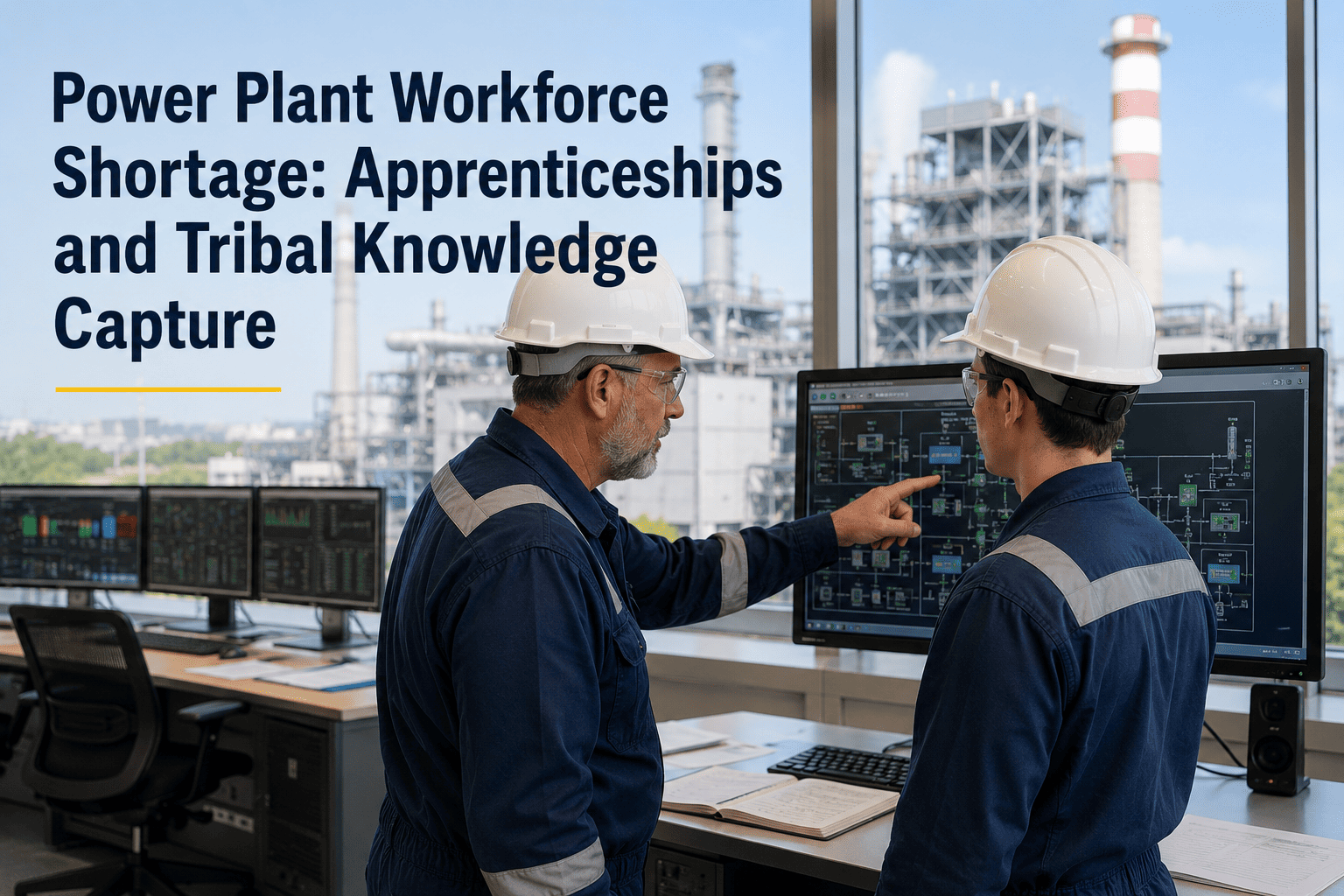
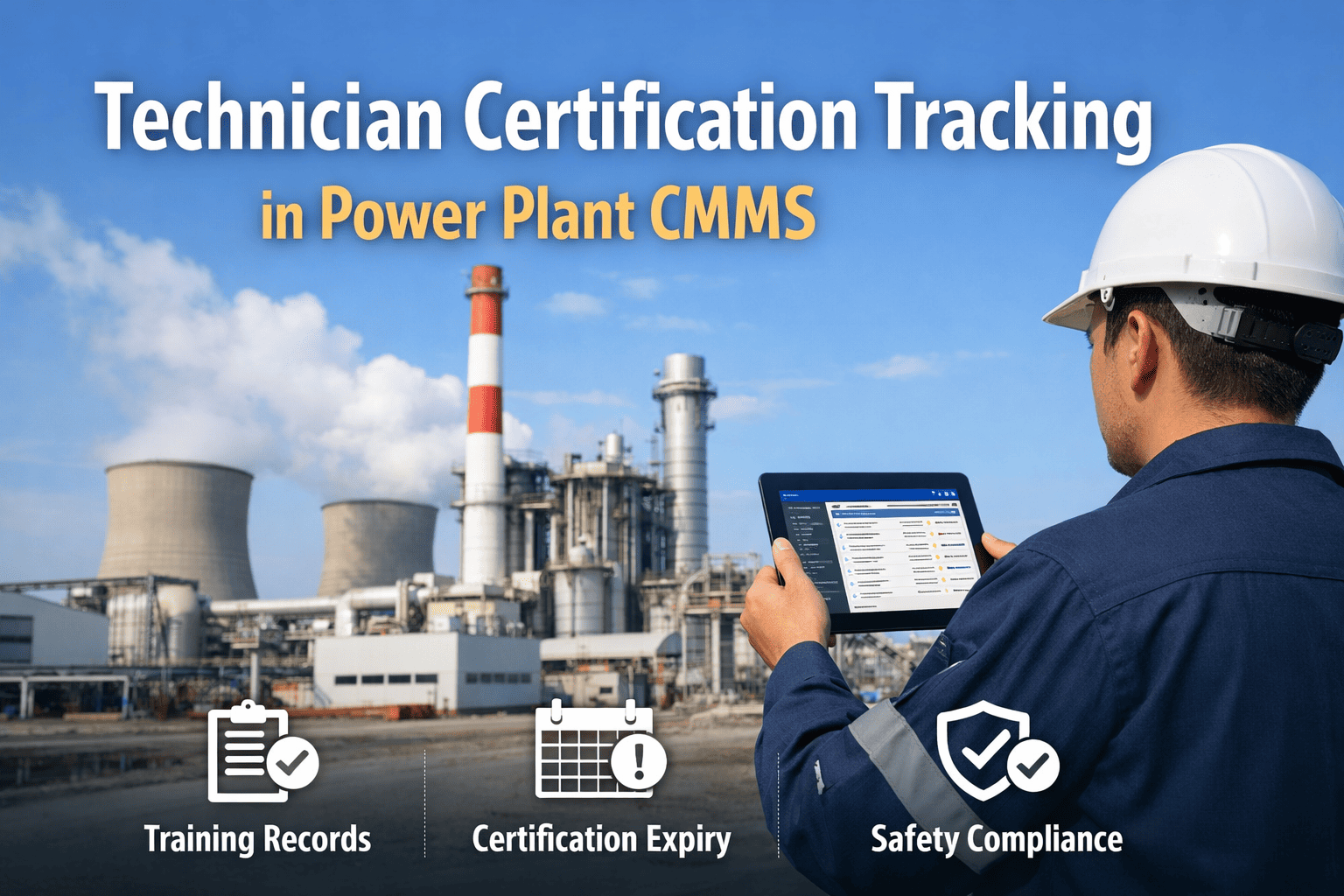
When your most experienced turbine technician walks out the door for the last time, 30 years of unwritten knowledge walks out with them — the bearing sounds that signal failure, the control panel reset sequences no one ever documented, the workarounds your team has relied on for a decade. CMMS platforms built for knowledge capture and workforce training are the only scalable answer to a crisis that is not coming — it is already here, and it is accelerating every quarter as the energy sector faces the steepest demographic cliff in its history.
2026 Workforce Crisis Report
The Skilled Labor Drain Is the Biggest Maintenance Risk Your Plant Faces Right Now
76% of energy employers can't find qualified workers. For every 2.4 technicians retiring, only 1 new worker enters. The plants that survive this will be the ones that stopped relying on people's heads and started building institutional memory into their systems.
76%
Energy employers struggling to hire qualified workers
2.4:1
Retirees vs. new entrants in advanced economies
40%
Of maintenance workforce retiring in the next 5 years
30–50%
MTTR reduction with structured knowledge management
The Real Problem
What Actually Happens When Your Senior Tech Retires
The Before Scenario
Your lead technician — call him Dave — has been at the plant for 28 years. He knows Boiler #2's reset quirks, can diagnose a failing bearing by its sound from 50 feet away, and carries in his head a dozen workarounds your team relies on daily. None of it is written down anywhere.
The Day After He Leaves
A problem that took Dave one hour now takes a team of three people half a day — starting from scratch every time. MTTR on your most complex assets rises 20–30% in the first 12–18 months. Industry data confirms this is not an edge case. It is the standard outcome when knowledge lives in a person rather than a system.
The System-Level Answer
A modern CMMS captures expertise passively as part of daily workflow — every repair log, every technician note, every failure code, every resolution becomes part of a permanent, searchable institutional memory that no retirement can erase.
89%
of transmission and distribution employers report difficulty finding qualified workers (U.S. DOE 2025)
500K
additional skilled workers needed in energy construction by 2026
1.9M
manufacturing jobs could remain unfilled by 2033 due to the skills gap (Deloitte)
72%
of CEOs name talent gaps as their single biggest business challenge
Where Knowledge Lives
Two Types of Knowledge — Only One Survives Retirement
Tribal Knowledge
Lives in a person's head. Accumulated over years of hands-on experience. Includes unwritten reset sequences, workarounds, asset-specific quirks, supplier contacts, and failure patterns that exist nowhere else. When this person retires or resigns, it is gone permanently.
Sound-based fault diagnosis
Undocumented control panel sequences
Vendor relationship knowledge
Plant-specific workarounds
Risk Level: Critical — Lost on Departure
Institutional Knowledge
Lives in the system. Captured through structured work orders, failure codes, repair notes, and checklists. Searchable, transferable, and available to every technician on the floor — including the one who started last week. A CMMS transforms tribal knowledge into institutional knowledge continuously.
Asset repair history with technician notes
Failure patterns and root cause records
Step-by-step SOP libraries
Parts history and vendor data
Survives Every Retirement
How CMMS Solves It
6 Ways Oxmaint Directly Addresses the Workforce Shortage
01
Passive Knowledge Capture in Daily Workflow
Every work order, repair note, and technician observation logged in Oxmaint becomes a permanent, searchable record. Knowledge is not extracted in a frantic pre-retirement interview — it accumulates naturally, day by day, as part of normal maintenance activity. A new technician assigned to a 15-year-old generator can pull up its complete repair history, failure patterns, and past notes before turning a wrench.
Outcome
Zero knowledge lost to retirement
02
Standardized SOP and Checklist Libraries
Senior technicians' proven procedures are converted into digital, step-by-step checklists that any trained worker can follow. Mandatory fields and conditional logic ensure critical steps are never skipped — even by someone doing the procedure for the first time. This is the difference between "how Dave does it" and "how your plant does it."
Outcome
Expert-level execution from any technician
03
Asset History as On-the-Job Training
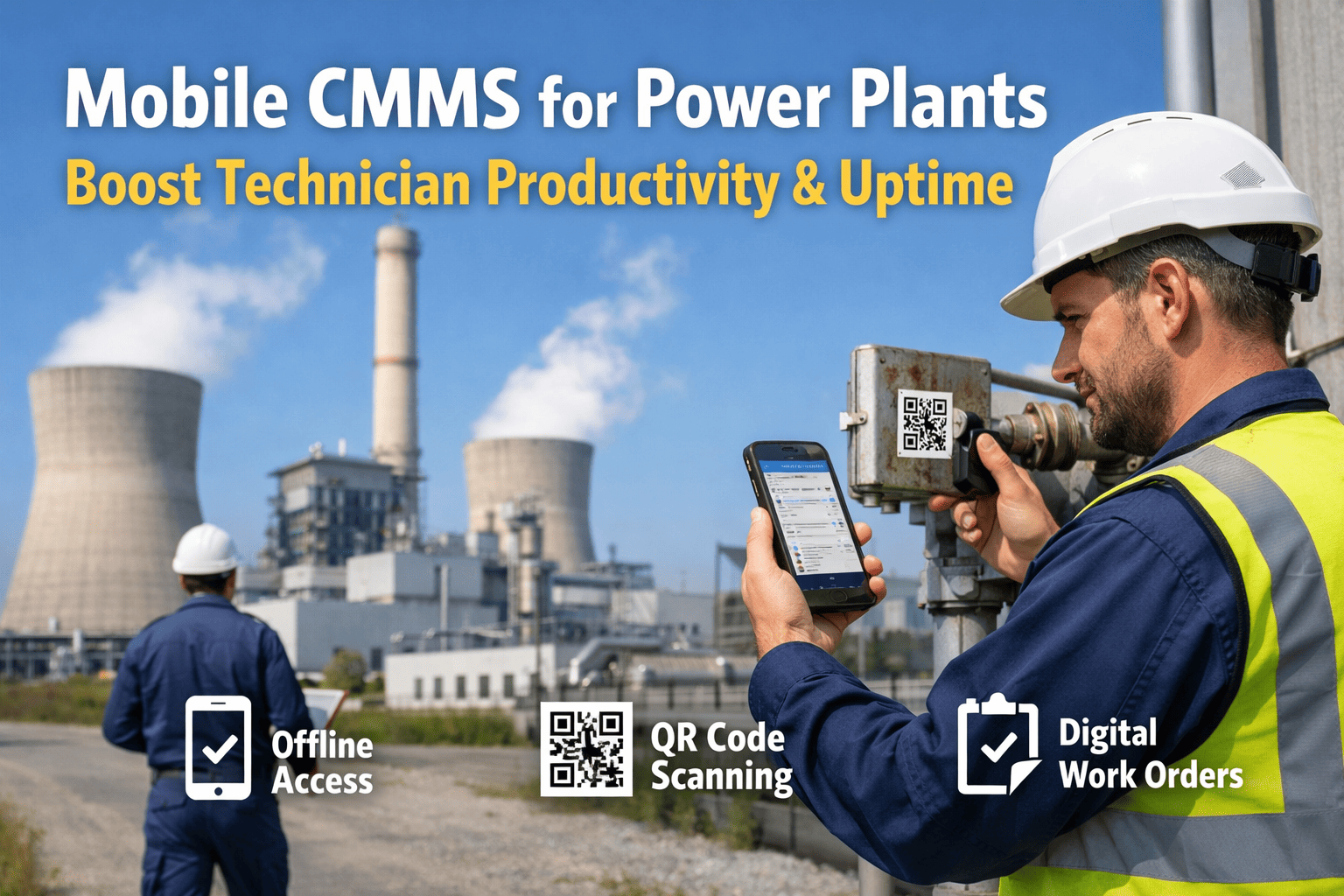
When a new hire scans a QR code on a pump or transformer, they see the full repair history, previous failure causes, and technician notes — right at the machine. This transforms every asset into a training document. New hires learn the specific behavior of your specific equipment, not just generic textbook knowledge. The learning curve compresses from months to weeks.
Outcome
Faster onboarding, context-aware new hires
04
Cross-Site Knowledge Sharing
A root cause identified at one plant can be codified in the CMMS and applied across every facility in the network — instantly. This shifts your operation from local tribal knowledge held by individuals to network-wide institutional intelligence accessible to all. A fix that your most experienced technician at Plant A discovered in 2019 becomes standard procedure at Plants B, C, and D without anyone needing to make a phone call.
Outcome
Best practices multiply across facilities
05
Productivity Recovery for Lean Teams
Eliminating paper work orders, manual data entry, and binder searches recovers close to 90 minutes per technician per day — redirected into productive maintenance work. For a plant operating with a reduced headcount, this is the equivalent of adding productive hours to the workforce without a single hire. Smaller teams do more, with fewer errors, and with measurable documentation.
Outcome
90 min/day recovered per technician
06
Predictive Alerts That Reduce Expert Dependency
When AI-connected CMMS catches a bearing anomaly 4 weeks before failure, your less-experienced technician does not need to "hear it" the way Dave would. The system does the detecting. The technician executes the repair using the SOP and asset history in front of them. This is force multiplication — fewer experienced people required, because the system carries the expertise they would otherwise provide.
Outcome
Less expert-dependency per repair
Don't Wait for the Next Retirement to Start Capturing Knowledge
Oxmaint's CMMS builds your plant's institutional memory from day one — turning every work order, note, and repair into a searchable knowledge asset that outlasts any individual on your team.
Before vs. After
Maintenance Operations: Without CMMS vs. With Oxmaint
| Situation | Without CMMS | With Oxmaint CMMS |
|---|---|---|
| Senior tech retires | Critical knowledge gone permanently. MTTR rises 20–30% on complex assets within 12 months | Full repair history, notes, and SOPs remain in system. New tech picks up where they left off |
| New hire onboards | Months of shadowing required. Learns equipment quirks through trial and error on live plant assets | QR scan at any asset reveals full history, past failures, and step-by-step repair procedures instantly |
| Unfamiliar failure occurs | Team searches manuals, makes calls, and attempts diagnosis from scratch — hours of lost time per incident | Technician searches CMMS for similar past failures and follows proven resolution from institutional history |
| Team headcount reduced | Maintenance backlog grows, PMs get skipped, reactive repairs increase, safety risk rises | Automated PM scheduling, mobile work orders, and 90 min/day productivity recovery stretch lean teams further |
| Multi-site operation | Best practices stay at the plant where they were discovered. No systematic sharing across facilities | Root causes and repair methods codified centrally — applied across every plant in the network automatically |
| Compliance audit | Manual records, paper logs, memory-dependent documentation. Risk of gaps and inconsistencies | Auto-captured timestamps, technician records, and digital checklists generate clean audit trail on demand |
The Numbers
What the Industry Data Says About the Crisis
10,000+
Experienced workers reaching retirement age every day in major economies in 2025
$2.6B
Annual investment needed just to prevent the skills gap from widening further by 2030 (IEA)
66%
of utility leaders say talent gap is the biggest obstacle to deploying AI in their operations
32M
People energy employers must hire between 2025 and 2035 — 15M as direct replacements for retirees
Adoption Roadmap
How Plants Roll Out CMMS-Based Knowledge Management
Week 1–2
Asset Setup and QR Tagging
Critical assets are loaded into Oxmaint with asset histories, existing manuals, and any documented procedures. QR codes are applied so technicians can pull asset context instantly on the floor.
Week 3–4
SOP and Checklist Creation
Senior technicians convert their key procedures into digital checklists in Oxmaint. This is the structured knowledge capture phase — tacit expertise becomes searchable, reusable institutional content.
Month 2
Full Team on Mobile Work Orders
All technicians use mobile devices to receive, complete, and close work orders. Every completed job adds to the asset knowledge base automatically. Knowledge capture becomes continuous and passive.
Month 3+
Knowledge Compounds Over Time
MTTR begins to drop as technicians use historical data to resolve issues faster. Failure patterns emerge. PMs adjust based on real data. The system grows more valuable every single day — and every retirement leaves knowledge intact.
Your Next Retirement Is a Knowledge Emergency. Unless You Act Now.
Every day without a knowledge management system is another day your plant's institutional memory exists only in people's heads. Oxmaint captures it passively, continuously, and permanently — starting from day one. No consultants. No months-long implementation. Just cleaner operations and a team that performs at expert level, regardless of who just retired.
FAQs
What Maintenance Leaders Are Asking
How does a CMMS actually capture knowledge from experienced technicians without disrupting their workflow?
The key is passive capture — knowledge is collected as a natural outcome of doing the job, not as a separate documentation task. Every work order a technician completes in Oxmaint, every note they log, every failure code they assign becomes a permanent, searchable record attached to that specific asset. Over time, this builds a rich institutional knowledge base without asking anyone to take time away from maintenance work. Start capturing your team's knowledge in Oxmaint today — free to set up.
Can CMMS really reduce the impact of losing a senior technician?
Yes — and the data is specific. Facilities without structured knowledge management see MTTR rise 20–30% on their most complex assets within the first 12–18 months after losing a key senior technician. Facilities with a well-implemented CMMS maintain or improve MTTR because the knowledge is in the system, not the person. When technicians access complete asset history before a repair, they troubleshoot with context rather than guessing from scratch. See how Oxmaint's knowledge tools work in a live demo.
How fast can new hires become productive with CMMS-backed training?
Plants using mobile CMMS with asset history and digital checklists report significantly shorter onboarding timelines because new hires learn from the specific history of your specific equipment — not just textbook theory. When a new technician scans a QR code at any asset, they see every repair it has needed, how it was fixed, and what to watch for. This context-rich environment compresses months of learning into weeks. Oxmaint is built for mobile-first, field-level access that new hires can use from day one.
What if we only have 5 to 10 technicians — is CMMS knowledge management still worth it?
Smaller teams have more to gain, not less. When your entire maintenance operation runs on the knowledge of a handful of experienced people, losing even one is a critical risk. A CMMS ensures that the expertise of your best technicians multiplies across the team, and that no single departure creates an operational crisis. Oxmaint scales from small teams to enterprise-level operations at the same cost per seat — and setup takes days, not months. Talk to a specialist about your plant's specific setup.
How does Oxmaint help when experienced staff can't be replaced due to hiring challenges?
Oxmaint tackles the hiring gap from two directions: it stretches the productivity of your existing team by recovering up to 90 minutes per technician per day through mobile work orders and automated scheduling, and it makes every technician more capable by giving them instant access to asset history, SOPs, and failure records at the point of work. The result is a leaner team that delivers more reliable output — even in a market where hiring qualified replacements takes 6 to 9 months. Sign up free and start boosting your team's output today.