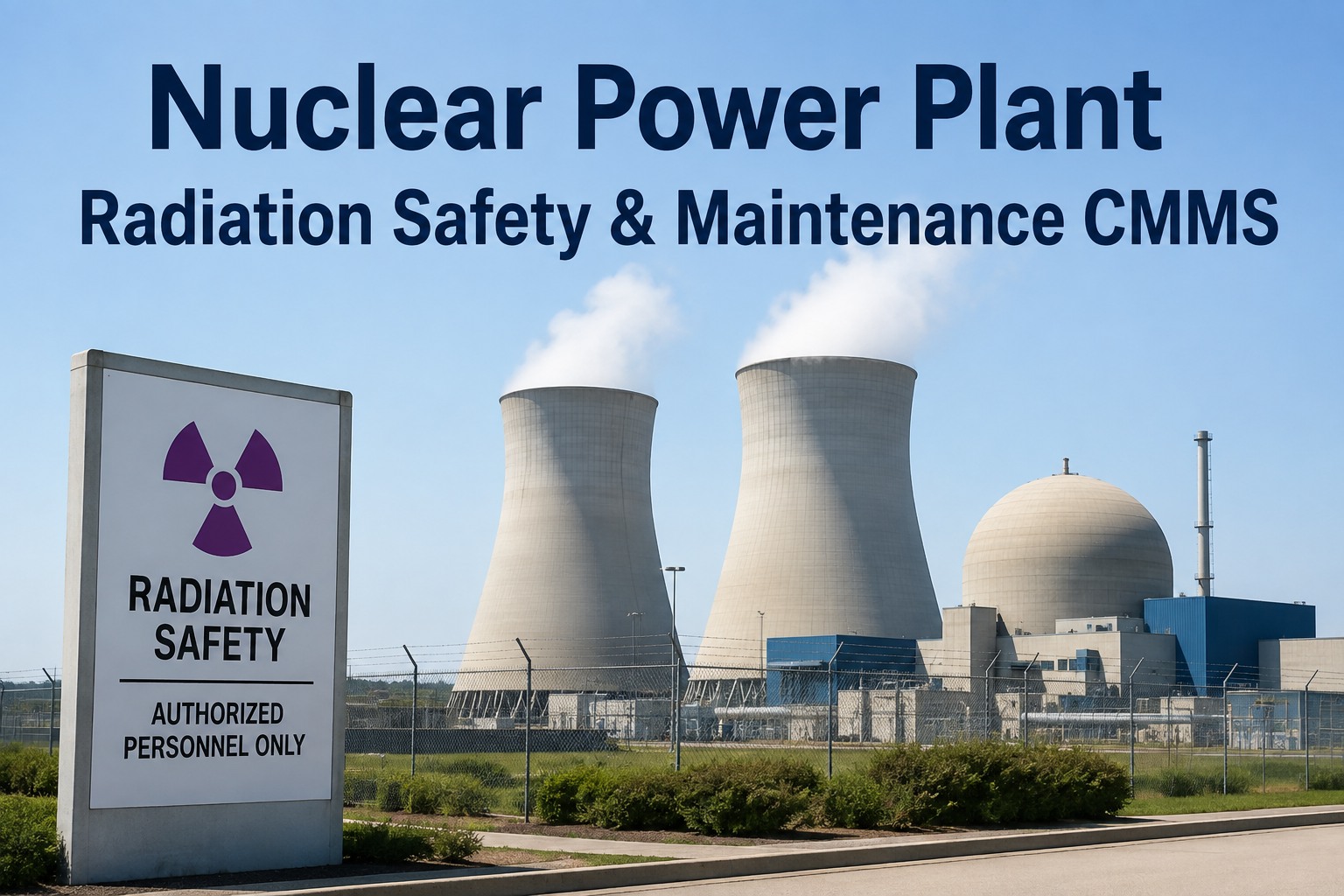
A Tier 1 nuclear generating station accumulated 14 regulatory citations in a single refueling outage — not from reactor safety failures, but from radiation work permit documentation gaps. Three technicians entered a high-radiation area with expired permits. Two dosimetry records could not be reconciled with field logs during an NRC audit. Seven ALARA reviews lacked required supervisor sign-offs, and two contamination boundary changes were never communicated to active work crews. After deploying a digital radiation work permit system integrated with Oxmaint CMMS, permit cycle time dropped from 4.2 hours to 38 minutes, zero expired-permit entries occurred over two subsequent outages, and NRC inspection findings related to RWP documentation dropped to zero.
91%
Reduction in RWP processing time when nuclear plants replace paper-based permit workflows with digital CMMS-integrated systems
Zero
Expired-permit area entries recorded across two refueling outages after deploying automated permit expiration tracking and access control
$2.6M
Average cost of a single NRC escalated enforcement action related to radiation protection program deficiencies at commercial nuclear plants
Why Paper-Based Radiation Work Permits Fail Under Outage Pressure
Nuclear plant outages compress 18 months of maintenance into 20–35 days with 2,000+ supplemental workers executing hundreds of concurrent tasks in radiologically controlled areas. Paper RWP systems that function adequately during normal operations collapse under this volume — permits queue for health physics review, boundary changes propagate slowly, and the administrative burden on radiation protection technicians pulls them away from field monitoring. Plants that continue relying on manual RWP processes during outages accept regulatory risk that a digital permit management platform eliminates entirely.
Paper-Based RWP Process
−
4–6 hour permit cycle time from request initiation through health physics review, ALARA evaluation, supervisor approval, and issuance to the work crew
−
Manual dosimetry reconciliation requires RP techs to cross-reference field dose readings with paper logs — errors compound when 200+ workers are active simultaneously
−
Boundary change communication gaps rely on radio calls and physical postings that miss workers already inside controlled areas
−
Audit trail reconstruction takes 8–12 hours per outage, pulling health physics staff from active monitoring to compile paper records
Digital RWP with CMMS Integration
+
38-minute average permit cycle with parallel routing to health physics, ALARA reviewers, and supervisors — automated escalation on stalled approvals
+
Real-time dose tracking integration links electronic dosimeters directly to active permits — cumulative exposure updates every 60 seconds per worker
+
Instant boundary change alerts push notifications to every worker signed onto an affected permit — with acknowledgment tracking
+
Continuous audit readiness with every permit action timestamped, attributed, and stored — NRC inspection response in under 5 minutes
Key Insight
68%
of NRC radiation protection findings at commercial nuclear plants trace back to administrative control failures — not equipment malfunctions or personnel errors. Permit documentation gaps, missed ALARA reviews, and expired authorization records account for the majority of citations that a digital RWP system would have prevented.
Core Components of a Digital Radiation Work Permit System
An effective digital RWP system addresses every stage of the radiation work authorization lifecycle — from initial job planning and dose estimation through active field monitoring, boundary management, and post-job closeout. Facilities managing these processes through Oxmaint's integrated platform consolidate permit management, work order execution, and compliance documentation into a single system of record.
01
RWP
Permit Request and ALARA Planning
Every radiation work permit begins with a structured request that defines scope, location, expected dose rates, required protective equipment, and estimated person-rem exposure. Digital systems pre-populate fields from historical job data — a valve replacement in the reactor coolant pump room auto-fills dose rates from the last survey and calculates estimated collective dose based on crew size and task duration.
Pre-job dose rate survey integration — current radiological survey data pulled directly into permit request with area classification and hot spot identification
ALARA dose estimation calculator — task duration multiplied by area dose rates with shielding credit factors applied per approved ALARA plan
Historical job comparison — system surfaces dose outcomes from previous jobs to benchmark estimates against actual performance
Protective equipment assignment — auto-generates PPE requirements based on area classification and contamination levels
02
ACS
Authorization and Access Control
Digital authorization replaces the clipboard sign-in sheet with electronic access control that verifies worker qualifications, training currency, medical clearance, and cumulative dose status before granting permit entry. Workers who exceed administrative dose limits or lack required training are automatically blocked from signing onto the permit.
Qualification verification gate — checks radiation worker training, medical surveillance, and respirator certification at sign-on
Administrative dose limit enforcement — blocks permit sign-on when cumulative dose approaches TEDE, organ, or extremity limits
Real-time headcount tracking — maintains accurate personnel count inside each radiological boundary for emergency accountability
03
FDM
Field Dose Monitoring and Alerts
Active dose monitoring integrates electronic dosimetry data with the permit system in real time — tracking dose accumulation against permit limits, ALARA targets, and administrative thresholds. Plants using Oxmaint's alert management route these notifications directly to responsible supervisors with recommended actions.
60-second dose rate refresh — electronic dosimeter readings update in the permit system every minute for all active workers
Graduated alert thresholds — configurable warnings at 50%, 80%, and 95% of permit dose limits with escalating notification chains
Collective dose dashboard — real-time aggregation of person-rem expenditure by permit, job, system, and outage
04
BCM
Boundary Control and Contamination Management
Radiological boundaries shift during outage work as systems are opened, drained, and decontaminated. Digital boundary management links area classification changes directly to every active permit that references the affected zone — replacing physical postings and radio calls that fail when crews change shifts or multiple boundary changes occur simultaneously.
Dynamic boundary mapping — radiological area classifications updated as surveys confirm changed conditions
Affected permit auto-notification — every worker in the affected area receives boundary change alert with updated requirements
Contamination event tracking — links discoveries to source permits and required follow-up actions
05
CLO
Permit Closeout and Compliance Documentation
Permit closeout captures final dose records, confirms all workers have exited the radiological area, documents post-job survey results, and archives the complete permit history. Sign up for Oxmaint to maintain continuous audit readiness across every radiation work permit.
Automated final dose compilation — dose records locked to the permit record at closeout with no manual transcription
Post-job ALARA review trigger — compares actual dose outcomes to pre-job estimates and flags overages
10 CFR 20 retention compliance — all records stored with required data fields for the regulatory retention period
Your radiation protection program should not depend on clipboards and radio calls during outage conditions. Oxmaint digitizes the entire radiation work permit lifecycle — from ALARA planning through permit closeout — with automated compliance tracking and instant NRC audit readiness.
RWP Workflow: From Job Planning to Permit Closeout
The digital radiation work permit workflow replaces serial paper routing with parallel electronic processing — health physics review, ALARA evaluation, and supervisory approval happen simultaneously rather than sequentially.
Step 1
Job Scope Definition
Maintenance planner creates work order in Oxmaint with task description, location, and estimated duration. System auto-triggers RWP requirement with pre-populated radiological data from the most recent area survey.
Step 2
Parallel Review Routing
Permit request routes simultaneously to health physics, ALARA coordinator, and shift supervisor. Each reviewer can approve, return for revision, or escalate — with automated reminders on stalled reviews.
Step 3
Pre-Job Briefing and Sign-On
Approved permit generates pre-job briefing with area-specific hazards, dose rate information, and PPE requirements. Workers electronically sign on after briefing — system verifies all qualifications before granting access.
Step 4
Active Work Monitoring
System monitors dose accumulation, tracks boundary conditions, and maintains real-time personnel accountability. Alerts escalate when conditions deviate from permit parameters.
Step 5
Closeout and Archive
Job completion triggers closeout — final dose records compiled, post-job survey linked, ALARA comparison generated, and complete permit history archived in Oxmaint.
Platform Capabilities for Nuclear Radiation Protection
Oxmaint provides nuclear facilities with purpose-built tools that connect radiation work permit management to the broader maintenance execution workflow.
Integrated Work Order and RWP Linking
Every maintenance work order that touches a radiologically controlled area automatically generates an RWP requirement — eliminating manual coordination between maintenance planning and health physics.
Work Order IntegrationAuto-RWP Trigger
Electronic Dosimetry Data Feed
Direct integration with electronic dosimetry systems streams real-time dose data into active permits — no manual reading transcription and no reconciliation gaps between field measurements and official dose records.
Real-Time Dose TrackingDosimetry Integration
Regulatory Compliance Dashboard
Consolidated view of 10 CFR 20 compliance status across all permits — dose tracking against regulatory limits, ALARA performance metrics, and documentation completeness indicators.
10 CFR 20 TrackingNRC Audit Ready
Outage Workforce Scalability
System handles the 3–5x workforce surge during refueling outages without degrading permit processing speed — supporting hundreds of concurrent active permits with automated qualification verification.
Outage SupportContractor Management
Critical RWP Compliance Areas Addressed
Nuclear radiation protection programs operate under prescriptive regulatory requirements where documentation failures carry the same enforcement weight as actual radiation safety deficiencies.
10 CFR 20.1501 — Surveys and Monitoring
Radiological Survey Integration
Digital RWP systems link active survey data directly to permit conditions — when survey results change, every permit referencing the affected area updates automatically with revised dose rates and boundary classifications.
10 CFR 20.2102 — Records of Radiation Protection Programs
Automated Recordkeeping
Every permit action generates a timestamped, attributed record that satisfies 10 CFR 20 documentation requirements without manual compilation. Records are searchable and available within minutes of an NRC document request.
Pre-job ALARA reviews, dose estimates, shielding plans, and post-job comparisons are maintained as integral components of each permit record. Start managing ALARA documentation through Oxmaint to maintain continuous program compliance.
During our last refueling outage we processed 847 radiation work permits in 28 days with zero NRC findings. The previous outage using paper permits — 612 permits in 32 days with three findings and a supplemental inspection. The digital system made us incapable of issuing a permit without every required review documented and traceable.
Health Physics Manager — Pressurized Water Reactor Facility
Digitize Your Radiation Work Permit Program
Oxmaint connects radiation work permit management directly to your maintenance work order system — ensuring every job in a radiologically controlled area has proper authorization, real-time dose tracking, and complete compliance documentation from first request through final closeout.
How does a digital RWP system handle the volume spike during refueling outages?
Digital systems process permits through parallel review routing — health physics, ALARA, and supervisory reviews happen simultaneously. This maintains 38-minute average cycle times even when permit volume increases 4–5x. Book a demo to see outage-volume processing.
What electronic dosimetry systems integrate with digital RWP platforms?
Oxmaint supports data feeds from major electronic dosimetry providers including Mirion, Thermo Fisher, and Landauer through API integration. Real-time dose data streams into active permits every 60 seconds.
Does the system satisfy 10 CFR 20 recordkeeping requirements?
Every permit action generates a timestamped record stored for the required retention period. The system captures all data fields specified in 10 CFR 20.2102. Sign up to explore compliance reporting.
How are boundary changes communicated to active workers?
When a radiological boundary changes, the system identifies every active permit referencing the affected area and pushes notifications to all signed-on workers. Permits can be automatically placed on administrative hold until workers acknowledge changed conditions.
Can the system enforce ALARA dose goals at the permit level?
ALARA dose targets are set during permit creation based on pre-job estimates and historical data. The system tracks actual dose accumulation in real time and generates alerts when expenditure trends toward exceeding the ALARA goal.