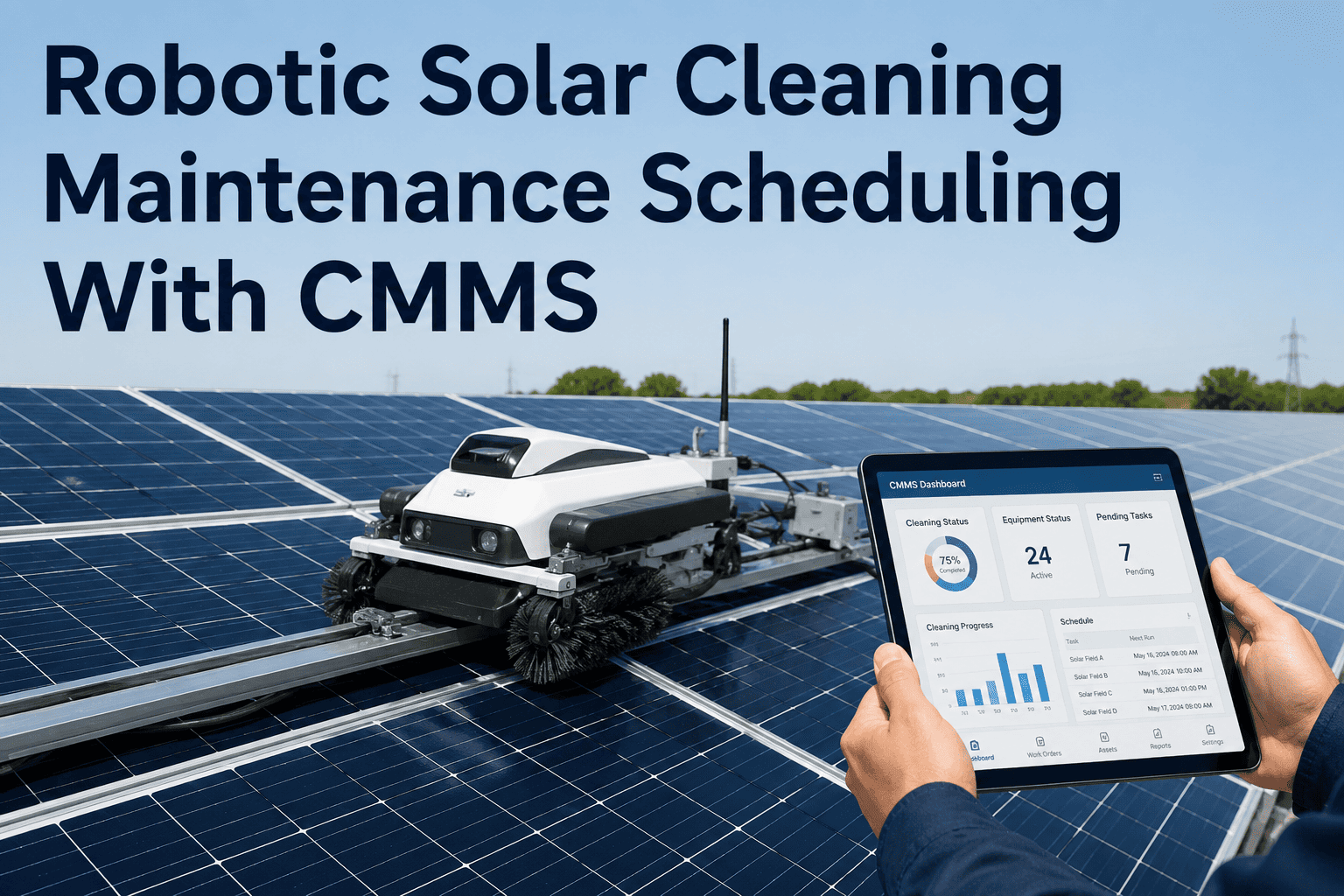
Utility-scale solar farms lose 15-35% of energy output annually to soiling — dust, bird droppings, pollen, and mineral deposits that accumulate faster than manual crews can clean. A 200 MW plant with 500,000+ panels cannot sustain manual washing cycles without ballooning labor costs and water consumption. Autonomous cleaning robots patrol rows continuously, restoring panel transmittance without water waste or crew risk, and when every cleaning cycle feeds directly into a CMMS like Oxmaint — start your free account to see it in action — each pass becomes a tracked maintenance event — soiling data populates asset histories, cleaning exceptions generate work orders, and your O&M team optimizes schedules based on real performance data instead of calendar guesses.
Why Solar Farms Are Losing Millions to Soiling
Soiling is the silent revenue killer in utility-scale photovoltaics. Every gram of dust on a panel surface absorbs or scatters photons that should be generating electricity. In arid regions — where solar irradiance is highest and installations are largest — dust accumulation rates are also at their peak. Manual cleaning crews cannot keep pace with 100+ MW installations, and the economics of truck-mounted washing at scale simply do not work. The result is a permanent performance gap between what your plant could produce and what it actually delivers. Autonomous cleaning robots, integrated with your CMMS, close that gap systematically — sign up free to manage your solar cleaning operations in Oxmaint.
How Cleaning Robots Transform Solar O&M
Robotic panel cleaning is not just about removing dust — it is a complete shift in how solar plants manage their most revenue-critical maintenance activity. Here is how each capability directly impacts your bottom line — create your free Oxmaint account to automate your cleaning work orders.
Waterless Dry Brush Cleaning
Rotating microfiber or soft polymer brushes sweep dust from panel surfaces without water. Eliminates water sourcing logistics in remote desert sites. Brush pressure sensors prevent micro-scratching of anti-reflective coatings. Each pass restores 95-98% of original transmittance on panels with light to moderate soiling.
Autonomous Row Navigation
GPS-RTK and rail-guided systems navigate panel rows autonomously at 300-800 m/hour. Edge detection sensors prevent falls at row boundaries. Obstacle avoidance handles junction boxes, wiring conduits, and debris. Robots return to charging docks automatically when battery drops below threshold, then resume the route from the exact panel where they stopped.
Real-Time Soiling & Defect Detection
Onboard cameras and IV curve sensors measure panel output before and after cleaning. AI classifies soiling severity, detects cracked cells, hotspots, delamination, and snail trails during every pass. Defect findings push directly as geo-tagged work orders with panel-level location and photographic evidence — sign up for Oxmaint to receive robotic defect reports automatically — turning every cleaning cycle into a diagnostic inspection.
CMMS Integration & Work Order Automation
Every robot cleaning cycle generates structured data packets — panels cleaned, soiling levels measured, defects flagged, cleaning exceptions logged. This data streams via REST API to Oxmaint, where it auto-populates asset records, updates cleaning histories, triggers defect work orders, and adjusts PM schedules based on actual soiling rates. Schedule a demo to see the full robot-to-work-order pipeline.
Every Cleaning Cycle Is a Data Event. Capture It All in Oxmaint.
Oxmaint receives robotic cleaning data and defect findings automatically — generating work orders, updating asset histories, and optimizing cleaning schedules based on real soiling patterns.
Robot Types for Utility-Scale Solar Cleaning
Choosing the right cleaning robot depends on your panel mounting system, site terrain, soiling type, and water availability. Here is how the major robot categories compare for utility-scale deployments, and how each integrates with your maintenance workflows — sign up for Oxmaint to track all robot cleaning data in one platform.
| Robot Type | Cleaning Method | Speed | Water Use | Best For |
|---|---|---|---|---|
| Rail-Mounted | Fixed brush on aluminium track | 400-800 m/hr | Zero (dry brush) | Fixed-tilt ground mount, new installations with pre-installed rails |
| Wheeled Autonomous | Rotating brush, self-navigating | 300-600 m/hr | Zero to minimal | Existing plants, tracker systems, retrofits without rail infrastructure |
| Drone-Deployed | Water spray from aerial platform | 150-300 m/hr | 0.5-1 L/panel | Rooftop arrays, hard-to-access floating solar, bird dropping removal |
| Semi-Autonomous | Operator-guided robotic washer | 200-500 m/hr | 0.2-0.5 L/panel | Mixed-terrain sites, panels with heavy cemented soiling |
From Dirty Panel to Clean Record: The 5-Stage Pipeline
Data without a destination is just noise. The real value of robotic cleaning emerges when every pass generates actionable maintenance intelligence inside your CMMS. Here is the pipeline that connects robot operations to maintenance execution — create your free Oxmaint account to set up this data pipeline.
Manual Cleaning vs. Robot + CMMS: Side by Side
The shift from manual crews to autonomous robots is not incremental improvement — it is an operational transformation that changes how solar O&M teams spend their time, allocate budgets, and measure plant health.
Replace Calendar Guesses with Condition-Based Cleaning Schedules
Oxmaint uses real soiling data from your cleaning robots to dynamically schedule cleaning cycles — maximizing energy yield while minimizing robot wear and operational cost.
Key Capabilities That Make Robotic Cleaning Pay Off
Anti-Reflective Coating Protection
Brush pressure regulated to <50g/cm² prevents micro-scratching of AR coatings. Brush material certified by major panel OEMs. Cleaning robots preserve panel warranty compliance while manual high-pressure washing voids it.
Soiling Analytics Dashboard
Robot data feeds into Oxmaint's analytics layer showing soiling rates by zone, seasonal patterns, cleaning effectiveness trends, and energy recovery per cleaning cycle. O&M managers see exactly which blocks need more frequent cleaning and which are over-serviced.
Fleet Management & Scheduling
Multi-robot fleet coordination assigns zones, manages charging rotations, and ensures complete plant coverage within target intervals. Fleet status, mission completion, and maintenance needs for the robots themselves are tracked inside Oxmaint alongside plant assets.
Remote Monitoring & Teleoperation
Cloud-connected robots report real-time position, battery status, cleaning progress, and exception alerts to a centralized dashboard. Operators can intervene via teleoperation for edge cases — stuck robots, unusual obstructions, or priority re-routing during weather events.
Deployment Roadmap: Pilot to Full Coverage
From Dirty Panels to Dispatched Work Orders in Minutes. That Is Modern Solar O&M.
Oxmaint bridges robotic cleaning data and maintenance execution — every cleaning cycle updates asset records, every defect becomes a tracked work order, every soiling trend informs your next schedule.