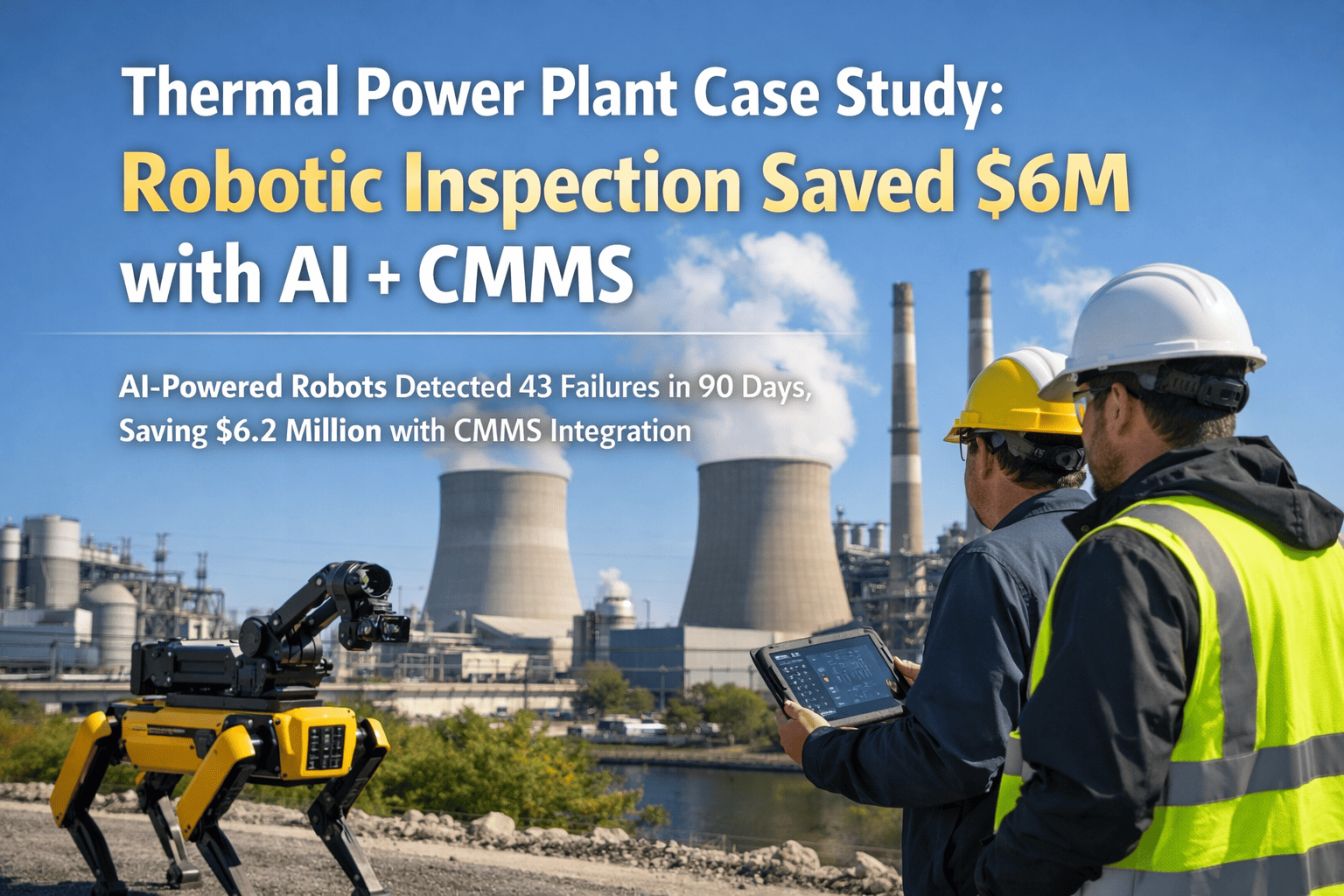
Power grid transformers are the backbone of modern electricity infrastructure, yet inspecting and maintaining them remains one of the most hazardous tasks in the utility sector. High-voltage environments, oil-filled tanks operating at extreme temperatures, toxic gas exposure from degraded insulation, and the constant risk of arc flash incidents make routine transformer inspections a serious safety concern. Across the globe, aging grid infrastructure — with some transformers exceeding 40 years of service — is pushing utilities to inspect more frequently, more thoroughly, and more safely than ever before. Autonomous and semi-autonomous inspection robots equipped with thermal imaging, AI-driven fault detection, and real-time data reporting are now replacing manual inspections in these high-risk zones, capturing diagnostic data that human inspectors could never safely collect.
For utilities managing hundreds or thousands of transformer assets, the challenge isn't just deploying robots — it's turning robotic inspection data into actionable maintenance decisions. When an inspection robot detects oil leakage, overheating windings, or partial discharge patterns, that finding needs to flow instantly into a structured maintenance workflow. That's where Oxmaint's CMMS platform becomes essential — automatically converting robotic inspection findings into prioritised work orders with thermal images, severity ratings, GPS coordinates, and recommended actions. The result is a fully closed loop from robotic detection to tracked maintenance execution, reducing response times from days to minutes.
Automate Transformer Inspections. Eliminate Human Risk. Capture 10x More Data.
Why Transformer Inspections Need Robotic Automation
Traditional transformer inspections are slow, dangerous, and incomplete. Maintenance crews in full arc-flash PPE can only spend limited time near energised equipment, often missing early-stage faults that robots with thermal cameras and gas sensors detect effortlessly. Here are the key drivers pushing utilities toward robotic transformer inspection:
Aging Grid Infrastructure
A significant portion of the global transformer fleet has been in service for over 30-40 years. Aging insulation, corroding tanks, and degraded gaskets require more frequent inspections — far more than manual teams can safely deliver. Robotic inspectors run scheduled patrols around the clock without fatigue or exposure limits.
Arc Flash and Electrocution Hazards
Substations contain energised equipment with lethal voltage levels. Arc flash incidents during manual inspections account for a significant share of utility worker injuries each year. Robots eliminate direct human presence in the most dangerous inspection zones, reducing arc flash exposure to zero for routine tasks.
Oil Leak and Fire Prevention
Transformer oil leaks create pool fire and spray fire risks. Robots equipped with thermal cameras and visual AI detect micro-leaks at gaskets, bushings, and tank seams long before they become visible to human inspectors — preventing fires that can destroy multi-million dollar assets and cause extended outages.
SF6 Gas Monitoring
Sulphur hexafluoride (SF6) — used as insulation in high-voltage equipment — is one of the most potent greenhouse gases, with 23,000 times more warming potential than CO2. Robotic gas sensors continuously monitor for SF6 leaks during inspections, supporting both environmental compliance and equipment integrity.
Data-Driven Predictive Maintenance
Robots capture 10-50x more data points per inspection than manual teams. Thermal profiles, oil level readings, vibration data, and dissolved gas analysis build historical trend models that predict transformer failures weeks or months in advance — shifting maintenance from reactive to predictive with Oxmaint's CMMS.
Types of Transformer Inspection Robots
Different transformer environments demand different robotic platforms. Modern inspection fleets combine multiple robot types coordinated through centralised management systems:
Ground-Based Wheeled Robots
Navigate substation floors on pre-programmed routes, stopping at each transformer to capture thermal images, visual inspections, oil level readings, and gas measurements. Pan-tilt-zoom cameras allow remote operators to zoom in on specific components. Best for flat, well-maintained substation yards with regular patrol schedules.
Aerial Drones (UAVs)
Inspect transformer tops, bushings, cooling fins, and overhead connections that ground robots cannot reach. Equipped with thermal and visual cameras, drones complete a full transformer top inspection in 5-15 minutes. Ideal for detecting bushing overheating, cooling system blockages, and connection point degradation across large substations.
Internal Micro-Inspection Robots
Miniaturised robots designed to enter oil-filled transformer tanks without requiring full oil drainage. These micro-robots navigate between windings, cores, and insulation layers, capturing close-up images of carbon traces from partial discharges, insulation degradation, and structural anomalies. Eliminates weeks of downtime previously needed for internal inspections.
Tracked Crawlers
Heavy-duty robots with tracked mobility for rough terrain, outdoor substations, and confined spaces. Equipped with robotic arms for close-proximity measurements like ultrasonic tank wall thickness testing and contact-based partial discharge sensing. Handle gravel, mud, and uneven surfaces that wheeled robots cannot traverse.
Every Robotic Finding Should Become a Tracked Work Order. Automatically.
Oxmaint receives inspection data from transformer robots and instantly generates prioritised maintenance work orders — complete with thermal images, location data, and severity classification.
Key Inspection Capabilities and Sensor Technologies
Thermal Imaging
Visual AI Inspection
Dissolved Gas Analysis
Partial Discharge Detection
How Robotic Inspection Data Flows Into Oxmaint CMMS
The real value of robotic transformer inspection isn't just collecting data — it's converting findings into completed repairs. Here is how the automated workflow operates from robot to resolution:
Robot Patrols Substation
Inspection robot follows pre-programmed route through the substation, stopping at each transformer to capture thermal scans, visual images, gas readings, and oil level data from multiple angles.
AI Analyses Findings
Onboard AI processes sensor data in real time, classifying anomalies by type (thermal, visual, gas, structural) and severity (low, medium, high, critical). False positives are filtered using trained models.
Data Pushed to Oxmaint
Classified findings are automatically transmitted to Oxmaint's CMMS via REST API — including thermal images, GPS coordinates, equipment ID, anomaly type, and recommended action.
Work Order Created and Dispatched
Oxmaint generates a prioritised work order, assigns it to the responsible maintenance team, attaches all supporting data, and tracks it through completion — ensuring no finding falls through the cracks.
Trending and Prediction
Historical inspection data builds asset health profiles over time, enabling predictive maintenance scheduling that prevents failures before they cause outages.
ROI of Robotic Transformer Inspection
Turn Robotic Inspection Data Into Completed Repairs — Automatically
Oxmaint's maintenance management platform integrates with robotic inspection systems to create, prioritise, dispatch, and track every work order from detection to verified completion.
Implementation Roadmap: Getting Started
Pilot Deployment
Deploy one inspection robot at your highest-value substation. Start with supervised teleoperation mode while operators build familiarity. Connect to Oxmaint CMMS for automated work order generation. Measure baseline inspection coverage, defect detection rates, and safety metrics.
Autonomous Transition
Transition to supervised autonomous patrol routes. Enable AI-powered anomaly detection and automatic work order creation. Build historical data models for trending analysis. Document ROI results for expansion business case.
Fleet Expansion
Expand to 3-5 substations based on pilot results. Add drone platforms for transformer top inspections. Integrate predictive maintenance algorithms using accumulated inspection data. Most utilities achieve full payback within this phase.
Frequently Asked Questions
Can robots operate in energised substations safely?
Yes. Modern substation inspection robots are designed specifically for energised environments. They maintain safe clearance distances from high-voltage equipment through pre-programmed exclusion zones and LIDAR-based proximity detection. The robots themselves are electrically insulated and EMI-hardened to prevent interference with substation equipment. Most importantly, they eliminate direct human presence in hazardous zones during routine inspections, removing the primary cause of arc flash injuries — which studies have linked predominantly to human factors during maintenance and inspection activities.
How do robots inspect inside oil-filled transformers?
Specialised micro-inspection robots (typically under 150mm in size) are designed to enter oil-filled transformer tanks through existing access ports without requiring full oil drainage. These robots navigate between windings and core assemblies using compact propulsion systems, capturing high-definition images and UV fluorescence data to identify carbon traces from partial discharges, insulation degradation, and structural anomalies. This approach eliminates weeks of downtime previously required for traditional internal inspections that demanded complete oil drainage and confined space entry.
How does Oxmaint integrate with inspection robots?
Oxmaint provides REST API endpoints that receive structured inspection data from robotic platforms. When a robot's onboard AI classifies an anomaly — for example, a thermal hot spot on a bushing rated as "high severity" — the robot system packages the finding with thermal image, GPS coordinates, equipment identifier, and recommended action, then posts it to Oxmaint's API. Oxmaint automatically creates a prioritised work order, attaches all supporting media, assigns it to the appropriate maintenance planner based on asset ownership, and tracks it through to completion and verification. Typical time from robotic detection to dispatched work order is under 5 minutes.
What maintenance do the robots themselves require?
Inspection robots require their own preventive maintenance programme. Daily post-mission checks include sensor cleaning, battery health verification, and wheel/track inspection. Weekly maintenance covers sensor calibration, communication system testing, and software updates. Monthly service includes motor/gearbox inspection, full system diagnostics, and environmental seal verification. Oxmaint manages robot maintenance alongside your grid assets — each robot has its own asset record, PM schedule, and spare parts inventory within the same CMMS platform that receives their inspection findings.
What is the typical ROI timeline?
Most utilities see payback within 6-14 months based on a combination of avoided transformer failure costs (a single unplanned transformer failure costs $2M-$10M including replacement, outage costs, and environmental cleanup), reduced inspection labour, decreased unplanned outages, and eliminated safety incident costs. Utilities that start with a single robot pilot typically expand to 3-5 substations within 18 months once ROI documentation is complete. The compounding value of historical inspection data — enabling predictive maintenance that prevents failures rather than just detecting them — continues to grow the ROI year over year.
Ready to Deploy Smarter Transformer Maintenance?
Join leading utilities using Oxmaint to bridge the gap between robotic inspection technology and maintenance execution. Every finding becomes a tracked, completed, verified repair.