AI Vision for Operator Assistance in Manufacturing
By Michael Finn on January 21, 2026
A veteran CNC operator at a precision aerospace parts manufacturer missed a subtle tool wear pattern during a night shift. The result? 127 titanium components scrapped, $340,000 in material losses, and a three-week delivery delay to a major defense contractor. That quality escape—entirely preventable with AI-powered visual assistance—cost more than a decade's investment in vision technology. Manufacturing operators face an impossible cognitive load: monitoring dozens of parameters, detecting subtle anomalies, following complex procedures, and making split-second decisions—all while maintaining quality standards measured in microns. AI vision systems don't replace human expertise; they amplify it, catching what eyes miss and guiding hands with precision no manual can match.
$3.1T
Global Manufacturing Output at Risk from Human Error Annually
Facilities with AI vision assistance reduce operator errors by 85% and cut training time for complex tasks by 60%
The global machine vision market is projected to reach $21.4 billion by 2030, with operator assistance applications growing at 18.5% CAGR—the fastest segment in industrial AI. Manufacturing sits at the epicenter of this transformation—where human judgment meets machine precision to achieve quality and productivity levels neither could reach alone. Schedule a consultation to discover how AI vision can transform your operators into superhuman performers.
Why Manufacturing Operators Need AI Vision Assistance
Modern manufacturing demands perfection at inhuman speeds. Operators must simultaneously monitor equipment status, verify quality, follow procedures, and respond to exceptions—tasks that exceed human cognitive bandwidth, especially over 8-12 hour shifts.
Cognitive Fatigue
68% Error Increase After 4 Hours
Human visual inspection accuracy drops dramatically during extended shifts. AI maintains 99.9% consistency whether it's minute one or hour twelve.
Procedure Complexity
200+ Step Assemblies
Complex products require hundreds of sequential operations. Missing or misordering a single step can render entire assemblies defective.
Operator Variance
40% Quality Variation
Different operators interpret standards differently. What passes for one inspector fails for another, creating inconsistent quality and customer complaints.
Cycle Time Pressure
2-5 Second Inspection Windows
Production speeds leave mere seconds for quality verification. Thorough manual inspection would cut throughput by 30-50%.
The Hidden Cost of Human Limitation
Operator errors don't just cause immediate defects. They create warranty claims 6-18 months later, damage customer relationships, trigger costly recalls, and in safety-critical industries, can result in catastrophic failures. AI vision assistance isn't about replacing operators—it's about giving them superhuman capabilities.
The Real Cost of Operating Without AI Vision
Manufacturing leaders often underestimate the cumulative impact of operator limitations because errors appear random and distributed. But when you aggregate the true cost across quality, efficiency, training, and liability, the numbers are staggering.
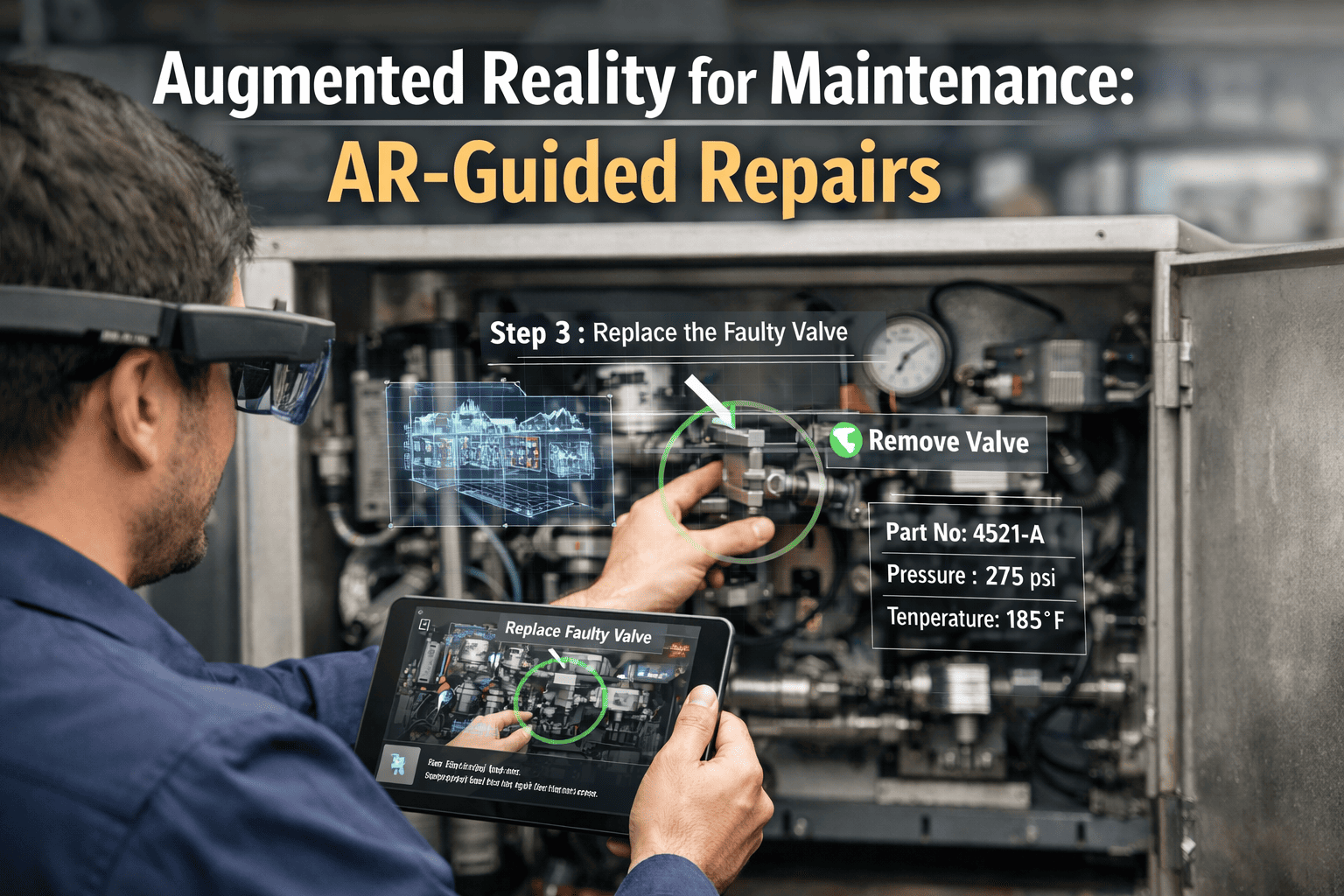
Modern AI vision systems combine edge-deployed neural networks, augmented reality displays, and real-time process integration to guide operators through complex tasks while continuously monitoring for quality and safety issues.
When AI vision detects an issue—whether a quality defect, procedural error, or safety hazard—it integrates with your computerized maintenance management system (CMMS) to ensure proper follow-up. Equipment problems trigger maintenance work orders; recurring quality issues flag process improvements. Create your free Oxmaint account to see how integrated vision systems close the loop from detection to resolution.
Key AI Vision Applications for Operators
AI vision assistance spans the entire manufacturing workflow, from incoming inspection through final assembly. Focus implementation on applications with the highest error rates and quality impact.
High Impact
Assembly Verification
Error Reduction92-98%
AI verifies correct parts, orientation, torque sequences, and fastener presence. Catches missing components, wrong parts, and assembly errors in real-time.
High Impact
Surface Defect Detection
Detection Rate> 99.5%
Identifies scratches, dents, porosity, cracks, and contamination that human inspectors miss—especially on reflective or complex surfaces.
Medium Impact
Tool & Fixture Verification
Setup Error Prevention> 95%
Confirms correct tooling, fixtures, and machine setup before cycle start. Prevents crashes, wrong-part machining, and costly rework.
Medium Impact
Work Instruction Guidance
Training Time Reduction40-60%
AR-overlaid instructions guide operators through complex procedures step-by-step, with automatic verification that each step is completed correctly.
Enabling
Safety Monitoring
Incident Prevention> 80%
Detects PPE compliance, unsafe positions, and hazardous conditions. Alerts operators and supervisors before injuries occur.
Enabling
Measurement Assistance
Measurement Speed10x Faster
AI vision performs dimensional verification, GD&T checks, and SPC data collection automatically—freeing operators from manual gauging.
Not sure which applications to prioritize? Our engineers will assess your operations and recommend high-ROI vision implementations.
The difference between traditional quality methods and AI-powered operator assistance isn't just about automation—it's about fundamentally changing how humans and machines collaborate on the factory floor.
Quality Assurance Approach Comparison
Traditional Methods
⚠️
Post-process inspection catches defects late
Paper-based work instructions
Subjective quality judgments
Sampling-based inspection (1-5%)
6-12 month operator proficiency
2-5%typical defect escape rate
AI Vision Assistance
✅
In-process detection prevents defects
Interactive visual guidance
Consistent, objective decisions
100% inline inspection
2-4 week operator proficiency
< 0.1%defect escape rate achievable
Proven Results from AI Vision Programs
Manufacturing facilities that implement AI vision for operator assistance consistently achieve dramatic improvements in quality, productivity, and workforce effectiveness.
Documented Industry Outcomes
85%
Reduction in operator-caused defects
60%
Faster training for complex tasks
25%
Increase in throughput capacity
6-9mo
Typical ROI payback period
"
After deploying AI vision guidance on our assembly lines, we reduced first-pass defects from 3.2% to 0.15% and cut new operator training from 16 weeks to 6 weeks. Our experienced operators love it too—they say it's like having a quality engineer watching over their shoulder, but one that never blinks.
— VP of Operations, Automotive Tier 1 Supplier
Implementation Roadmap
Deploying AI vision for operator assistance requires careful planning to capture baseline performance, train AI models on your specific products, and integrate seamlessly with existing workflows.
1
Assessment & Use Case Selection
Week 1-2
Quality data analysis to identify high-impact opportunities
Workstation ergonomics and camera placement study
Baseline defect rate and cycle time documentation
2
Data Collection & Model Training
Week 3-6
Capture images of good parts, defects, and procedures
Train and validate AI models on your specific products
Develop work instruction sequences with verification points
3
Pilot Deployment & Validation
Week 7-10
Deploy on 1-2 pilot stations with operator training
Validate detection accuracy and false positive rates
CMMS integration for issue escalation and tracking
4
Scale & Continuous Improvement
Ongoing
Roll out to additional lines and product families
Continuous model improvement with new data
Expansion to additional use cases based on ROI
Choosing the Right AI Vision Solution
The AI vision market offers solutions ranging from simple camera inspection to comprehensive operator assistance platforms. For manufacturing applications, prioritize these capabilities:
✓
Edge-Deployed AI Processing
On-device neural network inference for sub-100ms response times. Cloud-dependent systems can't provide real-time operator feedback at production speeds.
✓
No-Code Model Training
Quality engineers should be able to add new defect types and products without data science expertise. Look for intuitive labeling and training interfaces.
✓
Multi-Modal Guidance Options
Support for AR headsets, mounted displays, projected guidance, and audio alerts—matching the delivery method to each workstation's needs.
✓
CMMS/MES Integration
Native connectivity to maintenance management and execution systems enables automated escalation, traceability, and closed-loop quality.
✓
Analytics & Continuous Learning
Built-in dashboards for defect trends, operator performance, and model accuracy—plus automated retraining as new edge cases emerge.
Frequently Asked Questions
Will AI vision replace our operators?
No—AI vision augments operator capabilities rather than replacing them. Operators remain essential for judgment calls, exception handling, and tasks requiring dexterity. AI handles the superhuman tasks: maintaining perfect attention across 8-hour shifts, detecting microscopic defects, and ensuring 100% procedure compliance. Most facilities report that operators embrace the technology because it makes their jobs less stressful and more successful. Schedule a demo to see human-AI collaboration in action.
How long does it take to train AI models for our products?
Initial model training typically requires 2-4 weeks depending on product complexity and defect variety. Modern systems need 50-200 examples of each defect type for robust detection. The key is capturing representative samples—your quality team already has this knowledge. Ongoing model improvement happens continuously as the system encounters new edge cases.
What about false positives disrupting production?
Well-tuned AI vision systems achieve false positive rates below 0.5%—far better than human inspectors. Initial deployment includes a validation period where operators confirm AI decisions, and the system learns from corrections. Most facilities report that after 2-4 weeks of tuning, operators trust the AI decisions more than their own eyes for subtle defects.
How does AI vision integrate with our maintenance systems?
When integrated with a CMMS like Oxmaint, AI vision detections automatically trigger appropriate responses. Equipment-related issues (tool wear patterns, fixture problems) generate maintenance work orders. Recurring quality defects flag process improvement tickets. This closed-loop integration ensures that detection leads to resolution, not just data collection. Sign up for free to explore integration capabilities.
Give Your Operators Superhuman Vision
Oxmaint connects AI vision systems with your entire maintenance and quality operation—transforming visual detections into actionable work orders, continuous improvement data, and documented quality excellence.