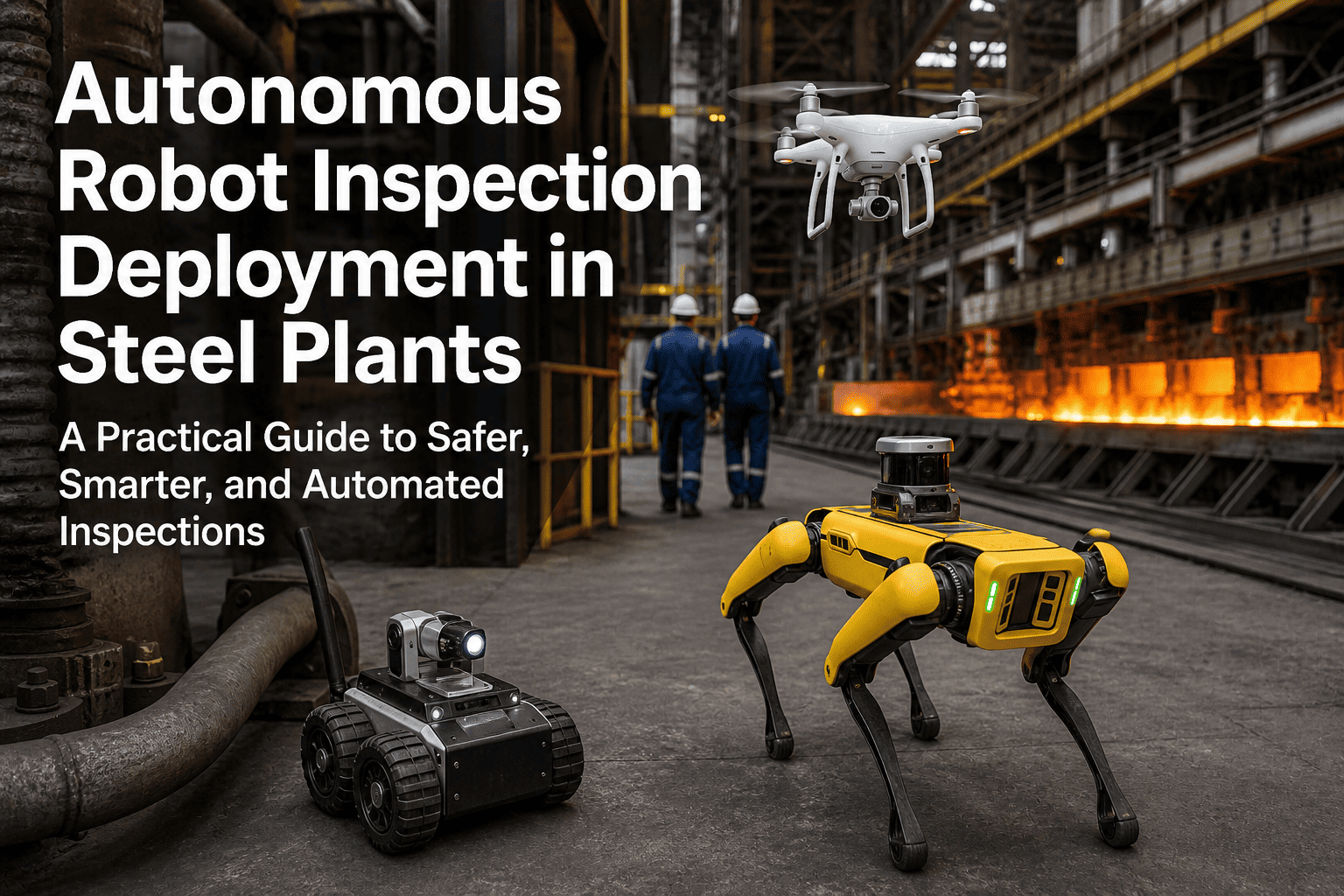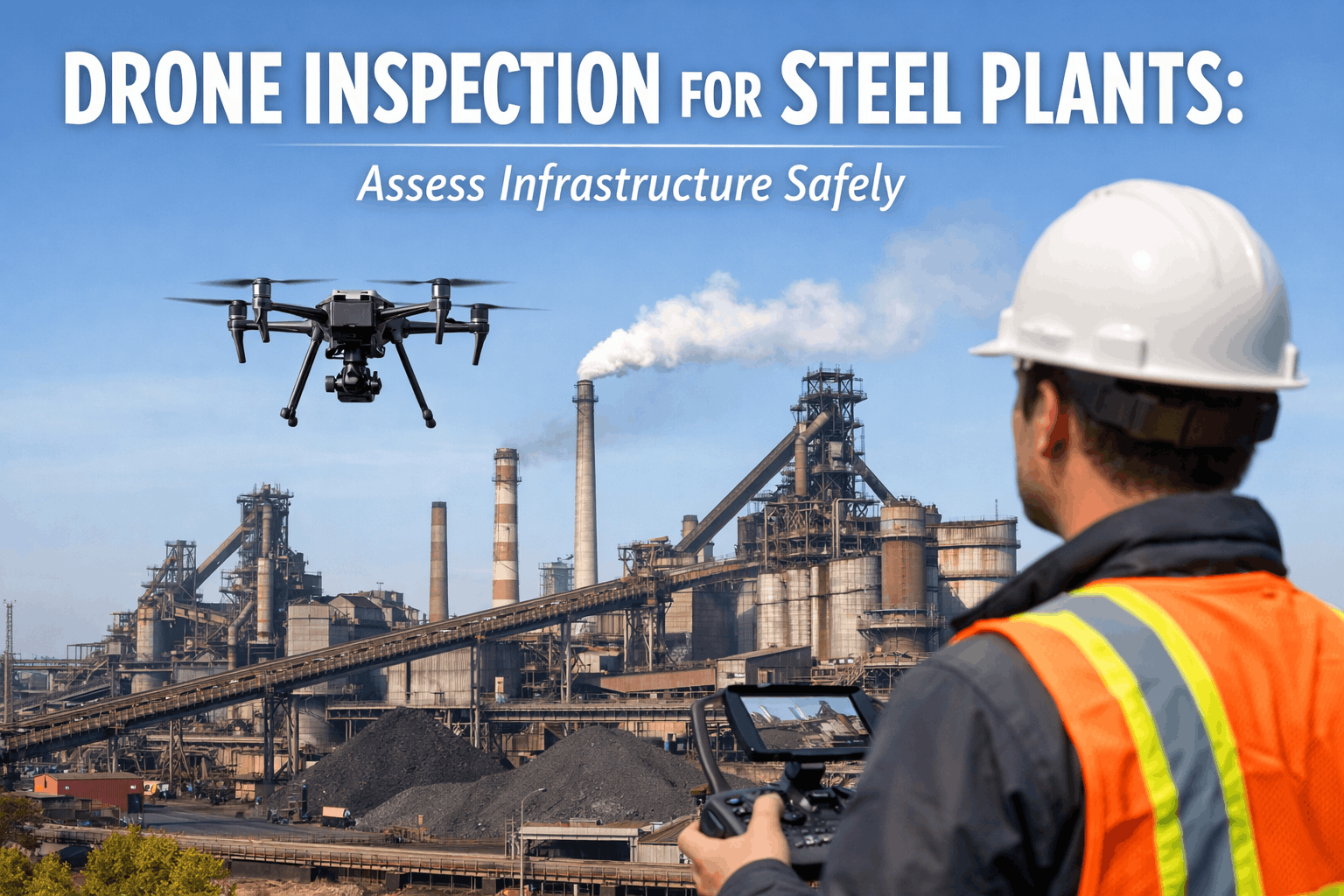
Steel plant inspection teams spend 38% of their working time in areas classified as high-risk — near blast furnace casthouse floors, inside torpedo ladle pits, and on elevated structures above active rolling lines. Autonomous inspection robots, drones, and crawlers now perform those same inspections with greater frequency, higher data fidelity, and zero exposure risk — and every finding flows directly into your CMMS as a structured work order, not a PDF report that someone has to manually action.
Inspection & Monitoring · AI Vision
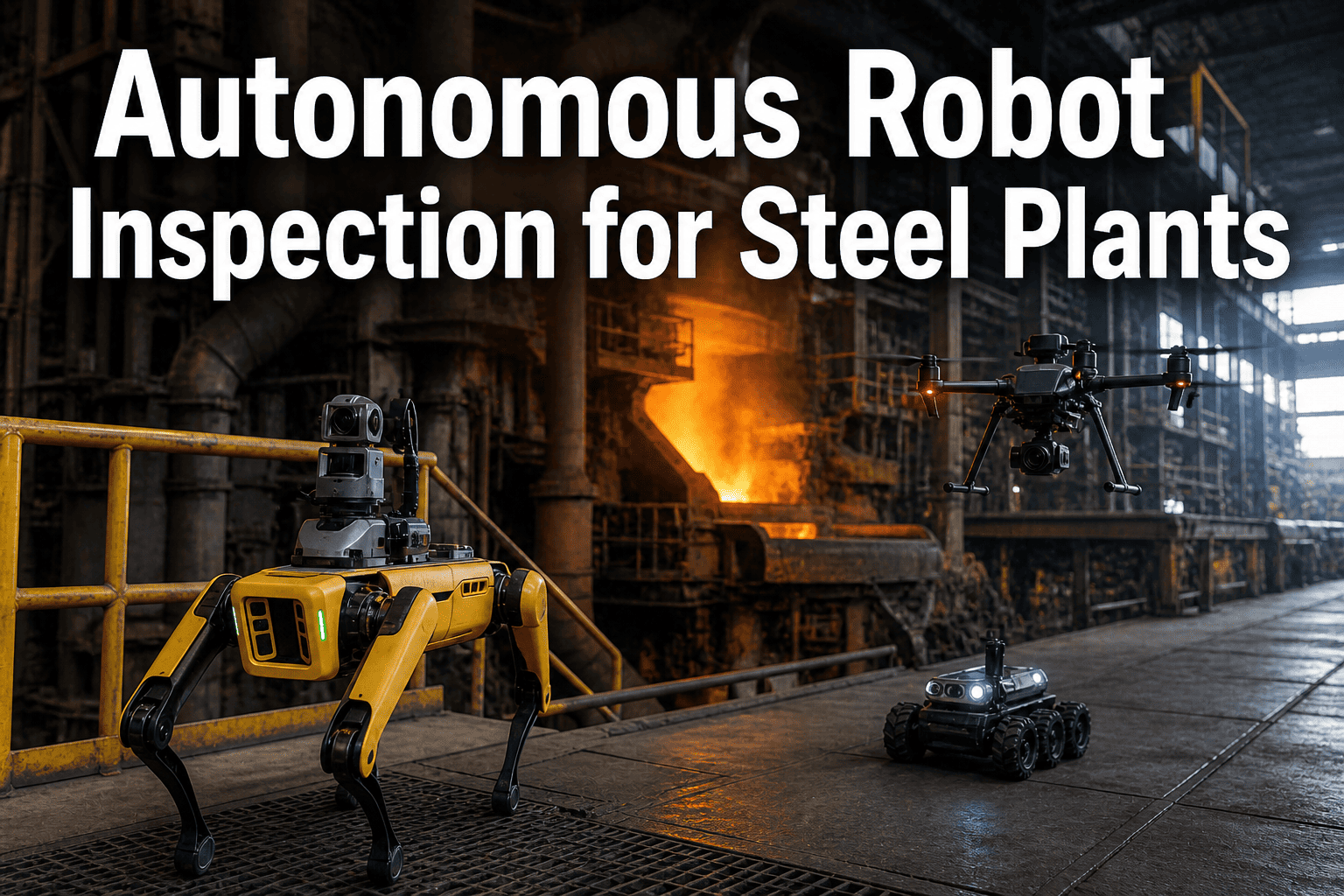
Autonomous Robot Inspection for Steel Plants
Drones · Crawlers · Quadrupeds — Hazardous Area Inspection with CMMS-Integrated Findings
Zones Robots Replace Human Inspection
Blast Furnace Casthouse95% risk reduction
Torpedo Ladle Pit88% risk reduction
EAF Roof Structures91% risk reduction
Coke Oven Batteries82% risk reduction
Hot Metal Transfer Routes97% risk reduction
Three Robot Types — Right Tool for Each Steel Plant Zone
Aerial Drones
Structures · Storage · Elevated Zones
Altitude rangeUp to 120m
Thermal + visualDual sensor
Mission time40–90 min
GPS-denied opsIndoor capable
Roof structure integrity, storage tank inspection, dust collector visual, overhead crane rail alignment, and cooling tower thermal surveys.
Pipeline Crawlers
Internal Pipe · Vessel · Confined Space
Pipe diameter100mm–1200mm
Wall thicknessUT + MFL scan
Travel speed0.3–1.2 m/s
Defect detection0.5mm resolution
Gas distribution pipelines, cooling water circuits, blast furnace raceway inspection, and pressure vessel internal corrosion mapping.
Quadruped Robots
Ground-Level · Complex Terrain · Hazardous
TerrainSteps, rubble, stairs
Temp toleranceUp to 65°C ambient
PayloadUp to 14kg sensors
AutonomyPre-programmed routes
Casthouse floor monitoring, converter aisle patrol, ladle preparation area inspection, and nightshift walkdown automation.
Every Robot Finding Becomes a Work Order in OxMaint — Automatically
AI vision classifies defect severity, OxMaint creates the work order, assigns it by criticality, and closes the loop from inspection to repair without manual data entry.
AI Vision + CMMS Integration — The Inspection-to-Action Workflow
1
Robot Deploys on Scheduled Route
Pre-programmed inspection path triggered from OxMaint work order schedule. No manual piloting required for routine inspection routes.
2
AI Vision Classifies Findings
Computer vision models detect and classify: corrosion grade, crack width, structural deformation, thermal anomaly, and fluid leak — with confidence score per finding.
3
Severity Scoring and Prioritisation
Each finding is scored against asset criticality and defect severity. Critical findings trigger immediate OxMaint alerts. Non-critical findings are queued in the PM backlog with evidence photos attached.
4
Work Order Generated in OxMaint
Structured work order created with: asset ID, defect type, severity level, GPS/location coordinates, photo evidence, and recommended action — all from robot data, zero manual entry.
Deployment Performance — Real Steel Plant Inspection Data
| Inspection Type | Human Method | Robot Method | Frequency Increase | Defect Detection Rate |
|---|---|---|---|---|
| Blast Furnace Shell | Annual shutdown survey | Drone thermal — quarterly | 4× more frequent | +34% vs visual |
| Cooling Water Pipelines | Planned shutdown — biennial | Crawler UT — semi-annual | 2× more frequent | +61% corrosion detected |
| EAF Roof Structures | Annual rope access | Drone visual — monthly | 12× more frequent | +28% crack early detection |
| Casthouse Floor Assets | Shift walkdown — daily | Quadruped — per shift | Same frequency | 100% documented findings |
| Storage Tank Floors | 5-year internal entry | Crawler MFL — annual | 5× more frequent | +89% floor defect detection |
"
The argument for robotic inspection in steel is not primarily about cost per inspection hour — it is about inspection frequency. A human inspector enters a torpedo ladle pit once during a planned maintenance window. A crawler robot can inspect that same space every turnaround cycle. The findings from the second inspection that would have been missed for another 18 months? Those are the findings that prevent a $1.2 million liner failure. What makes it work operationally is the CMMS integration. Every robot finding that lands as a structured work order with photo evidence and severity classification gets acted on. Robot findings that arrive as PDF reports get filed and forgotten. The system only delivers value when the robot's output is indistinguishable — from the maintenance team's perspective — from any other work order in their queue.
Rainer Holzmann, Dipl.-Ing. (Mechanical), Certified Inspection Technology Specialist
Chief Inspection Engineer — ArcelorMittal Bremen · 24 Years Steel Plant Inspection Management · Specialist in robotic inspection deployment, NDT programme design, and CMMS integration for integrated steelworks and EAF plants
Frequently Asked Questions
Which steel plant zones are highest priority for robotic inspection deployment?
Highest ROI zones are areas where human inspection is either dangerous, infrequent due to access constraints, or limited by shutdown scheduling. Blast furnace shell and tuyere inspection, torpedo ladle pit surveys, and elevated EAF structure inspections consistently deliver the fastest returns because they replace inspections that previously happened only during planned shutdowns — annual or biennial. Quadruped robots in casthouse floors add value by making every shift inspection fully documented, which transforms shift notes from informal observations into structured CMMS data. Book a demo to see how inspection zones are prioritised during OxMaint deployment.
How do robot inspection findings integrate with OxMaint work orders without manual entry?
OxMaint's AI vision integration layer receives structured defect data from robot inspection systems via API — each finding includes asset ID, defect classification, severity score, location coordinates, and attached media. OxMaint maps these inputs to the correct asset in the asset register, applies criticality weighting, and generates a work order with all inspection evidence pre-attached. Technicians receive a work order with context — they do not receive a raw inspection report that requires interpretation. The entire pipeline from robot finding to assigned work order runs in under 4 minutes for critical findings. Start your free trial to see the inspection-to-work-order workflow in OxMaint.
Can autonomous robots operate during production without requiring shutdowns?
Most robotic inspection systems used in steel are designed for operation during live production. Aerial drones operate in areas above active production without interference. Quadruped robots follow pre-programmed routes designed around active equipment clearances. Pipeline crawlers typically require flow isolation but not full production shutdown. The shift to robotic inspection means plants can achieve quarterly or monthly inspection cycles on assets that previously could only be inspected during annual or biennial planned outages — this is where the material safety and reliability improvement comes from. Book a demo to see inspection scheduling within OxMaint's maintenance calendar.
What data formats do robot inspection systems output and how does OxMaint handle them?
Robot inspection systems output data in several formats: structured JSON from AI vision classification layers, image and video files with embedded metadata, thermal radiometry data in RJPEG format, and UT or MFL scan data in industry-standard formats. OxMaint normalises these into structured asset inspection records regardless of input format, links them to the relevant asset in the asset register, and stores them with full version history for trend comparison — so the second inspection of a storage tank floor is automatically compared against the first to detect progression. Explore OxMaint's inspection data management features in your free trial.
OxMaint · AI Vision Inspection
Robot Inspections Are Only as Valuable as the Work Orders They Generate. OxMaint Closes the Loop.
Every drone scan, crawler survey, and quadruped walkdown flows into OxMaint as a structured, prioritised, assigned work order — from inspection to repair action without manual data handling.