A steel mill running a mid-size blast furnace once went three full days without noticing anything wrong. A single cooling stave had developed a small water channel blockage, but daily rounds still showed outlet temperatures in range and weekly pressure checks still looked normal. By day three, that blockage had grown into a wide shell hotspot. By day twenty-one, the furnace was down for an unplanned reline that erased a year of production margin in one event. The instruments that would have caught it on day one — the stave body thermocouples — were already installed. Nobody was trending them. See how Oxmaint turns that same thermocouple data into a live stave health score.
Blast Furnace Health / Stave Temperature / CMMS Guide 2026
Blast Furnace Health Monitoring: Stave Temperature Data Your Furnace Is Already Collecting
Every stave thermocouple in your furnace is generating an early-warning signal right now. The only question is whether anyone is trending it before the refractory pays the price.
4-8 wks
Typical advance warning from stave heat flux trending before a single thermocouple hits alarm threshold
2-5 yrs
Campaign life extension reported by mills that trend stave temperature continuously instead of on rounds
3-5%
Cooling water flow drop that signals a developing blockage weeks before it becomes critical
72 hrs
Window in which a single stave breach can spread thermal stress into neighboring cooling elements
From Raw Thermocouple Data to Stave Health Score
Watch Every Stave the Way Your Best Furnace Engineer Would
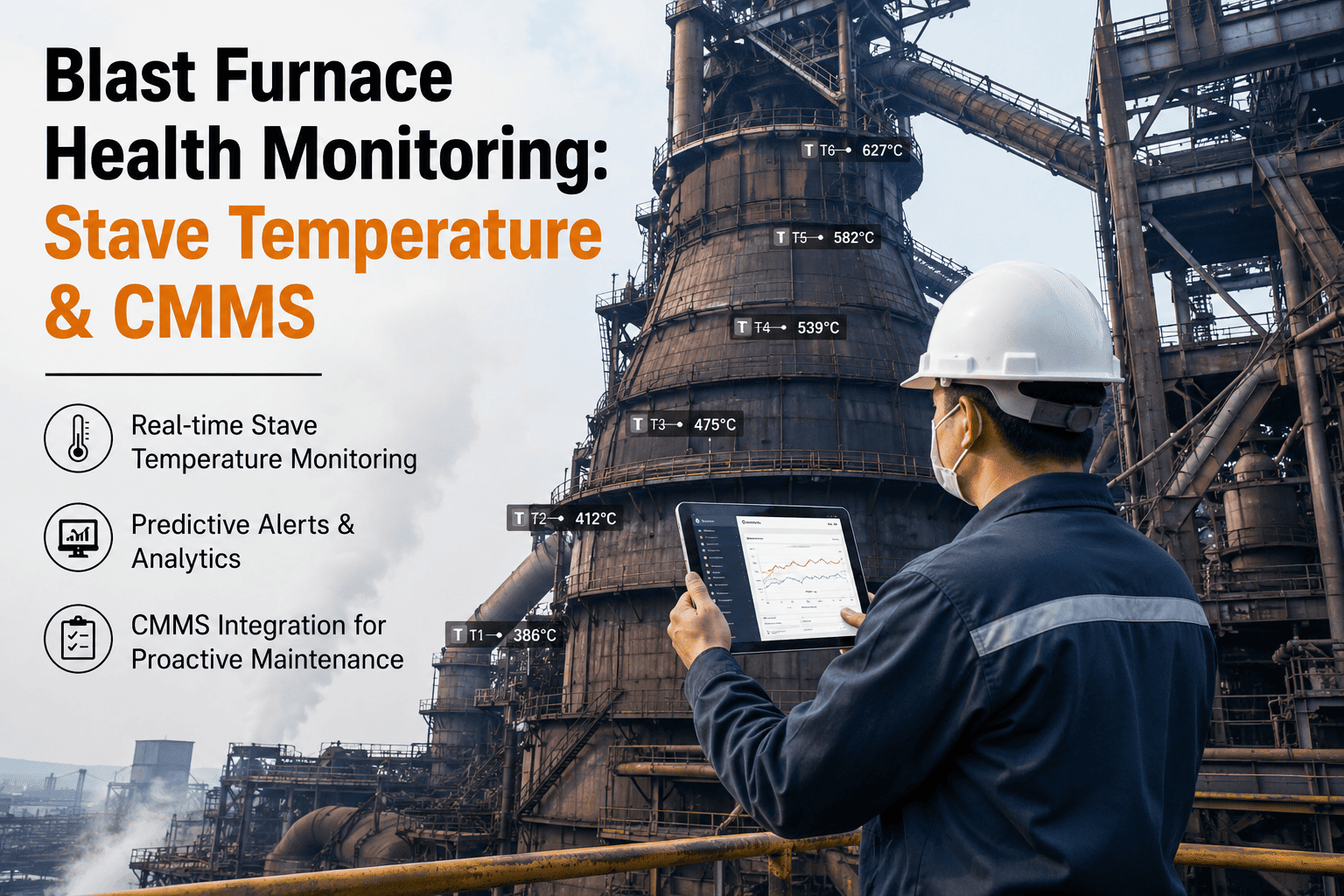
Oxmaint pulls stave body temperature, cooling water inlet and outlet readings, and calculated heat flux into one continuously trending view, so a developing hot spot shows up as a pattern, not a surprise.
Why Stave Temperature Is the Furnace's Earliest Warning System
A blast furnace shell survives 2000°C+ internal temperatures because the cooling staves behind it are constantly pulling heat away through circulating water. When a cooling channel narrows, even slightly, the stave body temperature rises before the water outlet temperature moves enough to trip a rounds-based check. That gap is where campaigns are won or lost. A furnace watched on a daily paper round catches trouble in days. A furnace watched through continuous stave thermocouple trending catches the same trouble in hours, while the fix is still a planned intervention instead of an emergency reline.
Three Signals Hiding in Your Stave Thermocouple Data
01
Rising Body Temperature at Steady Flow
When water flow is confirmed normal but the stave body temperature keeps climbing, the stave has likely lost part of its heat extraction capacity and the refractory behind it is running with reduced protection.
02
Heat Flux Drifting Off Its Own Baseline
Every stave has a personal heat flux baseline formed by its position and skull formation. A slow drift away from that baseline, even within alarm limits, often shows up weeks before a threshold alarm fires.
03
Asymmetric Outlet Temperature Rise
A stave whose outlet temperature climbs a few degrees faster than its neighbors on the same panel is frequently the first physical sign of a channel restriction long before pressure readings flatten out.
Daily Rounds vs Digital Trending vs CMMS-Based Stave Monitoring
The table below shows why the format of your monitoring data matters as much as the sensors themselves.
| Metric |
Manual Rounds Only |
Digital Readouts, No Trending |
CMMS-Based Continuous Trending |
| Detection window |
Hours to days after failure starts |
Same day, only after alarm trips |
4-8 weeks before threshold alarm |
| Data used per stave |
Single spot reading per shift |
Live number, no history attached |
Temperature, flow, and heat flux trend |
| Comparison baseline |
None — judged on gut feel |
Fixed alarm limit only |
Stave's own history plus panel average |
| Work order trigger |
After a visible problem |
After an alarm fires |
Automatic at early deviation |
| Typical outcome |
Reactive, unplanned reline risk |
Fewer surprises, still late |
Planned intervention, campaign preserved |
The Five-Point Framework for CMMS-Based Stave Monitoring
01
Map Every Thermocouple to Its Stave
Tie each stave body and cooling circuit thermocouple to a specific panel position so a reading can be judged against its own neighbors, not a generic plant-wide limit.
02
Calculate Heat Flux Per Stave
Combine water flow rate with the inlet-outlet temperature differential to get actual heat removed per stave segment, the number that reveals wear long before a raw temperature does.
03
Set a Personal Baseline, Not a Flat Limit
Let each stave's own operating history define normal, so a slow drift shows up as a deviation instead of being masked inside a wide plant-wide alarm band.
04
Correlate Temperature With Water Flow
A rising stave temperature next to a falling flow reading points to a blockage. The same rise with steady flow points to internal cracking — the response to each is different.
05
Route Deviations Straight Into Work Orders
A flagged stave should generate an inspection work order automatically, so the gap between detection and action is measured in minutes, not the next planned outage.
Stop Reading Thermocouples One at a Time
Let Oxmaint Trend, Compare, and Flag Every Stave for You
Instead of a technician scanning rows of numbers on a screen, Oxmaint's stave health model compares every circuit against its own baseline and the panel average, and opens a work order the moment a pattern looks wrong.
How Oxmaint Builds a Living Stave Health Model
01
Continuous Thermocouple and Flow Ingestion
Oxmaint connects to existing furnace instrumentation and pulls stave body temperature, cooling water flow, and inlet-outlet differentials continuously, instead of waiting for a shift-based manual entry.
No new sensors required to get started
02
Per-Stave Heat Flux Trending
Each stave's calculated heat flux is trended against its own baseline and against the panel mean, so a slow drift is visible long before any single reading crosses an alarm limit.
Weeks of advance notice instead of a sudden alarm
03
Automatic Anomaly Flagging
When a stave's temperature, flow, or heat flux pattern deviates from its own normal range, Oxmaint flags the circuit and opens a work order for inspection before the deviation becomes damage.
A flagged stave gets attention the same shift
04
Campaign-Long Health Records
Every stave replacement, water bypass event, and thermal anomaly is logged against the asset over the full campaign, building a history that guides the next reline and inspection plan.
A full stave history instead of scattered notes
What Changes Once Stave Data Moves Into Oxmaint
| Outcome |
Before Continuous Trending |
After Oxmaint |
| Blockage detection |
Found after outlet temp visibly rises |
Flagged at 3-5% flow deviation |
| Stave wear visibility |
Judged against one plant-wide limit |
Compared to its own baseline and panel |
| Response time |
Next scheduled round or report |
Automatic work order within the shift |
| Campaign planning |
Based on periodic spot checks |
Based on continuous historical trend data |
| Failure type |
Unplanned, high-cost shutdown risk |
Planned inspection during normal ops |
Why Continuous Stave Monitoring Pays for Itself
2-5 yrs
Added campaign life reported from active stave and cooling monitoring
A longer campaign delays the single largest capital cost a furnace ever incurs, its reline
$500K+
Typical cost of a single unscheduled stave-related furnace stop
Most of that cost is avoidable once the same stave shows a trend weeks in advance
4-8 wks
Advance notice heat flux trending gives before a threshold alarm fires
That window is the difference between a planned repair and an emergency crew
72 hrs
Time a single undetected breach can take to stress neighboring staves
Early flagging on one circuit protects the panel around it, not just the one stave
A single unplanned reline can cost more than a decade of continuous monitoring across an entire furnace fleet. The thermocouples and flowmeters already installed on your furnace are not the missing piece — a system that trends them continuously and tells you when a pattern looks wrong is. Start a free trial to see your own stave data trended from day one, or book a demo to walk through it against your current furnace instrumentation.
Frequently Asked Questions
What is stave temperature monitoring in a blast furnace?+
It is the practice of continuously tracking cooling stave body temperature, water flow, and heat flux to catch refractory wear or cooling channel blockages long before they become a shell hotspot.
How early can stave data actually predict a failure?+
Continuous heat flux trending typically flags an abnormal pattern four to eight weeks before any single thermocouple crosses its alarm threshold, giving time for a planned inspection instead of an emergency stop.
Do we need new sensors to start CMMS-based stave monitoring?+
What is the difference between temperature monitoring and heat flux monitoring?+
Temperature is a single point reading. Heat flux combines that reading with water flow rate to measure actual heat removed, which reveals wear trends a raw temperature reading alone can miss.
Can this fit into a furnace instrumentation setup we already run?+
Yes. Oxmaint layers trending, baselines, and automatic work orders on top of your existing thermocouple and flow data.
Book a demo to see it mapped to your furnace.
Blast Furnace Stave Health + CMMS — Oxmaint
Every Stave Trended. Every Drift Flagged. Every Campaign Protected.
Continuous thermocouple trending, per-stave heat flux calculation, automatic anomaly flagging, and campaign-long stave history — built on top of the furnace instrumentation you already have.
4-8 wks
Advance warning before a threshold alarm fires
2-5 yrs
Reported campaign life extension from active monitoring
0
New sensors typically required to get started
1 view
For every stave's temperature, flow, and heat flux trend