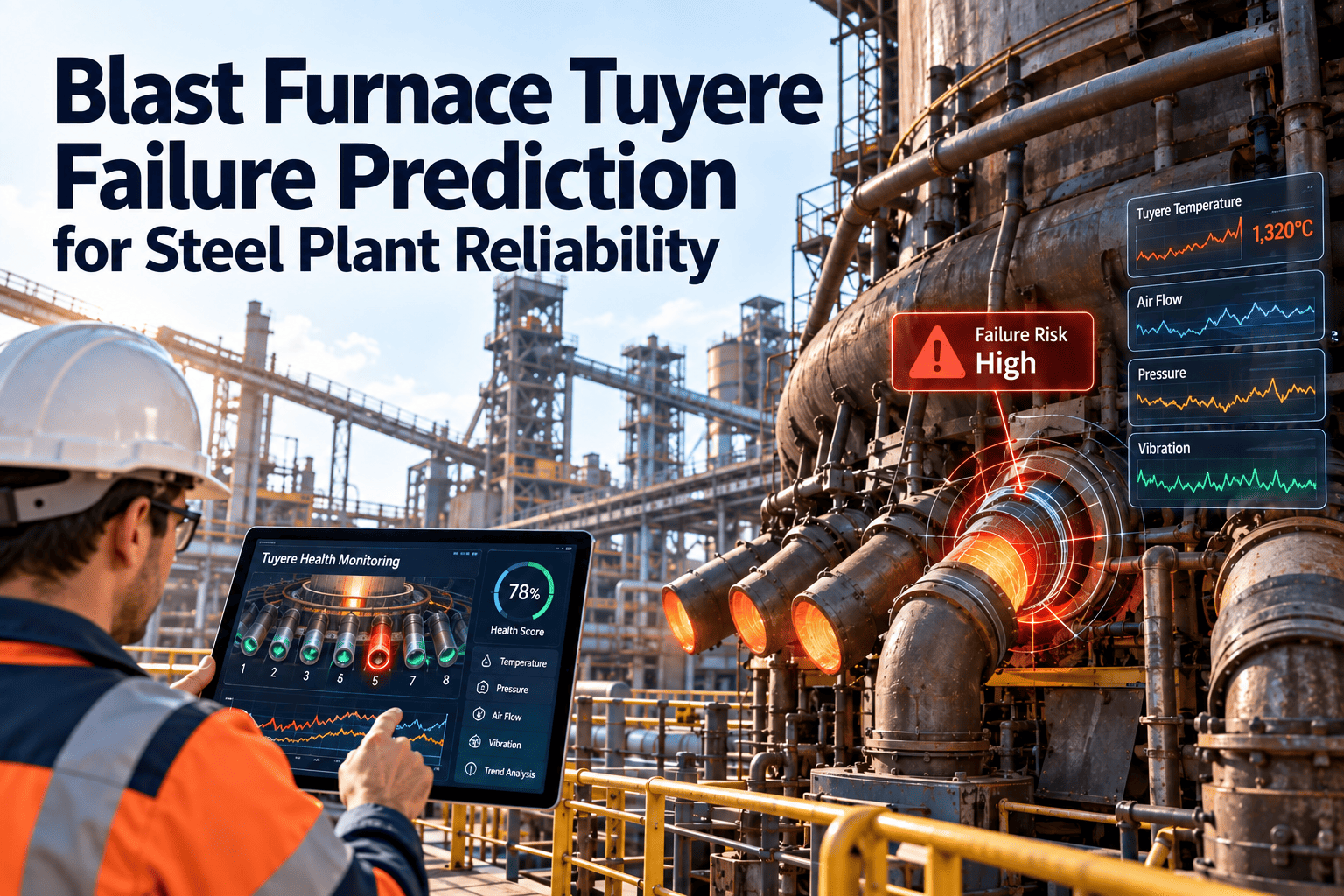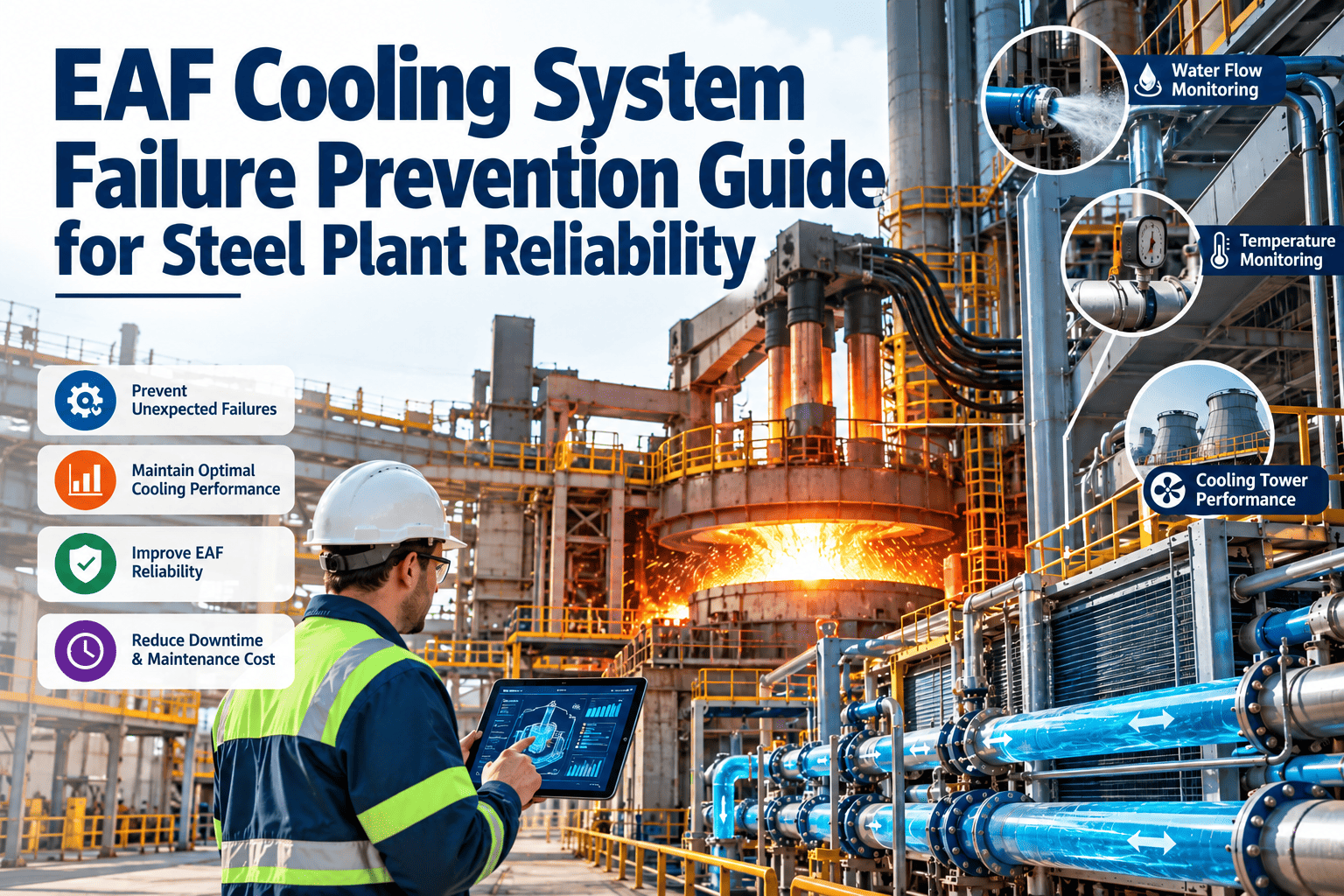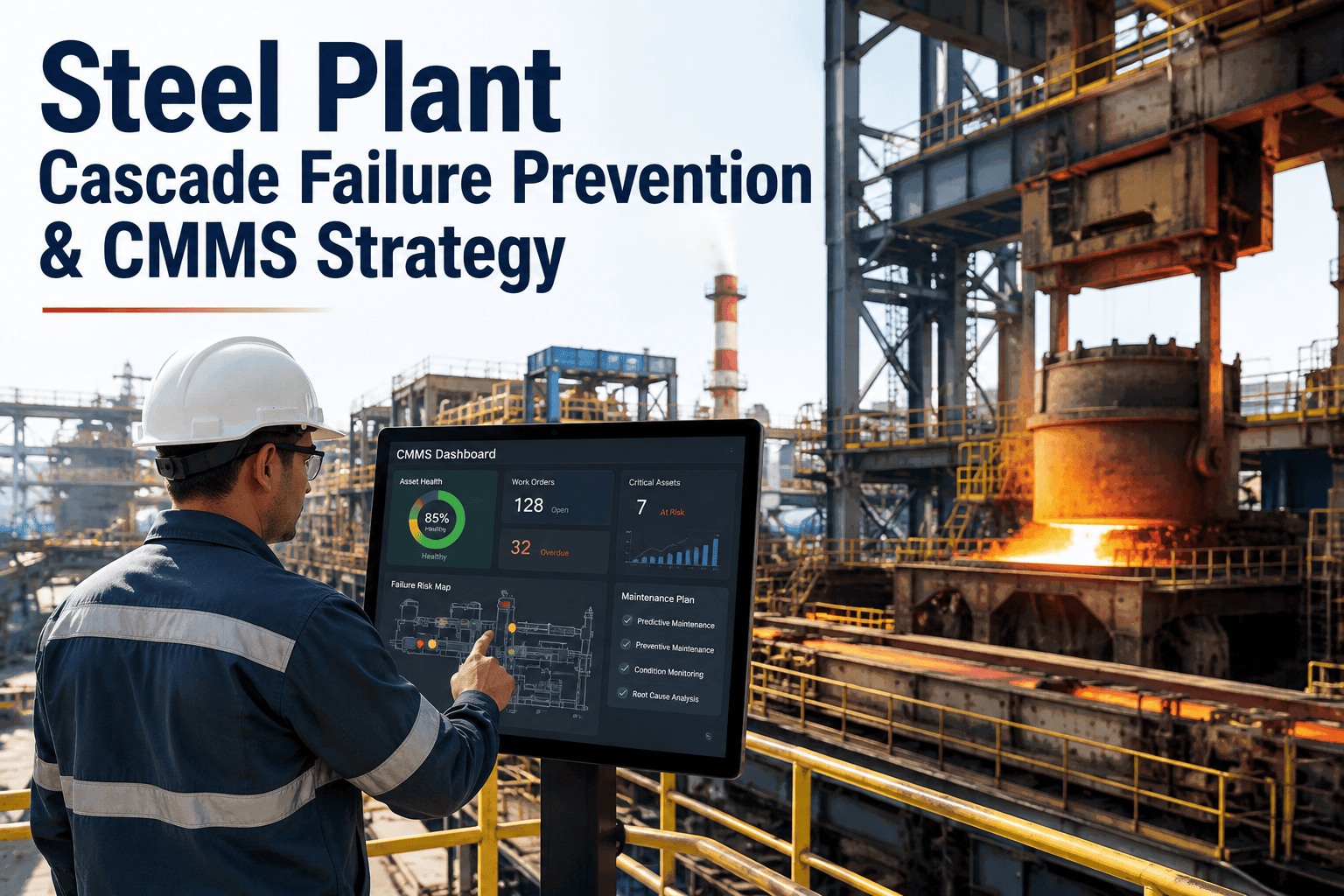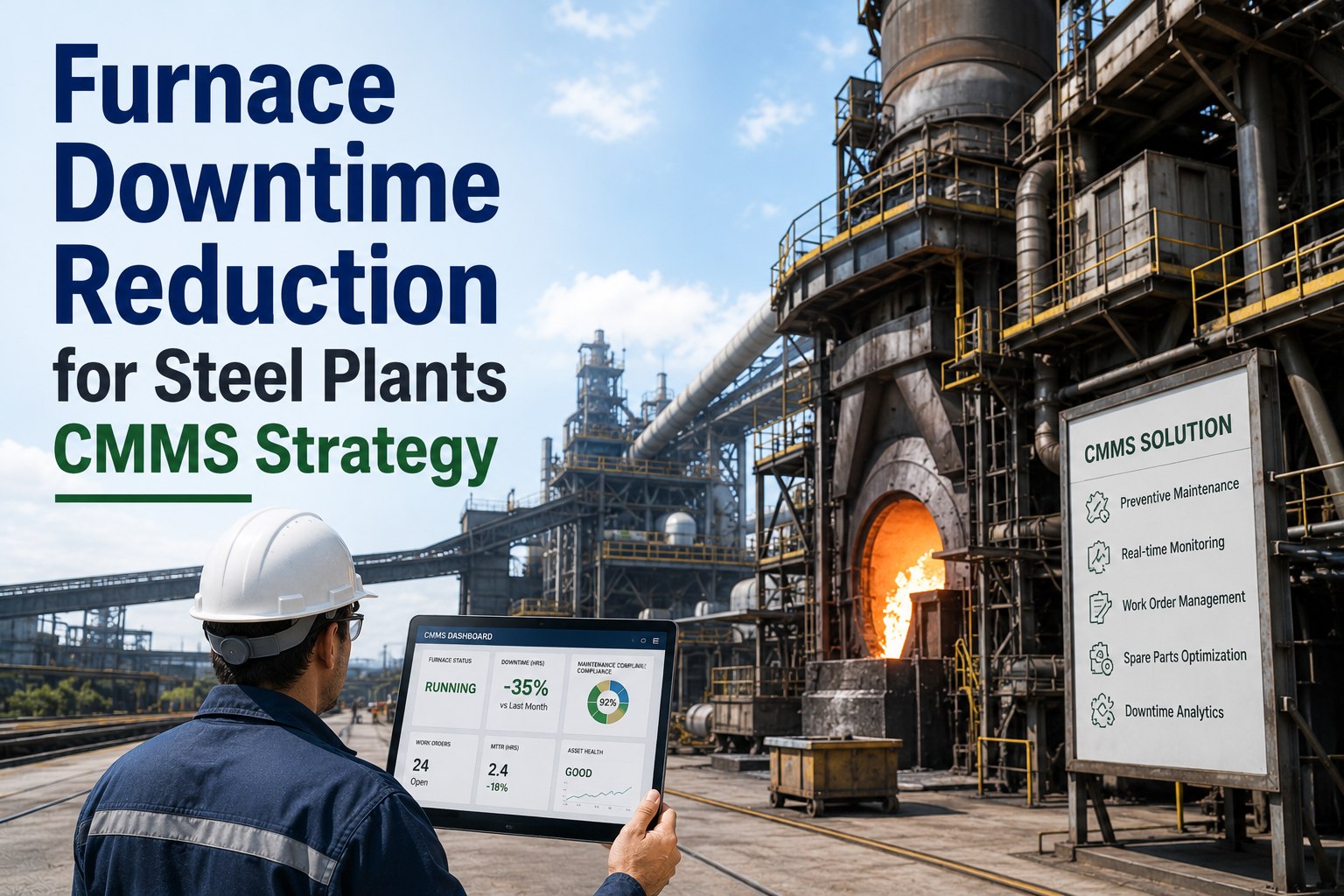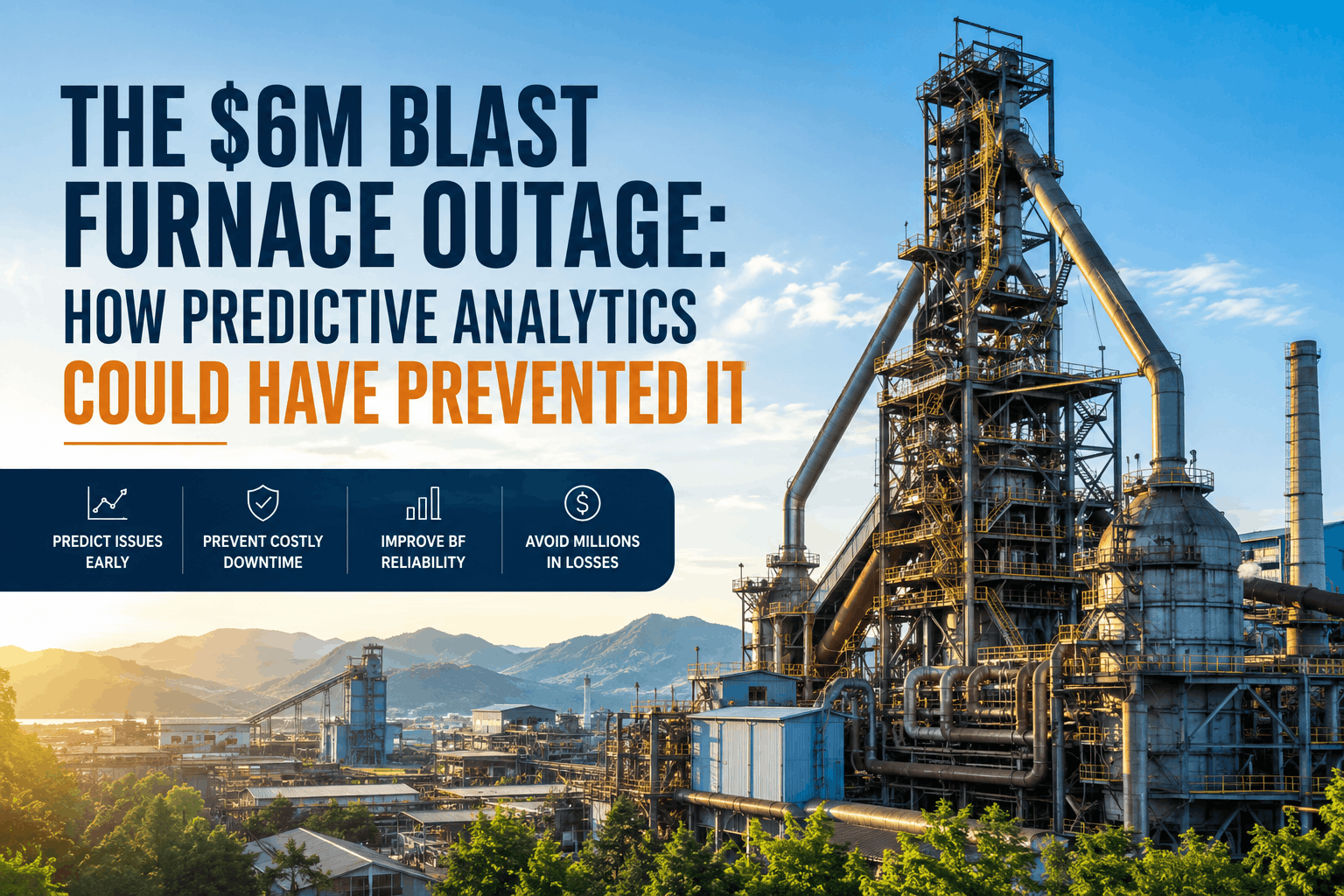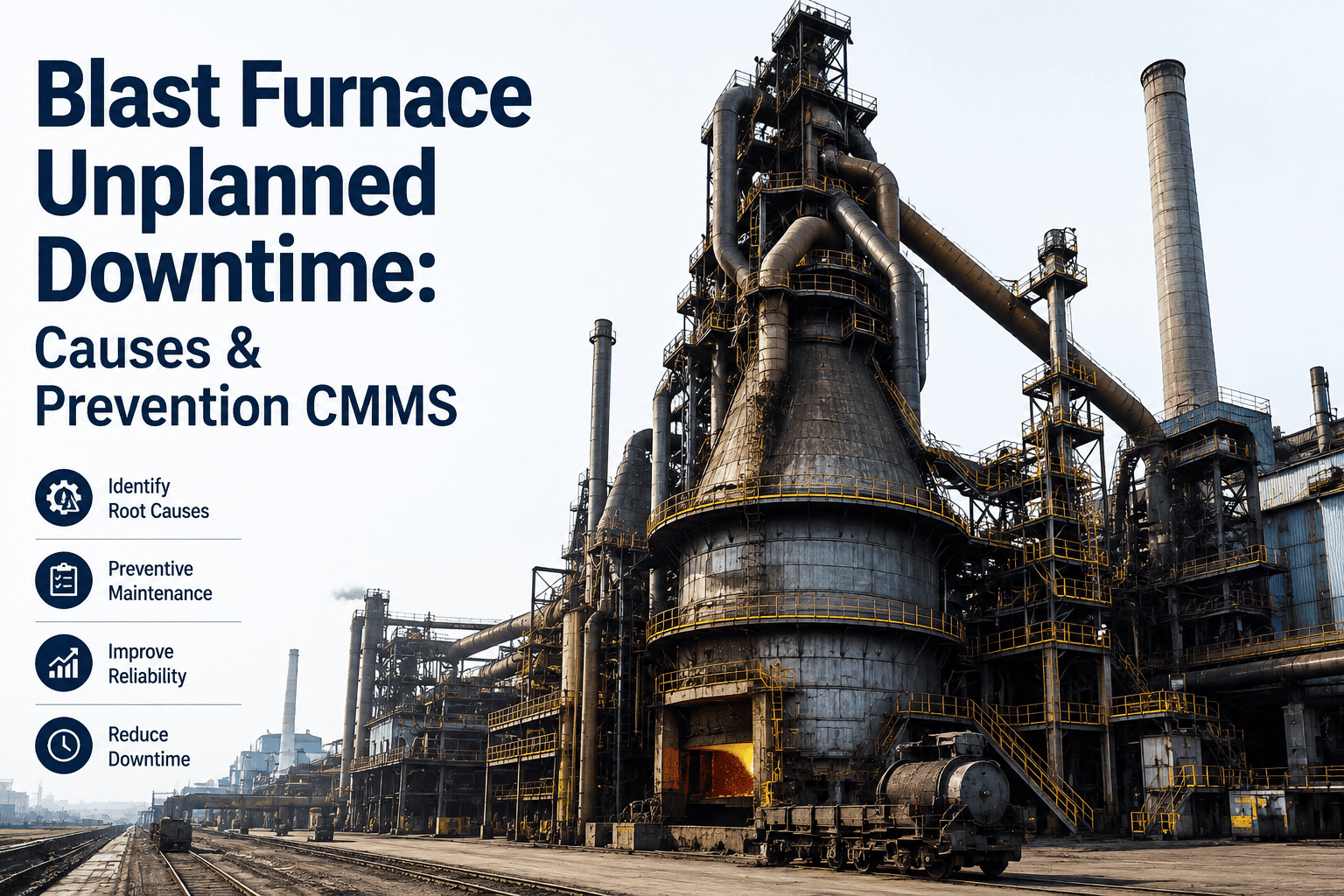
Blast furnace unplanned downtime is the single costliest event an integrated steel mill can face, often draining seven-figure margins within hours of a trip. Most incidents are not random — they trace back to a short list of repeat failure modes: cooling system leaks, tuyere burnouts, refractory degradation, casthouse delays, and hot blast stove trips. Every one of these failure paths sends early warning signals for days or weeks before the furnace actually goes down, yet most plants still catch them only after production has already stopped. This guide breaks down why blast furnaces go down unexpectedly, the signals that precede each failure mode, and how a structured CMMS-driven maintenance program turns those signals into planned interventions instead of emergency blowdowns.
Why Blast Furnaces Go Down Without Warning — And How To Stop It
A single unplanned blast furnace stoppage can cost well over a million dollars in lost hot metal, emergency labor, and cascading downstream delays across the BOF, caster, and rolling mill. This guide maps the real causes behind blast furnace unplanned downtime and the CMMS practices that catch them before the furnace trips.
Six Failure Paths Behind Most Blast Furnace Unplanned Stoppages
A blast furnace runs for years without stopping, which is exactly why an unplanned trip feels sudden. In reality, nearly every stoppage develops slowly inside one of six subsystems below — the furnace simply hides the damage until a threshold is crossed. Understanding which subsystem is degrading is the first step toward catching it early.
Scale buildup inside cooling circuits is the leading cause of premature stave burnout. A single undetected leak can progress to shell overheating and force a multi-day emergency blowdown.
A burned-out copper tuyere injects water directly into the hearth, risking a frozen hearth — the most catastrophic recovery scenario a blast furnace can face.
Thinning refractory creates hot spots that accelerate lining erosion, shortening campaign life and raising the risk of an unplanned reline years ahead of schedule.
Taphole clay quality, runner and skimmer wear, and ladle scheduling conflicts routinely delay cast starts, backing up hot metal and forcing rate cuts upstream.
Stove dome cracking, checker brick fouling, and hot blast valve failure are among the most common emergency stops in the hot blast delivery chain.
Fouling in dust catchers and scrubbers raises differential pressure and erodes top pressure control, gradually pushing the furnace toward an unplanned rate reduction.
Early Warning Signals: What To Watch Before Each Failure Mode
Every failure path above leaves a trail. The table below lists the leading indicator for each cause, roughly how far in advance it typically shows up, and what tends to happen when it goes unreviewed.
| Failure Mode | Leading Indicator | Detection Window | Consequence If Missed |
|---|---|---|---|
| Stave / Circuit Leak | Rising delta-T, flow-rate drift | 7-14 days | Shell overheating, emergency blowdown |
| Tuyere Burnout | Nose temperature spike, coal flow imbalance | Hours to 2 days | Water ingress, frozen hearth risk |
| Refractory Wear | Shell hot-spot scanning, hearth thermocouples | Weeks to months | Accelerated lining loss, early reline |
| Casthouse Delay | Taphole drilling resistance, runner wear | Per-cast trend | Cast backlog, forced rate cut |
| Stove Trip | Dome temperature profile, cycling irregularity | Days to weeks | Blast pressure loss, forced stop |
The Five-Step Prevention Framework
Preventing blast furnace unplanned downtime is less about new equipment and more about disciplined, structured monitoring. These five steps form the backbone of a CMMS-based BF reliability program used across modern integrated mills.
Replace paper round sheets with structured digital logs so every reading builds a time-series trend instead of a single point-in-time snapshot.
Manage each cooling circuit and tuyere as its own asset record with installation date, service hours, and failure history for precise, unit-level monitoring.
Configure automatic alerts when delta-T, flow rate, or dome temperature crosses a defined threshold, and route escalation directly to the responsible shift engineer.
Tie tuyere, stave, and refractory spares to inventory levels so a planned replacement is never blocked by an 8-12 week procurement lead time.
Let condition thresholds trigger CMMS work orders automatically, converting a trending anomaly into a scheduled repair instead of an emergency dispatch.
Turn Warning Signals Into Planned Work Orders
Oxmaint gives every stave circuit, tuyere, and stove its own trending asset record — with automated alerts and work orders the moment a threshold is crossed. See it running on your furnace hierarchy in under an hour.
What Proactive Blast Furnace Maintenance Is Worth
The return on structured BF monitoring is not theoretical — it shows up directly in avoided emergency events, extended campaign life, and preserved production days. The figures below reflect what reliability teams typically report after moving from reactive to condition-based monitoring.
Frequently Asked Questions
Stop Finding Out About Failures After They Happen
Oxmaint helps steel plants track every cooling circuit, tuyere, stove, and casthouse asset in one system — turning slow-developing warning signals into planned repairs instead of emergency blowdowns.