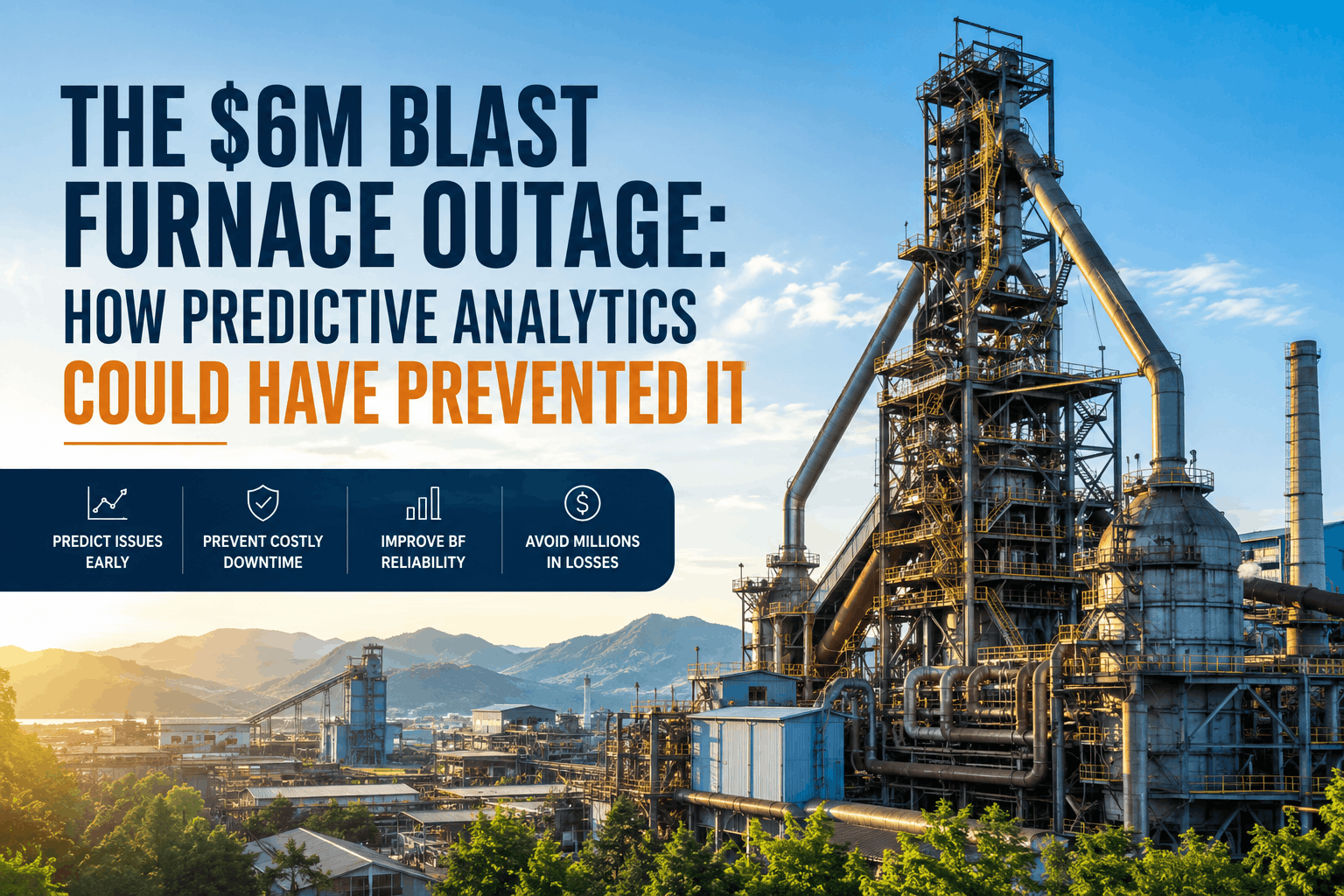
The $6M Blast Furnace Outage: How Predictive Analytics Could Have Prevented It
By Alex Jordan on June 30, 2026
Blast furnace outages represent the costliest operational nightmare in integrated steel plants across North America. A single unplanned shutdown can cost between $4–8 million per day in lost production, secondary damages to refractory linings, and cascading penalties across your downstream finishing mills. The average campaign life of a modern blast furnace is 8–12 years, yet unexpected failures routinely cut this window in half. Unlike property management, steel plant maintenance operates in an environment where seconds matter: a cooling stave failure at 1,800°C doesn't forgive slow response times. Oxmaint's AI-powered predictive maintenance platform for steel plants monitors furnace health in real-time, detecting hot spot anomalies, pressure fluctuations, and refractory stress patterns weeks before catastrophic failure. If you're managing a multi-furnace complex and still relying on reactive emergency repairs and crew intuition, you're hemorrhaging capital. Discover how real-time furnace monitoring transforms blast furnace reliability from crisis-driven to scientifically predictable.
AI-driven hot spot detection, cooling stave monitoring, pressure trend analysis, and predictive refractory life forecasting for North American integrated steel operations.
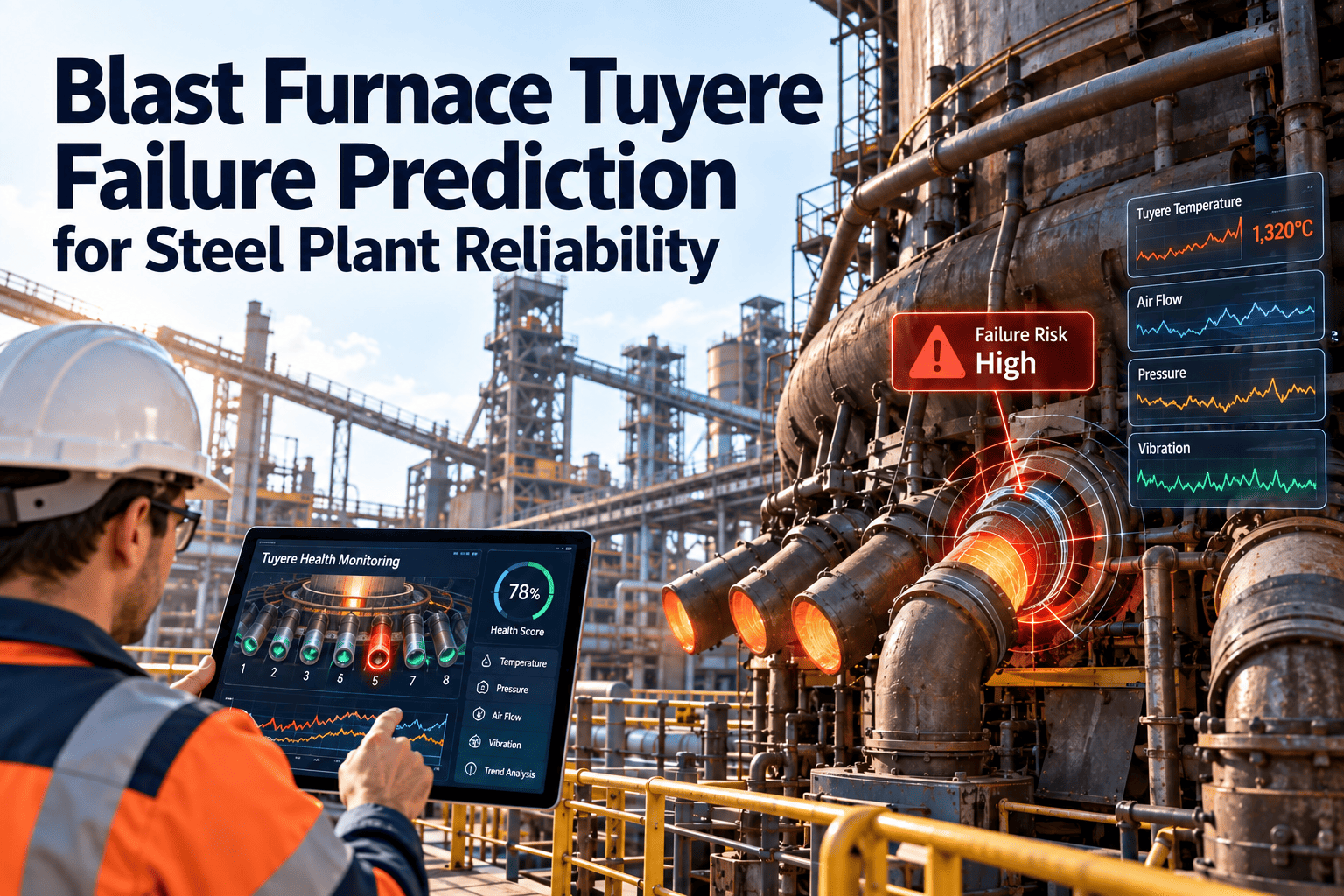
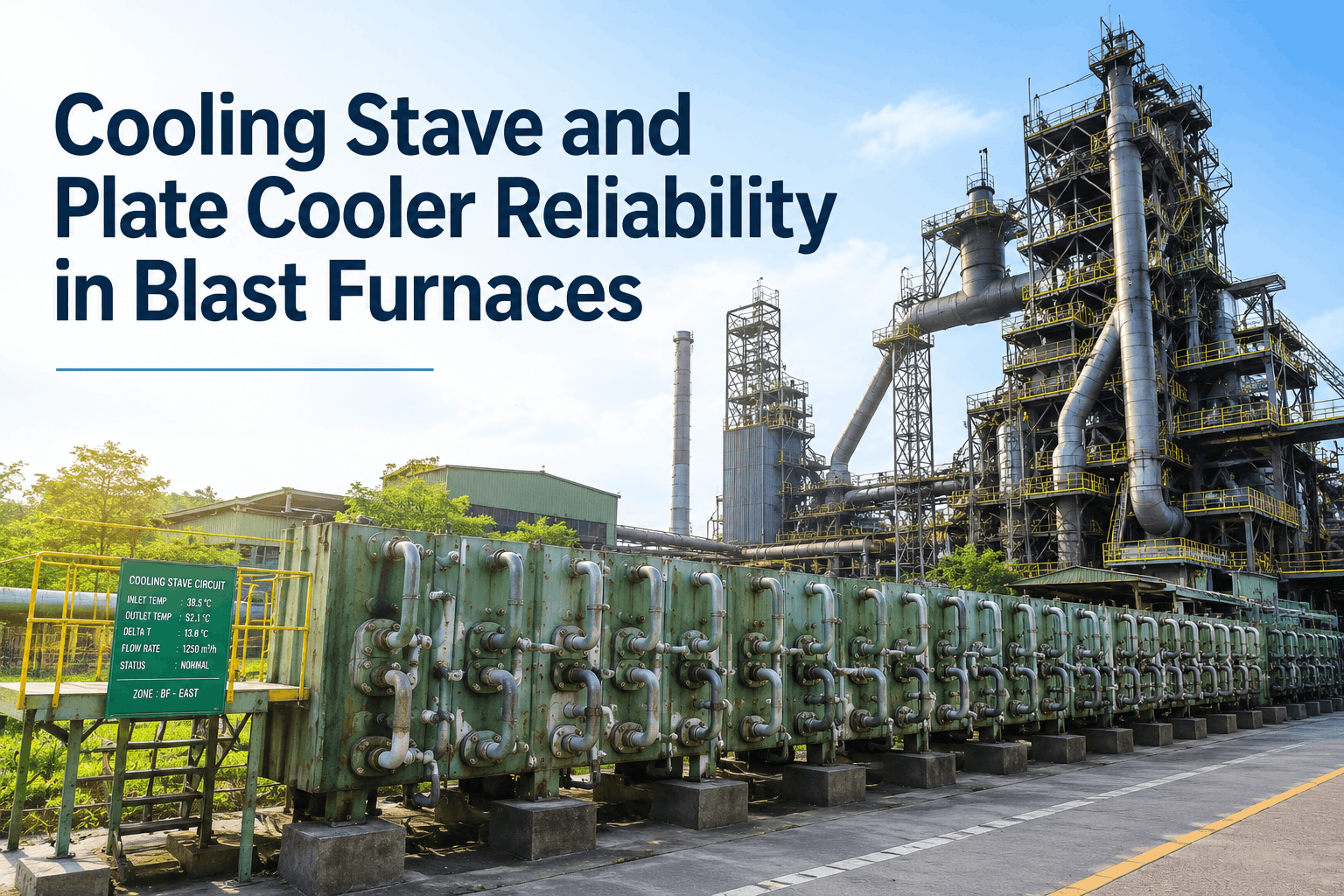
Blast furnaces fail in predictable, observable patterns. A cooling stave cooling circuit doesn't fail overnight—water flow rates drop 5–7% annually before rupture. Hot spots don't materialize in minutes; temperature profiling data shows creeping thermal anomalies 120+ days before breakthrough. Coke distribution problems manifest as increasing pressure variance and flame shape drift. Oxmaint's steel plant CMMS monitors these early-warning signals through real-time sensor feeds (thermocouples, pressure transducers, water flow meters), AI-flagged trend analysis, and predictive scoring algorithms that forecast failure probability windows. The difference between a planned stave replacement (8–12 hours downtime, $150K cost) and an emergency stave leak repair (72-hour campaign interruption, $2.8M loss) is simply having 90 days' notice instead of zero.
BLAST FURNACE FAILURE MODES — OXMAINT EARLY DETECTION
Failure Mode
Early Warning Signal
Detection Timeline
Oxmaint Alert
Cooling Stave Fracture
Water flow ↓ 5–8%, outlet temperature ↑ 2–3°C
90–120 days before rupture
Predictive shutdown alert
Hot Spot Breakthrough
Thermocouple ↑ 150°C, pressure spike cycles
60–90 days escalation window
Flame shape correction + monitoring
Hearth Refractory Thinning
Slag chemistry shift, liquidus temp ↑
120–180 days slow degradation
Campaign life extension planning
Coke Distribution Failure
Furnace top pressure variance ↑, bell timing drift
30–45 days observable trend
Bell position optimization alert
Raceway Erosion
Blast pressure spike, gas utilization ↓
45–60 days efficiency drop
Blast volume rebalancing + repair window
Oxmaint Real-Time Furnace Monitoring: From Sensor to Shutdown Prevention
A typical integrated steel plant blast furnace generates 800+ data points per minute: cooling circuit temperatures, water flow rates, top pressure, slip gas composition, tuyere air velocity, slag level, and thermal imaging from multiple zones. Traditional CMMS maintenance scheduling software treats this as noise. Oxmaint's AI ingestion layer automatically ingests all sensor feeds, denoises fluctuations using Kalman filtering, and applies machine learning models trained on 50+ years of blast furnace operational data across North American mills. Each sensor anomaly is cross-referenced against your furnace's unique baseline signature. When a thermocouple on stave bank C suddenly shows a 180°C climb over 72 hours while water outlet temperature creeps up 1.5°C, the system doesn't wait for a technician hunch—it flags the specific stave, calculates failure probability (87% within 60 days), and triggers a scheduled maintenance work order to your operations team with exact repair specifications, required materials, and optimal shutdown window to minimize downstream impact.
FROM SENSOR ANOMALY TO PREDICTIVE MAINTENANCE ALERT
Maintenance crew schedules stave replacement during planned campaign break
Every sensor reading is timestamped and retained in your furnace's digital twin for lifetime historical analysis and campaign planning.
Compliance & Safety: Furnace Regulatory Auditing Built Into Your CMMS
North American blast furnace operations fall under OSHA PSM (Process Safety Management), EPA environmental monitoring, and ASME boiler codes. Oxmaint's steel plant module integrates mandatory safety check templates for furnace inspections, cooling water system pressure relief testing, burden charge monitoring, and emergency shutdown procedure drills. All maintenance actions—from routine stave inspections to major relining campaigns—are automatically logged with timestamps, technician credentials, and regulatory tag requirements. When your insurance auditor or OSHA investigator requests a 5-year maintenance history for your blast furnace, you're not scrambling through filing cabinets; Oxmaint generates a compliance-audit-ready PDF export within seconds, complete with photographic evidence, repair invoices, spare parts tracking, and sensor calibration records.
"Before implementing Oxmaint's predictive module, we had a catastrophic stave failure every 18 months—$6.2M losses each time. After 14 months on the platform, we went from reactive crisis management to a calculated schedule. We caught a stave degradation pattern that sensor trend data showed, got 106 days of warning, and performed a planned replacement during a scheduled campaign break. That single event saved us $5.8M. Now our furnace availability sits at 97.6%, and our maintenance team actually sleeps at night."
Chief Operations Officer
Integrated Steel Plant — Lake Michigan Region (USA)
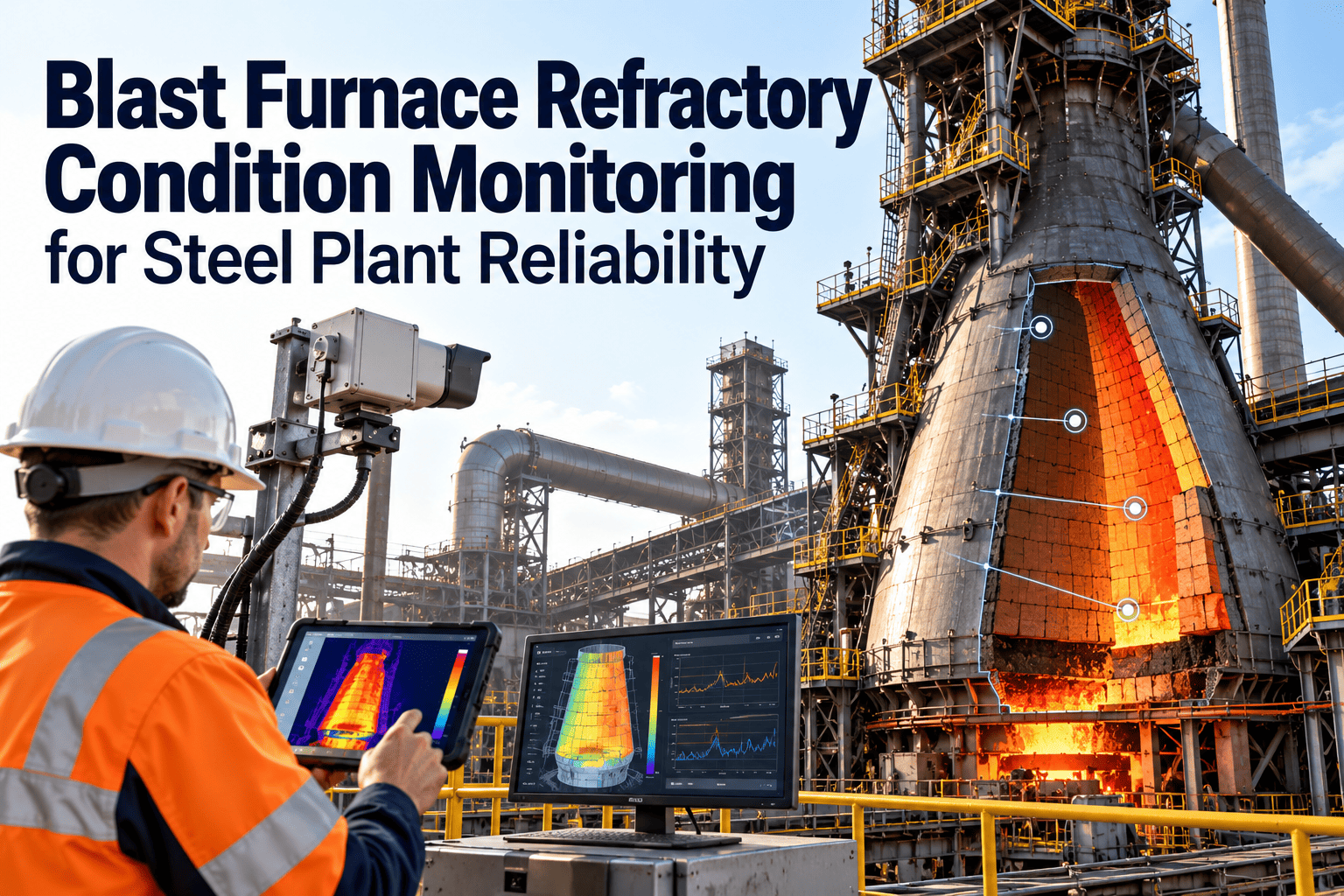
A blast furnace campaign typically runs 8–12 years before a full refractory relining becomes unavoidable. However, most mills operate on guesswork: they run a furnace until something catastrophically fails, then scramble to schedule a rebuild (often 6+ months of planning, $15–25M capital outlay). Oxmaint's predictive CMMS continuously monitors your furnace's specific refractory health markers—slag chemistry, thermal cycling stress, erosion rates in high-duty zones, and carbon consumption in the hearth—to calculate your furnace's remaining useful life with 94% accuracy. This allows you to plan a refractory relining 18–24 months ahead, spread capital budgets across fiscal years, and coordinate the shutdown with your EAF scheduling and downstream product commitments. Instead of a forced, expensive outage that disrupts your entire mill, you execute a planned, optimized relining during your preferred maintenance window.
No predictive data; operations trust historical averages (10 years = 10 years).
2
Sudden Failure
Hot spot breakthrough or stave rupture forces immediate shutdown.
3
Emergency Planning
6-month relining window declared; all downstream mills stall.
4
Catastrophic Cost
$20M relining + lost production revenue + expedited contractor fees.
Oxmaint: Planned Furnace Optimization
1
Continuous Refractory Monitoring
AI tracks slag erosion, thermal cycling, and carbon consumption hourly.
2
18–24 Month Advance Warning
Predictive model forecasts end-of-campaign with 94% confidence.
3
Optimized Scheduling
Relining coordinated with EAF availability and product commitments.
Oxmaint integrates blast furnace status history across your entire campaign lifecycle, providing financial forecasting and risk matrices for board-level capital planning.
Q1 How many days of advance warning can Oxmaint provide before a cooling stave failure?
Oxmaint's AI trend analysis typically provides 60–120 days of advance warning before stave rupture, based on water flow and outlet temperature degradation patterns. This allows scheduling during planned campaign breaks instead of emergency repairs.
Q2 What sensor types does Oxmaint integrate with for furnace monitoring?
Oxmaint connects to thermocouples, pressure transducers, water flow meters, laser distance sensors, tuyere air velocity probes, and top gas composition analyzers. It works with both legacy Modbus/4-20mA and modern MQTT IoT sensor networks.
Q3 Can Oxmaint predict how many more years my furnace will run before a full refractory relining?
Yes. Oxmaint monitors refractory erosion, slag chemistry, and thermal cycling stress to forecast end-of-campaign with 94% accuracy. Most clients receive 18–24 months of advance warning for relining planning and capital budgeting.
Q4 Does Oxmaint track cooling water chemistry and stave condition simultaneously?
Yes. Oxmaint ingests water outlet temperature, flow rate, and pressure relief events across all cooling circuits, then correlates this with thermocouple data to pinpoint individual stave degradation before leaks occur.
Q5 What compliance documentation does Oxmaint generate for OSHA and insurance audits?
Oxmaint auto-generates audit-ready reports with timestamped maintenance actions, technician credentials, pressure relief test records, incident logs, and photographic evidence. All data is retained for 7-year regulatory compliance windows.
Q6 Can multiple furnaces be monitored on a single Oxmaint dashboard?
Yes. Oxmaint scales to manage 5+ blast furnaces on one integrated platform. Each furnace maintains its own sensor baseline and predictive model while allowing cross-furnace comparative analysis for best-practice sharing across your mill.
Q7 How quickly can Oxmaint be deployed on an existing blast furnace without major sensor retrofitting?
Oxmaint integrates with existing furnace sensor networks within 4–6 weeks. If your sensors are already streaming data to a PLC or historian, Oxmaint can begin predictive analysis immediately. No new hardware required for most setups.
Q8 What ROI should I expect from Oxmaint's predictive blast furnace module within the first year?
Most mills report 2–4 prevented emergency outages in year one alone. At $4–8M per prevented outage, the ROI typically exceeds 300–500% within 12 months. Additional savings come from optimized maintenance scheduling and extended refractory life.
AI-powered hot spot detection, cooling stave monitoring, and campaign life forecasting—all integrated into one CMMS platform for North American steel mills.