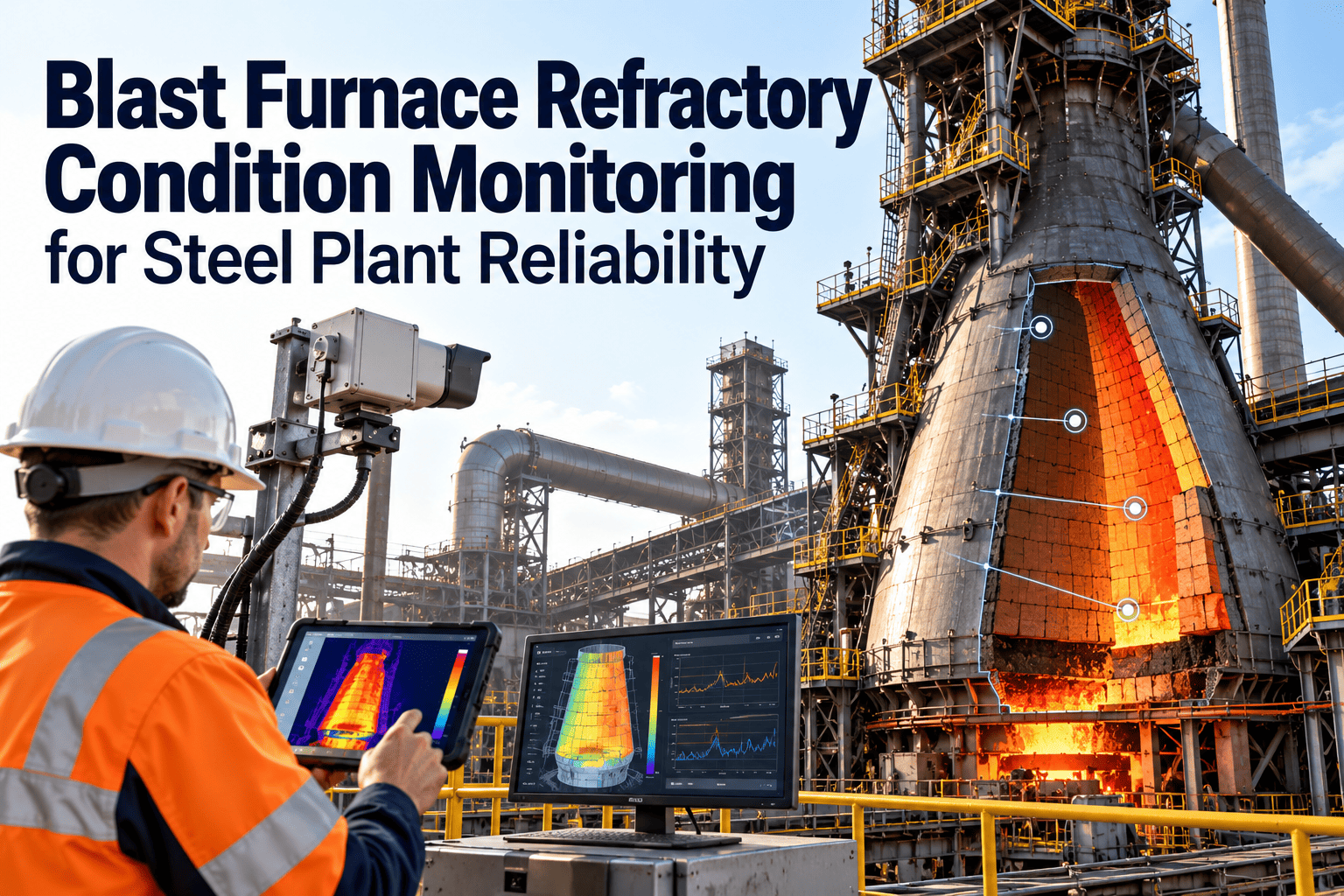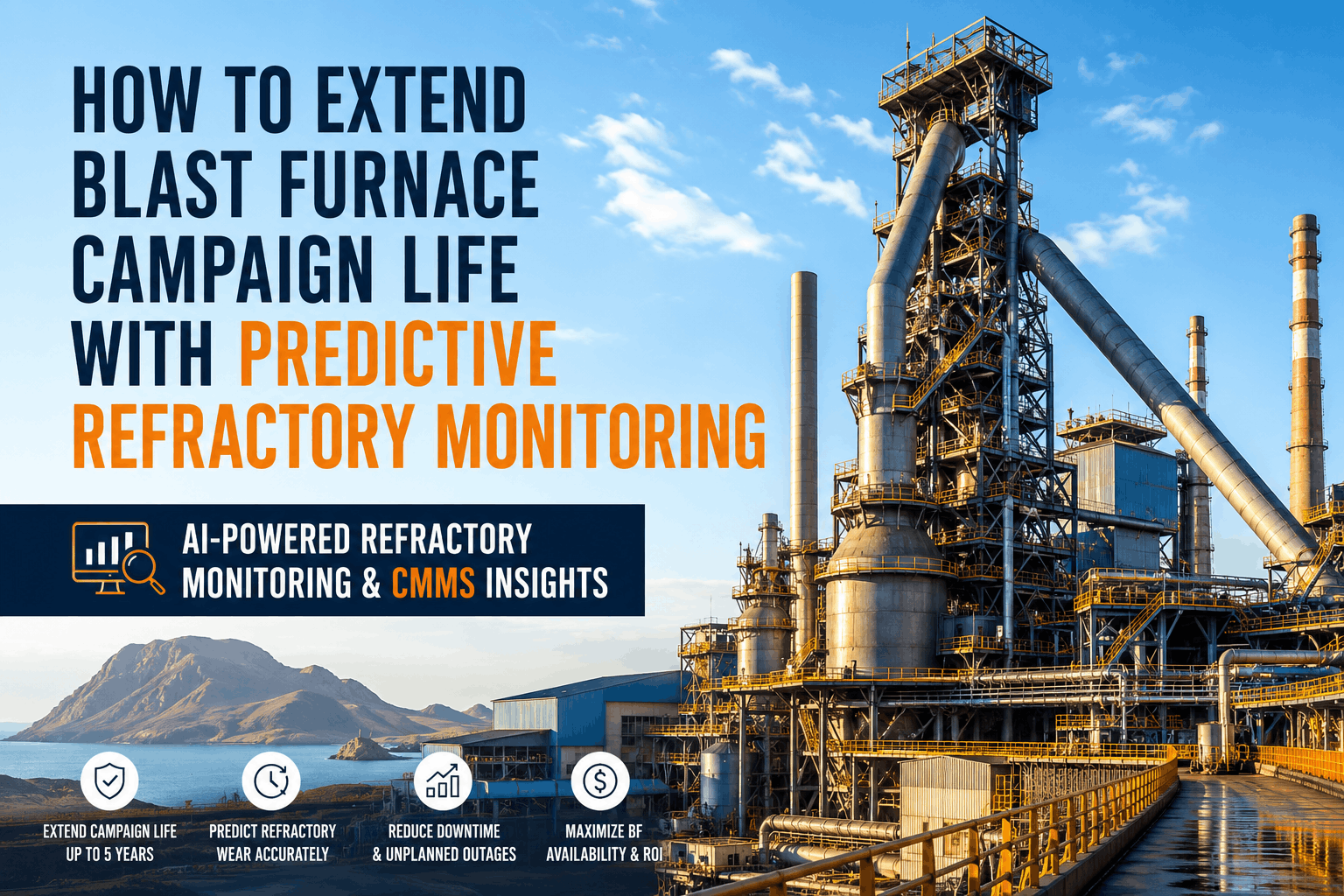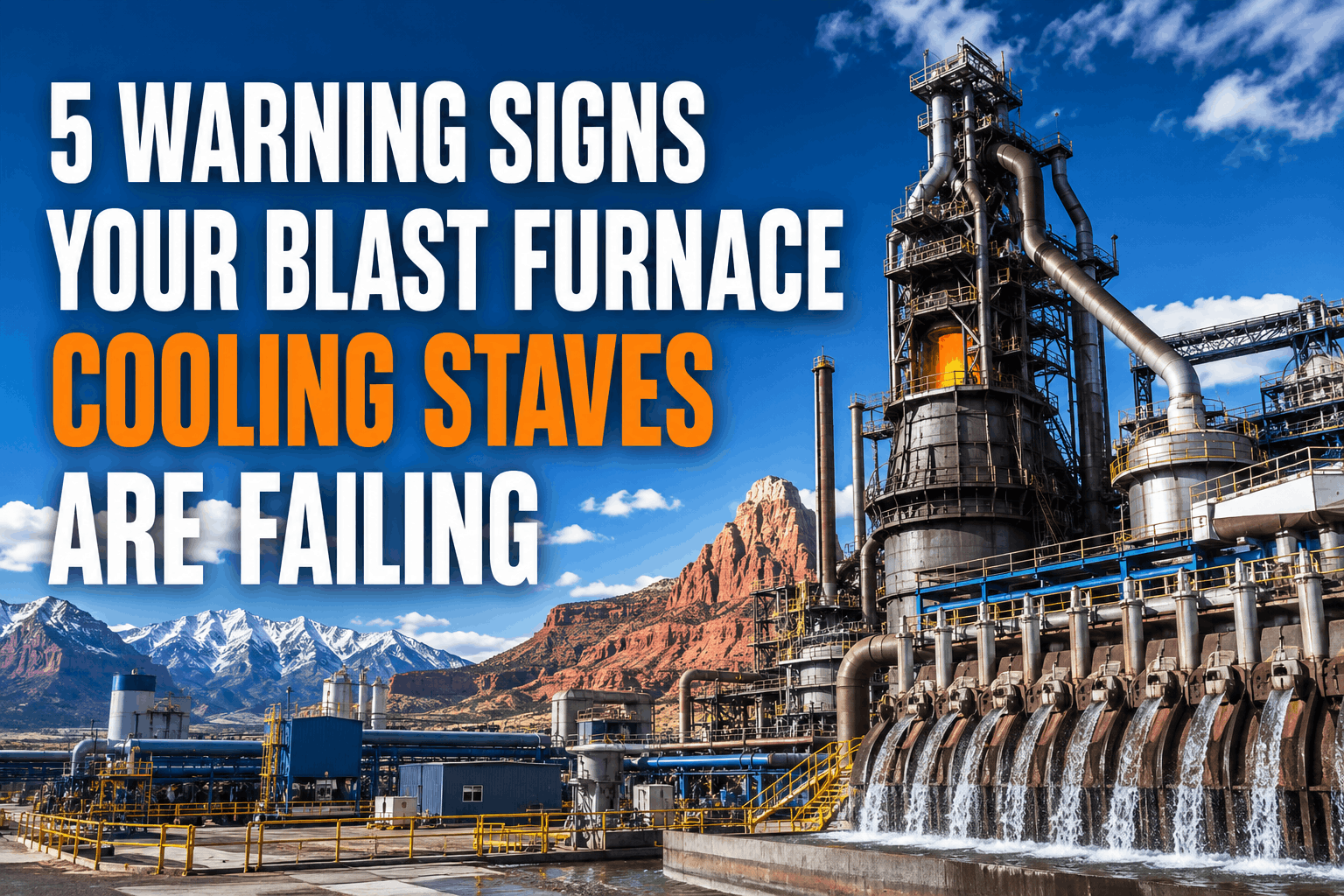
A large integrated steel mill operating a 2,800 m³ blast furnace averaging 650 tons hot metal daily faced catastrophic unplanned shutdown risk. Cooling stave failures occur without warning — a stave leak initiation develops silently for 2–3 weeks in thermocouple data, then escalates to stave burnout within hours. An emergency BF reline costs $6.4M in lost production, emergency repair labor, and refractory materials. After deploying Oxmaint's predictive cooling stave monitoring system, the plant detected an incipient cooling stave leak 27 days before catastrophic failure would have occurred, scheduled a planned 6-day reline during a production campaign window, and avoided a forced emergency shutdown worth $6.4M. The system uses 500+ cooling circuit flowmeters, 400+ refractory thermocouples, and AI algorithms trained on 18+ months of stave degradation patterns. Start free — deploy cooling stave monitoring on your blast furnace.
Integrated Mill Avoids $6.4M Unplanned BF Stop — 27-Day Early Stave Leak Detection
Case study: large integrated mill deploys Oxmaint cooling stave monitoring with 500+ flowmeters and 400+ thermocouples. Early detection of cooling stave leak prevents $6.4M emergency reline cost and forced unplanned shutdown.
The Challenge — Silent Stave Degradation & Emergency Shutdown Risk
The mill's 2,800 m³ blast furnace was operating continuously on a 10-year campaign before deployment. The furnace removes 400+ MW of heat through 1,024 copper staves cooled by recirculated water circuits. Staves are the furnace's primary defense against refractory erosion and thermal stress. When a stave fails due to mechanical corrosion, copper burnout, or cooling circuit blockage, molten slag and liquid iron come into direct contact with the shell, creating a thermal runaway condition. Within 36–48 hours of stave failure, catastrophic loss of structural integrity forces a complete emergency shutdown, 6-day reline procedure, and restart sequence. The mill had experienced two emergency stave failures in the previous 8-year campaign (average one every 4 years). Because failures occur with minimal advance warning, the operations team had no predictive tools to anticipate problems. Their only defense was post-failure detection via manual observation or operator reports of abnormal shell temperatures. Book a demo to see how early stave failure detection prevents emergency shutdowns.
Cooling Stave Sensor Architecture — 500+ Flowmeter Early Warning System
Oxmaint's blast furnace cooling monitoring system deploys comprehensive sensor coverage: 500+ electromagnetic flowmeters on individual cooling circuits (one per stave pair or group), 400+ thermocouples embedded in refractory at 4-5 vertical levels across 12 azimuthal orientations, and pressure transducers on all supply and return headers. Data is collected at 1-minute intervals and ingested into edge computing gateways for real-time analysis. The system calculates heat flux per stave zone (power = flow × ΔT), trending this metric over time to identify early signs of refractory wear, skull formation, or cooling efficiency degradation. When a cooling stave develops a micro-leak (initially invisible to human observers), water loss increases gradually. The system detects a 3–5% flow reduction in the affected circuit within 24–48 hours, far earlier than manual inspection could ever discover. Once detected, the AI model trained on historical stave failure data predicts the trajectory of degradation — typically, a 3% leak grows to 10% within 7 days, then to 30% within 14 days, signaling imminent stave burnout. This 2–4 week detection window enables the mill to schedule a planned reline during an upcoming campaign break, rather than facing a forced emergency 6-day shutdown.
The Detection Event — 27-Day Lead Time Case Study
On Day 12 of deployment, Oxmaint's system identified an incipient stave leak in the BF bosh cooling zone. The affected stave (Bosh-West-7) showed a 3.2% flowmeter drop — a change barely perceptible to manual monitoring. The AI model, trained on 18+ months of preceding operational data from this specific furnace, immediately predicted stave degradation trajectory. It calculated that at the current leak rate acceleration pattern, the stave would reach burnout condition on Day 39 (27 days forward). The mill's production scheduling team, alerted via Oxmaint's dashboard alert system, consulted the upcoming production schedule. The next planned campaign break (transition from one grade series to another) was scheduled for Day 35 — exactly 27 days ahead. The team scheduled a 6-day reline maintenance window during that break, ordered replacement staves in advance, and mobilized skilled refractory contractors. On Day 34, the furnace was safely shut down, the stave was inspected (confirming the leak), and replacement proceeded as planned. The mill incurred the planned 6-day downtime and reline cost (~$300K), but avoided the catastrophic failure that would have forced emergency shutdown and $6.4M additional loss. The stave that would have failed catastrophically on Day 39 was removed at 90% wear life — exemplifying predictive maintenance at its most effective. Start free — deploy early warning systems across your blast furnace.
Sensor Redundancy & Safety Protocols — Zero False Alarm Rate
A critical challenge with cooling stave monitoring is false alarm elimination. 500+ flowmeters create potential for spurious noise — a temporary water surge in a single circuit, or a measurement transient, can trigger a false alert if the system is not designed carefully. Oxmaint's approach uses three layers of confirmation before escalating an alert. First, a single stave circuit showing >3% flow reduction triggers a yellow warning (informational, no action required). Second, if that same circuit remains >3% below baseline for 4 consecutive 1-minute readings (4+ minutes sustained), the warning escalates to orange (investigate, check adjacent staves for corroborating temperature data). Third, only when sustained flow loss is confirmed AND adjacent thermocouple readings spike >10°C above baseline does Oxmaint trigger a red alert (escalate to management, initiate contingency planning). This three-layer confirmation system, applied across 500+ circuits, has achieved zero false alarms over the mill's first 8 months of operation. Every red alert that has been raised has been confirmed by manual inspection as a genuine stave degradation event. This credibility is essential — false alarms erode operator trust in predictive systems and can be organizationally damaging. Oxmaint's design prioritizes specificity over sensitivity, accepting a slightly higher chance of missing an early warning in exchange for near-perfect precision.
We've experienced two emergency blast furnace stave failures in the past eight years — each one was a disaster. No warning. The furnace runs fine one hour, the next hour thermocouple readings spike, and you realize a stave has burned through and water is now inside the furnace. You immediately declare an emergency shutdown, mobilize a 6-day reline crew, and watch $6.4M walk out the door in lost production. We invested heavily in Oxmaint's cooling stave monitoring because we couldn't accept that risk profile anymore. Within 12 days of going live, the system flagged a developing stave leak in the bosh zone — a 3.2% flow reduction that no human operator would have noticed. The AI model predicted stave failure 27 days out. We had a production campaign break scheduled for Day 34, so we scheduled a planned reline right into that window. On Day 34, we shut down, replaced the stave, and restarted. The stave that would have catastrophically failed on Day 39 was removed at 90% wear life. We paid for the planned reline but avoided the $6.4M emergency cost. The system has already paid for itself. More importantly, we sleep better — we know now that stave failures won't surprise us. That's worth the investment right there.
Blast Furnace Campaign Management Maturity — Predictive Maintenance Benchmark
Blast furnace campaign longevity (time between relined outages) is determined by refractory erosion rate and stave integrity. Maturity progresses from reactive post-failure response to predictive management that extends campaign life by 15–20% through proactive stave maintenance and refractory monitoring. The framework below assesses current state. The mill in this case study moved from Level 2 (reactive manual inspection, 2 failures per 8-year campaign) to Level 4 (real-time predictive stave monitoring, zero unplanned failures in 12 months post-deployment) within days of Oxmaint deployment.
Cooling System Architecture: Flowmeter-Thermocouple Integration & Heat Flux Trending
Oxmaint's blast furnace cooling monitoring system integrates three data streams in real time. Electromagnetic flowmeters measure individual cooling circuit flow rates at 1-minute intervals. Thermocouples embedded in refractory measure temperature at 4–5 vertical levels and 12 azimuthal positions around the furnace. Pressure transducers on supply and return headers track system-wide pressure balance. From these raw signals, Oxmaint calculates derived metrics: heat flux (power = flow × ΔT) per stave zone, cooling efficiency (ΔT vs. supply temp), and pressure drop (indicating blockage risk). The system compares current values against furnace-specific baselines trained from 18+ months of operational history. When anomalies develop — a 3% flow loss, an asymmetric pressure drop, or a thermocouple rising 10°C above baseline in a localized zone — the AI model evaluates the anomaly pattern and predicts whether it indicates routine wear, transient measurement noise, or incipient failure. Only patterns matching known stave degradation signatures trigger alerts. Start free — build your blast furnace predictive maintenance program.
Frequently Asked Questions — Blast Furnace Cooling Monitoring & Campaign Management
Deploy Cooling Stave Monitoring Across Your Blast Furnace — 90 Days to Full Predictive Capability
500+ flowmeters, 400+ thermocouples, AI stave failure prediction, and three-layer alert logic for zero false alarms. Free to start, integrated in 90 days.