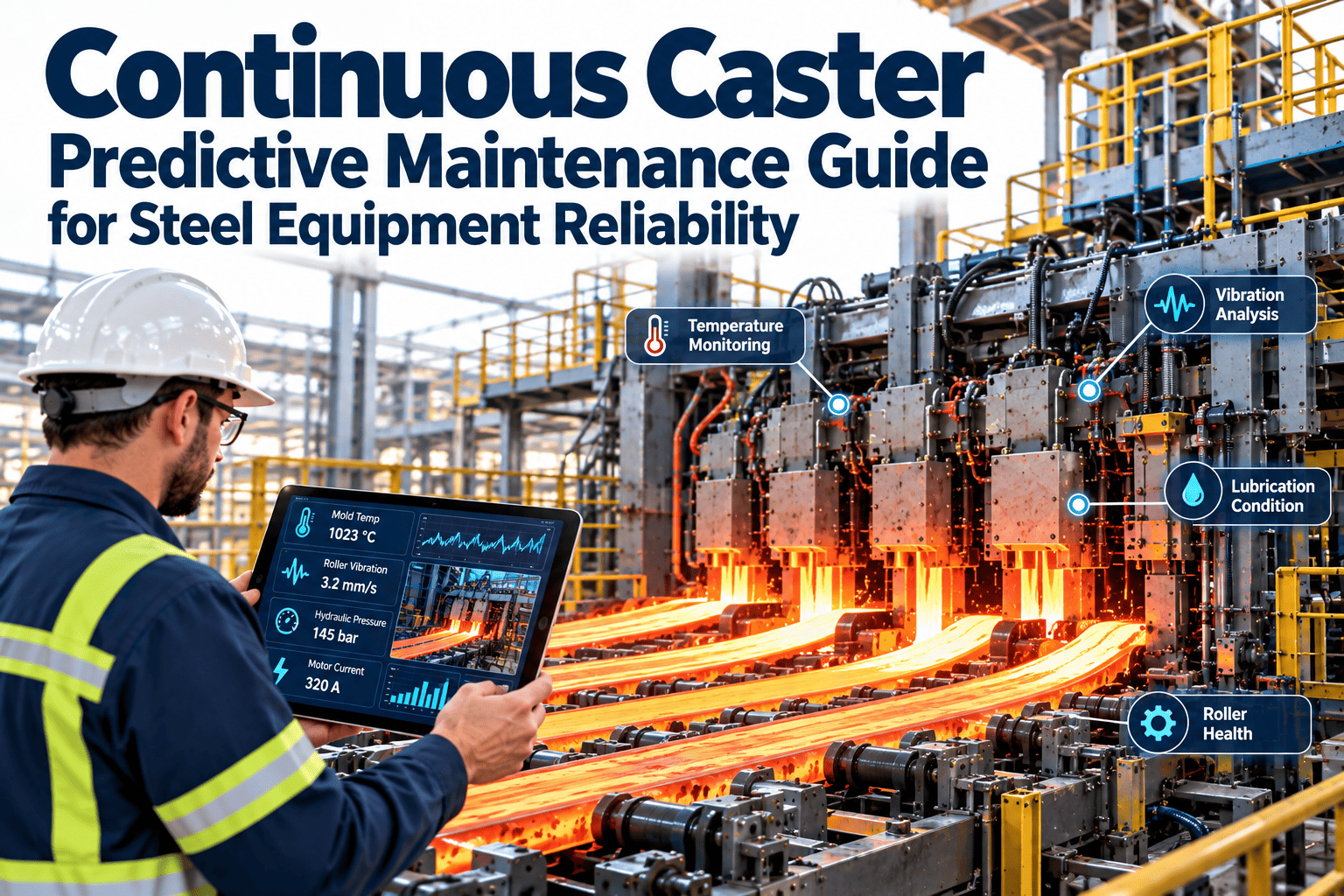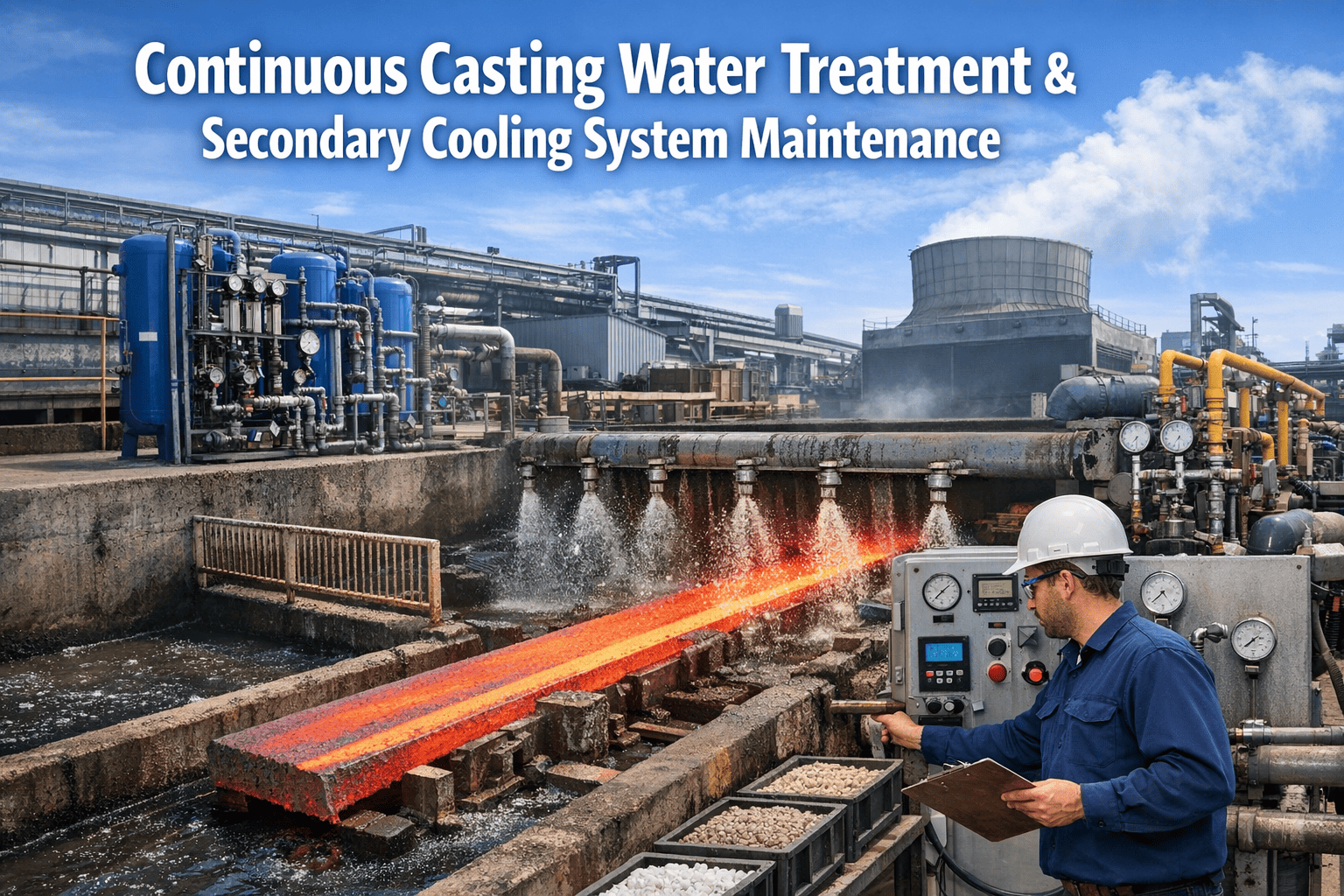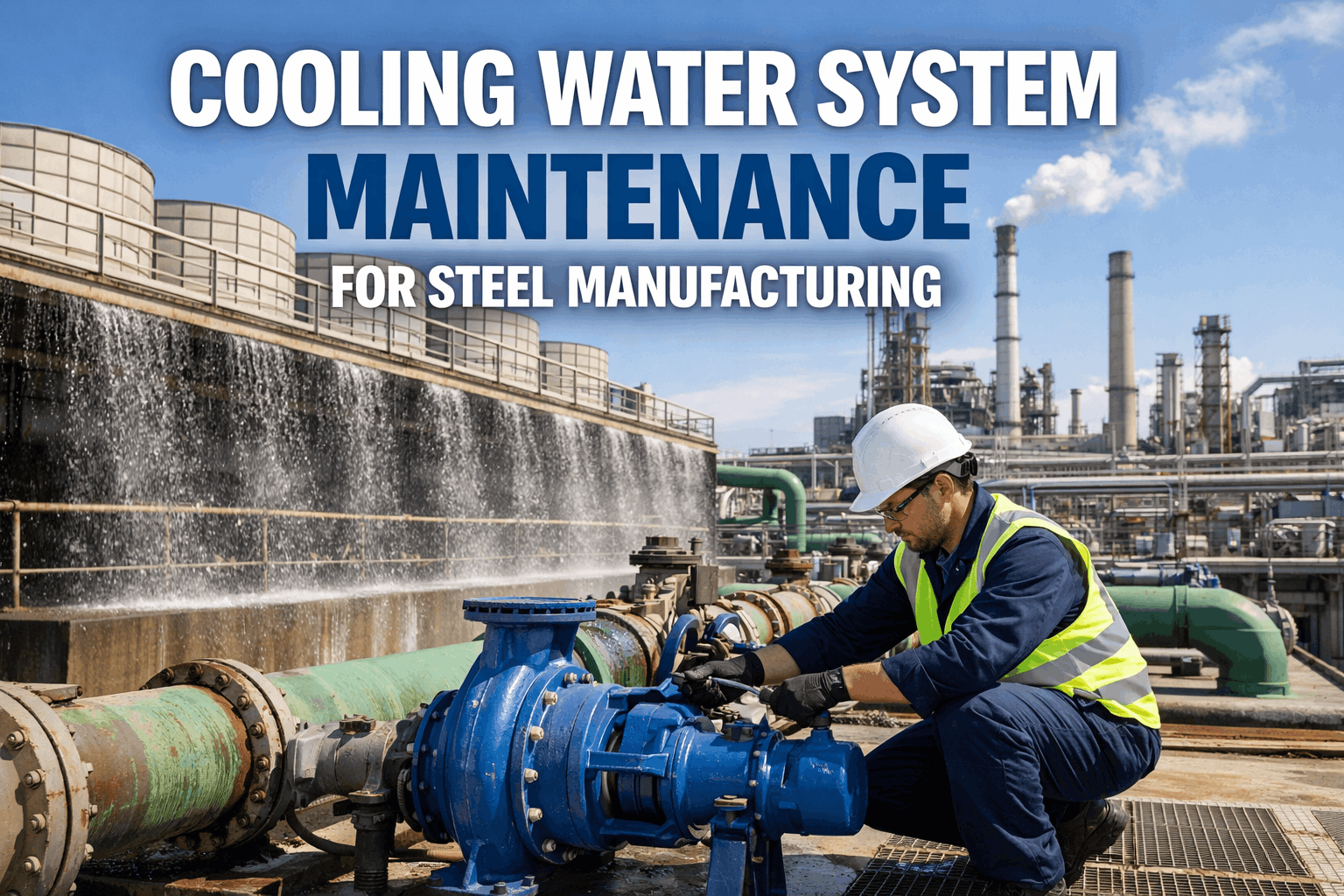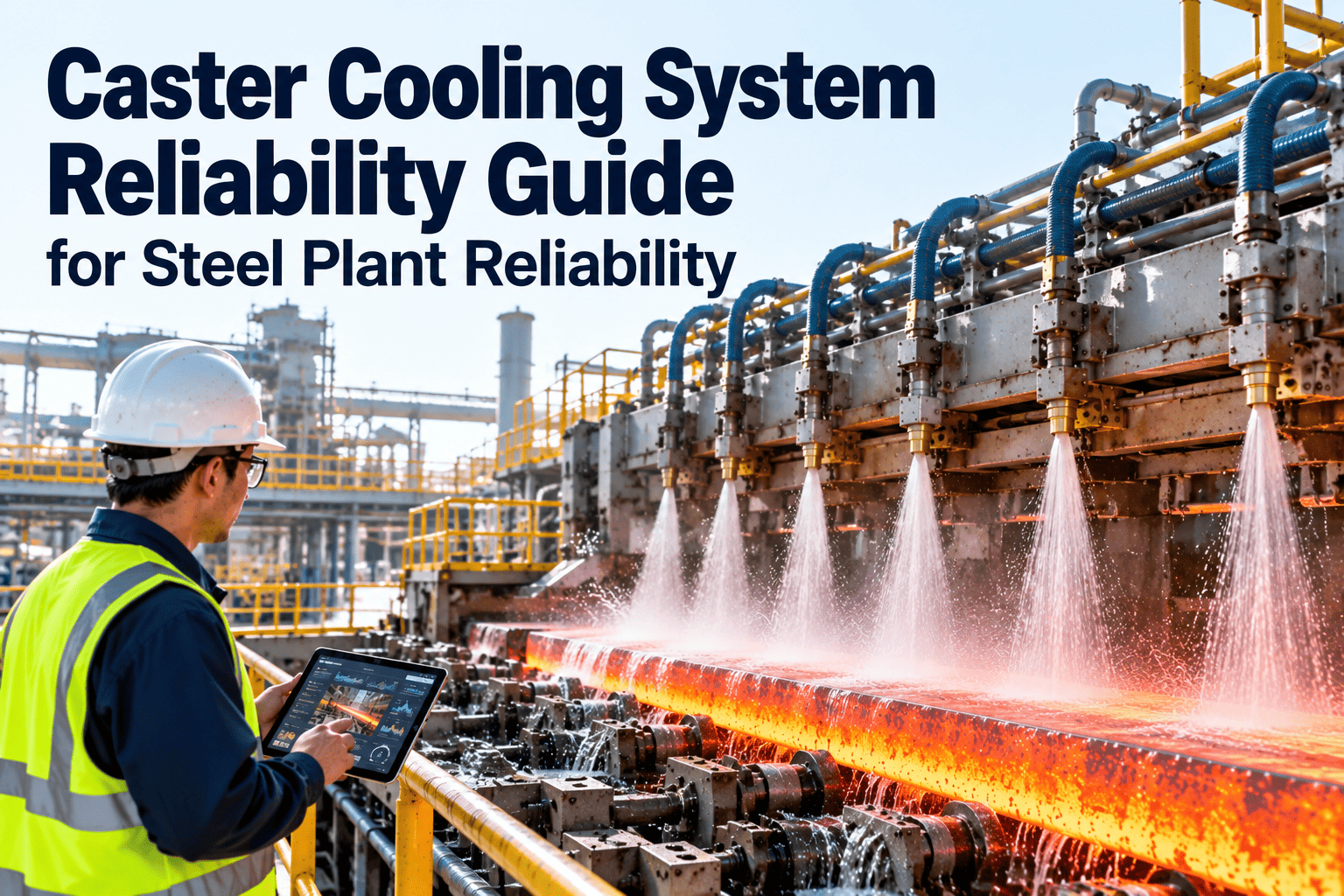
Continuous casting depends on cooling water doing its job every second of a sequence. Mold water removes heat to form the shell, and secondary spray zones finish solidification below the mold. When flow drops, a nozzle blocks, or a pump falters, shell growth becomes uneven and the risk of a breakout rises. Reliable cooling is therefore a maintenance discipline, not a utility afterthought. Explore how steel plant CMMS software keeps that discipline consistent.
Caster Cooling System Reliability Guide for Steel Plant Reliability
Monitor water flow, pressure, temperature, leaks, valves, and pump condition to protect shell formation, product quality, and casting continuity.
A small water problem can become a large casting problem
The caster has little tolerance for cooling instability. Heat extraction must stay uniform along the strand and across its width.
Cooling disturbance
Flow drop, clogged nozzle, scaled passages, or warm return water change heat removal.
Uneven shell growth
Some areas of the strand solidify too slowly or too quickly, creating thin or stressed zones.
Quality and safety risk
Surface and internal defects increase, and in the worst case a breakout releases liquid steel.
Downtime and recovery
Cleanup, equipment repair, and restarting the sequence consume hours and disrupt downstream mills.
Where cooling can fail across the machine
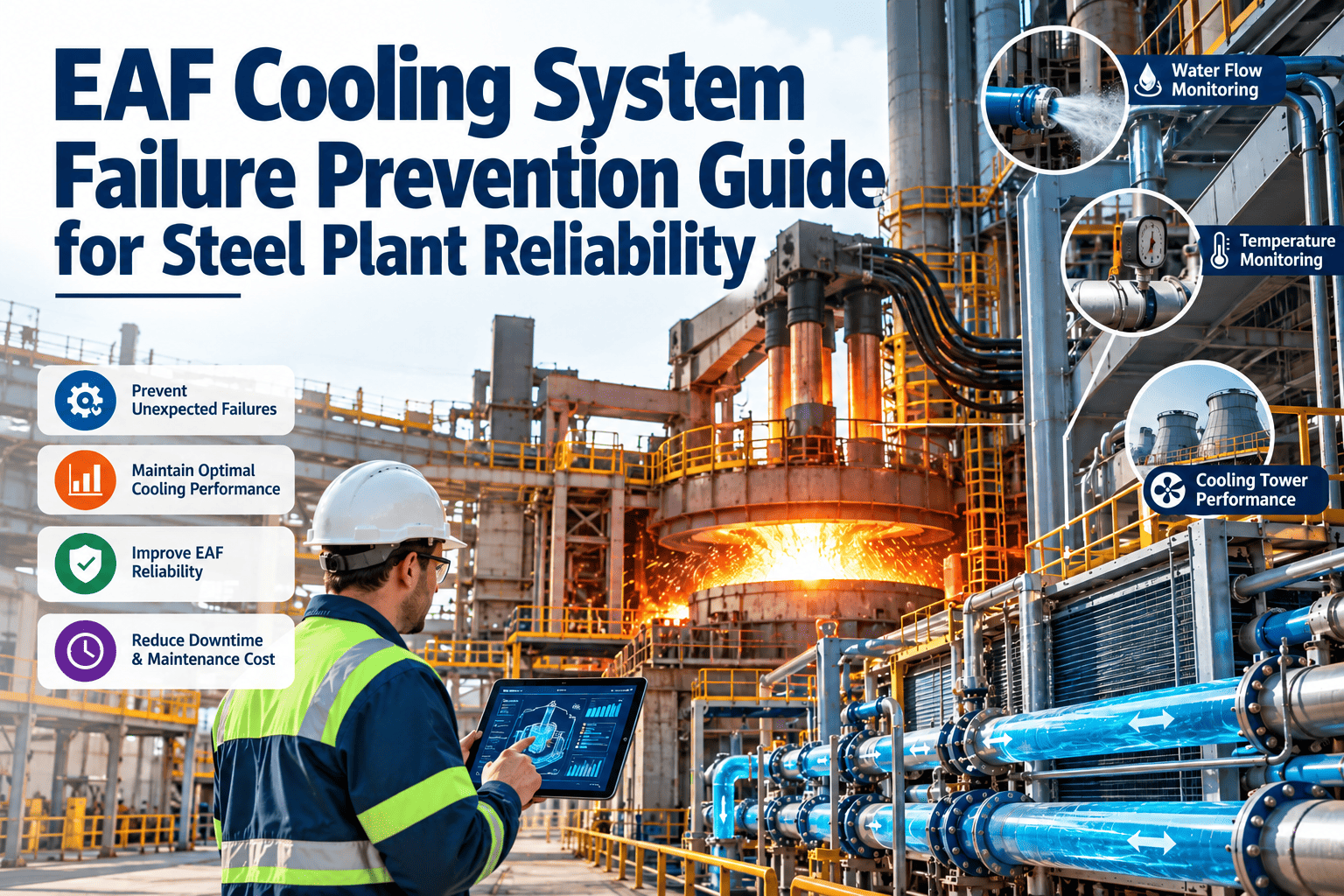
Each circuit has its own failure patterns and monitoring needs. Treating them separately makes inspections more precise.
| Circuit | Main Purpose | Common Failure Modes | Key Signals |
|---|---|---|---|
| Mold cooling | Extract heat to form the initial shell | Scaling in mold water channels, low flow, leaks, warm supply | Flow, inlet and outlet temperature difference, pressure |
| Secondary spray zones | Control strand surface temperature after the mold | Blocked or worn nozzles, uneven spray patterns, valve faults | Zone flow, header pressure, spray pattern checks |
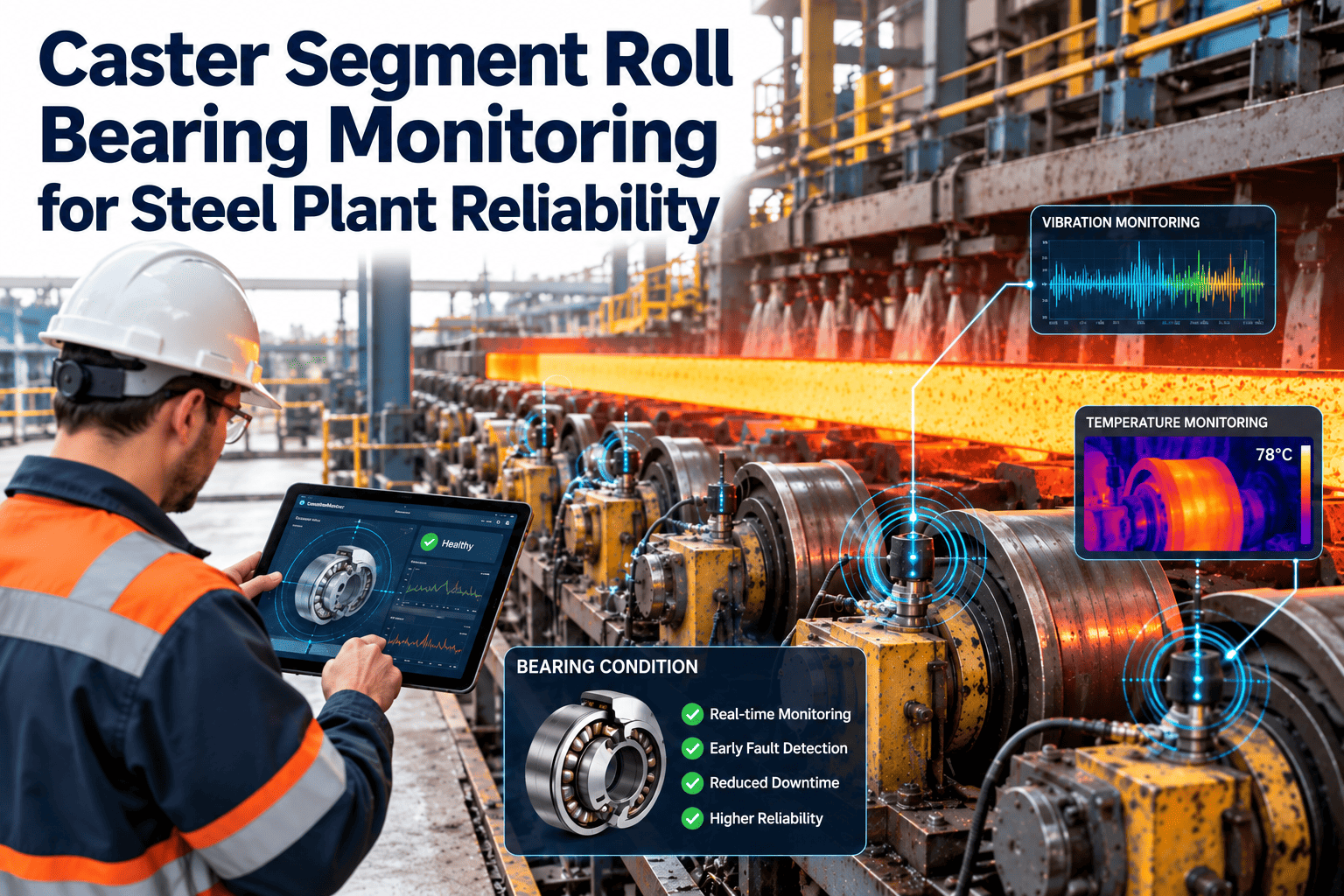
| Segment and roll cooling | Protect rolls and bearings from heat | Plugged lines, leaking joints, bearing overheating | Flow, temperature, bearing condition |
| Closed loop and open loop water systems | Supply clean, cool water to the machine | Fouling, filter blockage, treatment problems, cooler degradation | Water quality, filter differential pressure, supply temperature |
| Pump station | Deliver required pressure and flow | Bearing wear, seal leaks, cavitation, impeller wear, motor faults | Vibration, motor current, discharge pressure |
Five measurements that tell you cooling is healthy
Online monitoring and structured inspections should cover the same core parameters, so findings can be compared.
Limits should follow the caster supplier's instructions and the plant's metallurgical practice, since they vary by steel grade and machine design.
Make cooling checks part of every casting plan
Schedule inspections, track faults, and keep spare parts ready for the systems your caster cannot run without.
The small components behind most spray problems
Spray cooling relies on hundreds of nozzles and the valves that feed them. Wear and blockage often develop slowly and go unnoticed.
Nozzle issues to inspect for
- Partial or complete blockage from scale and debris
- Orifice wear that changes spray angle and flow
- Incorrect nozzle type or position after maintenance
- Loose or damaged mounting and misaligned headers
- Spray pattern differences across strand width
Valve issues to inspect for
- Sticking control valves that cannot hold setpoint
- Leaking isolation valves that waste water and pressure
- Actuator and positioner calibration drift
- Failed limit switches and feedback signals
- Strainers or filters upstream that restrict flow
Protecting the pump station and finding leaks early
Pumps provide the pressure behind every cooling zone. Leaks drain that pressure and create safety hazards near molten metal.
- Vibration and noiseCavitation, imbalance, and bearing wear appear first as changes in vibration or sound.
- Motor currentA drifting current draw against flow can indicate impeller wear or blockage.
- Seal conditionSeal leakage and cooling water contamination raise risk of bearing failure.
- Standby readinessStandby pumps should be rotated into service and tested so they start when needed.
- Leak surveysRoutine walk-downs of hoses, couplings, and flanges catch seepage before it becomes a spray.
A practical inspection rhythm for the cooling system
- Review flow and pressure alarms
- Walk mold area for leaks
- Check filter differential pressure
- Confirm standby pump readiness
- Inspect spray patterns and nozzles
- Check segment and roll bearing cooling
- Verify valve response and feedback
- Record findings against assets
- Clean or replace nozzles and strainers
- Inspect mold water channels for scale
- Overhaul pumps and actuators
- Calibrate flow and pressure instruments
Which cooling failures deserve immediate attention
Priorities should reflect how quickly a failure can affect the strand and how many casting strands depend on it.
Data that connects cooling problems to casting results
Cooling problems often look like quality problems first. Linking maintenance records to casting outcomes makes root causes easier to find.
How Oxmaint supports caster cooling maintenance
Oxmaint provides structure around the routine tasks and fault response that cooling reliability depends on.
- Preventive maintenance: recurring inspections for pumps, filters, nozzles, and valves by interval or runtime
- Mobile inspections: technicians record readings, leak findings, and photos at the machine
- Corrective work orders: faults found during rounds become assigned, trackable jobs
- Condition-based workflows: abnormal flow, pressure, or vibration readings can trigger follow-up tasks
- Inventory: keep critical spares like seals, nozzles, and transmitters available
- Dashboards: monitor open jobs, overdue inspections, and recurring cooling faults
Water treatment is a maintenance concern as much as a chemistry concern
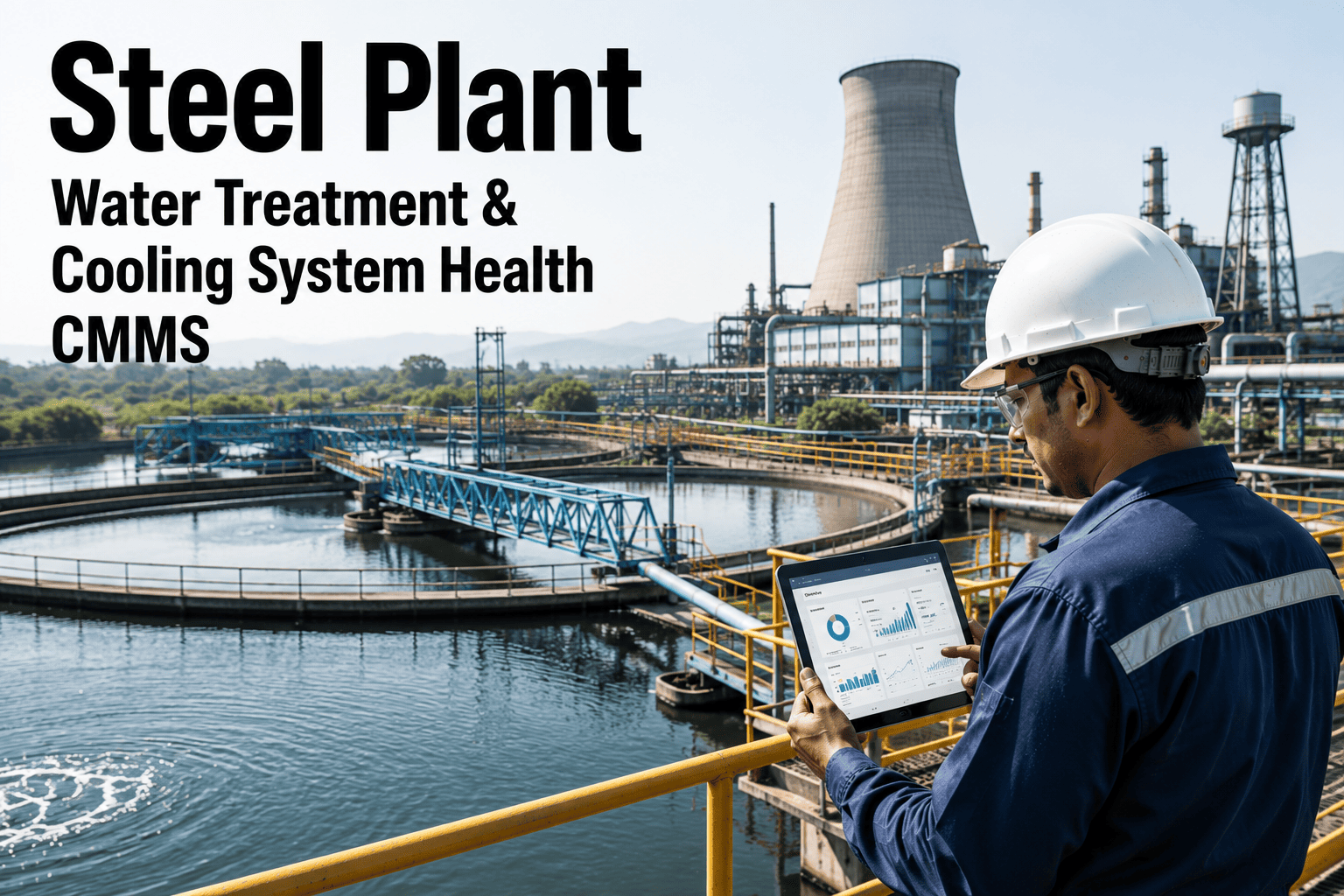
Many cooling problems that look like equipment faults begin with water quality. Scale narrows mold channels, suspended solids plug spray nozzles, and corrosion slowly thins pipework and heat exchangers. Maintenance teams need treatment results visible next to equipment findings, so the two are never investigated separately.
Problems poor water quality creates
- Scale deposits that reduce heat transfer in mold and roll cooling passages
- Debris and suspended solids that restrict nozzles and strainers
- Corrosion that causes pinhole leaks in headers and fittings
- Biological growth that fouls coolers and cooling tower fill
- Accelerated wear on pump impellers and seals
Maintenance actions that help
- Scheduled strainer and filter cleaning, based on differential pressure
- Blowdown valve checks and dosing pump inspections
- Regular cleaning of basins and cooling tower components
- Sampling points kept accessible and labeled
- Treatment results recorded against the circuit they affect
Reliable cooling control depends on trustworthy instruments
Operators make decisions from flow, pressure, and temperature readings. If an instrument drifts, the control system may believe cooling is normal while the strand experiences something different. Calibration and verification deserve the same attention as mechanical work.
| Instrument | Typical Problem | Effect on Operation | Maintenance Check |
|---|---|---|---|
| Flow meter | Fouling, air bubbles, or electrode coating | False low or high flow reading | Cleaning, zero check, and comparison with a reference reading |
| Pressure transmitter | Blocked impulse line or drift | Misleading header pressure trend | Calibration and impulse line inspection |
| Temperature sensor | Poor contact or degraded wiring | Wrong heat removal estimate | Verification against a calibrated probe |
| Control valve positioner | Air leaks or calibration drift | Valve cannot hold flow setpoint | Stroke test and air supply check |
| Basin level sensor | Fouling or false trips | Pump protection errors or unexpected stoppages | Cleaning and alarm test |
Handovers that keep cooling problems from disappearing between crews
Cooling issues often span several shifts. A slow leak noticed on nights can become a major problem by the next afternoon if the observation never reaches the day crew. A structured handover record prevents that loss.
- Open alarmsList any flow, pressure, or temperature alarms active or repeated during the shift.
- Temporary fixesRecord clamps, bypasses, and manual valve positions so they are replaced with permanent repairs.
- Equipment out of serviceIdentify standby pumps, valves, or instruments that are unavailable and when they should return.
- ObservationsCapture unusual noise, spray patterns, or small leaks while details are fresh.
- Planned workConfirm which jobs are scheduled for the next sequence break and what parts are staged.
Planning cooling work around the casting schedule
Cooling system tasks that need isolation are best completed during planned breaks. Good planning ensures the window is used for the most valuable work instead of the loudest request.
Collect findings
Gather inspection results, open work orders, and condition trends for every cooling circuit.
Rank by risk
Sort jobs by effect on casting safety and quality, then by time and effort required.
Prepare resources
Stage parts, tools, permits, and personnel so isolation time is spent on repair rather than searching.
Verify before restart
Test flow, pressure, valve response, and leak tightness, then record results before releasing the machine.
Habits that quietly weaken cooling reliability
Most cooling reliability problems are not exotic. They come from routines that slowly drift away from good practice.
- Cleaning without recordingNozzles are cleaned but the blockage pattern is never noted, so the root cause remains unknown.
- Ignoring slow trendsA gradual rise in filter pressure drop is accepted until flow finally collapses.
- Untested standby equipmentStandby pumps sit idle for months and fail to start in an emergency.
- Mixed nozzle stockUnlabeled or substitute nozzles are installed, changing spray patterns without anyone noticing.
- Separate silos of dataMaintenance, process, and water treatment teams each hold part of the picture and never combine it.
Moving from fixed intervals to condition-driven cooling maintenance
Fixed intervals remain useful, but condition information makes them smarter. Sensors and inspection findings can show which circuits need attention sooner and which can safely wait.
Cooling work happens close to molten metal
Water and liquid steel are a dangerous combination, so cooling maintenance carries safety requirements beyond ordinary pipework repair. Procedures should be explicit, practiced, and recorded.
Before starting work
- Confirm isolation and depressurization of the affected circuit
- Verify the strand and ladle position are safe for the task
- Check that permits and lockout points are complete
- Brief the crew on water release paths and escape routes
When work is finished
- Remove tools and temporary covers from the area
- Refill and vent the circuit according to procedure
- Test for leaks at working pressure before casting
- Record the repair, parts used, and who verified the result
Tracking whether cooling reliability is improving
A few consistent measures show whether inspections and repairs are reducing risk. Each can be drawn from maintenance records and casting logs without special tools.
- Cooling related stopsCount and duration of casting interruptions where cooling water was a recorded cause.
- Inspection completionShare of scheduled mold, spray, and pump inspections finished on time with findings recorded.
- Repeat nozzle and valve faultsNumber of times the same zone or valve appears in corrective jobs within a set period.
- Mean time to repairHours from fault report to verified repair on cooling equipment.
A simple first step for plants building a cooling reliability routine
Start with the circuits that can stop the caster fastest, then widen coverage. Early wins build support for the rest of the program.
- Mold water circuit
- Main pumps and standby
- Critical valves and filters
- Inspection checklists
- Fault and cause codes
- Spare part lists
- Weekly open fault meeting
- Monthly repeat fault list
- Quarterly limit review
Caster cooling system reliability questions
What is the most important cooling parameter to monitor?
Mold water flow is generally critical, supported by pressure and temperature. Follow the machine supplier's limits.
How does scaling affect mold cooling?
Scale insulates channel walls, reducing heat transfer and raising local temperatures. Good water treatment helps limit it.
How often should spray nozzles be checked?
Visual checks between sequences are common, with deeper cleaning at planned outages. Frequency depends on water quality.
Can maintenance software help prevent breakouts?
It supports prevention by scheduling inspections and tracking faults, but breakout control also relies on process systems. Book a demo to see the workflow.
Where should a plant start?
Register the mold, spray, and pump assets, then build inspection tasks. You can sign up to begin.
Keep the caster cooling system ready for every heat
Give your team one platform for inspections, faults, spares, and repair history across the cooling circuits.