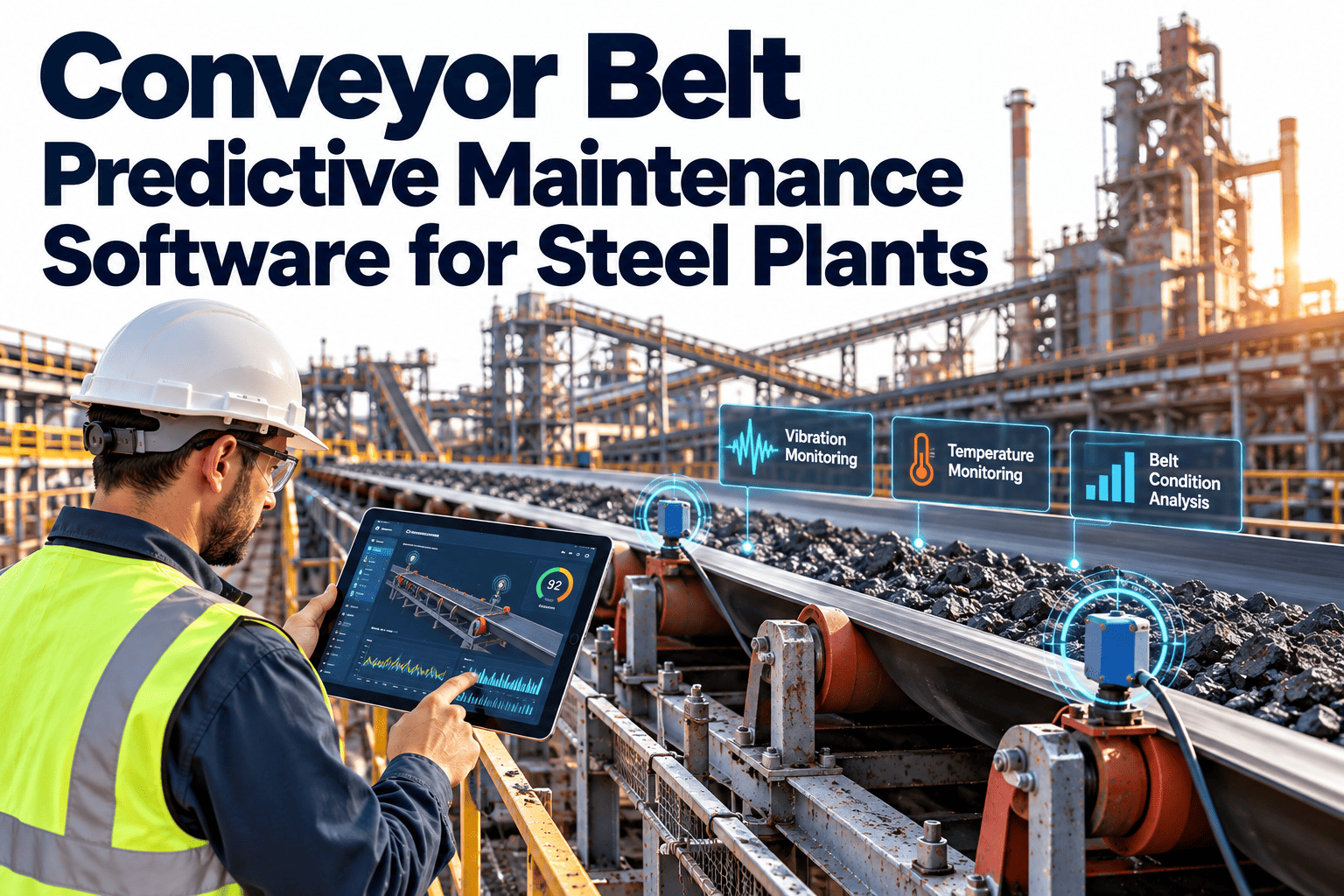
A steel plant conveyor belt that fails unplanned during production does not just stop material flow — it stops every downstream process the belt feeds, from ore transfer to blast furnace charging to sinter plant supply. OxMaint's AI Vision and Conveyor Monitoring module detects belt surface wear, splice fatigue, edge damage, and roller failure weeks before breakdown — combining machine vision cameras, vibration sensors, and belt tracking data into a single health score per conveyor that updates every shift. Book a 15-minute demo to see AI-driven conveyor health monitoring running on your plant's belt network.
Conveyor Belt Health Monitoring: AI Vision & Predictive Maintenance for Steel Plants
Wear detection, splice monitoring, belt alignment, idler failure prediction, and throughput optimisation — tracked continuously by AI vision and sensor analytics, with automated work orders from OxMaint when any zone crosses its health threshold.
Seven Conveyor Failure Modes — Detected Before Breakdown
Book a Demo — See AI Conveyor Health Monitoring Running on Your Belt Network.
OxMaint's AI Vision module ingests data from cameras, acoustic sensors, tracking sensors, and vibration monitors — generating a per-belt health score that updates every shift and auto-creates work orders before failure occurs.
Detection Technologies — What Each Sensor Sees and When
| Technology | What It Detects | Detection Frequency | Lead Time | OxMaint Integration |
|---|---|---|---|---|
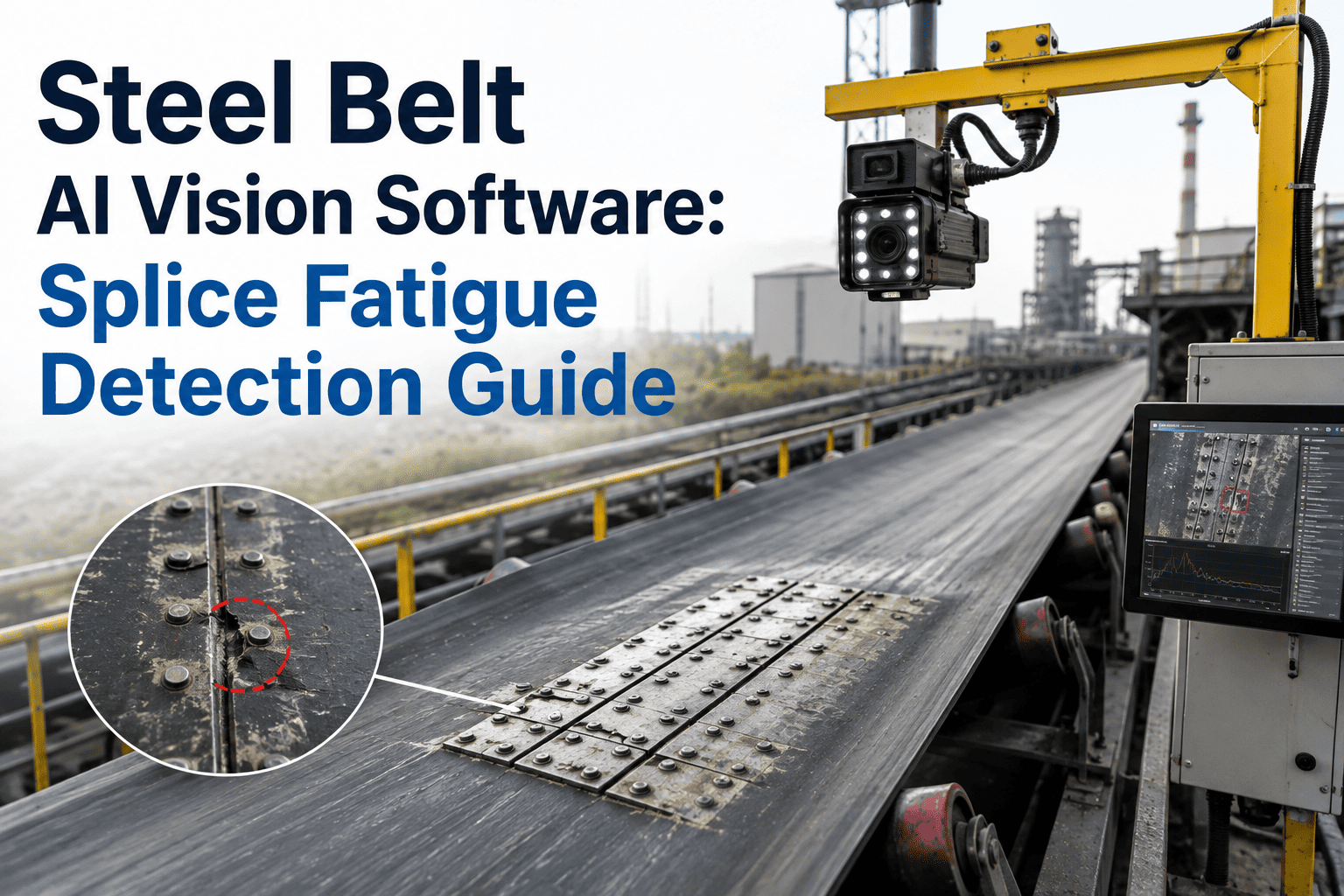
| AI Vision Camera (2D/3D) | Surface wear, splice gaps, edge damage, delamination, rips | Every belt revolution | Days to weeks | Direct API — per-image defect log to asset record |
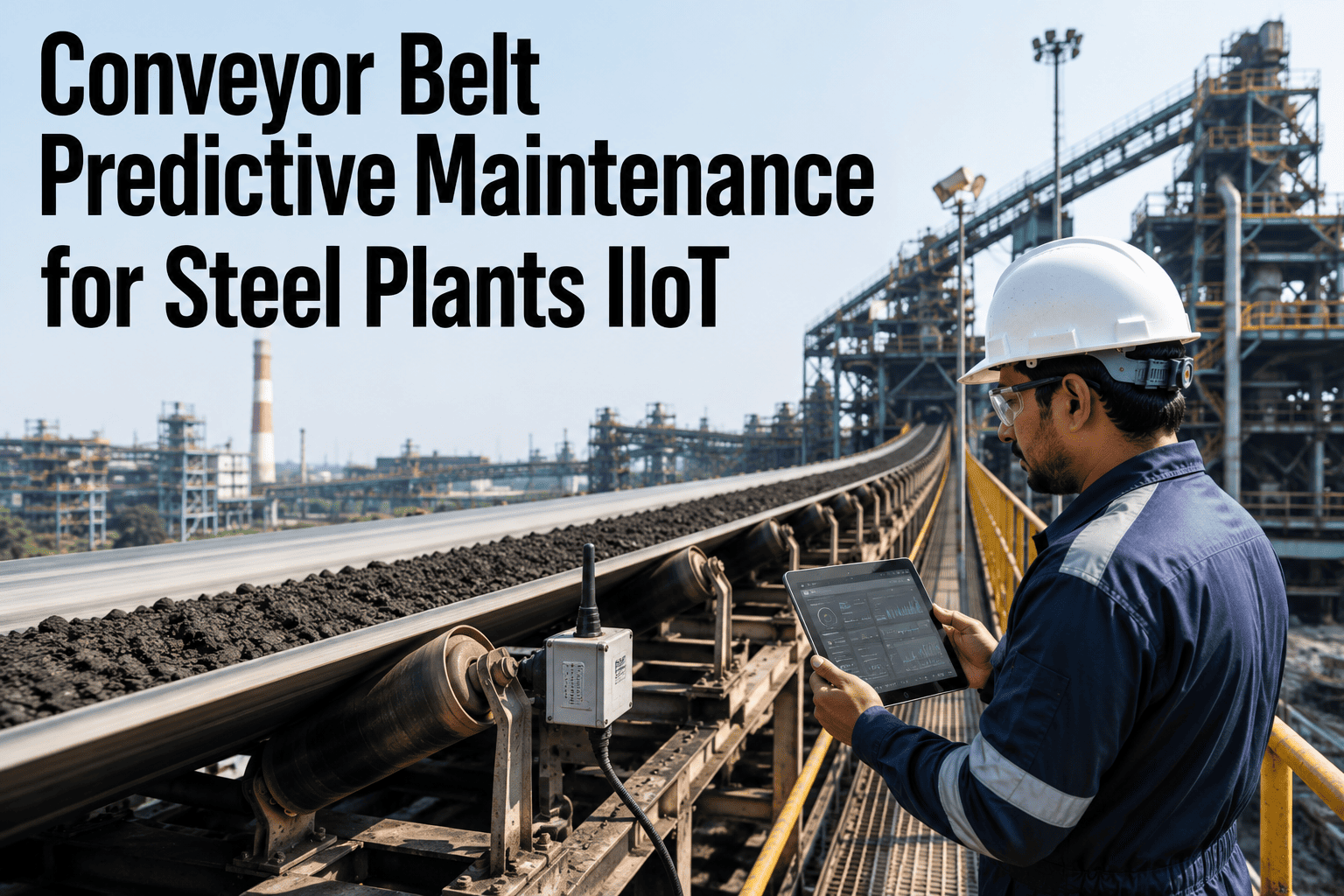
| Acoustic Emission Sensor | Idler bearing fault frequencies, belt noise anomalies | Continuous | 2–5 weeks | MQTT/OPC-UA → anomaly alert → WO |
| Infrared Thermal Camera | Locked idlers, friction hot spots, motor overheating | Continuous patrol or fixed | Hours to days | Thermal alert threshold → priority WO |
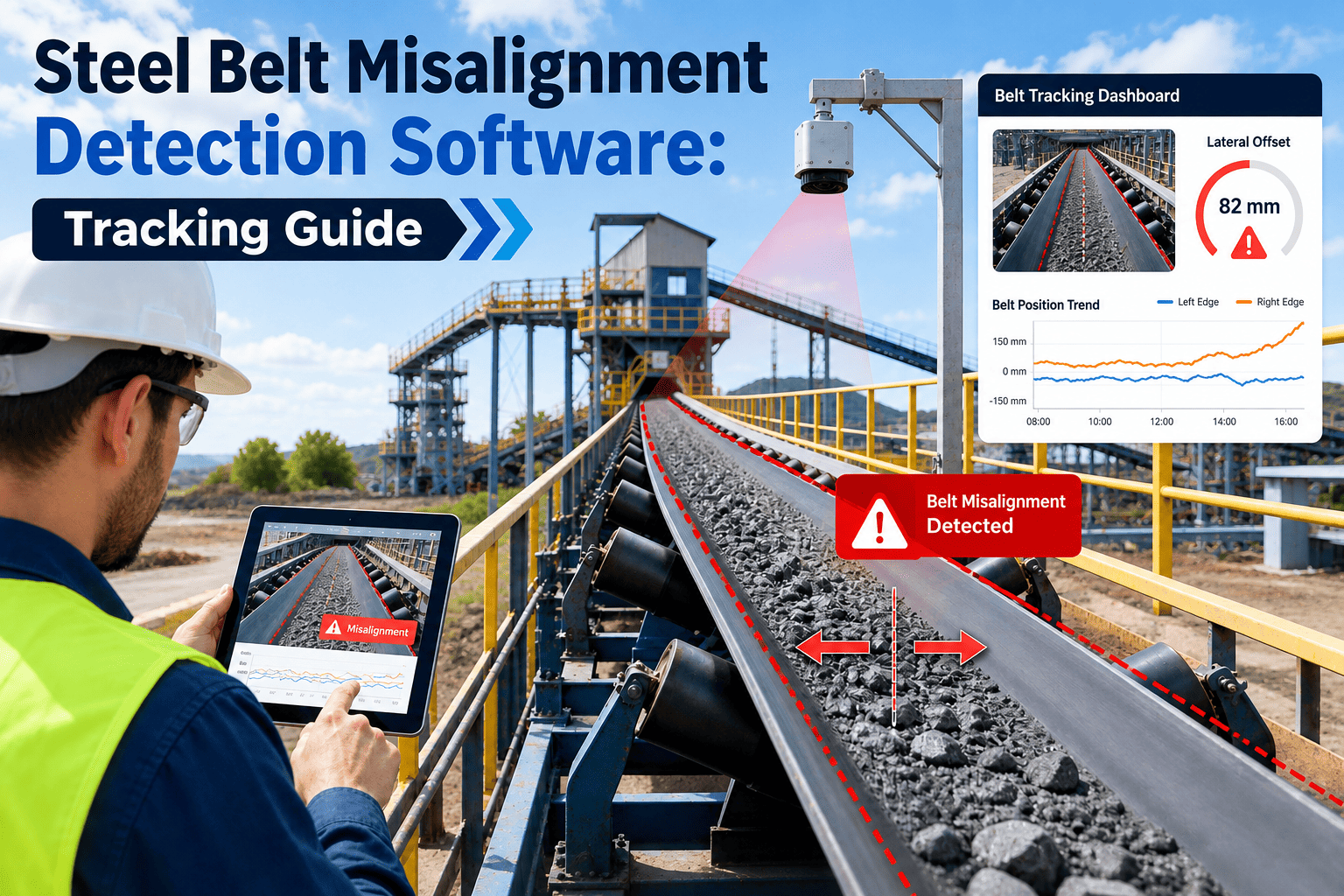
| Belt Tracking Sensor (laser) | Lateral drift, misalignment, edge wear pattern | Continuous | Hours | Position deviation → alignment WO |
| Embedded Rip Detector | Longitudinal tears, foreign object penetration | Continuous — every belt pass | Seconds (stops belt) | Hardwired E-stop + OxMaint emergency WO |
| Ultrasonic Thickness Gauge | Belt cover rubber thickness at defined measurement points | Monthly or per-patrol | Weeks to months | Monthly PM WO — thickness results stored per location |
| Motor Current Transducer | Belt slip, drive overloading, sudden load changes | Continuous | Minutes to hours | Current spike alert → drive inspection WO |
Sign in to configure sensor integration for your conveyor monitoring network in OxMaint.
Conveyor Belt PM Tasks — Frequency and OxMaint Action
| PM Task | Frequency | OxMaint Action |
|---|---|---|
| Belt surface visual inspection and wear measurement | Weekly | Weekly PM WO — wear depth recorded per zone against belt asset |
| Idler roller condition check (visual + acoustic) | Weekly | Acoustic sensor alert or weekly patrol WO — replacement WO on detect |
| Belt alignment and tracking check | Weekly | Weekly WO — tracking sensor reading documented, adjustment WO if deviation |
| Splice condition inspection — all splices | Monthly | Monthly PM WO — splice gap and condition photographed and stored |
| Drive pulley lagging thickness measurement | Monthly | Monthly PM WO — replacement WO triggered at minimum thickness |
| Carry-side idler lubrication (greaseable type) | Monthly | Monthly lubrication WO per belt asset — grease type and quantity documented |
| Skirt board and loading chute wear inspection | Monthly | Monthly PM WO — wear plate thickness recorded, replacement triggered at minimum |
| Belt scale calibration check | Quarterly | Quarterly calibration WO — as-found/as-left error % stored to asset record |
| Full belt thickness mapping (ultrasonic) | Quarterly | Quarterly WO — full-length thickness map stored and trended |
| Vulcanised splice pull test (sample) | Annual | Annual WO — pull test result stored, splice schedule adjusted on data |
| X-ray carcass inspection (for steel cord belts) | Annual | Annual WO — steel cord continuity map stored per belt section |
| Full conveyor structural inspection | Annual | Annual shutdown WO — all structural and mechanical findings documented |
Book a demo to see OxMaint managing your full conveyor PM programme.
In an integrated steel plant, the conveyor network is the circulatory system. When a critical belt goes down — ore bridge to blast furnace, sinter to burden preparation — the entire production chain stops within hours. The plants that manage this well are not the ones with the best belts. They are the ones with the best belt data: weekly wear measurements per zone, splice gap trending from each pass of the AI camera, idler acoustic signatures that catch bearing faults at the first frequency anomaly. Conveyor predictive maintenance is not sophisticated — it is systematic data collection and systematic response.
How OxMaint Manages AI-Powered Conveyor Belt Health
Conveyor Belt Monitoring Questions We Answer Every Week
What is the minimum sensor configuration to start AI-based conveyor health monitoring?
The highest-value starting point is a fixed AI vision camera at the head pulley exit and an acoustic emission sensor on the highest-failure-risk idler bank — typically the loading zone. These two sensors provide splice condition on every revolution and idler bearing fault detection weeks in advance. Belt tracking sensors and thermal cameras can be added as the programme matures. OxMaint integrates all sensor types through a single gateway without requiring a separate monitoring platform. Sign in to configure your conveyor sensor integration in OxMaint.
How does AI vision detect belt wear differently from a technician's visual inspection?
A technician can inspect a section of belt in good light conditions once a week. AI vision cameras inspect every point on the belt surface on every revolution — at full operating speed — recording a consistent set of measurements that are compared to baseline rather than to human memory. Vision systems detect millimetre-scale changes in cover rubber depth, splice gap width, and edge profile that are invisible to the naked eye until they have already reached a critical level. Book a demo to see AI vision defect detection vs manual inspection.
How does OxMaint determine when a belt should be replaced based on wear data?
OxMaint calculates wear rate per zone from quarterly thickness measurements — millimetres of cover rubber lost per month at each measurement point. From current thickness and current wear rate, OxMaint projects the date when any zone will reach minimum acceptable cover depth. The planned replacement WO is generated 90 days before that projected date — giving procurement and shutdown teams sufficient lead time to source the belt and schedule the replacement without an emergency. Sign in to activate belt life prediction and replacement planning.
Can OxMaint's conveyor monitoring work for belts not connected to a digital sensor system?
Yes. For belts without sensor infrastructure, OxMaint manages structured PM inspection programmes — weekly visual inspection WOs with photographic documentation, monthly wear measurement WOs with thickness inputs recorded against the belt asset, and quarterly splice condition assessments. This structured approach captures the same trend data manually that sensors capture automatically, and provides a documented maintenance history that supports warranty claims, insurance assessments, and replacement planning decisions. Book a demo to see OxMaint's manual conveyor PM programme.
Book a Demo — See OxMaint Managing Your Conveyor Belt Health Programme.
Per-belt health score · Splice gap trending · Idler bearing prediction · Wear map archive · Belt life projection · Automated work orders from every sensor alert. From ore handling to finished product — every belt, every shift, every failure caught early.