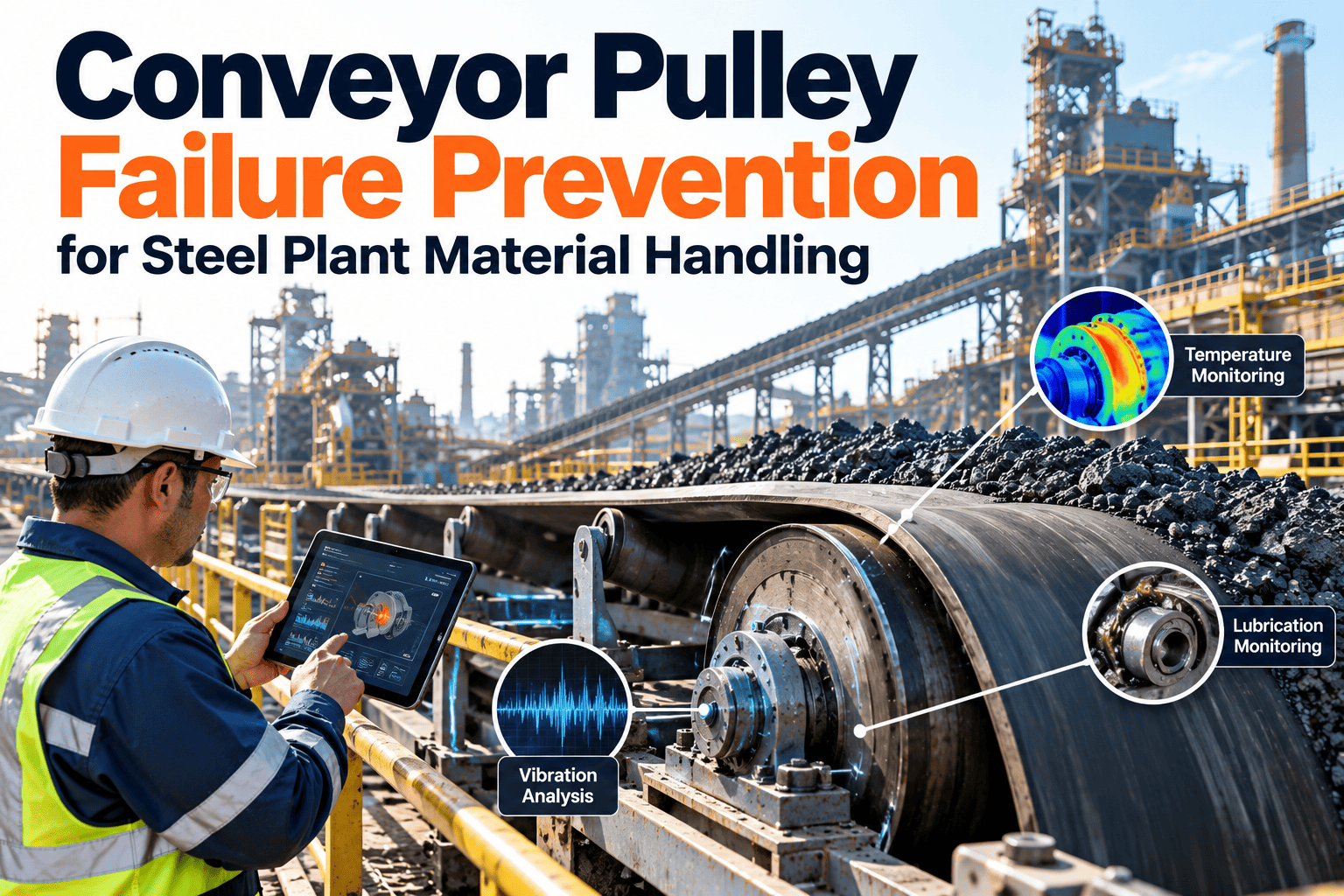
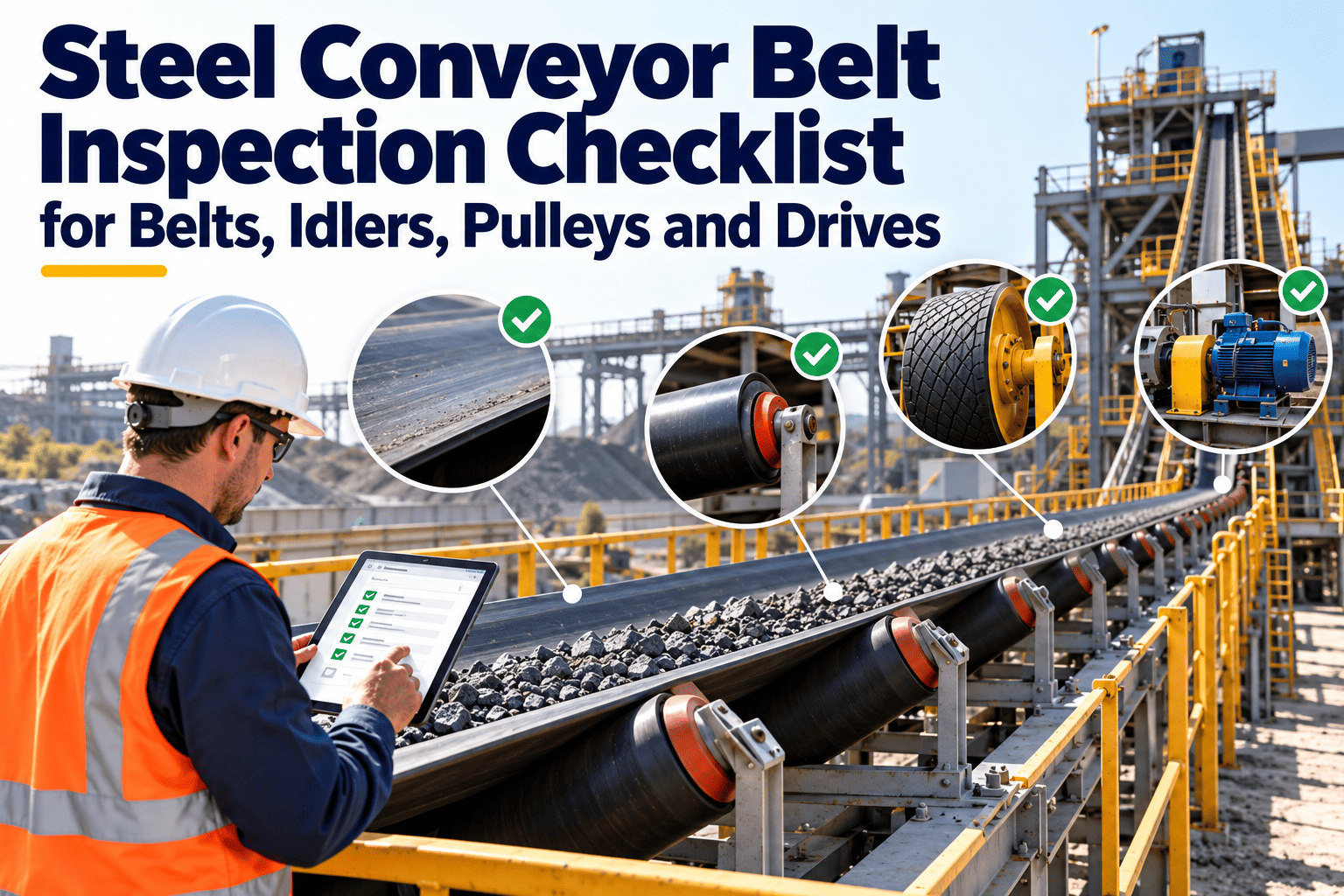
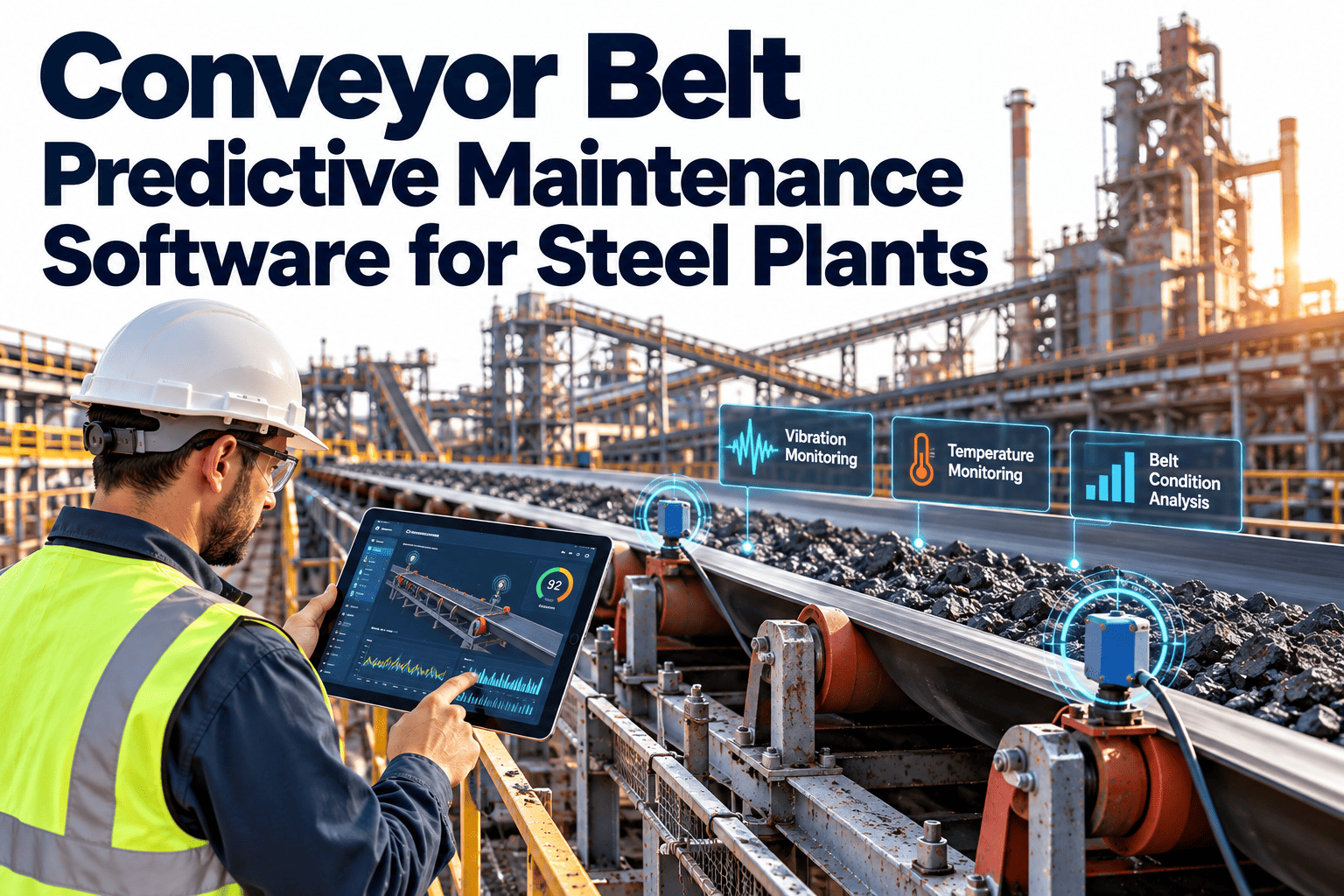
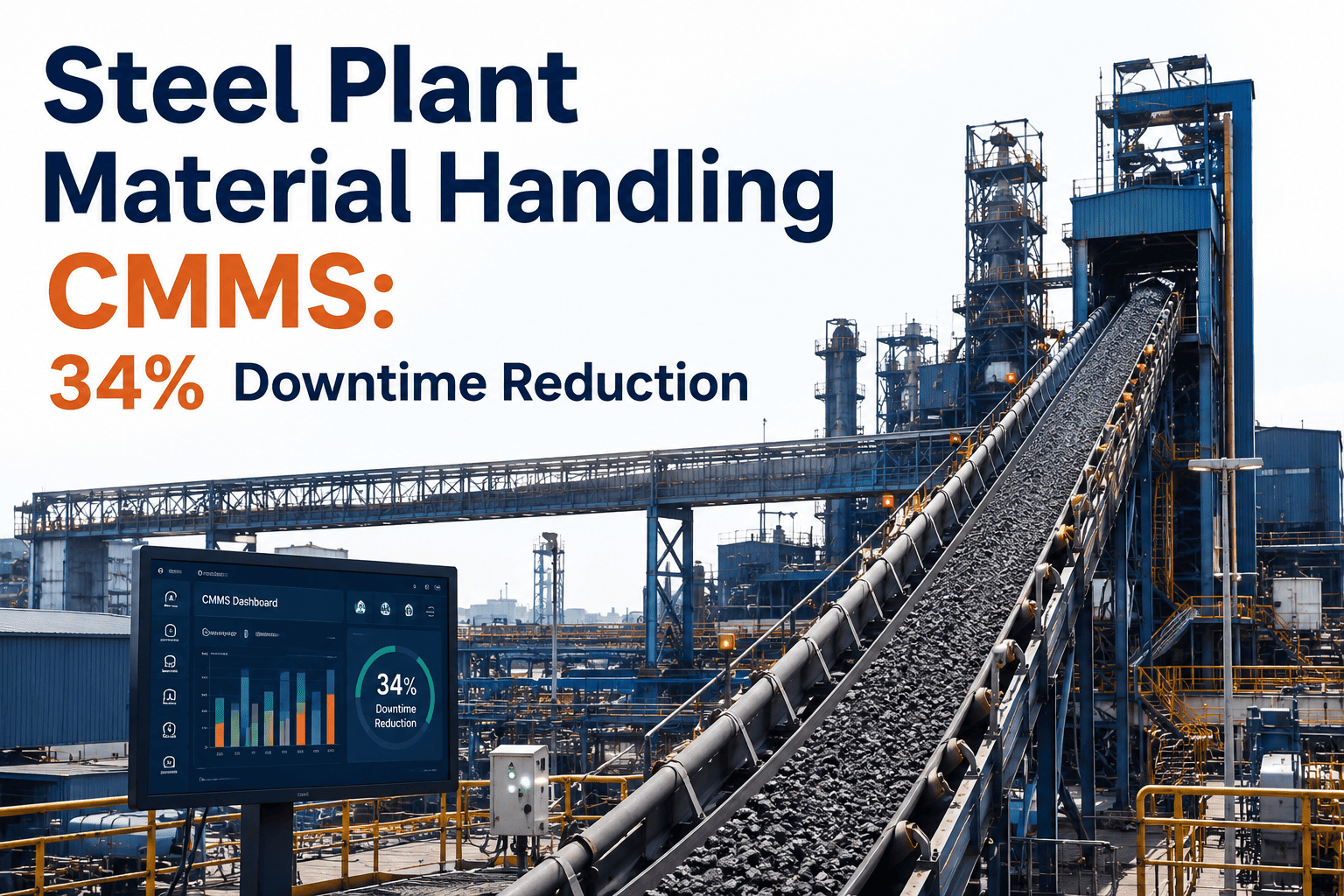
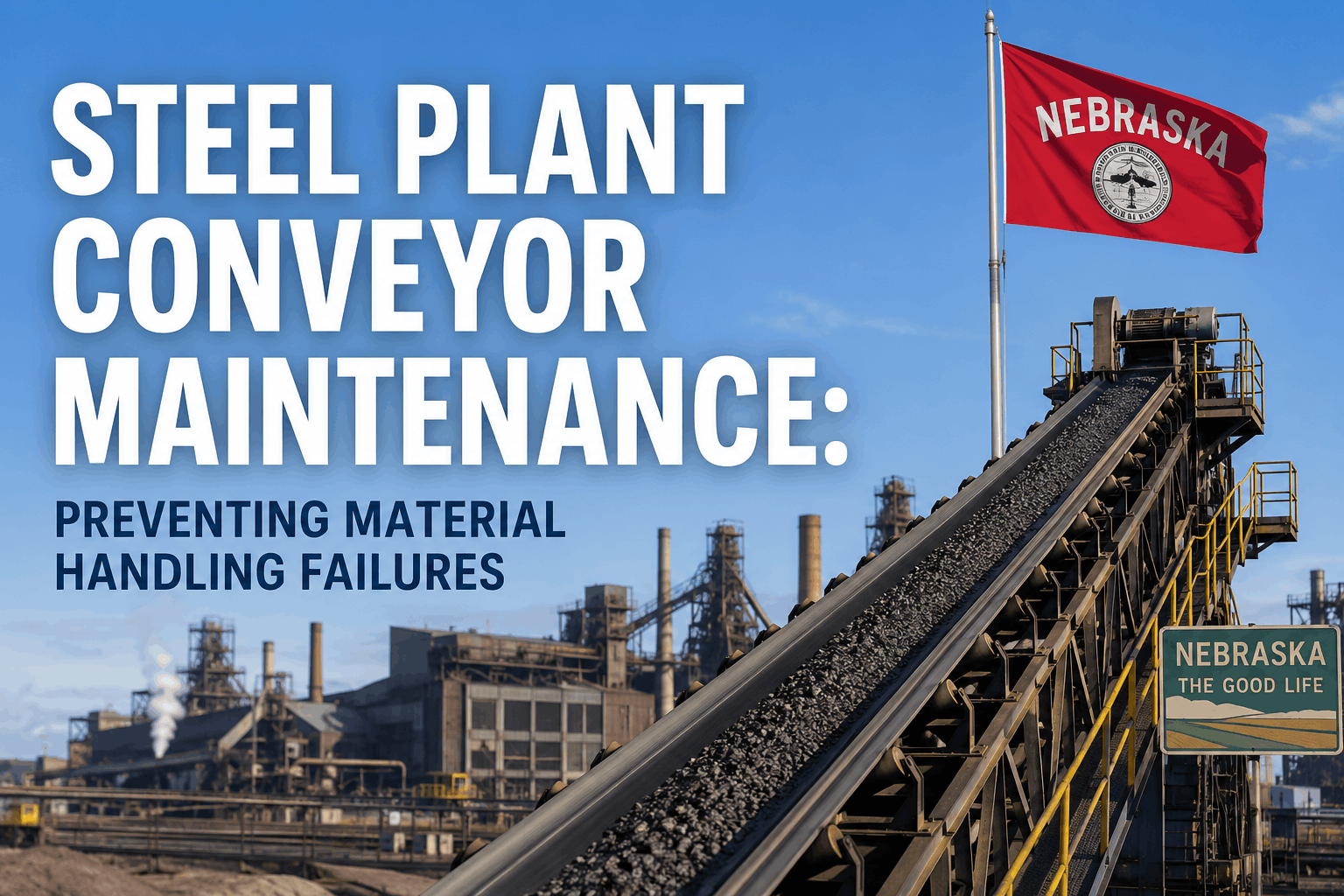
In a steel plant, nothing moves without conveyors. Iron ore, coal, coke, limestone, sinter, pellets, slag, and finished products — every material that enters or exits any process travels on belt conveyors. An integrated steel plant may operate dozens of conveyor systems spanning kilometers of total belt length, running widths of 900-1,600mm at capacities exceeding 2,000 tons per hour. When a conveyor fails, it doesn't just stop one process — it starves everything downstream. The global conveyor belt market reached $5.7 billion in 2024, with steel and mining as primary demand drivers (GM Insights). Belt downtime and replacement alone cause productivity losses exceeding 3% annually in heavy industries, and companies using low-cost belts without preventive maintenance face 3× more unplanned downtime (Fives Group, 2024). IoT-enabled conveyor monitoring reduces unplanned downtime by up to 30% (Deloitte, 2024), but the foundation is still disciplined preventive maintenance — daily inspections, systematic lubrication, belt tracking, and component replacement before failure.
Managing conveyor maintenance across a steel plant means tracking belt condition, idler wear, drive system health, and alignment across multiple systems simultaneously — each carrying different materials with different abrasion, temperature, and contamination profiles. Oxmaint CMMS centralizes conveyor inspection scheduling, belt lifecycle tracking, idler replacement logs, gearbox service intervals, and failure trend analysis — keeping your material flow uninterrupted. Schedule a demo.
Maintenance at a Glance
Where Conveyors Work in a Steel Plant
Every stage of steel production depends on conveyors to move material. Each area presents different challenges — abrasion, temperature, moisture, chemical exposure — requiring tailored belt types and maintenance approaches:
Raw Material Yard
Iron ore, coal, limestone, dolomite from stockpiles to process. High abrasion from crushed ore, outdoor weather exposure, long distances (1-2 km). Belt widths 1000-1600mm.
Coke Oven / Sinter Plant
Coal blend to ovens, coke to quenching, sinter mix to strand. Hot coke transport (up to 200°C+), abrasive sinter, fine dust. Capacity 1000-1800 TPH.
Blast Furnace Stock House
Coke, sinter, pellets, flux to BF top via skip or belt. Steep inclines (up to 18°), precise material metering, high reliability critical. Chevron or cleated belts.
Slag & Byproduct Handling
BF slag, BOF slag, mill scale, dust collection fines. Hot, abrasive, irregular lump sizes. Contact with moisture creates corrosive conditions.
Finished Product & Shipping
Pellets, slab pieces, scrap to storage or rail/truck loading. Precision placement required, lower abrasion but heavy impact at transfer points.
Map Every Conveyor, Track Every Belt, Prevent Every Failure
Oxmaint manages belt lifecycle data, idler replacement schedules, gearbox service intervals, and alignment checks across your entire conveyor network — with mobile inspection forms and automated PM triggers.
The Five Conveyor Killers: What Fails and Why
Most conveyor failures in steel plants trace back to five root causes. Each one is preventable with systematic maintenance — and each one can cascade into catastrophic failure if ignored:
Belt Mistracking
The belt drifts off-center, caused by misaligned idlers, damaged pulleys, uneven loading, crooked splices, or worn vulcanized splices. Leads to belt edge wear, material spillage, structural damage, and eventual belt destruction. In a steel plant, mistracking at a transfer point can spill tons of hot sinter or abrasive ore onto walkways and structures.
Belt Damage & Wear
Cuts, tears, gouges from tramp iron or sharp material. Longitudinal rips from jammed idler rollers or belt scrapers — steel cord belting can split completely in half. Cover rubber erosion from abrasive materials (iron ore, slag, coke). In steel plants, belt replacement cycles range from 1-5 years depending on application severity.
Idler & Roller Seizure
Idler bearings fail from contamination (dust, moisture), lack of lubrication, or normal wear. A seized idler creates a stationary friction point against the moving belt — rapidly wearing through the belt cover and potentially causing a fire. Steel plant environments with fine dust (sinter, coal, coke) accelerate bearing contamination dramatically.
Material Carryback & Spillage
Material sticking to the belt past the discharge point gets carried back on the return side, building up on return rollers, pulleys, and structures. Causes mistracking, roller seizure, structural corrosion, and housekeeping/safety hazards. Wet coal, fine ore, and sticky sinter are particularly problematic in steel plants.
Drive System Failure
Motor burnout, gearbox failure, coupling breakage, or pulley lagging wear. Drive failures stop the entire conveyor immediately. Gearbox oil changes are often overlooked — the initial break-in change and then every 2,500 hours of service. Pulley lagging wear reduces friction, causing belt slippage under load, especially during wet conditions or startup.
Maintenance Frequency: Daily → Weekly → Monthly → Annual
Conveyor maintenance follows a tiered frequency model. Steel plant conveyors operating 24/7 in harsh conditions require the most aggressive end of each interval:
Keep Every Ton Moving, Every Shift
Oxmaint CMMS manages your entire conveyor network — from daily walkthroughs to annual belt replacement planning — with mobile inspection forms, automated PM scheduling, belt lifecycle tracking, and failure trend analysis.
What the CMMS Must Track for Conveyor Maintenance
Each conveyor in the plant needs a complete maintenance profile:
Frequently Asked Questions
What types of conveyor belts are used in steel plants?
Steel plants use several specialized belt types depending on the application. General purpose rubber belts handle iron ore, coal, and limestone at moderate abrasion levels. Heat-resistant belts transport hot coke (200°C+) and hot sinter near ovens and furnaces. Abrasion-resistant belts handle iron ore, slag, and scrap metal with hard/sharp particles. Oil-resistant belts carry coke, coal, and oil-contaminated scrap where conventional rubber would deteriorate. Chevron and cleated belts transport material on steep inclines (up to 18°) such as blast furnace stock house feeds. Steel cord belts provide high tensile strength for long-distance, heavy-load applications. Belt widths typically range from 900-1,600mm with capacities up to 2,000+ TPH. Steel plants also use pipe conveyors in environmentally sensitive areas to fully enclose the material being transported.
What are the most common causes of conveyor failure in steel plants?
Five primary failure modes dominate: Belt mistracking — caused by misaligned idlers, damaged pulleys, or uneven loading, leading to belt edge wear and spillage; Belt damage — cuts, tears, and longitudinal rips from tramp iron, jammed idler rollers, or sharp material, with belt replacement cycles of 1-5 years in severe applications; Idler seizure — bearing failure from dust contamination and poor lubrication creates friction points that burn through belt covers and can cause fires; Material carryback — sticky material on the return belt builds up on rollers and structures, causing mistracking, roller seizure, and corrosion; Drive system failures — motor burnout, gearbox issues, and worn pulley lagging. Companies without preventive maintenance experience 3× more unplanned downtime (Fives Group, 2024), while IoT-enabled monitoring can reduce unplanned downtime by up to 30% (Deloitte, 2024).
How often should conveyor belts be inspected in a steel plant?
Steel plant conveyors running 24/7 require a tiered inspection approach: Daily/every shift — visual belt surface inspection, listen for unusual noise (seized rollers), check belt tracking, verify emergency stops, note spillage or slippage; Weekly — lubricate roller bearings, clean debris from mechanism, check belt tension, inspect and adjust scrapers, verify guard placement; Monthly — detailed belt inspection (both surfaces, full length), gearbox oil service (every 2,500 operating hours), replace worn scraper blades, inspect electrical components, measure belt cover thickness at wear points, check take-up system; Annually — full structural inspection, laser pulley alignment, complete splice inspection, belt thickness measurement survey to predict replacement date, motor insulation resistance testing, year's repair history analysis. Infrared scanning of bearings and vibration analysis on drives can supplement the visual program.
How does CMMS software improve conveyor maintenance management?
A CMMS provides systematic management across the entire conveyor network: Asset registry — every conveyor mapped with belt type, width, length, capacity, material conveyed, and drive specifications; Belt lifecycle tracking — installation date, cover thickness measurements over time, splice repair history, and predicted replacement date; Automated PM scheduling — daily, weekly, monthly, and annual tasks triggered by calendar or run-time hours, with overdue alerts and escalation; Mobile inspections — operators complete walkthroughs on tablets with photo documentation, findings flow directly to work orders; Component tracking — idler replacement logs by location (identifying chronic failure zones), gearbox oil analysis trends, motor temperature progression; Spare parts management — belt inventory, idler stock levels, scraper blade consumption rates, and automatic reorder triggers; Failure analysis — trend reporting identifies repeat failure patterns and enables root cause correction.
What safety systems should conveyor belts in steel plants have?
Steel plant conveyors require multiple safety systems: Emergency pull cords along the full conveyor length for immediate shutdown; Belt rip detection systems to identify longitudinal tears before the belt splits (critical for steel cord belts that can rip in half); Fire detection and suppression — particularly near coke ovens and hot material handling; Self-extinguishing belts in underground or enclosed applications; Anti-runback devices (holdbacks) on inclined conveyors to prevent loaded belts from rolling back during power loss; Guarding at all pinch points (pulleys, idlers, drives, couplings); Maintenance walkways (minimum 800mm width) with handrails along the entire run; Overload protection on motors and drives; Magnetic separators at feed points to remove tramp iron before it damages belts. The CMMS should track testing dates and results for all safety devices.
Start Optimizing Your Conveyor Maintenance Today
Join steel plants already using Oxmaint to reduce unplanned conveyor downtime, extend belt life, and keep every material handling system running at full capacity.